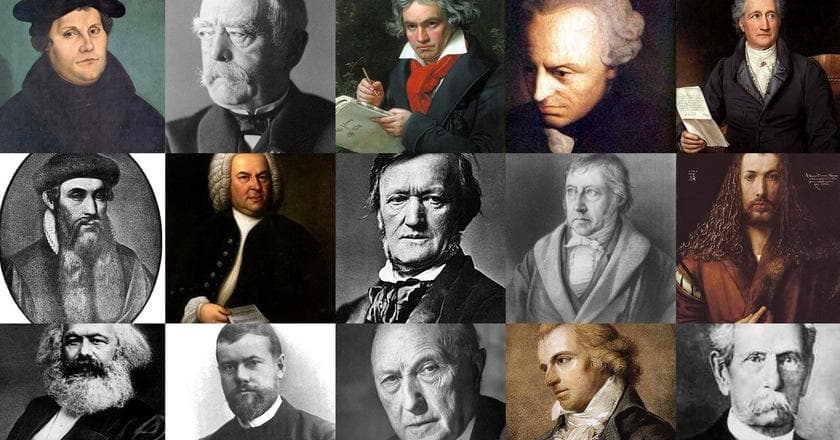
Democrat historians outnumber Republican historians by somewhere between 8 to 1 and 19 to 1. The disparity is even worse than those ratios suggest, since many of the Democrat historians are not just Democrats, but hard-left ones, while virtually none of the few Republican historians are hard-right.
There’s a name for hard-left historians. They’re called “tenured professors” and we pay their salaries and give them summers off. There’s also a name for hard-right historians. They’re called “Uber drivers” and we pay their salaries, too, but they don’t get their summers off.
It’s no surprise that historians have not looked at Donald Trump in a historical context. They’re too busy simply bashing him as a “threat to democracy” along with whatever epithet du jour is dished out by the pseudo-academic establishment in concert with the Democratic National Committee.
Admittedly, there are still one or two Republican historians in existence. Not all are Uber drivers. But they, too, have not done much to contextualize Donald Trump. They’re instead simply doing the polar opposite of what the army of leftist historians are doing. They’re cheerleading the Trump Presidency. You know who you are.
When a person is a history professor on the left, or less often on the right, maybe the lure of public grants and private clicks is just too strong to actually profess some history.
In any event, since the historians on both sides are busy practicing politics, your undersigned political junky will practice a little history. Someone has to.
Let’s start small. We could compare Trump to FDR, who bullied the Supreme Court into approving his welfare state even though it plainly ran afoul of the Constitution. He succeeded by threatening to expand the number of Supreme Court Justices to whatever number was necessary and packing it with his toadies.
Or we could compare Trump to the other Roosevelt – the one known as Teddy – because Teddy was a Rough Rider and, well, Trump is a rough rider.
Or we could compare Trump to Lincoln, who suspended habeas corpus (the Constitutional right of a prisoner to contest illegal imprisonment) and left it suspended even after the Supreme Court said the suspension was unconstitutional. (The matter was mooted only when Congress later passed legislation to ratify Lincoln’s suspension retroactively.)
Or we could compare Trump and his Greenlandic hegemony with Jefferson who doubled the size of the young nation by purchasing the Louisiana Territory without Congressional authorization.
Let’s go back a bit further.
Alexander the Great was the son of a Macedonian king who was publicly assassinated when Alexander was only 20. There’s disagreement about whether Alexander was behind the plot but, in view of his subsequent brutality and ambition, there’s no disagreement that such a plot was certainly within his character.
Alexander took the throne and immediately conquered much of the known world at a tender age when much of today’s youth is still on their parents’ health care insurance. He subjugated Athens. He put Persia out of business for about 2,400 years (until Benjamin Netanyahu and Donald Trump had to perform another smack-down last summer).
He founded a city on the coast of Egypt that became one of the great cities of the age. He had the unmitigated self-centeredness to name it after himself, Alexandria. The towering lighthouse he commissioned for the Alexandria coast was one of the Seven Wonders of the Ancient World, and stood for a thousand years.
Alexander himself stood for fewer than 33 years and was in power for only 12. But which do people remember, Alexander or the lighthouse?
(Since we’re on the topic of namesake cities, I can imagine TrumpopolisTM as a city. Send royalty checks for that name, Mr. President, to TheAspenBeat.)
Historians who are still practicing history say Alexander was a thug. He burned down Persepolis, the great Persian city in present-day Iran. He enslaved hundreds of thousands. He was gay (as were many ancient Greeks on occasion) but evidently not happy.
Alexander’s empire didn’t last, but the Greek civilization did. He was a despot, not a democrat, but his worldwide influence permanently chiseled Greek culture into the Roman and Judaic worlds, and ultimately into our own. Alexander wasn’t good, but he was certainly great.
On to another despot, Julius Caesar. Forget about Greenland, this guy invaded France. Then he went home and declared himself dictator. Desperate times call for desperate measures which call for desperate men.
It didn’t end well for Caesar, but it did end well for Rome. The ensuing empire ruled the known world for the next 500 years, establishing the “Pax Romana” that was the most peaceful time in ancient history.
We’ve named things after Julius Caesar – a casino, a surgical procedure, a month in the calendar, and a salad. No battleships, yet.
Then there was Napoleon Bonaparte. The Corsican seized power in France in the aftermath of the French Revolution where a succession of bloodthirsty mobs had made ritual machine-beheading into a spectator sport. It was something like being canceled, but more so.
Napoleon’s reach exceeded his grasp, especially in the Russian winter where half his army was frozen, starved or shot.
For that, Letitia James or some such person got Napoleon exiled. He came back for one last, brief round of glory, but met his Waterloo in 1815. He was then exiled again, and died on a remote island in the South Atlantic.
Like Alexander and Caesar before him, Napoleon wasn’t good but he was great.
America shows some parallels to the waning days of ancient Greece, the deteriorating Republic of Rome preceding the grandeur of the Empire, and post-Revolution France.
By some objective measures, our best days are behind us. National debt is far higher than ever before. Student achievement has plummeted.
A large portion of the population embraces socialism. Experiments over the years have proven socialism to be destructive and divisive, but the adherents are blissfully ignorant of those experiments, as are their teachers.
The basic competence of America’s governing elite is abysmal. Immigrants are allowed to defraud the people out of billions on the grounds that it would be racist to stop them. Trillions were spent on virtue-signaling in the guise of climate-change abatement.
For decades, the border was wide open – the government was even sending airplanes to pick up migrants for the express purpose of illegally plopping them into the country. They get commercial drivers’ licenses, welfare, college scholarships and voting rights, no questions asked.
Public discourse has deteriorated to yard signs, cable TV shouting matches, and internet drive-by commentary.
The democratic republic established by our Founders is nor equipped for this mob rule any better than post-monarchy France was.
Enter Donald Trump. He is not a good man and never will be, but he may prove to be a great man. As in the case of other historical figures, consider his timing, circumstances and luck – and sheer audacity.
What that greatness might mean for America will be revealed by history. But probably not by historians.
 the Aspen beat
An interesting romp through history, and enjoyable, thanks, Glenn. Isn’t it amazing that with all the national and local gov’t F%&^-ups, (to put it politely) past and present, by our so-called leaders, we still manage remain the most innovative, wealthy, creative and comfortable place to live on the planet. (In the history of the world?) Pretty incredible. Now, imagine if our leaders were not corrupt or at the very least practiced some common sense?
Good men are very rarely great
Great men are very rarely good!
Then out spake brave Horatius,
The Captain of the Gate:
“To every man upon this earth
Death cometh soon or late.
And how can man die better
Than facing fearful odds,
For the ashes of his fathers,
And the temples of his Gods”.
Mr. Beaton, I always look forward to your columns. This one is quite wonderful and puts much of what we are enduring in perspective. However, I disagree with you that “Trump is not a good man and never will be.” He is a far better man than the despots you profile above. Like Frank Sinatra, he has been silently generous without credit for decades. He’s certainly not perfect but none of us are but Trump is a far better man than most.
I am a reader of your columns from faraway New Zealand and enjoyed this particular one. I must, however, disagree with your assessment that President Trump is not a good man. He is a flawed man, definitely, but then most of us are flawed, are we not? It is quite clear that he is esteemed and loved by his family and it is also known that he has been generous to many in need, without requiring public recognition. He has, in my opinion, sacrificed a lot to take on the onerous role of president. He did not need to do it. He could have had a much easier life. What is apparent is that he deeply loves his country and at a time when most men are retired and enjoying a quieter life, he believed that he could make a difference, and is. In my estimation, that entitles him to be called a good man.
Victor Davis Hanson is specifically a military historian, and a classics scholar, as well as a farmer. He has written an entire book, “The Case for Trump,” and a revised edition for the most recent election.
Despite his being a Stanford professor and Hoover Institution fellow, few academics will let him play in any reindeer games, precisely because he is a conservative and positive toward Trump. So your point regarding his historical legacy is unchallenged.
Trump is not a perfect man; my Christian friends tell me there has only been one. But is he not a good man? A good man does good things, and if his motivations were venal that would make him a stupid man.
Frankly, I think VDH is one of those Trump cheerleaders. In an early draft of this piece, I called him out for that. His stuff is anodyne, predictable and invariably favorable. (I also find his writing very wooden, but that’s a different issue.)
I seldom see anything critical of Trump from VDH. I’d rather see a principled analysis than simple cheerleading. Moreover, some principled analysis would lend more credibility to his cheerleading.
But maybe I’m just jealous of his skill at garnering clicks . . .
If you’d like to see how the academy and its “historians” bleach history to suit their political & economic ends, have a look at this thread of comments re: “Woodrow Wilson” the racist academic who made it to the Oval. In this thread, commenter “takirks” has the scoop:
https://instapundit.com/766019/#disqus_thread
I agree with Patricia McCarthy. Your column is quite wonderful. I also want to point out that good is as good does. (Is it called tough love?) And the Donald has done a fair bit of good. At the same time I don’t think it’s got in the way of his being great. I’m thinking of 🧶 him a red white and blue cape. 🤭