
Confession: I failed to avoid shunning Epstein

The latest from The Establishment is that the nation’s Secretary of Commerce visited Epstein Island a decade and a half ago, back when he was an executive at a Wall Street investment bank. He brought along several adult women as well as at least four underage children.

OMG !!!

He did some ‘splainin yesterday. He claims the children were his offspring (though he offers no DNA evidence) and the women were his wife and multiple “nannies.”

That’s exactly what he would say, right?

If a nanny is just a nanny, the way a cigar on rare occasions is just a cigar, then OK. But how many nannies and cigars do you really need for any given occasion?

When you travel to Epstein Island with multiple nanny-women or multiple cigars, I say something carnal is afoot. Something sickeningly sick.

And now I have to confess my own little sick, sick, sickness. Jeffrey Epstein’s tentacles reached far, far, far away. I can no longer deny that his tenacious, rapacious, tenaculous tentacles wormed their circuitous, serpentine, systematic way into . . .

. . . The Aspen Beat.

Yep. I’m not proud of it, but I do want everyone to know about it. I’m not at liberty to divulge details – this is a family blog, after all – but Epstein and his delightful, delicious delicacies . . . and I . . .

‘Nuf said.

And so, I join the company of Bill Gates, Donald Trump, Bill sometimes-a-cigar-is-not-just-a-cigar Clinton, Larry Summers, What-a-Prince Andrew, Kevin Spacey, Woody “Woody” Allen, Alec Baldwin, Brad Pitt and, well, just about everyone who is anyone.

Well, not exactly everyone. Still without an appearance on Epstein Island are Stephen Hawking, Pope Leo XIV, Amelia Earhart, Abraham Lincoln, Mother Teresa, Bad Bunny (whose 30 minutes of fame just seemed like 30 hours), Donald Trump’s modesty, and the New England Patriots’ offense.

But really, which group would you rather party with? See ya on the Island. 

Colorado must choose between wolves and cows

I wrote a piece last year firmly supporting the reintroduction of wolves into Colorado to share the mountain landscape with cattle ranchers. I’ve changed my mind.

My reasoning at the time was that wolves are part of the natural landscape here. They help the huge deer and elk herds by taking the old and weak out for dinner.

As a lifelong hiker and mountaineer, I also liked the mere idea of having wolves in the Colorado mountains even if I never saw one (and I never have). After all, they’d been here for millions of years until they were eradicated in the 20th century.

As for wolves’ occasional predation on cattle, well, that’s the price to pay. Under the reintroduction program, ranchers get compensated for those predations.

But there’s a problem, which I should have recognized back when I wrote that piece.

Wolves are like other predators. They look for easy meals. For a wolf, there’s no easier meal than a calf.

That’s because domesticated cows in a wild setting are not equipped to fend off an attack on a young calf. Cows are big, to be sure – bigger than a deer and often bigger than an elk – but they lack both antlers and speed.

Moreover, a calf has a distinctive scent which attracts predators. In contrast, elk and deer fawns are born with very little scent, and their mothers ordinarily lick them spotless immediately after they are born. Deer and elk usually eat the placenta after giving birth. That, too, lessens the scent around the birth site. Cows out in a forest also do that sometimes, but less often.

Fawns naturally hide in-place in shrubbery and tall grass. Their natural coloration makes them very hard to spot, and their lack of scent makes them very hard to smell. And fawns make for a smaller meal than a calf.

If I were a wolf, I’d go after calves, not fawns. Calves are easier to find, easier to kill, and make for a bigger meal – enough for not only me but also my packmates, some of whom helped me by distracting the cow while I took the calf.

It’s impossible to teach wolves not to kill calves. What are you going to do? Smack them with a rolled-up newspaper each time they kill a calf?

The Colorado state agency responsible for the wolf reintroduction program has made a hash of it. They reintroduced the wrong wolves into the wrong areas at the wrong times. In at least one case, they violated their own written policy by reintroducing particular wolves who were known to be cattle predators. We now have more calves killed than wolves reintroduced.

Maybe a more competent agency with more competent professionals would have done a better job, but I doubt it. Managing the reintroduction of predators into a mountainous cattle ranching environment is a tall order for a few government employees

The end result is this. We have to decide between cows and wolves. In my mind, that decision is not an easy one. Here are some considerations.

First, there’s the tribal consideration. The conservative tribe generally chooses the cows. That’s mainly because liberal tribe chooses the wolves. The liberal tribe chooses the wolves because – you guessed it! – the conservative tribe chooses the cows.

If you’re tribally conservative – or tribally liberal – then read no further. You already have the information you need to make this decision.

The rest of us will want to consider some other factors. It’s true that wolves were a natural part of the Colorado mountains for millions of years. The importance of that fact, however, will depend on your personal aesthetics. It’s also true that malaria has been a natural part of Africa for millions of years, but nobody thinks we ought to preserve it for millions more.

It’s equally true that cattle ranching in the Colorado mountains has a colorful history going back almost two centuries. I don’t particularly like cows (though I do eat them once in a while) but I kinda like their owners, namely the cowboys and cowgirls. You could even say that cowboys and girls are my favorite sort of pickup drivers (but that’s a very low bar).

There are considerations of economics. If we don’t have cows eating grass on the National Forests of Colorado, then where on earth will they?

Texas. A little research suggests that the role of the Colorado National Forests is very small in economic terms. The cumulative “cow-days” of ranching in Colorado National Forests is maybe a few percent of the “cow-days” attributable to the enormous private ranches of Texas. Taking the cows out of Cow-lorado would have no effect on the price of hamburgers.

That’s no surprise. The terrain, climate and acreage of the Colorado mountains is far less hospitable to cows than the grasslands of Texas – even if the grass in Colorado is free because it’s growing on the public lands of the National Forests.

In any event, nearly all cattle from everywhere eventually get sent to feed lots in places like Kansas where they get fattened up for a few months with grain, and then slaughtered.

People sometimes complain that these feedlots are inhumane to the cows. I’ve never been to one, but I can imagine that’s probably true. The slaughtering part in particular sounds bad, but I doubt it’s as bad as being eaten alive by a wolf pack.

On a broader point, one school of thought holds that eating animals, at least sentient animals, is morally wrong.

For me, that’s a hard question. Eating animals is clearly natural, for people have been doing that for as long as there’ve been people. But people have also been murdering one another for as long as there’ve been people (see, e.g., Abel and Cain) and that doesn’t make it morally right.

Where do you draw the line? It’s easy to say that eating dogs is wrong, and it’s a short step to say the same about pigs and cows. But what about deer and elk? Is it wrong for us to eat deer and elk but right for wolves to?

What about eating frogs? What about insects? What about mushrooms and cheese mold? What about apples and pears?

I admit that I don’t like what cows do to my National Forests. Their sheer size is rough on the landscape, muddies the hiking trails, and tramples the small trees.

That’s a small point, I suppose, in comparison to the livelihood of a family that has been cattle ranching for four generations, but it’s still a point. I pay taxes, and those National Forests are partly mine and I own some of that free grass the cows are eating. (OK, it’s not exactly free, since the ranchers pay nominal grazing fees for National Forest access.)

I won’t tell you how I come out on all this after having reconsidered it – whether we should choose the cows or the wolves. It’s largely a matter of competing values and aesthetics. Your opinion is as good as mine.

But I’ll say this: It doesn’t work to have both cows and wolves in the Colorado mountains. Let’s choose wisely.

If I always please and pleasure you, then you should drop me

A reader emailed me recently to say he disagreed with my position on an issue. That’s fine, I get such emails all the time, and I typically respond to them. I’ve had some good discussions that way.

The funny thing about this one, however, is that the reader never walked me through the substance of his counterargument. Instead, he told me he usually liked my stuff because it is pretty logical, but in his judgment this particular piece was not. He didn’t say what was illogical about it

He implied that he would stop reading my work if I persisted in these unspecified illogicalities. I think he intended that as a threat.

Then he implied that my position was not only illogical for unspecified reasons, but was aligned with the other tribe. The thrust was that the other tribe is always wrong, and so if I happen to agree with them on a given issue, that makes me wrong as well. In addition to being traitorous.

I think he intended that, too, as a threat. As in, “If you persist in being a traitor, I’ll stop reading you.”

I got to thinking. This reader is exactly the sort of person who should read me. By reading me, he occasionally gets exposed to a position outside his comfort zone, expressed by someone he has enough regard for to take the time to read regularly.

However, he evidently is not interested in being taken outside his comfort zone. He likes his comfort zone just fine. It’s comfortable, in fact. What he wants is validation of his comfortable comfort zone.

He’s not alone. In today’s political polarization, he’s the rule, not the exception.

Bloggers like me – and even many legacy news sources – have learned to pander to these millions of polarized partisans. They publish what they know the partisans want to hear. They seldom stray off the reservation, lest they lose a reader, and a click, and a dollar.

As for me, I don’t need readers or clicks or dollars. I’m not in this for money (thank goodness). There are no stakeholders or shareholders in my operation. Unlike the Washington Post, there’s no chance I’ll lay off a third of my staff tomorrow. When you have no staff, you have no staff to lose.

I truly do this because I’m a political junkie, because I enjoy writing, and because I like to interact with my readers. If you don’t like what I say, or even if you do, please free to let me know in an email or, preferably, a public comment.

I’m happy to interact in a substantive and sometimes personal way. I’ve made friends in my writing, though in some cases we still haven’t met. (You know who you are.) And I’m talking about real friends – the kind where we can disagree without being disagreeable.  

On the other hand, if reading something with which you disagree is intolerable to you – if you insist that everything you read be tribal orthodoxy – there are plenty of other blogger-whores out there happy to pander to you.

They’ll say what you want to hear, every single time. They’ll please and pleasure you, orgasmically, and even pretend to have a simultaneous one with you – so long as you keep clicking.

Even the Californians are fleeing Colorado – go figure

Last year, more people moved out of Colorado to other states than vice versa. Interstate “net migration” was negative.

After factoring in births, the state’s overall population increased less than half a percent. That’s the lowest since the oil and gas bust of 1989 nearly a half century ago.

These figures put Colorado in the bottom half of population growth. We’re 29th of the 50 states. Neighboring Utah grew at the fifth-highest rate, so Colorado can’t blame it on the demise of the carbon-spewing, environment-wrecking, injury-causing, traffic-jamming ski industry which is mired in a record snow drought.

Colorado used to be cool. It was young, vibrant, virile. Colorado often led the nation in the youth and fitness of its residents.

It was the state to move to. Hardly anyone was born here. Even I wasn’t, though I’ve lived 90% of my life here. If you said you were born here, you were either a cowboy or a liar. (Nobody is both.)

Like a lot of low-density farming and ranching states, Colorado was a red state before “red state” was coined. Then it was a purple state for a brief transition in the late 20th century. Now it’s a deep blue state.

Colorado has not had a Republican governor for 19 years. The next one won’t be, either. The state legislature is overwhelmingly far-left Democrat, and routinely passes full-blown whack-job legislation that even the Democrat governor opposes.

All seven of the state Supreme Court Justices are Democrat appointees (who became a laughing stock after the real Supreme Court issued a 9-0 smack-down of their disqualification of Donald Trump from the 2024 state ballot).

Colorado College, once a gem of a liberal arts college, has fallen to a ranking of 370 in the latest Wall Street Journal college rankings, which puts it somewhere between Howard (that’s spelled with a “ow” not a “arv”) and the University of Alabama.

Alumni donations to the school are down as well. Perhaps all this has something to do with the fact that CC’s obsession with DEI (call it CC-DEI) drove them over a cliff into abandoning the SAT.

That’s right, today’s CC students get admitted not with test scores, but with skin color. The SAT was an inconvenient obstacle to that.

Needless to say, most sizeable Colorado cities including Denver (ruled by Democrat mayors for the last 73 years), Boulder, Fort Collins, Longmont, Lakewood, Durango and Greeley are “sanctuary cities” where local law enforcement is prohibited from cooperating with federal officials enforcing the nation’s immigration laws.

So how did Colorado go from paradise to parasite?

It’s not because the politics of the people changed. Rather, it’s because the people themselves changed. Back when Colorado was a hip place to move to, the hipsters moved here in droves. Hipsters, in case you haven’t noticed, tend to be Democrats.

Legalizing pot in Colorado also helped. In case you haven’t noticed, heavy pot smokers tend to be Democrats, as well.

Swarms of Democrats fled the hell of Democrat-controlled California. Utterly devoid of any perception of cause-and-effect (notwithstanding their preaching about “science”), they bring with them the Democrat policies that caused the hellish effect that they fled in California to inflict on the heavenly refuge of Colorado.

It’s the same everywhere. Californians flee their self-made hell but ignorantly bring with them the policies that created it. That pattern continues for a while, until the hellish policies of the newcomers turn their new heavenly refuge into a hell of its own. The next thing you know, people are fleeing that heaven-turned-hell, too.

Even then, Democrats remain incapable or unwilling to connect the dots between the hellish policies they enact in the statehouse and the living hell they produce on the ground.

And so, they flee to another new heaven – maybe Montana, maybe Idaho, maybe Utah. Naturally, they again take the same hellish policies that caused them to flee Colorado and, before that, caused them to flee California.  

I wish these people who faithfully chant “I believe in science” would learn about cause and effect.

Russian casualties in Ukraine now match American casualties in WWII

Both are a little north of one million. Of those, around 400,000 are deaths. (For the Ukrainians, both are a little lower, so far.)

Most observers thought the Russians would overrun Kyiv in weeks. But they’ve now been at war in Ukraine longer – four years – than America was at war in WWII. And there’s no end in sight. Recent Russian advances are measured not in kilometers, but meters.

Russian troop morale is as bad as you would expect. Nobody goes to Eastern Europe for outdoor winter camping where your tentmate sleeping next to you sometimes gets blown to bits.

The toll on the Russian economy has been brutal. GDP is flat or contracting. Apart from oil, Russia is incapable of producing anything the world wants.

After finally deciding communism wasn’t according to Russia’s needs (apologies to Karl Marx), they replaced it with fascism – the real kind, not the kind that loony Democrats accuse Republicans of. Communism is gone, but the atheistic, alcoholic corruption it taught to Russian society over the course of 70 years remains.

Russia can’t even export terror anymore. They ignored their ally Venezuela last month, left Iran and Syria high and dry last summer, and bid adios to Cuba a generation ago.

The Soviet Union had “client states” that did its bidding. Now, Russia itself is a client state, of China.  

Russia does still have a nuclear arsenal. But so do other third-rate nations, including Pakistan (thanks, Bill Clinton!) and North Korea (thanks, W!). In any event, Russian military ineptitude in Ukraine leaves me wondering whether they could launch a nuke past their own borders or might instead accidentally drop it on St. Petersburg.  

Strategically, the war has been even worse, if that’s possible. It drove Finland and Sweden into NATO. It finally awakened Western Europe to the danger of the Russian bear, even if it’s largely toothless now, and prompted them to increase defense expenditures – doubling them in some cases.

The distance between Berlin and Kyiv is 750 miles, after all, which is less than the distance between Denver and Chicago.

And then there’s those pesky casualties. Vladimir Putin probably doesn’t care about the deaths and injuries to his soldiers, other than in the sense that each casualty reduces his fighting force and therefore reduces the potency of his military (which he might eventually need for the purpose of keeping his own people subdued).

But the war has to be a little embarrassing for him. This is a former KGB spook who likes to be photographed shirtless on horseback. His macho motif is disrupted by dismembered soldiers and wailing mothers.

So, what will happen? Ukrainian equipment will continue to be better than Russian equipment so long as NATO supplies it. Russian troops seem no better than Ukrainian troops, and a lot less motivated.

In sheer numbers of troops, however, Russia has the advantage. They have a near-endless supply of hapless, helpless, atheistic, alcoholic youngsters, some of them convicts, to use as drone fodder.

But it could take years for that numerical advantage to play out. This war might not even be half over. The war could outlast Putin.

Meanwhile, Russia is not a player in the rest of the world. That much is good.

You say you want a civil war?

You say you want a revolution, well, you know, we all wanna change the world
– John Lennon/Paul McCartney

Three-quarters of a million people were killed in the American Civil War, and another half million were wounded – many grievously.

That was in a country with a population of less than a tenth of today’s America. The equivalent deaths in today’s America would be about eight million. That’s something like 20x the American deaths in WWII.

Much of Atlanta was burned to the ground in the Civil War, as were large sections of Charleston, Vicksburg and Richmond.

Abraham Lincoln was assassinated by a southern sympathizer near the end of the war, five days after General Robert E. Lee surrendered the main Confederate army.

The end of the war did not end the anger and hate. The country was divided for generations. I remember growing up in the 60s – in Colorado of all places – and kids would still tease one another about being “Rebels” or “Yankees” a century after the Civil War.

In the south, Blacks were freed from slavery but the defeated separatists subjected them to a new yoke of Jim Crow laws preventing them from voting, obtaining equal educations, living where they wanted, and loving whom they wished.

The Civil War was the most violent and destructive thing that ever happened to America.

Some people want another one.

On both the left and the right, many people are full of anger and hate for the “other side.” That much, I get. I’m pretty angry myself, and I confess to some hatred for the other side on occasion.

The silo’ed news sources on the internet contribute to this. Many people don’t look at news sources other than the ones that say what they want to hear – namely, that the other side is stupid, evil and perhaps subhuman. And hooray for our side!

That’s natural. People believe what they want to believe, and eventually they cherish those beliefs. They watch “news” that tells them their cherished beliefs are right, and that they are right to cherish them.

The news sources themselves are partly to blame. Generations of bias, then sheer incompetence, and now click-baiting, have produced a media industry that often lacks honesty and credibility.

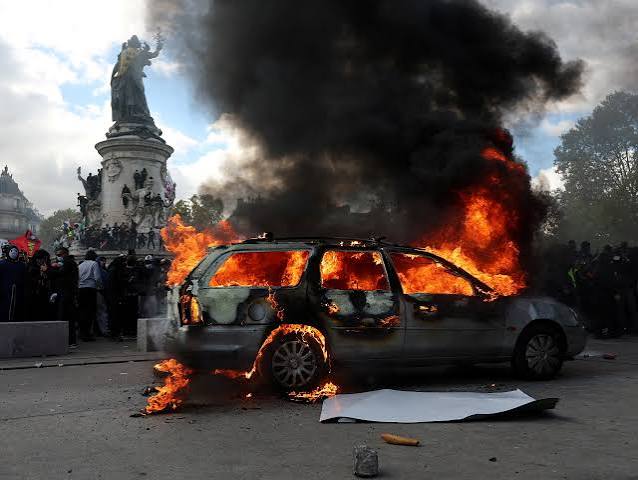
The end result is that anger and hate own some of us. Some of us want not only to beat the other side at the ballot box, and not only to beat the other side in the courts of law, and not only to beat the other side in the court of public opinion. They want to beat the other side literally. They want to kill, dismember and maim the other side.

They want another civil war.

Here’s my advice to those people. Your anger and hate will not produce a beneficial outcome for America.

Moreover, your anger and hate will not produce a beneficial outcome for you.

Look within. Anger and hate are not generated by the objects of your anger and hate; anger and hate come from inside you. And they are consuming you.

But when you talk about destruction, don’t you know that you can count me out.

Why on earth did Pretti bring a gun to a protest?

Alex Pretti did something foolish and illegal at the protest in Minneapolis. He interfered with law enforcement agents. There will be debates for days if not years about whether his illegal interference with the cops, the discovery of his gun, and his violent resistance justified them shooting him.

In considering that issue, I urge readers to consider it not from the warm comfort of their recliner while watching slow-motion videotapes interspersed with football highlights, but from the perspective of cops who are being taunted, spat upon, name-called, and threatened with being run over by organized protesters in the bitter cold, who suddenly discover in a scuffle that one of those protesters has a gun hidden in his pants.

(I’m glad to report that speculation that the gun was planted on Pretti by the cops appears to be disproven.)

But let’s put to one side the issue of whether the shooting was justified. Even now, we still don’t have enough facts to make that determination.

Let’s instead consider a threshold issue: Why did Pretti bring a gun?

Note that it’s not illegal in America for ordinary citizens to own a gun. And it’s not illegal to protest non-violently.

It’s not even illegal to bring a gun to a protest (despite claims to the contrary by a Trump Administration official).

In short, whatever illegalities Alex Pretti committed at the protest, he did nothing illegal in putting a gun in his pants and going there.

But why did he? Why did he hide a loaded gun in his pants?

Ordinary people carry guns routinely for lots of reasons. Most of those reasons are poor ones, in my judgment, but not illegal ones. Some ordinary people carry guns simply because it makes them feel secure or even masculine. Some ordinary people carry guns because it plays into boyish fantasies.

And a few ordinary people carry guns because they have legitimate reasons to think they may need them for lawful self-defense and they have the expert skill and excellent judgment to use them properly in that mode.

Pretti seems not to be in the latter category. Rather, he brought a gun to the protest because it made him feel secure or masculine or fulfilled boyish fantasies. Sadly, those feelings and fantasies cost him his life.

Before leaving this incident, there’s a tribal juxtaposition here that is worth noting. Conservatives typically defend and even celebrate owning and carrying a gun, while liberals typically decry the same. Conversely, liberals typically defend and even celebrate protests of law enforcement, while conservatives typically decry the same.

So, conservative and liberal tribalists are left in a quandary when somebody brings a gun to a protest of the immigration laws. Conservatives wonder, do we defend the gun-toter even if he’s protesting? Liberals wonder, do we defend the protester even if he totes a gun?

I like the fact that this quandary forces the tribes to think past tribal identities. Conservatives are forced to acknowledge that owning and carrying a gun may be lawful but there are circumstances where it isn’t smart or right. Liberals are forced to acknowledge that protesting may be lawful but there are circumstances where that, too, isn’t smart or right.

In short, judging an act often requires thought beyond merely identifying the tribe of the person performing that act.  A bit more thought and a bit less tribalism would be helpful these days.

In a remarkable coincidence, the Minneapolis man shot by ICE was carrying a standard ICE handgun

A Minneapolis man was shot and killed by ICE agents today, the second ICE fatality in Minneapolis in the last few weeks. Several interesting facts have emerged, and more will surely follow.

ICE reports that the man was armed.

The New York Times says that in a frame-by-frame analysis of video of the shooting, a phone is visible in the man’s hand, but no gun. Of course, that doesn’t mean he didn’t have one.

ICE does not claim that the man was brandishing the gun at any time. Again, that doesn’t mean he wasn’t, but one would expect ICE to report that fact if it were so.

The man was armed with a 9mm Sig Sauer P320 handgun. That’s not a rare gun. In fact, it’s fairly common. But it’s not a typical street gun. It’s a fine handgun, costing over $1,000. It’s a pricey piece for a guy who made a living as a nurse.

Reports are that the man had a gun registered to him. I have not seen any report as to whether it was a 9mm Sig Sauer P320.

Here’s the most interesting fact. The 9mm Sig Sauer P320 is also the standard issue for ICE agents.

Is Trump threatening war in retaliation for not being given the Peace Prize?

President Trump did some good things toward peace last year, for which I’ve congratulated him.

Among other things, he derailed the Iranian quest for nuclear weapons with which to make good their never-ending promise to destroy what they call the “Little Satan” of Israel and then the “Big Satan” of America.

He also supported Israel in its effort to contain Hamas and other Islamic terror groups. Israel’s efforts entailed some pain and suffering, but it was the only option to prevent another massacre like October 7, a massacre that Hamas explicitly vowed to repeat.

More recently, he decapitated a narco-klepto-regime in our own hemisphere, Venezuela, that had gotten very cozy with the outlaw states of the world and inflicted horrible misery on its own people.

But the Nobel Peace Prize Committee chose to give their prize to someone else. They have their reasons. One possible reason, which they will never admit to, is that they hate Jews, hate Israel, and hate anyone who helps the Jews of Israel secure their ongoing existence. So, Trump’s efforts to help achieve peace in the Middle East may have actually hurt his chances for the Peace Prize.

In any event, the Prize Committee has explained that the cutoff for “good deeds” considered in Committee determinations was long before Trump’s Middle East triumph. That seems fair enough. Deadlines are deadlines.

As for Venezuela, the actions by Trump to remove the dictator came not just after the cutoff, but after the Prize had already been awarded.

The person who won the Prize was the opposition leader of Venezuela who has literally risked her life for her people for years.

Before the Prize was awarded, she thanked Trump for his support. After the Prize was awarded, and after the dictator had been removed, she was effusive in her thanks to Trump.

In fact, in a visit to the White House last week, she offered the prize to Trump. He accepted it. The physical Prize in now in his possession.

However, the Nobel Committee has declared that transferring physical possession of the Prize does not accomplish a transfer of the Prize itself. The winner is and will always be the Venezuelan opposition leader to whom it was awarded.

It’s a little like an Olympic gold medal. If physical possession of a medal is transferred from the medal winner to someone else, by gift, sale, theft, accident or otherwise, the medalist is still the person who won it, not the transferee.

All this did not sit well with the President. He openly campaigned for the Prize. After it was awarded to someone else, he said again that it was he who deserved it. When he was offered a gift of it by the winner, he accepted the gift and now proudly displays it as if he actually won it.

That was all awkward enough. Over the weekend came the Peace Prize coup de grace.

Trump has been agitating to take possession of Greenland. That’s not as crazy as it sounds but, as always, Trump has pursued this latest prize ham-handedly. He’s even made noises about a military invasion.

The current owner of Greenland is Denmark. They’ve held the place for roughly a thousand years – since long before Columbus sailed. The Danes are not happy with Trump’s invasion threat. Nor is the rest of Europe.

As a general matter, I have little geopolitical sympathy for the Danes or for the rest of Europe. They’ve been freeloading off America’s defense for three generations. And all the while, they impugn us with a moral and cultural smugness that is hard to bear.

The Greenland matter will get worked out. As usual in Trump spats with foreign powers, it will involve some gain for America (probably not outright possession of Greenland, however). Whether that long-term gain will be worth the short-term (hopefully) alienation of allies is something history will judge.

Meanwhile, we have negotiations by public tweets and non-confidential texts. In a text over the weekend, Trump told the Norwegian Prime Minister:

“Considering your country decided not to give me the Nobel Peace Prize for having stopped 8 Wars PLUS, I no longer feel an obligation to think purely of Peace, although it will always be predominant but can now think about what is good and proper for the United States of America.”

This is weird on several levels. First, there is the petulance of a sore loser. That needs no elaboration.

Second, the President seems to be suggesting a substantive change in America’s priorities and policy simply because he personally did not win the Peace Prize derby. He suggests that before losing, he had been thinking “purely of peace” but he “can now think about what is good and proper for the United States.”

Wait a minute! He’s been preaching “America First” for years. Now, we find out it’s America First only since last fall when he lost out on the Peace Prize. If he’s awarded the next Peace Prize (fat chance!), will we be back to something other than America First?

Finally, there’s the irony of it all. The President seems to be willing – nay, he seems to be begging – to be manipulated: “Give me the Peace Prize, or I’ll wage war on Greenland!” Is that an effective pitch for a Peace Prize?

Maybe I’m missing something. But if this is “the art of the deal,” then someone is not playing with a full deck.

Colorado ski conditions are worse than ever. Yay!

Switzerland ski resort last February. Places in Colorado this year are worse.

OK, it’s not technically true that ski conditions right now are worse than ever. The snowpack at Colorado ski resorts today (Jan. 16, 2026) is not worse than the snowpack in, say, an average August.

But for this time of year, the Colorado snowpack is officially the worst on record.

That’s right, since the time they’ve been keeping records of the Colorado snowpack, this is the lowest it’s ever been for mid-January. It’s barely half the normal. The forecast for the next ten days is more of the same – warm and dry.

My eyes confirm all this. The snowpack on top of Vail Pass at 10,662 feet is barely over my shoe tops.

In the town of Vail itself, about 2,700 feet lower, there’s bare dirt where there’s supposed to be deep drifts. The kitschy Norman Rockwell style sculptures littering Vail which are supposed to be buried under the winter snow are fully visible. That’s a bad thing; that stuff shouldn’t be visible even in the summer.

The ski resorts try to hide all this bare dirt with snowmaking equipment. Not by parking the equipment on the bare slopes, but by using it to make artificial snow that they spray over the slopes at night.

But that doesn’t work very well. Even a modest-sized resort of three thousand acres can cover only a fraction of the slopes with artificial snow. Moreover, they can’t cover the slopes deep enough to safely bury rocks and tree stumps. They instead succeed in burying such obstacles just enough to conceal them with a half inch of artificial snow – until the customer hits one.

As for the challenging terrain of blacks (lower case “b”), double blacks and extreme stuff, forget about it. They won’t be open at all this season, or at least not safely. The open terrain at Copper Mountain right now is barely a third of their total terrain. In a normal mid-January, it would be more like 90%.

The daily lift ticket price at Aspen is $254. That amounts to about $1.00 per snowflake.

But cheer up. It’s only about ten cents per a-hole.

I see two things to cheer about amid this skiing catastrophe. First, driving is great. The roads are snow-free. In fact, they’re bone dry, even over the high passes.

As I mentioned in a recent piece, the Catch 22 of skiing is that when the skiing is good because slopes are snowy, you can’t get there because the roads, too, are snowy. And when the driving is good because the roads are snow-free, the skiing is bad because the slopes, too, are snow-free.

Moreover, traffic volume is down. Skiers are staying home because they know that, since the roads are great, the skiing is terrible.

The second good thing about the skiing catastrophe is that it allows Colorado to be, once again, something like Colorado – the Colorado I grew up in. The Colorado of the Ute Indians and Zebulon Pike and Molly Brown. OK, maybe John Denver. The others were all before my time (but not by much.)

Skiing, you see, ruined Colorado. And I say that as a person who used to ski upwards of fifty days a year, including significant backcountry winter ascents coupled with skiing descents.

Resort skiing has nothing to do with nature. A ski resort is like a mountain converted into an expensive amusement park full of no-nothing morons who ski the way they drive – too fast for their ability and with little regard for others.

A few more years of great winter driving conditions, and Colorado might again be Colorado. We might get rid of the skiers from out-of-state.

Now if only they would take with them the wolves from British Columbia, the potheads from California, and the Democrats from all over . . .