Here’s how the First Amendment debate over governmental prohibitions on free speech has been framed:
- The Democrats want the government to prohibit people from spreading “disinformation” that they don’t like.
- The Republicans correctly point out that the First Amendment, in general, prohibits such a prohibition.
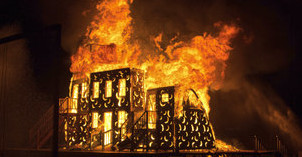
- The Democrats then respond that the First Amendment does not apply because disinformation is like falsely shouting FIRE in a crowded theater – people’s safety is at risk.
- Republicans then point out that the analogy between political speech and falsely “shouting FIRE in a crowded theater” is rooted in a Supreme Court case dating back to WWI. In that case, the Court upheld a restriction on speech in opposition to the wartime draft. The Court decided that political speech opposing the draft was like falsely shouting FIRE in a crowded theater, in that it could cause America to lose the war. It was a stretch, but that was the Court’s analogy.
- But, say the Republicans, that Supreme Court case was later rejected during the Vietnam War in 1969 (a much less popular war than WWI) and was essentially overruled. Political speech today clearly is protected by the First Amendment – even if it’s highly unpopular or even untrue.
So far, so good. But many Republicans have gone on to imply that the Supreme Court’s overruling of the “shouting fire in a crowded theater” analogy means that the First Amendment gives people the right to falsely shout FIRE in a crowded theater.
This was a mistake for two reasons. The first is strategic and the second is legal.
The strategic reason is that contending the First Amendment gives people the right to say things to cause an immediate, panicked mayhem violates common sense and tends to discredit the First Amendment. Casual thinkers start to casually think, “Gee, if the First Amendment gives people the right to cause dozens of trampling deaths in minutes, just to watch people get trampled, then maybe the First Amendment is not such a good thing.”
The legal reason it’s a mistake to imply that the Supreme Court ultimately decided falsely shouting FIRE in a crowded theater is protected by the First Amendment, is that the Supreme Court never did.
Rather, what the Court held in that later case was that political speech is simply not the same as falsely shouting FIRE in a crowded theater. The latter is false and may produce immediate maiming and death, while the former is a political statement which might be false (or might not be) but is not likely to produce immediate maiming and death.
If the Supreme Court is ever confronted with a case where someone is prosecuted for causing immediate maiming and death by falsely shouting FIRE in a crowded theater, I am confident that the Supreme Court will not decide that his grotesque mischief is protected by the First Amendment.
But, you say, isn’t the First Amendment absolute?
No, it is not. For example, there is no First Amendment right to tell material lies in the sale of a product – to engage in false advertising. The First Amendment does not give a business the right to falsely state that their snake oil has cured cancer in 29,385 people if it hasn’t, or falsely state that customers can return goods for a cash refund if they can’t.
There is no First Amendment right to state falsehoods on your tax return. You can’t tell the IRS that you earned X dollars when you really earned X + Y dollars, as Hunter Biden has learned to his dismay (along with thousands of other citizens over the years, notoriously including Al Capone).
There is no First Amendment right to lie under oath. That’s perjury, and it’s a crime – and it’s not protected by the First Amendment.
There is no First Amendment right to defame a person, as several media outlets learned when they falsely characterized a teenager as racist because it suited their narrative.
There is no First Amendment right to make or distribute child pornography.
But most other speech is indeed protected by the First Amendment, particularly political speech. Saying that Donald Trump colluded with the Russians, or that Barack Obama or Vladimir Putin is running the White House, or that the 9/11 attack was orchestrated by the CIA or by aliens, or that your uncle was eaten by cannibals, is all generally protected as political speech – whether it’s true or not.
Such political speech is not the same as shouting FIRE in a crowded theater to cause an immediate mob scene of trampled human bodies.
Whether there’s a political price to be paid for false speech is, of course, a separate issue. Sometimes there is, and oftentimes there’s not. Either way, that’s not a legal matter, but a political matter.
Our nation stands nearly alone in the protections of the First Amendment. In most of Europe, you can be sent to jail for “hate speech” that a judge finds offensive. And many people have been. That is not the law in America, yet.
The Republicans have by far the better of this First Amendment debate, but they’ve expressed their argument poorly by implying that you can indeed shout FIRE in a crowded theater.
The proper argument is: Granted, you can’t falsely shout FIRE in a crowded theater, but political speech is nothing of the sort.
Glenn K. Beaton practiced law in the federal courts, including the Supreme Court.
 the Aspen beat
“There is no First Amendment right to lie under oath. That’s perjury, and it’s a crime – and it’s not protected by the First Amendment.” Oh really? That is what the Clinton impeachment was about but it is burned into the public’s mind as prosecuted for sex and Hillary has lied profusely to no consequence and those who falsey accused Trump, disgraced FBI guy and his lawyer squeeze, they perjured themselves and just got big dough. Lying seems to pay the right people while regular schleps get the book.
The fact that Clinton was not prosecuted for perjury (though he did lose his law license forever) does not mean that perjury is not a crime. It simply means that prosecutors have discretion in which crimes to prosecute.
You correctly point out that prosecutors will seldom exercise that discretion if the criminal is an ordinary schmuck.
There’s a lot of interwhinage about govt. censorship, but a lot of websites don’t want to hear from the public either, not really. 4th estate could stand to do a rhetoric self-check, now and again.
You can indeed shout “Fire!” in a crowded theater whether there is a fire or not. It all just depends upon the circumstances.
If you are in a crowded theater and you smell and/or see smoke, then based upon the notion that where there is smoke there is a fire, then you must shout “fire!” in order to alert everyone to evacuate the theater. If there is an actual fire, then of course shouting “fire!” makes complete sense.
What if you’re an actor on stage portraying say a French officer in Les Miserables? The actor then shouts “fire!” to a squad of soldier actors firing their rifles upon the Parisian barricades erected on the stage. Nope. No crime here either. Yet somebody just shouted “fire!” in a crowded theater when there was no fire.
But all of this is too academic, and this “you cannot shout fire in a crowded theater” is just so cliche and tiresome. Let’s at least have some fun and replace the four letter word FIRE with another four letter word instead.
I always liked the 1958 movie “The Blob” so let’s at least have some fun and say “you cannot shout Blob in a crowded theater.” Or perhaps you can indeed “shout Blob in a crowded theater” especially if you are Steve McQueen.
Steve McQueen … now there was a badass, an icon of American manhood. Every red-blooded American woman wanted him … and every red-blooded American man wanted to be him. Beware of the Blob! The Blob may just be that 300 lb. cat lady sitting right behind you in the cinema. 😼