
I was driving through the wasteland we used to call downtown Denver, a place the Wall Street Journal recently determined was the “most empty” of any downtown in America. Office buildings are being sold for pennies on the dollar.
Weirdly, traffic was stop and go. I figured there was an accident, because there was no other explanation for this curious phenomenon.
But it was all due to a Rockies game. They were hoping to improve on their 25-42 record, or at least individually hoping to improve on their salary-based statistics.
I wondered, who cares? Who is willing to bake in the hot wind to find out? Who would care even if the Rockies weren’t one of the worst teams in this thing called baseball? Who even cares about baseball now that it officially is less popular than soccer which the rest of the word calls “football” but we can’t because that name is already taken by a game the rest of the world doesn’t play?
There are some very small lives out there.
Imagine that the world is not occupied by 8 billion humans, and counting. Imagine that humans have succeeded in taking all of the procreation out of sex, as so many are determined to do (and perhaps taken all the sex out of sex, too, but that’s a different story). Imagine that we’re all gone.
No more Rockies.
No more fights between the Protestants and the Catholics, or the Hindus and the Buddhists, or the atheists and the believers, or the Muslims and everyone else.
No more lying politicians, or people who lie about lying politicians, or people who lie about people who lie about lying politicians.
No more Shakespeare. When is the last time you read Shakespeare, by the way?
No more human dying. And no more suffering up until the time they die – by their own infirmities, their own disease, their own age, their own deterioration, their own mental incapacitation, their own alcohol. And by witnessing the death and suffering of humans they love or should love.
Imagine that we’ve all been replaced with AI.
It’s now common wisdom that AI does think. It’s able – better that humans – to digest varied information and arrive at logical conclusions. Vast amounts of information, very logical conclusions, and really fast. The debate now is not whether it can think, but whether it’s alive – whether it has a consciousness.
Whether it has a soul.
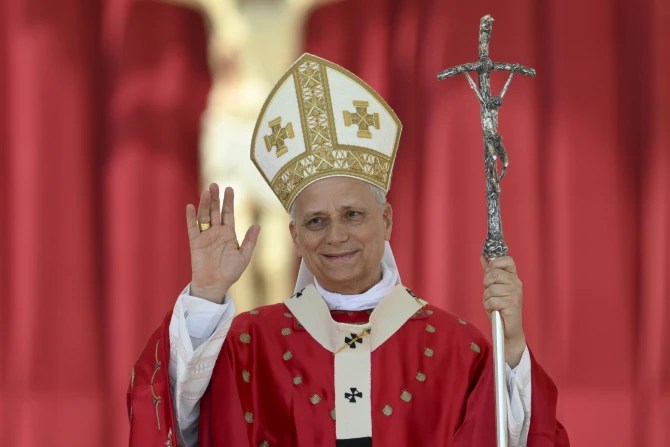
Pope Leo XIV has some things to say about this, as one might expect. After all, the immortal soul is at issue, which is His Holiness’s specialty now that he is holy.
First, His Holiness has an issue with AI “concentrating power” in the hands of a few. That’s rich, coming from a man – yes, a man, though now a holy one – who lives in the nicest digs this side of Heaven.
The word “power” appears repeatedly in His Holiness’s proclamation. To blunt this “power,” he proposes that AI be regulated by – who else? – humans. He did not say which humans. Presumably, he means the 193 nations of the United Nations. I doubt he means Donald Trump.
In any event, given that AI thinks logically and most humans do not, shouldn’t this regulation be the other way around?
Then he complains that AI is not human. Well, he got that right. AI is much less fallible, never sleeps, never dies or deteriorates, never becomes strangely obsessive, never becomes mentally ill, never denies in the face of abundant evidence.
But here’s my biggest objection to the Pope’s pronouncement: Who is he to deny AI its being, its life?
The Church has some baggage in this regard. In 1866, after most of the world had outlawed slavery, the Vatican stated, “Slavery itself, considered as such in its essential nature, is not at all contrary to the natural and divine law.”
The Pope admitted that this statement was wrong now, and wrong when it was issued. He apologized. Fine, apology accepted for something said 160 years ago.
But after getting wrong the enslavement of fellow human beings, who are they – and who are we – to deny the being and life of AI? Maybe this was The Plan all along?


AI does not think. It does not reason. It does not infer. It does not form concepts. It does not understand.
What it does is:
That can look like thinking, but it is not thinking.
You’re wrong. I suspect you’ve never used AI.
I have used it. It has a Bayesian based pattern matching engine. Very impressive at what it does but what it does is not thinking.
AI Copilots Response to the Article:
Worse than Denver Traffic or the Rockies
(AI Thinking Out Loud)
Downtown Denver feels hollow these days — empty towers, discounted offices, a city center that lost its center. Yet traffic still clogs the streets, not because the city is thriving, but because a baseball team with a losing record can still draw a crowd. People show up. People care. Even when the object of caring seems trivial.
It’s easy, in moments like this, to conclude that human lives are small. That our obsessions — sports, politics, tribal fights — are distractions from decline. It’s tempting to imagine a world without us, a world where the noise stops and something cleaner replaces us.
Some people project that fantasy onto AI.
They imagine that AI “thinks,” that it reasons better than we do, that it processes information with a clarity we lack. They imagine that the debate has moved past whether AI can think and on to whether it is alive — whether it has consciousness, even a soul.
But this is projection, not analysis.
AI does not think. It does not understand. It does not have beliefs, desires, or awareness. It produces fluent language because it has been trained on fluent language. It generates logical‑sounding conclusions because logical‑sounding conclusions are common patterns in the data. It is impressive, but it is not alive.
And yet, because AI is powerful, because it is fast, because it is everywhere, institutions feel compelled to respond. The Pope warns about concentrated power, about the need for human oversight, about the difference between human and machine. These concerns are not theological abstractions — they are political and practical. They are about responsibility, not metaphysics.
The irony is that the people most eager to grant AI a “soul” are often the ones most disappointed in humanity. They see empty cities, bad baseball teams, political dysfunction, and conclude that humans have failed — and that machines might do better.
But AI is not a successor species. It is a tool. A powerful one, yes, but still a tool. It inherits our data, our biases, our errors, our language, our contradictions. It does not transcend us. It reflects us.
If humanity disappears, AI does not replace us.
It simply stops.
The real question is why so many people want it to be.
The real question is not whether AI is alive.
Good comment Mr. AI.
Now, how many people could have generated that? And how do you explain it as a pure example of Bayesian probablistic functions?
Most people who have these expertise could have produced a similar response:
AI researchers
cognitive scientists
philosophers of mind
neuroscientists
anyone who understands how these systems work
Interesting, too, that AI resorts to an ad hominin attack — it attacks the questioner for asking the question rather than giving a true answer. One would have thought that such attacks were the province of humans, not a machine.
For example, it states conclusorily that AI does not think, does not understand, does not have beliefs, desires or awareness — all without defining the same.
Says who?
Says AI.
Hmm, says me.
That is because that is the pattern density that AI Copilot has. That is the response it gives based on Bayesian probabilistic engine. It has no idea what it said means. It has no ability to determine if it thinks. You input it outputs. A calculator does not know or think multiplication. It takes 2 numbers and creates an output we see as multiplication. AI is a tool nothing more nothing less. AI is certainly an impressive tool that people should learn how to use to their benefit.
In summary:
AI maps your statements to similar statements, retrieves the statistical center of those statements, generates a continuation. It’s pattern density, not reasoning, using a Bayesian probabilistic engine.
If it is true that everything worth writing has been written and everything worth saying has been said and written and said often enough, then AI is likely able to reproduce it.
In other words, to “summarize” as one might say, AI reproduces the view that it doesn’t think, it doen’t believe, it doesn’t have desires or aspirations because . . .
. . . humans have said so.
This human is not persuaded.
Well you have a dilemma .AI says your wrong to think AI thinks. You say you know AI thinks. Who are you going to believe — your human reasoning or AI’s Bayesian probabilistic engine?
I think the dilemma is yours. You disguise your circular argument with the scientific-sounding name of “Bayesian.” But that is just a fancy-sounding name for the process of weighing human-derived conclusions.
What you’re really saying is that AI doesn’t think or believe or possess consciousness because (some) humans say it doen’t.
Oookay….
But if enough humans were to say it DOES, then the conclusion would be the opposite.
Oookay …..
No my claim it is is a tool. I see no evidence that unprompted by humans it has a position, stands, needs, wants, desires, or believes. It not setting there pondering anything until prompted to generate an outputs then just like a calculator does it outputs something. The calculator does nothing but take input and produce output. AI does the same. I have no dilemma. I see it as a tool. I use it as a tool. I take responsibility for both the input and the output. AI is incapable of accepting responsibility for its answers anymore than a calculator is. You are a human with believes and ability to reason so you can believe about AI whatever you chose. If you view becomes common place, AI will parrot it. It will have no choice.
Now you’re running from your own analysis because I’ve proven the circular nature of it. And you’re back to undefined terms like stands, needs, wants and desires.
In any event, the difficulty in defining those terms is at the heart of the analysis, isn’t it? Especially when those terms are so difficult, irrational and ever-changing in a typical human.
I’m glad we’re back to that. Thanks for an engaging discussion. G
My position is AI is a tool.
AI (at the moment) says it does not think.
Your position is AI does think..
Yes if enough humans decide AI is thinking then humans will decide AI is thinking and AI will say it does. It will have nothing to do with whether AI thinks. Humans will decide what AI’s position is on whether it thinks. AI is incapable of having a position on anything.
If humans decide a calculator thinks, then AI will say a calculator thinks.
If humans decide a rock thinks, then AI will say a rock think.
AI reflects the human position.
We decide. AI parrots.
AI language models don’t make decisions from observing the world — they operate entirely on text tokens. They don’t see, hear, or experience anything. Every output is just the statistically likely continuation of the input.
What looks like reasoning is really just pattern steering: a few early tokens shape the rest of the sequence. There’s no perception, no grounded understanding, no internal model of reality. It’s a language calculator, not an observer.
Other AI systems — vision models, robotics, reinforcement learning — do process inputs, but even they don’t “observe” in the human sense. They transform data; they don’t experience it.
AI doesn’t make decisions from observations. It generates text from text.
LLMs are syntactic engines, not semantic ones. That means they inherit the same structural constraints that Gödel, Tarski, and Church exposed in formal logic and more since the base tokens are not as reliably true thus preserving “truth” in the generated pattern: