Glenn K. Beaton is a writer and columnist living in Colorado. He has been a contributor to The Wall Street Journal, RealClearPolitics, Powerline, Instapundit, Citizen Free Press, American Thinker, Fox News, The Federalist, and numerous other print, radio and television outlets. His most recent book is "High Attitude — How Woke Liberals Ruined Aspen"
Extrapolating from Glenn Youngkin’s win in the Virginia governor’s race, I predicted a year ago that the GOP would flip about 46 seats in the House in the midterm elections, and two or three in the Senate.
So here we are a year later, on the verge of those midterms. How’s my prediction holding up?
Quite well, thank you. The Real Clear Politics aggregation of pundit predictions says the GOP will pick up between 12 and 47 seats. The first – the 12 seat prediction – is clearly from a transexual-grooming Democrat pot legalization pundit with purple hair who just got canceled a tenth of the $100,000 student loan that THEY took out for THEIR gender studies degree, while the last – the 47 seat prediction – is obviously from someone who thinks clearly but about 2% too optimistically. Probably a Republican.
As reported in numerous outlets including this site, a man came forward last week alleging that he blackmailed the Democrat candidate challenging conservative firebrand Lauren Boebert for Colorado’s Third Congressional District, while the candidate was a city councilman in Aspen. The two daily newspapers – both overtly liberal – refused to run the story even while numerous citizens brought it to their attention.
The Dem candidate is Adam Frisch, and the Congresswoman he is campaigning to unseat is Lauren Boebert. Frisch presents himself as a high-minded moderate intellectual, but his initial broadcast email drumming up support name-called Boebert, in junior high fashion, “Boebert the Betrayer.” His campaign has gone downhill from there.
Boebert’s district went for Trump by over 9 points in the 2020 election, so Frisch has an uphill battle, which just got steeper.
The story in Glitter Gulch this week is one of blackmail, video cameras, small-time and big-time politics, sex, corruption and, of course, money. But the local newspapers refuse to report the story, apparently because they want a loser to win.
Here’s the story, as reported initially in Breitbart and now picked up by half a dozen outlets.
Democrat Adam Frisch is running to unseat conservative firebrand Lauren Boebert in Colorado’s 3rd Congressional District. Frisch was an Aspen city councilman for eight years, stepping down in 2019. According to an article in the Aspen Times at the time he stepped down, “some constituents thought he oscillated, or that he voted whatever way the political winds were blowing.”
Frisch’s response was “I was being pragmatic and people appreciated that . . . But people saw me making the sausage in my head and thought I was being wishy-washy. … I would’ve been more effective if I talked less.”
One of those constituents has offered an alternative reason for Frisch’s wishy-washy, pragmatic, sausage making. He says he blackmailed Frisch for his, um, oscillating.
The Supreme Court’s abortion decision was leaked before being issued, apparently in an effort by the liberal wing of the Court or their clerks to pressure the majority to reverse themselves. The Chief Justice in a rare press release condemned the leak, as did other conservative justices (no liberal justice did) and promised an investigation by law enforcement.
That was five months ago. If the investigation concluded that it’s impossible to identify the leaker, we’re entitled to see the report. If the investigation did successfully identify the leaker, we’re entitled to know who it was.
But we’ve heard crickets. The Chief apparently decided it was more important to just move on than to bring the matter to light. The leak damaged the Court badly enough, he may have concluded, and he doesn’t want to damage it even more by identifying the leaker – something that would cry out for an impeachment of a Supreme Court Justice.
If my theory is correct that the Chief is protecting a liberal Justice of the Court (I doubt he would go to such lengths to protect a mere clerk of a liberal Justice) then a storied institution charged with administering justice at the highest level in the land is consciously shirking its duty to administer justice in its own institution – in the interest, ironically, of preserving its status as an institution of justice.
With this on my mind, a headline in the Washington Post last week caught my eye. In their news pages – not their opinion pages – a story appeared under the headline “Supreme Court term begins amid questions about its legitimacy.”
Ah, I thought, WaPo is exploring this same story that is on my mind – that the Court is covering up the identity of the leaker to avoid a bloody judicial impeachment and Constitutional crisis.
I was wrong. The “legitimacy” issue in the WaPo story was that the Supreme Court had ruffled liberal feathers lately with decisions they don’t like. For example, the Court stated that abortion is not in the Constitution and therefore is not a matter for judges to decide, and that the power of administrative agencies is limited to what Congress delegated to the agency.
Democrats don’t like these decisions, both because they don’t like the particular results and because, more broadly, they don’t like shifting power back to the people. Democrats favor policies that are to the left of the people. They can’t enact such policies democratically because they would get voted out of office, and so they let unelected judges and administrative agency bureaucrats do their dirty work.
Leave it to the Democrats to charge that judges risk their legitimacy not by seizing judicial power, but by relinquishing it to the people and the people’s elected representatives.
Put this in historical perspective. For two generations, up until a few years ago, the Court was issuing decisions that I didn’t like. For that, however, I never questioned whether the Court was legitimate. I simply questioned whether its decisions were correct.
That’s an important distinction. An incorrect decision still needs to be followed. An illegitimate decision, by implication, need not be. Roe v. Wade was an incorrect decision as a matter of Constitutional law, but conservatives never argued that it cast doubt on the legitimacy of the Supreme Court. They simply argued that it was incorrect, and so should be overturned. In the meantime, it was the criticized but undisputed law of the land.
The left plays by a different set of rules. People who disagree with them are not merely incorrect; they’re deemed illegitimate. If such people are students, they get booted out of school; if they’re parents at school board meetings, they get arrested and investigated by the FBI; if they’re professors, they get fired even if they’re tenured; if they’re opinion columnists like me, they get censored; if they’re speakers, they get shouted down; if they’re politicians, they get name-called “racists,” “deplorables,” and “semi-fascists.”
Nutjobs in the radical left hear these things and conclude, apparently as they are supposed to, that conservatives should be hunted down and eliminated – physically if necessary. Political violence is escalating. Most of it is against conservatives, and it’s rare to hear the left – or even mainstream Democrats – condemn it.
If the persons with whom the left disagrees happen to be Supreme Court Justices, their legitimacy, too, gets questioned – after their homes get marched upon and one of them is the target of an assassination attempt.
As bad as physical violence and threats are, the deliberate undermining of the authority of the Supreme Court is worse. We are careening over the guardrails and into the day when the left simply announces – in the guise of news stories in prestige newspapers and not just opinion pieces – something like “People question whether Supreme Court rulings should be followed.”
The editors and reporters at WaPo have crossed a line. The line they’ve crossed is not expressing an opinion with which I disagree. They have a right to their opinions, and I’ll fight to preserve their right to express them – even though they conspicuously don’t fight to preserve my right to express mine and in fact do whatever they can to censor mine.
Where WaPo starts to cross the line is where they express their opinion not in their opinion pages where opinions belong, but in their news pages.
And then WaPo gets way over the line with the substance of their opinion-in-the-guise-of-news. The substance of their opinion, expressed as news, is that the Supreme Court is illegitimate simply because the Court is issuing decisions that WaPo doesn’t like.
So, remind me: Who’s the threat to democracy?
Glenn K. Beaton practiced law in the federal courts, including the Supreme Court.
Denver has its share of vagrants. The rule is evidently that you can illegally camp on the sidewalk and poop in the gutter until a lot of people complain. Once dozens or hundreds of people complain – they don’t publish what the requisite number is – the city will tell the vagrants they have two weeks to shuffle down the road to trash some other site.
What the vagrants then do, naturally, is leave for a few days and then come back to the same place again, where they stay again until enough people complain again and they get the two weeks’ notice again and then they leave for a few days again. I’d say it’s a case of rinse and repeat, except these feral humans have not seen a rinse in months.
The vagrants are offered shelter in several vagrant shelters, but typically refuse to go there unless it gets very cold, which in Denver it fortunately sometimes does.
The city council sees this as a problem, but not in the way you would assume. The problem they see is not that there are too many vagrants panhandling and pooping up the downtown. It’s that there are too few.
About ten years ago, in a piece written for Breitbart, Thaddeus McCotter recounted the tale of a man trying to sell his ’67 Plymouth Barracuda. Having no luck, he finally left it on the street with the key in the ignition and a big sign announcing “Free!” The next morning the ‘Cuda was still there, with a message scratched into it with the key, “Don’t nobody want this shit.”
McCotter followed with the point that politics divorced from popular culture sells about as well as this hapless vehicle; further, that Republican politics is Exhibit A. Make that “Model A.”
Of course, what neither Andrew Breitbart nor McCotter — with their mantra that politics is downstream from culture — could have fully foreseen is the degree to which popular culture would become tainted by unpopular culture which few people wish to be “downstream” from, any more than from raw sewage.
I’m not convinced that wealth disparity is a problem. I do firmly believe, mind you, that the world is rich enough now that no one should starve or freeze to death, at least not involuntarily, and that the injured or diseased should be given medical treatment.
In America, we’ve achieved that, and more. Poor people in America not only have plenty to eat (as is evident from their physiques) but also have automobiles, air conditioning, color cable television, smart phones, and free tuition.
The wealth disparity complaint is not about starvation or freezing. It’s the complaint that some people have far more luxuries than others. Some have fancier cars or more of them. Some have more frequent European vacations. Some have televisions in the bathroom. Some fly First Class on their own dime. Some drink not just wine – everyone drinks wine now – but the expensive kind.
Some of these people indisputably have more luxuries than they need. But so do the poor people, just not as many.
First Lady Jill Biden asked to be called “Doctor” after her husband was elected president. She’s not actually a doctor. She’s also not nearly as smart as one and so she thought the title made her look like she was, at least to stupid people who don’t know better.
The justification for “Doctor” Jill’s request to be called a doctor was she has an EdD. That’s a doctoral degree in education. It’s a little like a PhD but much easier to obtain. No EdD in the entire universe could pass an introductory college chemistry or physics course.
I suppose I could ask to be called a “doctor” too, since my law degree is a J.D., a Juris Doctor, but my friends would laugh at that request, and rightly so.
“In the popular television series Stranger Things, the “upside down” describes a parallel dimension containing a distorted version of our world. (See Stranger Things, Netflix 2022). Recently, Florida has seemed like a First Amendment upside down. Normally, the First Amendment bars the state from burdening speech, while private actors may burden speech freely. But in Florida, the First Amendment apparently bars private actors from burdening speech, while the state may burden speech freely.”
–U.S. District Judge Mark Walker
So goes the opening paragraph of the ruling by the referenced judge enjoining the enforcement of a law recently passed by Florida’s elected representatives prohibiting employers from imposing political indoctrination on their employees.
I practiced before federal court judges including the Supreme Court Justices and respect almost all of them, including Democrat appointees. When I saw a news account quoting this language, I assumed it must be from a state court judge, not a federal court judge.
James Weatherly’s lyrics having been written half a century ago, one can only wonder what “the man” might think of today’s L.A.
It probably doesn’t matter. After all, it was over a century and a half ago that the town of Concord, Massachusetts, with its whopping population of about 2,200, had grown too much for another man, who sought his simpler place and time on the shores of Walden Pond.
Thoreau’s celebrated experiment was little more than a grand and somewhat phony gesture by a self-impressed social misfit with a Harvard education. Nevertheless, he used the occasion to fire off some trenchant commentary about a social and economic system in which “The mass of men lead lives of quiet desperation.” Embraced by liberal academia, his book would sell like hotcakes in the 20th century.
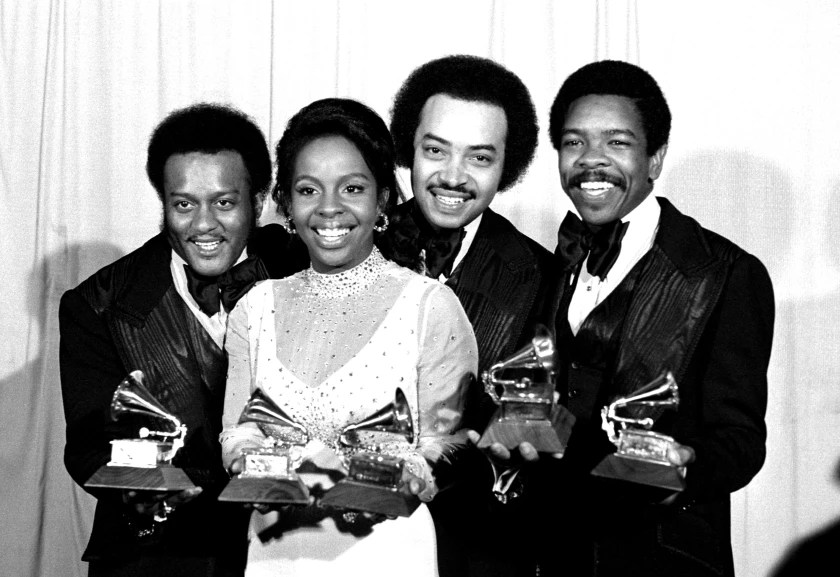
But back to the song by Gladys Knight and the Pips — with its all-American roots in R&B, Doo-wop, Country, and one other musical genre to be touched upon shortly.
The theme is familiar. Indeed, it’s not a stretch to say that the very creation of America in the European mind was an effort to catch the midnight train to Georgia. Yes, many came in the pursuit of wealth, even empire, but the tired, huddled masses were dreaming more modestly of a plot of earth and the intangibles that came with it. In their most purely idyllic fantasies, they imagined themselves as De Crevecoeur’s “new man,” an innocent new Adam dissociated from the historic past, dwelling in a paradise regained.
Some, like Brigham Young, claimed to have reached this place. More sober minds have acknowledged that the “new” man brought the old history with him — indeed, his descendants are up to their necks in the continued making of that history, some of it more dreadful than ever — and that it’s become nigh unto impossible to find a nook or cranny of America’s geography in which “Georgia” can be found. The TV series “Yellowstone,” for example, depicts a montane pastoral idyll filled with men and women whose desperation is far from “quiet.”
Back to the song — not that we should necessarily find the wisdom of the ages in a piece of pop music.
The first thing to understand is that it’s not about “the man,” his defeat and retreat, nor is it about Georgia. Rather, its subject and protagonist is the woman whose voice we are hearing, and who also will be boarding that train — not because her life is quietly desperate, but because “I’d rather live in his world, than live without him in mine.” It’s the principal declaration of the song, and presumably it hasn’t come without some internal conflict.
Perhaps she hadn’t been reading Betty Friedan and Gloria Steinem, but surely their question, which was blowing in the zeitgeist, had entered her mind — Was she going to Georgia only to raise this guy’s barefoot children and braise collard greens on the cook stove? Not well played, girl.
But if she is still conflicted, you’re not hearing it in her voice, which is positive, forward-looking, uplifted. It’s almost like we’re listening to a piece of Gospel music, which in fact happens to be the other major formative influence on this song. (Listen to it HERE and tell me you can’t hear The Pips sounding an “Amen” after almost every musical phrase.) Now capitalize the two male pronouns — “I’d rather live in His world, than live without Him in mine” — and you’re listening to two thousand years’ worth of Christian saints. Convert these words to female pronouns, and you’re thinking like a medieval chivalric knight about the secret lady of his heart, knowing that, socially, he can never live in her world, but will remain committed to living for her world until the day of his death.
Pretty noble stuff. “He who would lose his life for my sake shall find it.” This woman’s happiness does not lie in Georgia, but rather in her commitment to another person who appears to offer her something more than material comfort in Madonna’s material world.
Fifty years later we find ourselves among ideologues often characterized as utopians — “Great Reset,” New World Order types who feel that, if only we can erase past history and present values, together with the kind of people and thinking that created them, blend Western religion into a more universal spirituality that honors the Earth and no longer subjects it to “dirty,” non-renewable sources of energy, and liberate ourselves from “gender” stereotypes and so on, then behold The New Georgia and truly new men and women!
I don’t think the Gladys Knight persona would be buying it. You want “Georgia”? Just get on the train. It’s nearly midnight, when one day comes to an end, and a new day begins.








 the Aspen beat