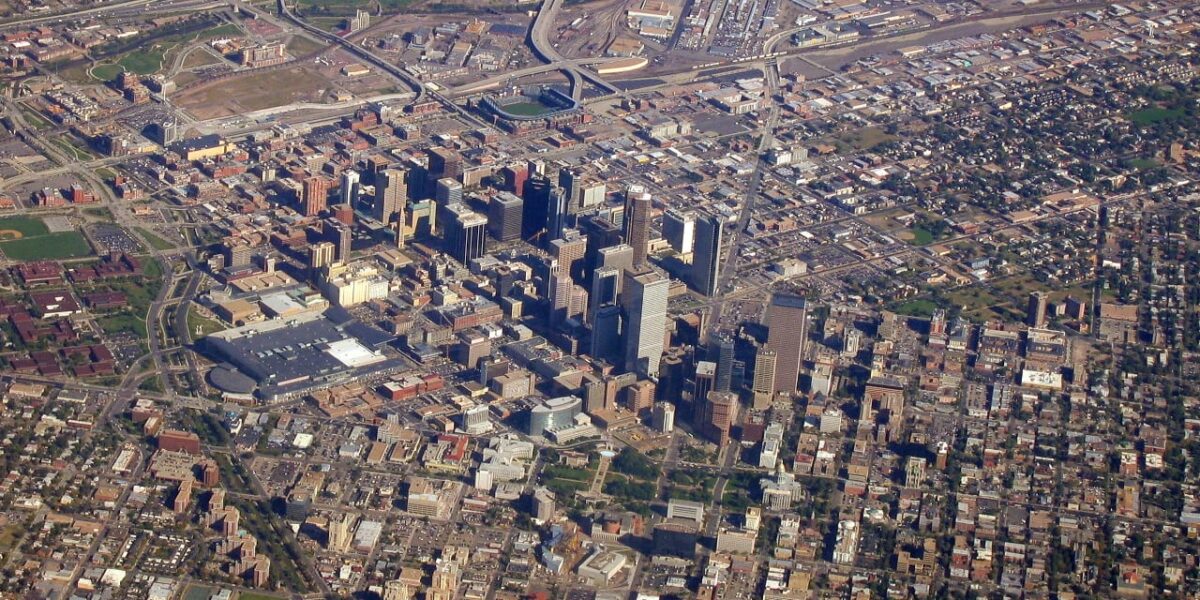
Already a quarter billion in the hole, woke Denver wants to keep digging

Denver is in financial trouble. They ran a $50 million deficit this year, which is projected to balloon to $200 million next year. Denver’s expenses are systematically exceeding its revenues.

Real-world entities would address this problem with a combination of (1) increasing their revenues and (2) decreasing their expenses.

But Denver is not a real-world entity. It’s a government entity. It plans to do what governments do in government-world: It plans to borrow money.

A lot of it. They’re putting on the ballot a bond proposal amounting to almost a billion dollars. By the time the bonds are paid off with interest years down the road, it would amount to nearly two billion.

The politicos have the gall to proclaim that this does not amount to a tax – as if the money to repay the near-billion of borrowed money plus the near-billion of interest on it, will come from somewhere other than Denver taxpayers.

Maybe they assume the money will come from taxpayers elsewhere, because Denver will default on the bonds and get a federal bailout. In today’s political environment, good luck with that.

Let’s take a look at some of what Denver wants to spend this borrowed money on:

$1,900,000 for a bike/pedestrian path (bicyclists and pedestrians love sharing paths, don’t you know) in a poor-ish section of town to “highlight local artists, history, heritage, and culture.”

$20,000,000 for a skateboard park.

$1,900,000 for a “bike pump track.” I don’t know what that is, but I’m sure it will pay for itself many times over in happiness for those who do.

$20,000,000 for an “American Indian Cultural Embassy.” For those who can’t read diversity-speak, that’s an Indian museum.

Gee, that’s never been done . . . .

$12,300,000 for maintenance of the existing “Blair Caldwell African American Research Library and Museum.”

Gee, that’s never been done, either . . . .

A few million for improvements to branch libraries for people who don’t know about the internet but love hanging out in branch libraries. In long trench coats, no doubt.

$10,915,000 for maintenance of a branch library in a bad part of town. Notice the other branch libraries only got a few mil.

$10,000,000 for a “Children’s Justice Center” which will be “intentionally designed to support healing and justice.” We’re warned that this ten million won’t begin to cover the total cost of the project. (As if we thought otherwise for even a minute.)

$1,000,000 for a Senior Center. That sounds nice, but do we really need to spend a mil to “center” our “seniors”? I’m a senior myself (don’t tell anyone) and I’m already plenty centered without hanging with the old farts at the “Senior Center” or the pervs in trench coats at the branch libraries, thank you very much.

Maybe “Senior Center” is a typo. Maybe they meant a “Señor Center.” Of course, Denver is a sanctuary city where they do their darndest to thwart federal enforcement of the nation’s immigration laws, thereby jeopardizing federal grants while borrowing money to pay for basic city services.

I won’t go to a Senior Center, but I would certainly go to a “Señor Center.” I’d walk in and say, “Mi nombre es Señor Senior.” When they look at me funny, I’d ask, “Habla Espanol?”

$3,000,000 for improvements to the Denver Art Museum. In my opinion, they could effectuate some double savings by using the “art” there to surface the skateboard park.

$32,000,000 for “affordable housing” or what we used to call “the projects.” Because when government gets into the housing business, good things happen!

$10,000,000 for a new branch library, naturally, to serve the new affordable housing.

Many millions for many swimming pools. ‘Cuz everyone wants to share warm pool water with the kind of people who will using them!

$70,000,000 to “transform” a city golf course into a “robust regional park” with a “regional scale playground.”

$1,500,000 for new tennis courts. But wait! The senior in me says, what about pickle ball? And the hoodlum in me says, what about midnight basketball?

There’s also a few hundred million for ordinary road maintenance and improvements. Some of that is a sly sop to the Denver Broncos – the city wants to buy up some land to build them another new stadium. The owners of the Broncos, who happen to be the Waltons – of Walmart riches – evidently need taxpayer subsidies.

Even the road maintenance and improvements that aren’t handouts to the Waltons are questionable. That’s the sort of thing that should be covered by ordinary budgets. The city should not have to borrow billions for it.

As large metropolitan areas go, metropolitan Denver as a whole is not all that left-leaning (though, to be sure, it does certainly lean left). But within the city limits, it’s hard, hard left. I might be the only Republican in town, and I’m only here part-time.

Denver is still woke, even now when “woke” is a four-letter word. Since the Great Depression, only two Republicans have represented Denver’s district in Congress. The current one is a Democrat no-name who has been in office for 28 years, and her Democrat predecessor was the inestimable Pat Schroeder, who was in office the preceding 24 years.

The last Republican mayor of Denver left office in 1963. I cannot recall the last Republican city council member.

And so, while formerly blighted and benighted cities like Detroit and San Francisco are tentatively rebounding, Denver still hasn’t hit bottom.

I spent a career in downtown Denver, and I loved the place. But now, downtown vacancy rates are at historic highs, the nightlife and restaurant scenes are non-existent, property values are falling, the roads stink, the people stink, and the Rockies stink.

Given the political make-up of Denver, it will get even worse. Well, not the for the Rockies – they’ll just leave town. As far as I’m concerned, they can take with them the mayor, all of city council and the owners of the Broncos. I hate Denver.

If you like my stinky stuff, you can subscribe — for free! — at my Substack page.
Democrats can’t get past “Oppressed vs. Oppressor”

The nature of humans and their relationships is complex and interesting. It involves friendship, hate, cooperation, competition, love, impulse, greed, work, betrayal, family, tribes, envy, sympathy and dozens of other emotions.  

Great writers and even bad ones have written billions of words on these powerful feelings, and how they function and dysfunction in groups of humans. Writers keep writing about them and their readers keep reading about them because they strike a chord within us. We witness them in our everyday lives.

Democrats have reduced it all to one thing: class struggle. In this class struggle, everyone is pigeonholed into one of two competing categories: the oppressed and the oppressors. But beware, there are some arbitrary exceptions because there’s something of a hierarchy of oppressors and oppressed.

For example, if your skin color is dark, then you’re oppressed. Unless you’re a dark-skinned Asian who wants to be judged fairly on merit, or a Black man like Martin Luther King, Jr. who wanted to be judged on the content of his character, or a political conservative like Justice Clarence Thomas or Professor Thomas Sowell or Secretary of State Marco Rubio – in which case you’re an oppressor.

If you’re a man who likes to pretend he’s a woman, then you’re oppressed. Unless, like Caitlin Jenner, you object to men pretending to be women competing against women in women’s sports – in which case you’re an oppressor.

If you like to do sexual things with people of your own sex, then you’re oppressed. Unless, like several of President Trump’s appointees, you happen to be politically conservative – in which case you’re an oppressor.

If you’re one of the 51% of humanity who is a woman, then you’re oppressed. (Never mind that you live six years longer than your oppressor.) Unless, like most women, you think men don’t belong in the women’s locker room – in which case you’re an oppressor.

If you haven’t made much money because you’ve chosen to use your time doing things other than working hard at well-paying jobs, then you’re oppressed. Same goes if you’ve made plenty of money but you’ve chosen to spend it all.

Enough about the oppressed. On to their oppressors.

If you’re a white man, you’re an oppressor. (That’s true even in Africa where white men are a distinct minority because . . . reasons.) Unless you’re a white man who chooses to use his time doing things other than working hard at well-paying jobs, and therefore has no money or has spent it all – in which case, as mentioned, you’re oppressed.

If you’re . . . well . . . hmm.

I planned to set forth the other types of oppressors but straight white men are pretty much the only ones. Oh, and Thomas Sowell, Martin Luther King, Jr., Clarence Thomas, and a couple billion Asians.

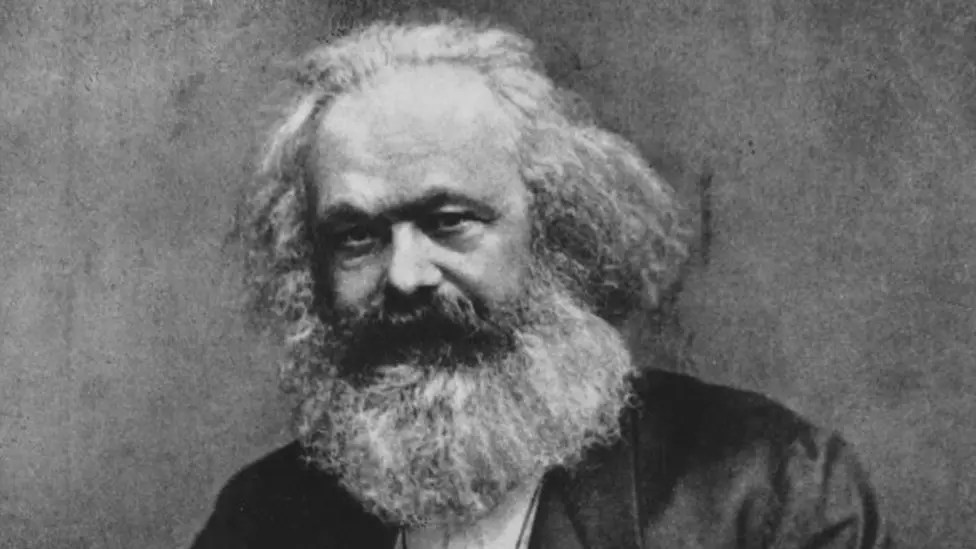
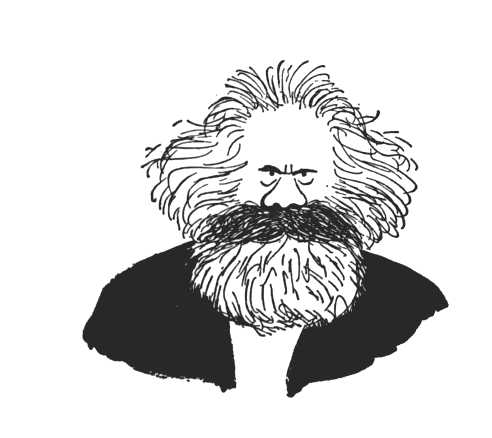
Credit this oppressor/oppressed view of humanity to Karl Marx, an intellectually feeble straight white man hiding behind a grotesque beard of pseudo-intellectualism. Of the myriad human emotions, he was blind to all but one: envy.

His envy led to his famous formulation for how to run an economy, which I paraphrase:

“From each according to his ability to make things, and to each according to his desire to have them.:

Marx’s formula doesn’t work for obvious reasons that are replayed predictably through the course of history. People who have the ability to make things stop making them if those things are taken away from them, and people who desire those things are never satisfied with what’s given to them if they aren’t required to expend any energy to get them.

Of course, the government can force people who are capable of making things to keep making them, even if they know those things will be taken from them. And that’s what socialist states wind up doing. But then you’re not running an economy, you’re running a slave labor camp. That’s not a sustainable plan. 

The Democrats are blind to this logic and this history, perhaps because they want to see themselves as part of the oppressed du jour, to whom, conveniently, the oppressors du jour owe a living, and a good one at that.

Hence the Democrats’ obsession with heroizing losers who are failures in life, from the Rosenbergs to George Floyd to Hunter Biden. For a Democrat, the greatest achievement is to be a failure and therefore a victim, because that means you’re oppressed, and that means you deserve sympathy – along with the material things that your oppressors made and you want. 

Give the Democrats some credit. They’re good at the first element of this non sequitur – the element of failure. I would say they’re still working on the other elements, but that would suggest they’re engaged in an activity they’re unwilling to engage in – work.

Until Democrats learn to achieve and celebrate more than just failure – until they learn to walk the walk of complex human emotions and relations – they still have talk. They can still talk the talk of oppressor/oppressed and perpetrators/victims. From such simple talk, they evidently derive great pleasure.

I think Shakespeare, Tolstoy and Faulkner might say . . . yawn. I know I do.

Ohh noooo, den-mark is mad at us!

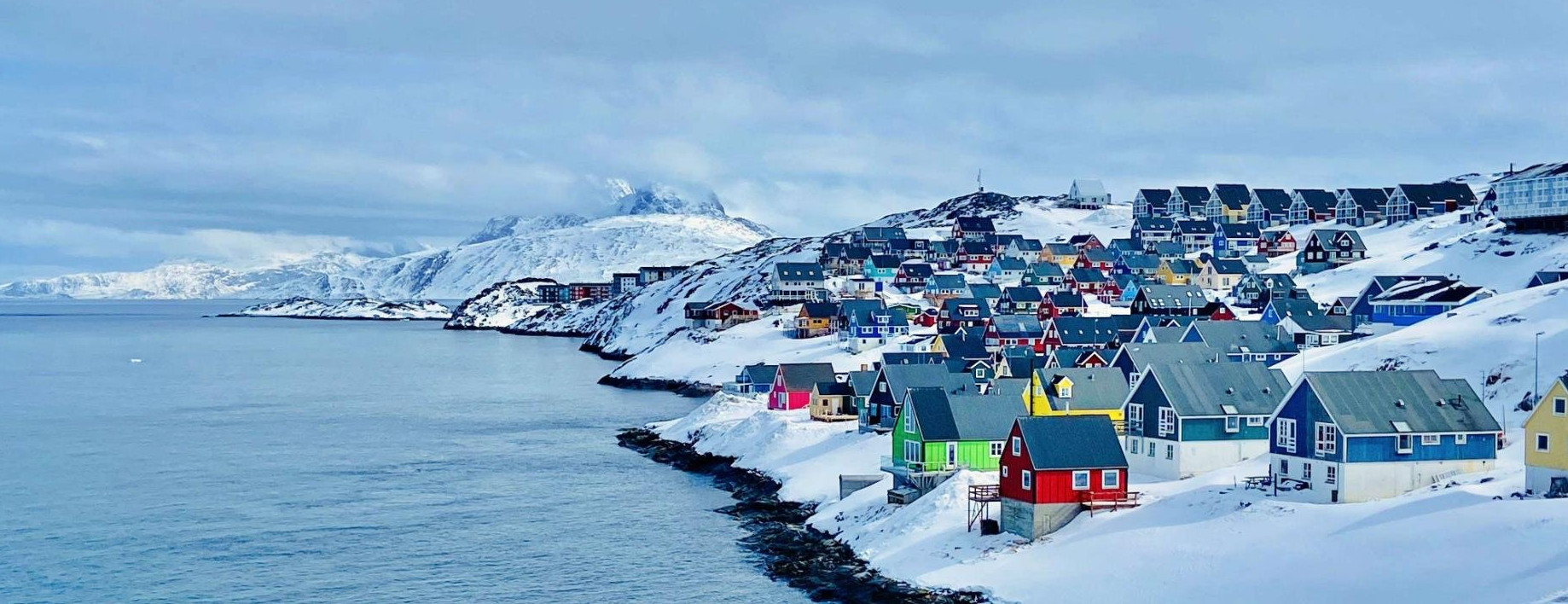
Nuuk, the capital of Greenland

Turns out, this is an actual country, not the name of a Cub Scout troop. And it’s not den-mark. It’s Denmark. And they don’t call themselves “Denmarkians. They call themselves “Danes.”

Anyway, the Danes are mad as hell. Or at least heck.

You see, back when the Spanish were looting the locals in South and Central America, and the Portuguese were lucratively, if inhumanely, trading slaves in what’s now Brazil, and the English were accidentally planting the seeds of a great republic in North America, the Danes were . . . [drum roll] . . .

. . . stealing ice from the Eskimos. Here’s the story.

But first, change “Eskimo” to “Inuit.” The word “Eskimo” went extinct in favor of “Inuit” about the time the predecessor word to “Black” went extinct in favor of “Black.” You see, “Eskimo” is the Inuit’s own word for “eater-of-raw-meat.” Which they were. (Have you ever tried to start and build a campfire on a glacier?) But they don’t like to be reminded of that fact.

To, um, engage with the Inuit people, the Danes (back when they were called Vikings – a demographic not known for being kind and gentle – and later the “Norse”) stole the home of the Inuit. They took what’s now Greenland.

The Danes got many of square kilometers that nobody but the Inuit wanted. After all, Greenland is roughly 50 times the size of Denmark. But the land is not exactly the Fertile Crescent. It’s not even the potato farms of Ireland. It’s mostly covered with ice year-round. (See, “eater-of-raw-meat,” above.)

Choosing the name “Greenland” for this icebox-in-need-of-defrosting was a nasty joke. The Danes named it that to encourage their fellow countrymen to colonize the place. Imagine their disappointment after a month at sea in the North Atlantic when their “green” new farms turned out to be glaciers.

Even so, the Danes’ colonies in Greenland survived, due in part to a climate that was warmer than today’s. Like most of the world, Greenland did better back when the climate was warmer, not colder, than today.

All this happened well after the greatest Dane in history, Laurence Olivier, also known as Hamlet, gave the answer, “to be.” (And then, he was. For a little while.)

“To be,” however, was not the fate of Greenland. They were never meant to be, even for a little while. There was no gold rush, no taming of the West or even the North, no railroads, no cattle ranches, no saloons, no nothin’. They didn’t even have slaves.

The icebox cruelly called Greenland still has a population of fewer than 57,000 people. That’s roughly the population of Bothell, Washington. There’s a reason you’ve never heard of Bothell, Washington.

Spread over a landmass, or rather ice mass, that is four times the size of Texas, this place called Greenland is one of the least-inhabited places on earth – second only to Antarctica, which the Danes would also have stolen from the Inuit except there were no Inuit there.

In WWII, Denmark declared itself neutral in an obvious attempt at appeasing Hitler. In a matter of days, Hitler’s armies marched through zero resistance in Denmark on their way to Paris. History tells us more about Danish pastry and Danish collaborators than Danish resistance.

After Denmark was overrun, Greenland was rescued by the Americans from the Nazis and their U-boat submarines. The Americans went on to rescue Europe and the world, then gifted Greenland back to Denmark. The Americans further gifted to Denmark – and the rest of western Europe – a massive rebuilding from the ruins of the war.  

Apart from those few years under the umbrella of America’s protection, it’s fair to say Greenland’s fortunes have been like her winters – endless darkness.

But in Greenland’s latitude above the Arctic Circle, the summer brings endless sun. Greenland may now be embarking on her summer, or at least her spring.

You see, the North Atlantic Ocean was unappealing to yesteryear’s conquistadors, but it is strategically important to today’s would-be conquistadors such as Vladimir Putin. Also, the ice sheets of Greenland show signs of shrinking due to Global whatever-they’re-now-calling-it. Greenland could wind up almost as warm as, oh, northern Alaska, in which case you could do all the things in Greenland that you now do in northern Alaska.

Like eat raw meat.

This literal and metaphorical turning of the seasons in Greenland has not gone unnoticed by the Americans. We have a National Weather Service, you know, which is on the lookout for such things when they’re not asleep at the flood-warning switch.

And so, our Troller-In-Chief told the Greenlanders that maybe he’ll just, you know . . . invade.

President Trump is not afraid to think and talk outside the box. Sometimes it seems like he lives there.

Greenland is still technically part of Denmark, sort of. They’re something like a colony, but without the success of one. So, the Danes took offense to this suggestion that America might liberate and protect the Greenlanders, as we did 84 years ago while Denmark was appeasing the Nazis.

That suggestion sent the popularity of America among the Danes south faster than a thermometer in Nuuk in November. The Wall Street Journal announced that this has “ended Denmark’s love affair with the U.S.”

Sheesh, can we still be good friends?

Building on the media’s typical everyone-hates-America story, the Journal interviewed some Danes who indeed do. They all had names that are unpronounceable and often unspellable. Suffice to say they’re real sad and kinda mad about their unrequited and now undone love for us.

But, they warned, if we make good on our threat to take over Greenland, they’ll . . . they’ll . . . they won’t talk to us anymore.

I admit I’m exaggerating their feebleness, but it’s for the noble purpose of mockery. The Danes’ real warning was more threatening, but just barely. Here’s the actual quote from a Danish military analyst (though I’m a little surprised such a job exists):

“I guess the rules of engagement would be, hand over the keys and take the next plane home, because there is very little we could actually do about it, and it would be sort of pointless to fight it because we have four dog sleds and some civilian police there, that’s it.”

In Greenland itself, they see this as more comedy than tragedy. Many of them have wanted to separate from Denmark for years, much as the Basque want to separate from Spain, the Welsh from Great Britain, and the Californicators from Earth.

In fact, I suspect the Greenlanders are pleased with the inordinate and unusual attention they’re receiving. On a per-person basis, Greenland’s icy escapade is more attention than Americans received when our 1980 hockey team performed the Miracle on Ice.

Maybe now we should troll the Greenlanders with a tweet and a smirk that we’ve found some other country, a younger and warmer one – maybe Fiji – to invade. But we can still be friends.

NPR goes down in flames

“When Pierre goes down, he goes down in flames”

— Punch line to old aviation joke

The Republicans finally did something great that I thought they never would have the stones to do. They reduced the funding for the government-controlled media outfit called The Corporation for Public Broadcasting.

Hallelujah!

CPB was established half a century ago with the good intention of providing television and radio services to rural America in a day long before cable TV and megawatt radio stations made television and radio ubiquitous, and long, long before the internet made them obsolete.

Fine.

Then they expanded into children’s programming like Sesame Street and Mr. Rogers, to give children an alternative to Saturday morning cartoons.

Fine. But notice the inevitable expansion. Taxpayer-funded enterprises have a way of doing that.

Then they expanded into cultural offerings like Masterpiece Theater and British comedy.

Not so fine. Why do the wealthy elites who watch Masterpiece Theater and British comedy (or is it “comedy”?) need taxpayer subsidies? And why do we allow cultural offerings selected by semi-government bureaucrats and apparatchiks to use taxpayer money to undermine the competing cultural offerings on commercial TV and the internet?

Then they went woke.

Everyone knew CPR was woke, and then a long-time editor wrote a piece for The Free Press (you should check out TFP, by the way) that amounted to a full blown exposé. He revealed their conscious attempt to bury the Hunter laptop story, to trumpet the false Russian collusion story, to dismiss the lab-origins of COVID, and so on. NPR had become a Democratic government mouthpiece.

He reported that at the headquarters of their radio arm, NPR, there were 87 registered Democrats and 0 Republicans. Unsurprisingly, Democrats were staunch supporters of NPR, and vice versa. Republicans, not so much.

For that exposé, NPR suspended the editor temporarily and ostracized him permanently. Consider the Pravda-esk irony that a government organization charged with reporting news punishes an employee for doing exactly that, because the particular news he dares to report is that the organization is biased in reporting the news. He ultimately resigned.

This week, the Republican Senate voted to claw back about a billion dollars in taxpayer-money allocated to CPB over the next two years. All Democrats voted against the claw-back. Two purported Republicans joined them, but the measure passed the Senate and later passed the House. It’s now on President Trump’s desk for signature.

So, what will happen? CPB and its labyrinth of entities have always simultaneously maintained that (1) they receive hardly any taxpayer money, and (2) taking away their taxpayer money will cripple them.

Both are lies. They do receive a lot of taxpayer money – a billion dollars over two years isn’t chicken feed – and they will not be crippled by losing it. If nothing else, the Democratic National Committee will toss them a few hundred million, directly or laundered through George Soros and his minions.

The CEO of NPR had a few choice words:


“I’m so done with late-stage capitalism.”
“America is addicted to white supremacy.”
“White silence is complicity.”
“I’m grateful those who have pointed out my phrasing could be understood as trans-erasure.”
“Horses inspire awe and foster a sense of identity. More kids should have access to these incredible animals. But most horse spaces are white spaces.”
“I know that hysteric, white woman voice. I was taught to do it. I’ve done it. That’s whiteness”
“What is the deranged racist sociopath ranting about today? I truly don’t understand.”
“Donald Trump is a racist.”

Oops, those are her tweets over the years. Gee, how could anyone accuse them of bias?

They wanna pave paradise and put up a Buc-ee’s

Don’t it always seem to go
That you don’t know what you’ve got ’til it’s gone
They paved paradise, put up a parking lot
Ooh, bop-bop-bop-bop, ooh, bop-bop-bop-bop

Joni Mitchell

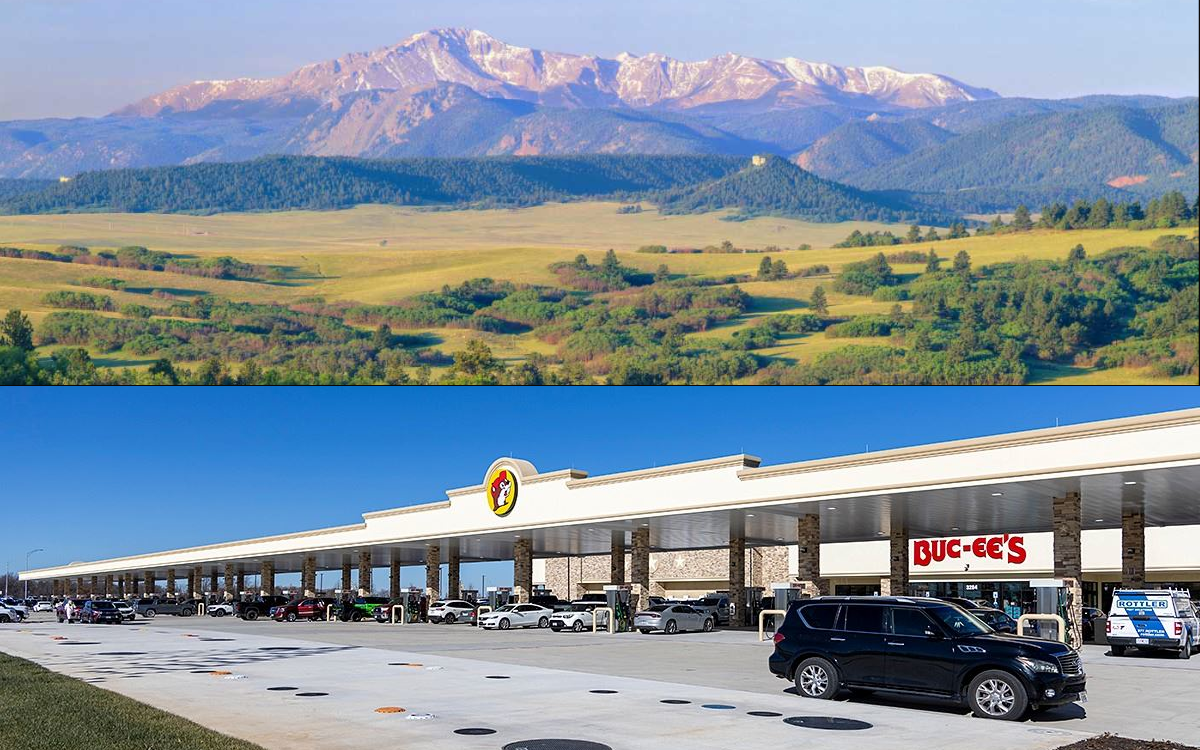
The “Front Range” of the Colorado Rocky Mountains stretches a few hundred miles from Wyoming to New Mexico. It’s where the plains meet the mountains. It’s high plateaus of grasslands, gnarly ponderosa pines and sandstone bluffs.

It’s anchored by 14,107-foot Pikes Peak, named in honor of the 1806 expedition to the region led by explorer Zebulon Pike.

“Pikes Peak or Bust” was the slogan of intrepid gold rush pioneers making their way across the Great Plains to Cripple Creek and other gold camps west of Colorado Springs. Those early gold rushers traveling on foot, horses and wagons were able to see Pikes Peak from the Kansas border 160 miles to the east, where they were still a week away from it.

I grew up a few miles from Pikes Peak, in the shadow of nearby Cheyenne Mountain. After traveling the world and summiting some of the great mountains, I still admire the majesty of what locals and former locals like myself call “The Peak.”

Today, the Front Range is rapidly turning into an extended suburbia. Metropolitan Denver to the north is growing at double the national average. Colorado Springs, 60 miles to the south, is growing even faster. The entire Front Ranch threatens to become a strip city. Call it Denver Dings.

Roughly in the middle of the sprawl is a large, preserved, open space that looks much like it did when Zeb Pike rode through, called Greenland Ranch. It once stretched from the Front Range all the way to the Kansas border. What remains today is about 17,000 acres – about 26 square miles. This fantastic landscape is home to coyotes, elk, deer, bear, mountain lions and prairie dogs.

Greenland Ranch was bought by cable television entrepreneur John Malone five years ago. He has invested tens of millions in the Ranch, but not to develop it. Rather, he spent his money to ensure the opposite. He granted a permanent conservation easement to preserve it forever.

Malone happens to be politically conservative. He donated $250,000 to Donald Trump’s campaign. Like many conservatives, he’s no environmentalist but he does believe in conservation. He therefore worked in conjunction with local governments which bought thousands of adjacent acres for permanent conservation.

As a result of the efforts of John Malone, there will always be Greenland Ranch to remind us of the Old West, whatever bad things happen to the rest of the Front Range.

Like Buc-ee’s.

I’m not intimately familiar with Buc-ee’s. It’s apparently a chain of gas station/convenience superstores. Think of a monster truck stop, but without the charm or grace.

Buc-ee’s wants to put up one of its superstores adjacent the Greenland Ranch and open space. They’ve sold the politicians running the nearby local town of Palmer Lake on the idea with the promise that their superstore would generate a million dollars a year in tax revenue.

Politicians like tax revenue.

The locals who are not politicians are less enthused. The issue has sharply divided Palmer Lake between the politicos who want tax revenue and the people who want the semi-wild landscape they came for.

Buc-ee’s proposal is to build and pave about 41 acres. They anticipate 11,000 cars a day and 60 gas pumps.

A recent article in the Wall Street Journal described the imbroglio. It was a decent piece, better than some of the pap that has appeared lately in the Journal.

As interesting as the piece itself, were the comments to it. The commenters were as sharply divided as the town of Palmer Lake, but for a different reason. The reason for division between the commenters was pure tribal politics.

The commenters saw Buc-ee’s as a political statement. To them it’s a symbol of truck stops, gasoline (and gas), fast food, big RVs, and American pie (or at least pie).

And so, the commenters favored or disfavored the Buc-ee’s proposal based on whether they were conservatives or liberals. A sampling:

Buc-ee’s brings much more joy to people than John Malone

Is it that Buc-ee’s is just “too American” for these people?

If you live in a town with either a Buc-ees or a Wawa [convenience store] you are blessed.

The usual Colorado leftist hypocrisy.

Buc-ee’s is awesome and a welcome stop anytime you do a road trip.

Ten dollars says that the Buc-ee’s opponents are card carrying Democrats.

This cult following around a business really shows Americans are starved for culture in these parts of the country.

The WSJ doesn’t have a clue what the spirit of the west is, just a bunch or rich spoiled elitists who think they know better how to live our lives than we do.

You can’t have a Buc-ee’s because it would make the elk sad is about the dumbest argument I have ever heard.

I love Buc-ee’s.

I love the Beaver Nuggets

Anybody who opposes a Buc-ee’s has never been to a Buc-ee’s

For me, the question is not whether Buc-ee’s is an appealing place or not (though I happen to think it’s probably not, to me anyway). Rather, the question is a land use question: Is this the right use for this land?

We frequently make decisions about how to use land. That’s why we have zoning laws.

Unfortunately, the debate over this Buc-ee’s at this particular location has devolved into a tribal fight. Conservatives favor Buc-ee’s because liberals oppose it, and liberals oppose it because conservatives favor it.

It’s today’s American politics in a microcosm. Whether you like Buc-ee’s or not, and whether you favor this particular Buc-ee’s location or not, this much is true: The American political system has become tribalized to the point of dysfunction.

Mamdani terrifies the Democrats

After losing to the one guy they were certain they could beat, Democrats are making a show of puzzling over how to win elections.

It’s not really much of a puzzle. They simply need to get on the right side of some easy 80/20 issues. Like illegal immigration. Like men competing in women’s sports. Like catching and punishing criminals. Like the First Amendment. Like disclaiming Marxism.

Why can’t the Democrats see this?

Well, they can. Democrats are just pretending they can’t because they don’t want to alienate . . .  Democrats.

Do the math. If only 20% of voters are on the liberal side of an issue, and essentially all of those 20% are Democrats, and registered Democrats comprise about 37% of the voters (the other 63% being Republicans and Independents), that means that, among Democrats, about 54% are on the 20 side of those 80/20 issues. (54% of the 37% of voters who are registered Democrats equals about 20% of the total voters.)

Most Democrat politicians can do this math. And so, they understand that getting on the winning side of these 80/20 issues would cost them over half of registered Democrats – the kind that vote, donate money, speak out, and get CNN spots.

Even the Democrats who can’t do this math (here’s looking at you, AOC) can sense it from their interactions with their base, which is about the only kind of interactions they have with the public.

One solution is for Democrats to trick their base into believing they are still on the 20 side of these 80/20 issues while actually migrating to the 80 side in order to get some of the 80 side voters.

But it’s hard for politicians to trick their base. That’s because the base tends to be passionate and aware. Moderates, on the other hand, are easier to trick. Moderates are moderates because they aren’t paying much attention.

So, what do you do if you’re a Democrat?

You trick the people who can be tricked – the moderates. You put on an insincere, hand-wringing act pretending that you’re considering switching to the 80 side on the 80/20 issues, all while winking and nodding to your hard-left base to tell them you’re really not.

But now the jig is up. Zohran Kwame Mamdani (if you’re a Republican, you couldn’t wish for a better name for him) has put the Democrats on the spot.

He wants government-owned grocery stores because he thinks (or just believes) they’ll be less expensive and more equitable. He wants government control over rent and real estate prices. He wants government-paid public transportation. He wants government child care. He wants, well, you get the picture.

He has lots of wants, and he wants those wants to be satisfied by the government.

Except the police. His only want from the police is that they cease to exist.  

He let slip – nah, he bragged – that the government should seize control over “the means of production.” It’s not clear where he learned that phrase, but it was in fact coined by Karl Marx.

He’s an actual, registered socialist. And he’s not a European-style one. He’s more like a Cuban-style one or Venezuelan-style one or Soviet Union-style one.

Democrats, who have crept, slouched, and sometimes flown toward socialism like bats into hell over the last 25 years since Bill Clinton left office, are mortified. Not because Mamdani favors socialism – they all do – but because he says it out loud.

By saying it out loud, Mamdani smokes out those fellow Democrats. They have to either agree or disagree. They can no longer pretend moderation in order to garner votes from unengaged moderates while winking and nodding to their hard-left base.

Mamdani is forcing socialist Democrats into the thing that socialists abhor most – honesty.

He’s currently the favorite to be elected. The result will be a disaster for New York City. But it will also be a disaster for the Democrats. I’m willing to accept both disasters if it’s a package deal.

Poor people have too much money

What do the following have in common?

  • Sports gambling
  • Prescription drug TV advertisements
  • Thousand-dollar concert tickets
  • Monster pickup trucks
  • Monster RVs
  • Monster waistlines
  • Monster wives
  • Monster children
  • Cigarettes
  • Soda pop
  • Fingernails
  • Credit card debt
  • Lottery tickets
  • Fast food
  • Pot
  • Tattoos
  • Expensive phones
  • Fast food

The answer is this: The consumers of these goods and services are often relatively poor. Poor people are bad at both making money and spending money. They make too little of it and they spend too much of it – on things that are wasteful or even harmful to themselves and to society. Much of what they spend is on credit cards with 22% interest rates.

It’s as if their poor spending habits and poor earning habits share a common cause. I wonder what that might be.

As for the poor earning habits of poor people, I can’t think of easy ways to help them. But as for their poor spending habits, I can.  

Make it harder to buy some of these things. Some of them should be banned, others should be heavily taxed, and still others should be socially shunned.

The ones we should ban include sports gambling, prescription drug TV ads, cigarettes, lottery tickets and pot. Those things impose a burden not just on the consumers of them, but also on society at large. The cost to taxpayers for Medicare and Medicaid treatment of diseases related to cigarettes and pot, for example, amounts to billions of dollars.

The ones we should heavily tax are expensive concert tickets, soda pop, tattoos, monster pickup trucks and monster RVs. Those items entail no societal benefit. Some, such as soda pop, are a real detriment to society. Their nutritional value is worse than zero.

The ones that should be shunned are fake fingernails, monster waistlines, monster wives and monster children.

Until those bans, taxes and shuns happen, and even after, expect to hear the incessant whining of society’s losers that they can’t afford everything they want to buy because wealth is shared unequally and – gasp! – inequitably.

Expect to hear the complaints of Generation Z – which has air conditioning, luxurious automobiles, the world at their fingertips in magical phones, ten paid sick days along with additional “mental health” days, paternity, maternity and no-ternity leave, four weeks of vacation and eleven paid holidays including Juneteenth and Indigenous Peoples’ Day, and shelves of cheap trophies for having participated in whatever – that life is very tough for them.

They work sooooo hard, they claim that they need to cut back. They need to balance what they call “work,” which is really half-assed, part-time fooling around, with what they call “life,” which is buying foolish things and endless meaningless recreation.

The end result is that they fail at both “work” and “life.”

I first visited Europe when I was 29. It was on a four-day business trip that stretched into nine. I worked all but one day. I didn’t see the Eiffel Tower or the Louvre or Big Ben or the Roman Coliseum. Instead, I saw the inside of a suburban office building where I negotiated a deal against four hard-bitten, tag-teaming, middle-aged Germans working for Siemens AG.

In contrast, my children had been to Europe half a dozen times, all on vacations, by the time they were 29. Their negotiations with Germans were limited to discussing chocolate cake.  

I’m glad to see that my children came out splendidly despite the spoils of German confections, and that I seldom hear complaints from them about how tough things are. I wish I could say the same about the rest of their generation.

“Veni, vidi, vici,” sayeth the Orange One?

The first to say that was Julius Caesar. After his crushing win over a Persian/Greek king in what is now Turkey, Caesar reported to the Roman Senate with characteristic immodesty and uncharacteristic brevity: “Veni, vidi, vici.”

I came, I saw, I conquered. Caesar had a flair for drama.

He similarly came, saw and conquered most of Gaul – what is now France – in an era well before the invention of B2 stealth bombers. Travelling from Rome to Gaul was an arduous multi-month sea and land adventure. Conquering the barbarians there was a crazy idea for anyone but Caesar.

He laid the foundation for the greatest and longest-lasting empire the world has ever seen. It’s impossible to travel in Europe without marveling at ubiquitous, still-majestic two-thousand-year-old ruins of that empire.

Caesar came from a privileged but not powerful family. Ambitious from the outset, he clawed his way up the political ladder of the Roman republic, a place with a governing structure that we vaguely recognize.

Indeed, we should. Aspects of our own republic consciously imitate Rome, such as the naming of our Senate after the Roman Senatus and even the Greco-Roman architecture of our capital.

Caesar’s foreign exploits were not just to conquer foreign lands. They were to conquer his homeland, Rome. He wanted conquests because he wanted attention because he wanted power – in Rome.

But he also did want to conquer those foreign lands. The Romans were keenly aware of their legendary cousins across the Ionian Sea, and Caesar knew all about the astonishing conquests of Alexander the Great.

When Ceasar was still relatively young (but, he was painfully aware, already older than the age of Alexander when he’d conquered much of the world) he was chosen to be something akin to a prime minister.

Later, during a period of increasing social turmoil in an unwieldy republic deteriorating toward civil war, Caesar was named dictator for life and offered a crown.

He made a show of publicly refusing the crown, but he did not refuse the powers that went with it.

After five years as dictator, at age 56, Caesar was stabbed 23 times by senators. Brutus, too, was one of those senators.

Myth has it that this assassination was because Rome wanted to reclaim its republic from the dictator. The truth is more prosaic – particular senators opposed particular policies of Caesar.

Indeed, the dictatorship, itself, survived and thrived after Caesar’s death. Rome became an empire ruled by a succession of emperors.

That sounds terrible, right?

It wasn’t. It was the best thing that ever happened in the ancient world. For the next centuries, the Pax Romana ensured relative peace, prosperity and enlightenment. There’s a reason that what followed the ultimate crumbling of the Roman Empire is called the Dark Ages and the subsequent period is called the Renaissance or “rebirth” of the civilization that preceded that dark age.

Some Roman emperors were great and good, such as Augustus, Trajan and Hadrian. Rome was at its biggest and best as an empire ruled by emperors, notwithstanding the occasional lunatics like Caligula and Nero. Similarly, Britain achieved the most when it was ruled by kings and queens. Same for Spain and France. There’s a lot to be said for benevolent dictators, so long as they aren’t crazy.

But Americans are taught, or at least used to be taught, that democracy is the ultimate and natural evolution of political governance. Isn’t it wonderful and equitable, say the propagandists, that everyone gets one vote, regardless of what they contribute, what they know, and what they merit?  

Isn’t it genius that we rely on ordinary Americans, 50% of whom are stupider than average, to select our leaders?

To ask those questions plainly stated is to answer them. So why have America and other western democracies been so successful?

Arguably, their success is not so much because democracy works well, but despite the fact that it doesn’t. What has worked well instead is something quite different.

It’s technology. The last two hundred years entailed the industrial revolution, the electronics age, and the ongoing computer revolution. Productivity is through the roof, even as people work far less than ever before.

Today’s average westerner is consequently much richer than the kings and queens of yesteryear. He has air conditioning, a house, one or two cars that take him anywhere he wants, only 1.7 children to feed, and a gadget in his pocket to get all the information in the world – and entertainment too – on a magical screen.

It wasn’t democracy that got him all that. It was technology.

If democracy is so great, then why aren’t companies managed by democracies? Shouldn’t we have employees elect their boss by popular vote, just as we elect our political representatives? Shouldn’t there be company-wide referendums by the employees to vote on how hard they have to work and what they get paid for that work?

Again, to ask those questions is to answer them. That system just wouldn’t work. So, what makes us think that such a system works in political governance?

I submit that democracy is not the ultimate evolution of political governance. “One man, one vote,” regardless of merit, does not work over the long run any better now than it did in Athens or Rome – and now we’ve corrupted it still further with universal suffrage and voting by mail.  

In the end, this democratic feel-goodery conflicts with meritorious substance. Almost by definition, the meritorious will win that conflict one way or another. Veni, vidi, vici.