
Democrats can’t get past “Oppressed vs. Oppressor”

The nature of humans and their relationships is complex and interesting. It involves friendship, hate, cooperation, competition, love, impulse, greed, work, betrayal, family, tribes, envy, sympathy and dozens of other emotions.  

Great writers and even bad ones have written billions of words on these powerful feelings, and how they function and dysfunction in groups of humans. Writers keep writing about them and their readers keep reading about them because they strike a chord within us. We witness them in our everyday lives.

Democrats have reduced it all to one thing: class struggle. In this class struggle, everyone is pigeonholed into one of two competing categories: the oppressed and the oppressors. But beware, there are some arbitrary exceptions because there’s something of a hierarchy of oppressors and oppressed.

For example, if your skin color is dark, then you’re oppressed. Unless you’re a dark-skinned Asian who wants to be judged fairly on merit, or a Black man like Martin Luther King, Jr. who wanted to be judged on the content of his character, or a political conservative like Justice Clarence Thomas or Professor Thomas Sowell or Secretary of State Marco Rubio – in which case you’re an oppressor.

If you’re a man who likes to pretend he’s a woman, then you’re oppressed. Unless, like Caitlin Jenner, you object to men pretending to be women competing against women in women’s sports – in which case you’re an oppressor.

If you like to do sexual things with people of your own sex, then you’re oppressed. Unless, like several of President Trump’s appointees, you happen to be politically conservative – in which case you’re an oppressor.

If you’re one of the 51% of humanity who is a woman, then you’re oppressed. (Never mind that you live six years longer than your oppressor.) Unless, like most women, you think men don’t belong in the women’s locker room – in which case you’re an oppressor.

If you haven’t made much money because you’ve chosen to use your time doing things other than working hard at well-paying jobs, then you’re oppressed. Same goes if you’ve made plenty of money but you’ve chosen to spend it all.

Enough about the oppressed. On to their oppressors.

If you’re a white man, you’re an oppressor. (That’s true even in Africa where white men are a distinct minority because . . . reasons.) Unless you’re a white man who chooses to use his time doing things other than working hard at well-paying jobs, and therefore has no money or has spent it all – in which case, as mentioned, you’re oppressed.

If you’re . . . well . . . hmm.

I planned to set forth the other types of oppressors but straight white men are pretty much the only ones. Oh, and Thomas Sowell, Martin Luther King, Jr., Clarence Thomas, and a couple billion Asians.

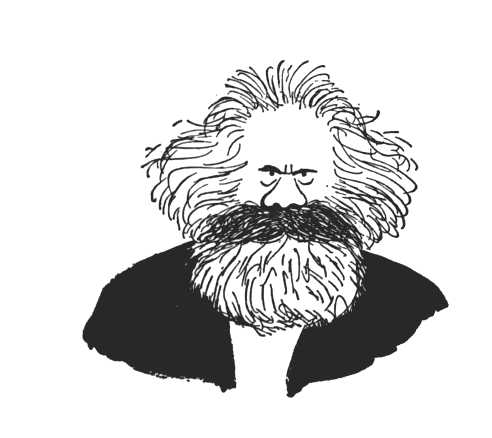
Credit this oppressor/oppressed view of humanity to Karl Marx, an intellectually feeble straight white man hiding behind a grotesque beard of pseudo-intellectualism. Of the myriad human emotions, he was blind to all but one: envy.

His envy led to his famous formulation for how to run an economy, which I paraphrase:

“From each according to his ability to make things, and to each according to his desire to have them.:

Marx’s formula doesn’t work for obvious reasons that are replayed predictably through the course of history. People who have the ability to make things stop making them if those things are taken away from them, and people who desire those things are never satisfied with what’s given to them if they aren’t required to expend any energy to get them.

Of course, the government can force people who are capable of making things to keep making them, even if they know those things will be taken from them. And that’s what socialist states wind up doing. But then you’re not running an economy, you’re running a slave labor camp. That’s not a sustainable plan. 

The Democrats are blind to this logic and this history, perhaps because they want to see themselves as part of the oppressed du jour, to whom, conveniently, the oppressors du jour owe a living, and a good one at that.

Hence the Democrats’ obsession with heroizing losers who are failures in life, from the Rosenbergs to George Floyd to Hunter Biden. For a Democrat, the greatest achievement is to be a failure and therefore a victim, because that means you’re oppressed, and that means you deserve sympathy – along with the material things that your oppressors made and you want. 

Give the Democrats some credit. They’re good at the first element of this non sequitur – the element of failure. I would say they’re still working on the other elements, but that would suggest they’re engaged in an activity they’re unwilling to engage in – work.

Until Democrats learn to achieve and celebrate more than just failure – until they learn to walk the walk of complex human emotions and relations – they still have talk. They can still talk the talk of oppressor/oppressed and perpetrators/victims. From such simple talk, they evidently derive great pleasure.

I think Shakespeare, Tolstoy and Faulkner might say . . . yawn. I know I do.
This is a heckuva way to run a Church, but on the other hand . . .

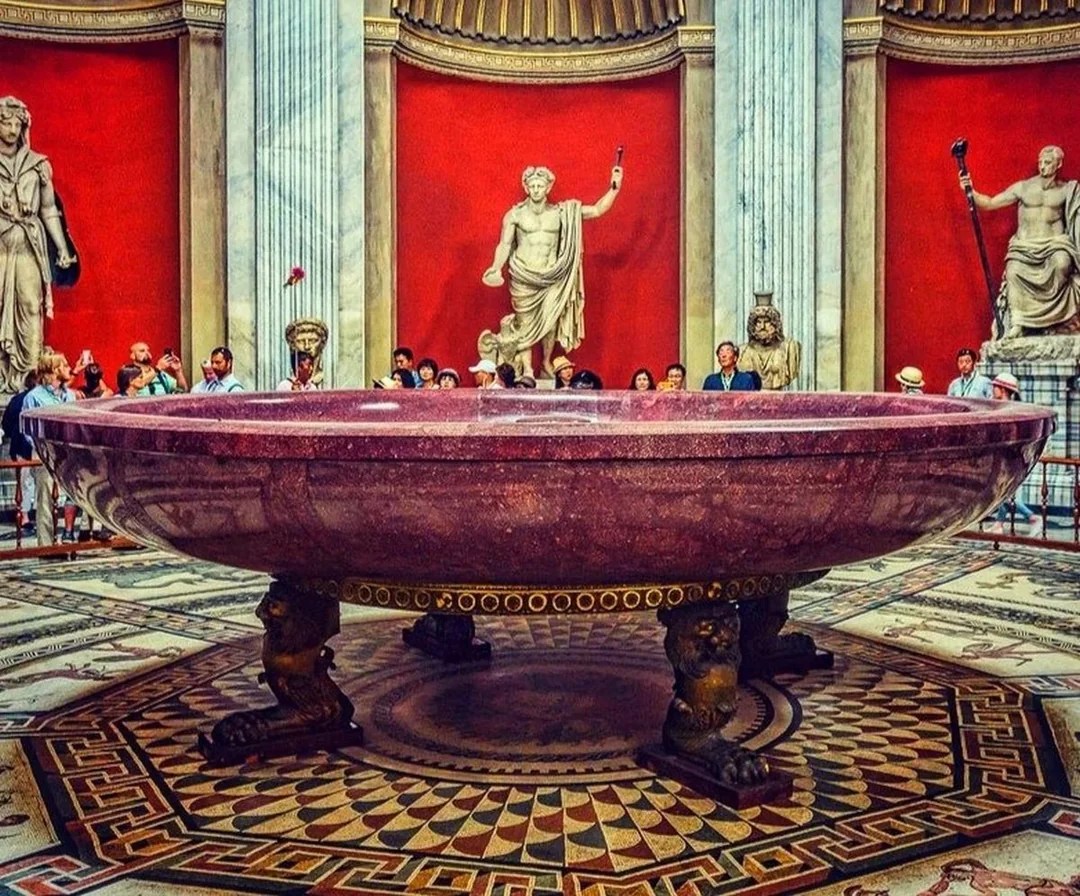
Nero’s Bathtub at the Vatican

Why do Catholics still worship an old king in a palace?

I understand why they did in the old days. Everybody did. (Well, except Christ didn’t.) There was Henry VIII, Louis XIV, Charlemagne and, in folklore, King Arthur. There were also king-like rulers called emperors, such as Julius Caesar, Peter the Great, and Napoleon Bonaparte.

It was way back in the olden days that Catholics set up the papacy, their kingship. Their first Pope was said to be the Apostle named Peter, who used to be called Simon.

By the way, the names of the Apostles always have confused me. There was Paul, who was really Saul. There was Mark, who sometimes went by John. There was John, who always went by John even though Mark sometimes did, too. There was the aforementioned Simon whom Jesus called Peter even though that wasn’t his name and there was another Simon whom Jesus called Simon even though that was his name.

There were two James’s. One was James the Greater about whom we know a great deal of apocrypha and the other was James the Lesser about whom we know much less. James the Lesser went by Jim. (OK, that part is made up.)

Jesus must have had the patience of Job, considering how many times he had to say “No, the other one.”

As if Apostles are not complicated enough, let’s get back to popes. In case you encounter a pope, the proper form of address is not “Your Majesty.” That’s for kings and queens. Popes get addressed instead as “Your Holiness.” You see, kings and queens may be majestic, but popes are holy.

In fact, papal pronouncements on matters of Church doctrine are said to be “infallible.” Never mind that Church doctrine changes from time to time. The old doctrine was infallible when it was in effect, and the new, different one is infallible when it’s in effect.

As for all things, for infallibility there’s a season.

So, popes are holy. But there’s a bit of majesty in them, too. For a long time, infallible popes were also effectively the rulers of the Holy Roman Empire, an area that stretched from Rome to the Baltic Sea.

Wars and intrigue gradually chipped away at the Empire. The establishment of the nation of Italy in the 1800s cost the Vatican almost all of the little land they still held. The earthly territory of the Holy Roman Empire now comprises 0.2 square miles within the city limits of downtown Rome.

But that 0.2 square miles holds some good stuff, such as Michelangelo’s Sistine Chapel, priceless art works, and St Peter’s Basilica.

And Nero’s Bathtub. Nero’s Bathtub is a massive bathtub about 25’ long made of stone quarried in Egypt and brought to Rome for Emperor Nero. What better place to fiddle through a fire than in a bathtub? The value of Nero’s Bathtub is estimated at around two billion dollars. That’s $2,000,000,000. (I’m not making this part up.)

Altogether, the Vatican is the most valuable 0.2 square miles this side of Heaven. Don’t ask how they acquired all this treasure, and don’t ask how to reconcile such material acquisitiveness with their incorporeal mission. We’re talking infallible, remember?

These material riches of the Vatican’s balance sheet are oddly juxtaposed with the sorry condition of its income statement. They’re rich but they spend far more than they make. In fact, their finances have been in bad shape for many years. They have fallible finances.

In their defense, back in those olden days they had a lot of expenses such as wars to fight and bribes to pay. But now they don’t fight earthly wars, and bribes have not been reported for years. Even so, well into modern times they’ve still had sloppy finances, money-laundering allegations, and what might be called, um, corruption.

During the tenure of newly departed Pope Francis, the Vatican’s operating deficit tripled. Maybe ballooning budgets come with the territory from which he originated – Argentina.

Whatever the reason, finance types warn that this Latin American spendathon cannot continue unless the Vatican sells off assets, which will fix finances only for a while, or resumes selling indulgences – to a flock that is no longer accustomed to having to pay for them.

In contrast to the papacy, the aforementioned kingships and empires of Europe have evolved. They’ve been replaced by indirectly elected technocrat parliamentarians in such countries as Great Britain, Germany, France, Italy and most everywhere else. Only the throne of Peter the Great is still occupied by a despot.

So, what’s with the black smoke/white smoke ritual (“smoke-filled room” takes on a new meaning here) by a politburo of old men that are attired in plush red robes and lamp shade hats (let’s trust they’re not chomping cigars) to choose a new, infallible, male, old, dear leader in the richest corner of the globe even as that corner – and the globe – drift inexorably toward bankruptcy?

This is a heckuva way to save souls.

On the other hand . . .

The Catholic Church has probably been the greatest force for good in the history of the world. It has brought Good News to billions of people to enrich their lives if not save their souls.

The lucre and treasures the Church acquired along the way were from a different era, when that’s what powerful people did. It’s difficult for them to give it all away now, just because some Protestant blogger mocks Nero’s Bathtub.

And to whom would they give it? Secularist governments?

Sheesh, after the Notre Dame burned, the secular government of France proposed replacing it with a temple that would not offend (i.e., would pander to) the burgeoning Muslim population that seeks control of Europe. They backed down only when the remaining Catholic population of Paris (and France and the world) made a fuss.

My brother, a very smart guy with a Ph.D. in Physics, was a convert to Catholicism. I never really talked with him about his faith, but I respected his judgment. In that way, he reminds me of another very smart convert, JD Vance.

I confess that on my two long walks of the Camino de Santiago, there were times when I, too, considered converting to Catholicism. (There have been times when I’ve also thought about converting to Judaism, but that’s another column.) For now, I’m a die-hard Protestant.

So, the Church on balance has been a very good thing over the millennia.

Still, it has its quirks.

Elites rediscover the power of religion – to control you

Pseudo-intellectual elites like to talk about the “arc of history.” Barack Obama loved that phrase almost as much as he loved the word “existential.” Things in Barack’s rhetorical world didn’t just exist. They were in the state of “existential” and forever bending along the “arc of history.”

The elites assured that this “arc of history” will take us inevitably to a world of equity, inclusion and diversity – a utopian world the elites have always imagined. They even have a theme song for the journey:

“Imagine there’s no heaven, above us only sky,
Blah, blah, blah, blahhhh . . .”

Of course, the people in charge of this utopia of the elites will be the ones with the prescience to anticipate it, the skill to guide us to it, and the power to run it – namely, those elites.

Moses brought his people to the Promised Land but never entered it. Modern elites won’t make his mistake again. They’ll lead us there, herd us in, lock the gates, and run the show.

And in a notable exception to the abolition of merit (it’s sooo dystopian that some people get more just because they merit more!) these meritorious elites will be well compensated. Very well. In the precise amount they deem just.

But detours have recently frustrated the elites in their arc-y journey toward their utopianistic place. Moses detoured 40 years in the desert; today’s elites find themselves detoured four years into a similar wasteland – for the second time in the last decade.

And now their people (note the possessive plural pronoun) in this wasteland are sinning again. Golden calves, bitcoins, ungratefulness, orange hair, cutting taxes. You know – all the usual sins.

With alarm, the elites see that their people are getting beyond their command. What’s needed, they figure, is some of that old time religion.

That’s why a utilitarian epiphany of the elites is in the works.

Let me be clear. Religion is not a bad thing; it’s a good thing. Religion tends to discourage socially destructive behaviors. Nearly all religions have rules against murder and theft, for example.

But those rules are not what the elites like about religion. In fact, they’re a little skittish about those particular rules because the penalties for violating them tend to be imposed disproportionately on people they enjoy viewing as oppressed, blameless, and childlike.

Moreover, the elites historically saw religion as competition for power. The allegiance of the people was divided between the secular elites and the Church elites. The secular elites had the power of money, but the Church elites also had money – and God, too.

Eventually, the secular elites won the competition for power by running the table on money. But they remained at odds with religion until recently. They reasoned that a power like religion that inspires people willingly to burn themselves and others at the stake is one always to be wary of.

But it’s been a long time since religion burned anyone at the stake. Religion has dwindled to the status of a sheep in wolves’ clothing. Elites began to think of religion as a simple superstition that bitter, stupid people cling to – that they depend on – as comfort when things goes bump in the night.

Today, the elites still think that, but now they see religious dependency as a feature, not a flaw. On their road to Damascus, and Davos, they’ve envisioned and embraced Karl Marx’s observation that religion is “the opiate of the masses.”

How convenient. The elites have coincidentally decided that the people inhabiting the land recently laid waste, again, who are rebelling against their authority and inattentively and hyperactively sinning against them, need something opium-ish. And they deserve it, good and hard. For that, the elites have concluded, religion is at least as good as Adderall, and cheaper.

Religion no longer threatens the elites, much. Today, the mild threat that religion poses to secular power is more than offset by its usefulness in securing that power by sedating the masses. In particular, the elites like the rules of religion that call for deference to authority – “authority” being them, of course.

Honor they father, honor thy mother, honor thy priest, honor thy Environmental Protection Agency, honor thy right to choose, honor thy elites, and so on.

Never mind that Scripture doesn’t explicitly spell out every single one of those honor/submission rules. The elites contend that, like abortion, they’re implied in the penumbra.

And so, we have an Episcopal Bishop in gilded robe with bejeweled scepter scolding the man newly elected by the people to lead them, whom she spots worshipping respectfully in her congregation.

She thereupon transfigures the worship service into a public damning of that one man. Complying with his Constitutional duty to enforce the duly enacted Federal immigration laws is sinful, she warns, and honoring the God-created genders is immoral.

She would have the President and us believe that a kid struggling emotionally with sex issues doesn’t need help, he needs surgery. He is the victim of God’s mistake where He accidentally put a female soul into a male body. She proclaims that she’s the one to make that decision, by God, and the President is merely the one to enforce her decision by correcting what she has decided is God’s mistake.

Just don’t get carried away, Mr. President, and start enforcing the immigration laws decided by Congress, too. Who does Congress think they are anyway? Episcopal Bishops?

Elites’ new love for religion has all the passion of an old-style revival meeting. It lacks only one thing: God.

Here’s my advice, for what it’s worth. Don’t believe in religion because it’s a good thing for society – even though it often is, as even the elites are starting to realize.

Rather, believe in it because it’s the truth, and the truth will set you free.

But don’t take my word for it. Really, please don’t. This is a truth that each person must find in, and on, his own way.

God never existed in Barack’s world. But he wants him in yours. He wants you to hallow the elites; he wants you in their kingdom; he wants you to beg forgiveness.

For the Baracks of the world, God is a useful fiction. But they may someday be startled at what they’ve stirred.