Half a century ago, American children were taught in elementary school that “representative democracy” was the highest form of government.
Part of me wondered even then, why should everyone get an equal say in things? That wasn’t how it worked in my elementary school, I observed, even as they taught that creed. The students and the janitor didn’t get the same say as the principal and the teachers.
Some people are smarter, more diligent, better educated, work harder, and pay more taxes. Shouldn’t they get more of a say in how those taxes are spent than people who are not smart, not diligent, don’t work, aren’t educated, and don’t pay taxes?
The only plausible answer to that question as to why everyone should get an equal say, is that everyone should feel like a stakeholder in the nation.
That’s a nice sentiment, but there are several problems with it. First, allowing – nay, begging – stupid lazy people to vote is a high price to pay to make them feel like stakeholders. Second, it doesn’t work. They still don’t feel like stakeholders.
Third, if you want people who don’t pay taxes to feel like stakeholders in the nation, maybe a good first step would be to ask them to pay some of the nation’s taxes.
As it stands today, the bottom 40% of earners pay about one percent of federal income taxes. Is it any wonder that those so-called taxpayers always want to increase taxes? It’s because they themselves never pay them.
The Founders recognized this fallacy with the democratic republic they created. They recognized that at some point the lazy stupid masses might come to realize that they could vote for a “redistribution” of the wealth of the smart hardworking producers. That’s undoubtedly the reason that the Constitution originally did not allow for income taxes; it took the 16th Amendment. (Nearly all amendments after the first ten were mistakes, BTW.)
In another genius of socialist branding, the stupid lazy masses have dubbed this legalized theft “fairness.”
But let’s leave the tax tangent and get back to the broader failure of American democracy.
What we have now is mob rule. Everyone has a microphone in the form of the internet, including me. With that microphone, they can get “clicks” on what they post. Those clicks are more or less exchangeable for cash.
Human nature being what it is, many people are owned by their desire for cash, and thus many internet posters are owned by their desire for clicks. They post stuff that is designed to generate clicks and cash.
That’s why we now have horrible creatures out there like Tucker Carlson and Candace Owens who are willing to generate clicks/cash with blood libels of the Jews.
Barely better are the people behind “Instapundit” who post misleading headlines appealing to notions in my tribe such as all Democrats are transexuals who want to conduct “gender affirmation” surgery on children in schools while burning the flag in Satanic rituals in the playground. (I’m sure the leftist websites have similarly weird headlines about Republicans, but I don’t see them because I don’t go to those websites.)
It’s political porn; it panders to the worst instincts of political junkies; it’s addictive; and it’s destructive to them, us, and our society.
And it works – for the perpetrators anyway. Ask Tucker.
(I have a friend who says he habitually clicks into Instapundit, but only to get the links. Uh huh. And I’m sure he got Playboy just for the articles.)
Speaker of obscenity, there’s the legislative branch. That’s the branch of government where a majority of the people elected to do the voting are supposed to enact and repeal laws.
Except it takes more than a majority to do both enacting and repealing. The Senate filibuster rule (another thing not in the Founder’s Constitution, or even the current one) means that it takes 60 of the 100 Senators to enact or repeal almost any law.
That means that the minority party – the political party that the people decided should be fewer in number than the other party – has a veto over any enacting or repealing of the laws.
That’s a bit weird. The “rule” is that that majority rules, except that the minority gets a veto. Huh?
It gets worse. Not only does the minority get a veto, they can shut down the government unless the majority concedes its power to them.
The minority shut down the government for over a month last fall, demanding that the majority pretend that the minority was the majority and the majority was the minority, by repealing part of the tax bill that was passed by the majority months earlier.
Now the minority is doing the same on a narrow issue, with the result that people are waiting hours in TSA lines at the airport. (I say fire TSA anyway; it’s all theater.)
The latest is the minority’s filibustering of a law to require photo ID when you vote, just as you’re required to have photo ID when you board an airplane, borrow a book, or cash a check – a law that is supported by 80% of Americans.
Maybe the majority should formally concede that it is effectively the minority. Then they can turn the tables and demand those minority filibuster rights. At which time the minority would say, “Not so fast, we’re the minority, so we’re in charge here!”
Yep, that’s American “democracy.” Don’t even get me started on the European kind.
And sooooo . . . .
Let’s impose this farcical system on Cuba and Iran. Given their history of ecumenical largess (I have no idea what that phrase means, but it popped into my demagogue head; help me here, Tucker) they’ll surely be every bit as successful with it as we currently are.
OK, don’t go away mad. Here’s a tidbit to brighten your day. Donald J. Trump is not a Democrat, and I’m not even sure he’s a democrat.
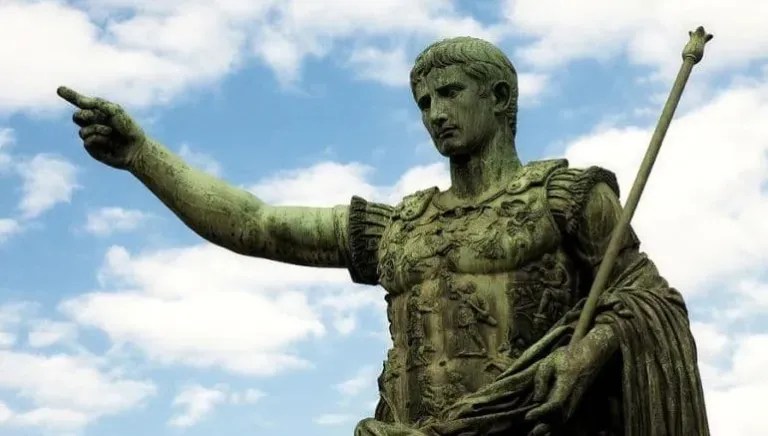
But bear in mind that the greatest leader of the ancient world – the one who brought the greatest good to the greatest number – was Augustus Caesar. He wasn’t either.
 the Aspen beat