
Trump was right not to want a second strike

The facts are still emerging through the fog of war (or is it the fog of law enforcement, or the fog of antiterrorism?). Sometimes people (including myself) draw conclusions on the basis of incomplete information, so let’s start with what’s really known.

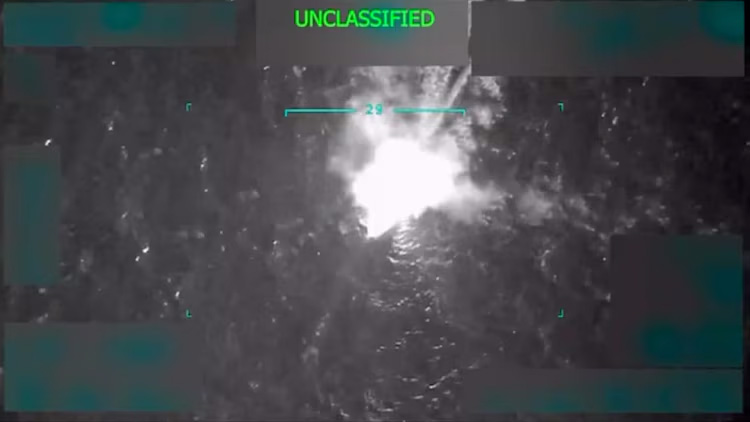
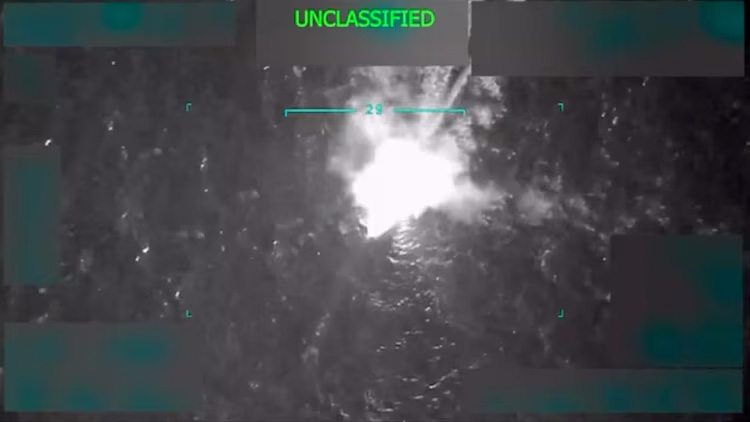
Our military launched another missile attack on a drug-smuggling fast boat. The boat burst into flames and was dead in the water but did not immediately sink. On-scene surveillance showed that not all of the 11 crew members were killed. One or two men were seen moving in the water.

Unlike the footage of other fast boats being attacked by missiles, this footage has not been publicly released, but the facts in the preceding paragraph are undisputed.

A second missile strike was then ordered. It obliterated the wreckage of the boat and killed the two remaining survivors. That, too, is undisputed.

The mission was observed in real time by the Admiral in charge as well as his boss, the Secretary of War, in a room at the Pentagon. Both men saw the first missile strike.

The Secretary of War reports that he then left the room to attend another meeting. The second strike was then ordered by the Admiral who evidently believed he had authority from the Secretary of War.

Here’s where it gets foggy. One report says that the Secretary of War instructed the military in advance to “kill them all.” He denies saying that.

He did say afterward that he supports the Admiral’s ordering of the second strike, and went on to proclaim “the fake news is delivering more fabricated, inflammatory, and derogatory reporting to discredit our incredible warriors fighting to protect the homeland.”

What’s the President say? When asked about the appropriateness of the second strike, he said:

“[The Secretary of War] said he didn’t do it, so I don’t have to make that decision.”

In the hurley-burley of the impromptu press conference aboard Air Force One, it’s not clear what, exactly, the Secretary told the President he “didn’t do.” It can’t be that he told the President they “didn’t do” a second strike, because they clearly did. Maybe what the Secretary said he “didn’t do” was to be the one who ordered it, since he was no longer in the room, or maybe what he told the President he “didn’t do” was to order the military to “kill them all.”

Apart from that ambiguity – something to be hashed out between the Secretary and the President – the most important words from the President about the second strike were the following:

“I wouldn’t have wanted that – a second strike. The first strike was very lethal. It was fine.”

Personally, I’ve defended the policy of bombing the drug smuggling fast boats. It’s a close call, legally, but the drug problem in America is very serious.

In the legal profession, there’s an expression: Hard facts make for hard law. America’s drug problem is a hard fact, and dealing with it requires some hard laws.

For that reason, I reluctantly support bombing fast boats loaded with lethal drugs in order to stop the drugs from entering America. I admit, it seems they could instead be simply followed and apprehended when they reach our shores, but Presidents get a lot of latitude in these matters of foreign affairs. I’ll give him that latitude in view of the seriousness of our drug problems.

But launching a second missile after the first missile wrecked and incinerated the boat, just for the purpose of killing the helpless survivors of the first missile, is a quite different thing.

Suppose the military had boarded the boat and found the two wounded survivors, rather than firing a second missile. Does anyone seriously contend they would be justified in executing them on the spot with a gun to their heads? If not, then why are they justified in executing them with a second missile launched from a different spot?

I think the President was right. The first strike was enough to stop the boat. There was no need to launch a second missile to kill the two wounded survivors in the water. Those killings were not necessary to the mission.

There’s a word for unnecessary killings. It’s on the tip of my tongue . . .

Like the President, I have little sympathy for drug runners, and if they die in the course of their criminality we shed no tears. But the President also knows that to murder them as they flail wounded in the water, well, that would make him worse than them. No thanks.
Bombing defenseless civilians clinging to a blown-up boat is murder

Credible reports are emerging on the latest shoot-fish-in-a-barrel episode in the Caribbean, where the force of the U.S. military is brought to bear on “fast boat” drug runners. For the record, I’ve supported these operations in the past.

A whistle-blower connected to the mission revealed that in this particular episode the boat and crew weren’t immediately vaporized. The initial missile strike destroyed the boat and killed nine on board, but the boat didn’t immediately sink. Two people were still alive in the water, wounded. The American military evidently saw from the air that the two men were alive.

The threat posed by this boat to American shores and American people was never imminent but was certainly real. Drugs kill, and they’ve recently killed more people than we’ve lost in highway deaths and gun shootings combined.

But the threat posed by this particular fast boat had ended. The boat was going nowhere.

The military had several options at that point. They could have simply went away. The effect would be to let the wounded go down with the boat or die of their wounds.

They could have rescued the wounded men and put them on trial for drug smuggling. Sure, the men were probably armed, and might have fought their rescuers – an apparent surrender can be an ambush. But that’s always a risk when taking a person prisoner. It’s one of the many risks that servicemen and women sign up for.

The mission leaders chose a third option. They conducted a “second strike” missile attack where they obliterated the already-disabled boat and killed the two wounded men who had survived the first strike.

That second strike was in direct violation of written Pentagon policy prohibiting attacks on shipwrecks where combatants on board are unable to fight.

I’ve defended these shooting-fish-in-a-barrel missions on the grounds that the law affords the President wide latitude in matters of foreign affairs. President Obama ordered lethal drone attacks on terrorists on foreign soil – including some who were American citizens, and I supported that as well. 

A President does not need a Declaration of War from Congress to take action to defend American interests. The last time Congress issued a Declaration of War was 1942. (Both wars against Iraq were approved by Congressional “resolutions” that fell short of a Declaration of War.)

So, the absence of express Congressional approval for these actions does not especially bother me. What bothers me is the circumstances of this particular episode.

Put aside the fact that there’s been no judicial adjudication that these drug runners are, in fact, drug runners. Threats to American shores do not always lend themselves to due process determinations by old judges in walnut paneled courtrooms a thousand miles away.

And put aside the fact that these drug runners who are being bombed seldom get to America – they go to intermediate points such as Mexico or Caribbean islands where their drug cargo is transferred to some other drug runner.

And put side the fact that while these drug runners are certainly wrongdoers who deserve punishment, they are hardly drug kingpins like El Chapo with nine-figure bank accounts. They’re typically impoverished fishermen or peasants looking for a five-figure payday. 

And put aside the fact that none of these fast boats has put up a fight. The crew are undoubtedly armed, but their arms are in the form of handguns, not surface-to-air missiles to deal with an F-16.

Put all that aside. It’s a close call, but I’m still willing to support the President in blowing up the drug runner boats. That’s not because I dismiss the gravity of doing so; in fact, it’s a matter of great gravity. Rather, it’s because I weigh that against the gravity of America’s drug problem.

Constitutional scholars are mixed on the legality of these fast-boat bombings.

But whatever the legality of a fast-boat bombing, making a second strike to kill the helpless wounded survivors – flailing in the water as they cling to their sinking boat – crosses a line. It’s in violation of Pentagon written policy, it’s a violation of the rules of war, it’s barbaric, it’s murder.

The President was understandably not aware of the situation in real time – he has other things on his agenda – but he said afterward that he would not have ordered the second strike.

The second strike was evidently on the direct orders of either the Secretary of War or an admiral in charge of the mission. Both were reportedly watching the mission live. The Secretary of War says the second strike was with his authority but he was out of the room when the order was given.

Either the admiral or the Secretary of War, or both, should resign or, in the case of the admiral, be court martialed. This cannot stand. It’s wrong.