
Electric vehicles are probably the vehicle of the future, but they are not the vehicle of the present. Let’s look at the numbers.
An EV uses about six cents of electricity to go a mile. That’s if you charge it at home with inexpensive residential electricity rates. It’s more if you use a charging station, and it’s more if it’s a large vehicle like a Rivian. And by the way, be prepared to leave it plugged in for several hours to get it charged.
Gasoline-powered cars use about thirteen cents of gasoline to go a mile, assuming gas is something over $3/gallon and you get something like 25 mpg.
So, the difference between the EV fueling cost and the gasoline fueling cost, on a per mile basis, will be 13 cents minus 6 cents = 7 cents. And so, the per-mile fuel cost of an EV is about half that of a gas-powered car.
So far, so good.
But the price of an EV is typically about $10,000 more than the same model in a gas car. It’s more like $15-20k for luxury brands like Porsche, but for our hypothetical let’s be generous to the EVs and use the $10,000 figure.
The number of miles required to recoup the $10,000 difference in purchase price is 10,000 dollars divided by 0.07 dollars per mile, which equals 142,000 miles.
That $10,000 premium you pay for an EV will buy a lot of gas.
That’s bad enough, but it gets worse. Assume it takes about ten years to drive those 142,000 miles. That means there’s a cost-of-money factor to consider. Your $10,000 differential in purchase price was paid up-front, while your recoupment of it takes ten years.
To make the recoupment calculation fair, you have to compare apples to apples. The question becomes, what’s the present-day value of $10,000 paid over ten years?
If you assume interest rates of, say, four percent (though historically you do much better than that in the stock market), then the $10,000 recoupment over ten years has a present-day value of only about $8,200. To get that figure up to the $10,000 premium that was paid up-front for the EV, you have to go out almost 13 years.
(This cost-of-money point is also typically not considered when people tout the economics of home solar panels, which cost a lot up-front while the recoupment takes many years, but that’s a different column.)
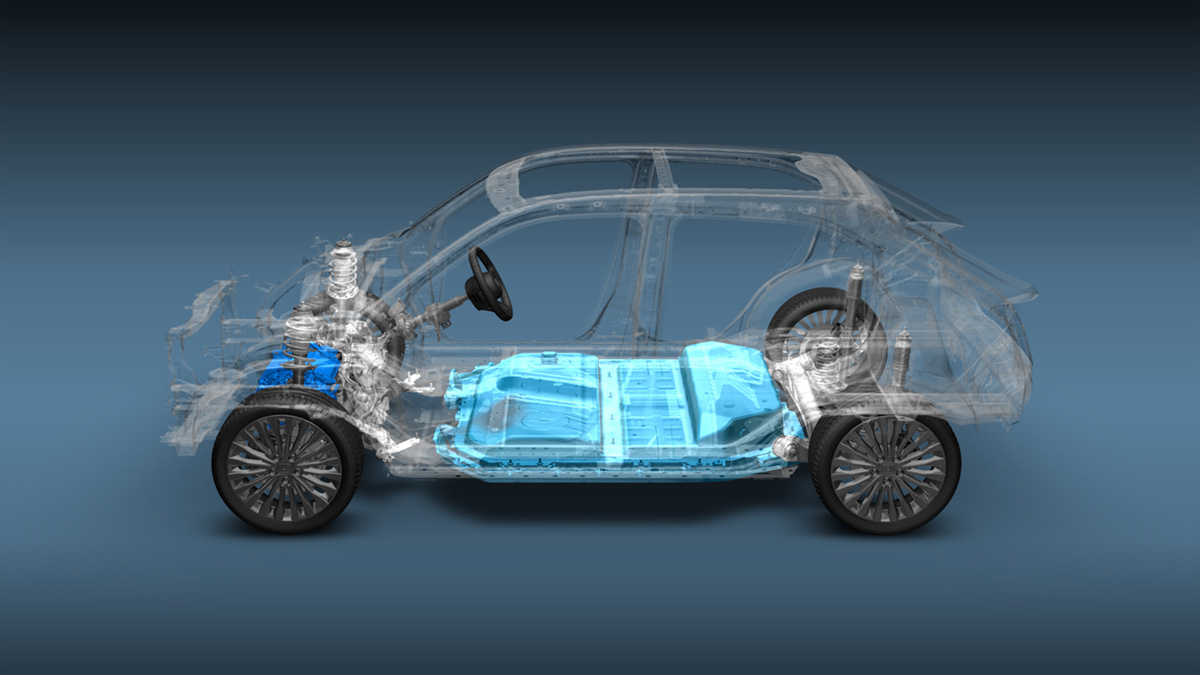
And it gets even worse. Gas cars have better resale values than EVs. That’s partly because the most expensive component of EVs – their batteries – wear out. I don’t mean they discharge and need charging, though they of course do that, too, every day. I mean the rechargeable batteries wear out and have to be replaced.
But I said out the outset that EVs are the vehicles of the future. Why’s that?
It’s because they’re much simpler mechanically. They have no transmission, they have no emissions components, the drive train is simple, they don’t generate the dirt and grime of an internal combustion engine, maintenance is less, and, most of all, batteries will continue to improve by becoming less expensive, lighter in weight, and more durable. (All that said, there are no battery breakthroughs on the immediate horizon.)
But for now, electric vehicles make no economic sense. Don’t let that stop you from buying one to signal your virtue, but it won’t signal any financial sense.
 the Aspen beat