
Maybe we should pay bad parents money to be sterilized

A good part of a person’s success in the game of life is a product of nature and nurture – his genes and the parenting he received. People who were unlucky enough to receive bad genes, or bad parenting, or both, tend to be unsuccessful.

Tragically for America, these people who are unsuccessful at life are the very people who are disproportionately successful at having babies. Those babies tend to inherit their parents’ bad genes and learn their bad parenting.

When those babies grow up (or, often, just partially grow up) they, like their parents, are unsuccessful at life but disproportionately successful at having babies. Those babies, in turn, wind up short-changed by both nature and nurturing.

What I’ve just described already takes us through three generations. In the end, there’s no end. We’ve set up a vicious and expanding cascade of poverty and failure.

The effect is a policy of survival – and propagation – of the un-fittest. Charles Darwin would predict adverse consequences for our species.

Before you take offense, I hasten to add that general rules often are riddled with exceptions. I grew up in in a family of six with modest means. We all turned out OK. But the fact that it sometimes rains in the desert doesn’t disprove the general rule that deserts are dry.

The welfare state makes it all the worse. This was recognized as early as 1965 by intellectuals such as Daniel Patrick Moynihan, the future Democrat Senator from New York back when the Democratic Party sometimes produced rigorous thinking rather than identity politics. Moynihan’s work focused on poor Black families but it’s not a Black issue per se; it’s a poverty issue.

Moynihan criticized social welfare policies where we pay unsuccessful people to have unsuccessful babies to propagate their failure at life, thereby amplifying this vicious cascade of poverty.

The more babies they have, the more money we pay them. Then their babies have babies, and we’re off to the races.

Perhaps our policy should be exactly the opposite. Perhaps we should discourage unsuccessful people from having unsuccessful babies.

A smart start to getting out of this hole would be to stop digging. We should stop paying unsuccessful people to propagate. To that end, eliminate the $3,000 child tax credit.

Then go a step further. Pay people not to have babies. A simple way to accomplish that would be to pay them to undergo sterilization.

That sounds cruel, but is it really? If “my body my choice” justifies people aborting unborn babies because they’re inconvenient, then surely it justifies people accepting money to prevent the babies’ conception. For gosh sakes, the manufacturers of condoms accept money to prevent the conception of babies.

Moreover, many if not most of the babies these people have are utterly unplanned. If it’s cruel to prevent unwanted pregnancies, then why haven’t we outlawed those condoms – along with birth control pills, the rhythm method, premature withdrawal, abstinence and chastity?

I recognize that courts are wary of government measures that produce sterilization. Courts might view a system where the government pays people taxpayer money conditioned on them being sterilized as tantamount to the government sterilizing them involuntarily.

So don’t do it through the government. Let foundations and philanthropists administer the system with private funds. A foundation or a rich guy (Elon, do you hear me?) could say, “Here’s $3,000 for anyone under 50 who wants to get sterilized. And we’ll pay the medical bills, too.”

The people that we want not to have babies would find that offer tempting, because $3,000 is a lot of money to those people. But the people we want to have babies would not find that offer tempting, because that’s not a lot of money to them.

Over time, we just might reduce the population of undesirables (not to be confused with deplorables).

You might ask, what about America’s fertility crisis? Yes, it’s a fact that American (and European) birthrates are less than what’s required to maintain the current populations. And so, the argument goes, we should provide incentives for people to procreate.

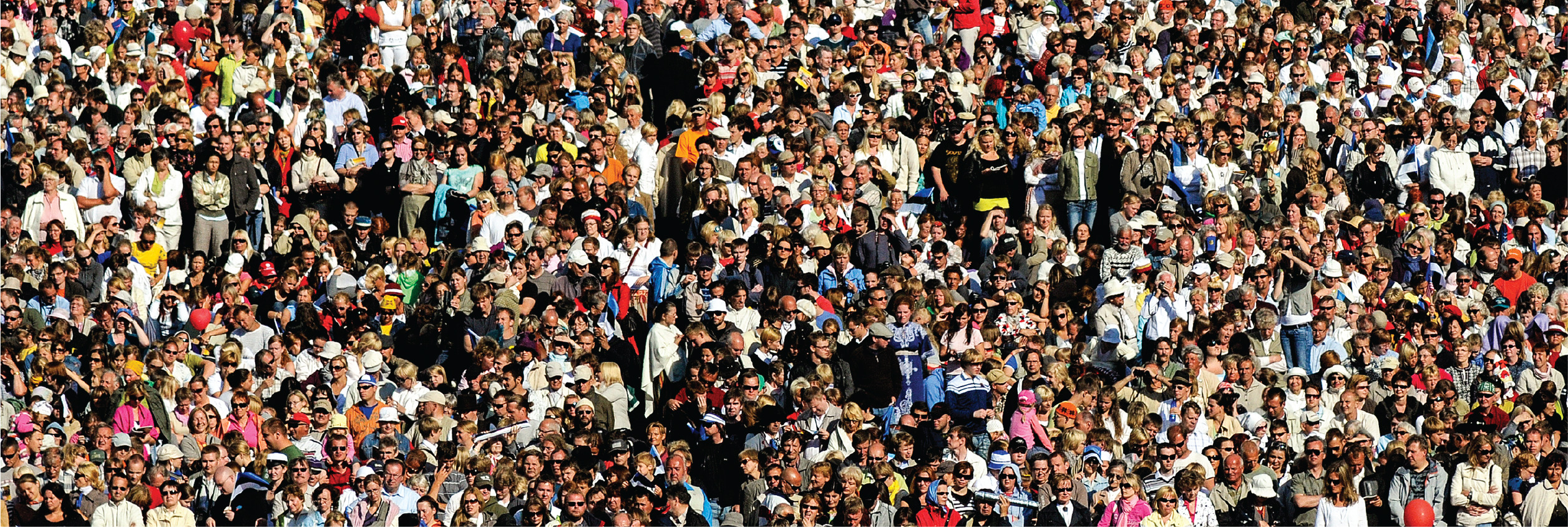
That argument is premised on the notion that when it comes to people, the more the better. I question that notion, especially when I’m forced to endure crowded freeways, crowded hiking trails, and crowded crowds.

We have eight billion of us. Is that not enough? I don’t know about you, but I rarely think, “Gee, I wish there were more people here.”

From a pure financial perspective, it’s true that an ever-increasing population is necessary to continue our Ponzi scheme called Social Security, where we need more and more workers to support more and more retirees who live longer and longer (though the effects of rationed medical care – which seems inevitable and already encroaching upon us – will partially solve that problem).

I submit that the way to fix the Ponzi scheme of Social Security is not to produce infinitely expanded pools of young suckers to support it, but to phase out the scheme. Like all Ponzi schemes, it’s unsustainable. We cannot increase our population forever to produce an ever-increasing pool of hard-working suckers to support an ever-increasing number of long-lived retirees. At some point, we run out of space, resources and suckers.

Even if the number of suckers we breed to support the burgeoning population of retirees is sufficient in quantity, they are apt to be insufficient in quality. How many generations of bad nature and nurture can a society withstand?

I miss the TV dads – and my own too

You know them. They were in your living room and part of your family conversations every night, especially during those 60-second breaks. 

Before America was siloed into warring tribes by ratings-hungry cable TV and, later, by click-hungry internet sites, these men defined fatherhood for two generations. They were uncool before uncool was cool.

I’m aware this isn’t Fathers Day, other than in a specific religious sense. But Christmas always brings back family memories for me, particularly of my dad, which gets me thinking about the role of dads everywhere.

You’ll have your own favorite dads, but here are mine, in no particular order. Feel free to add and subtract.

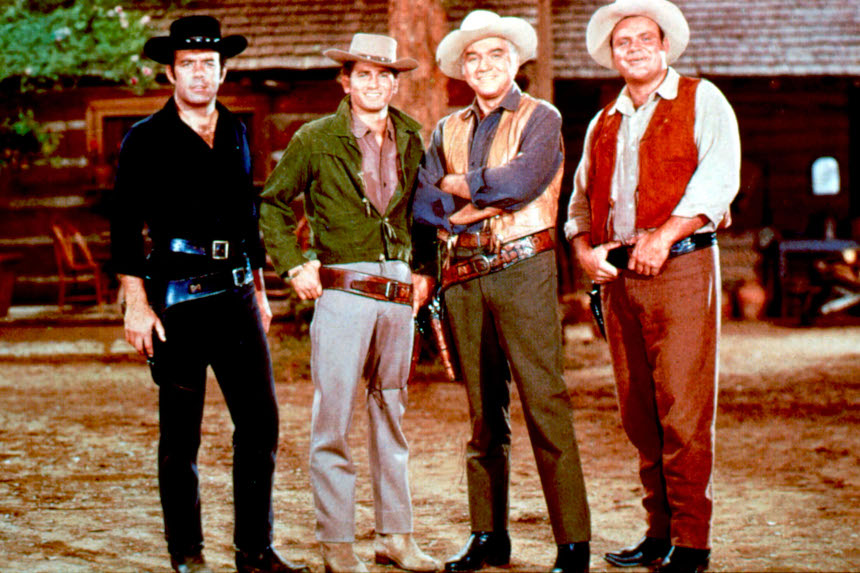
Ben Cartwright, of Bonanza

Ben came west, and founded the Ponderosa Ranch. He married and buried three women who gave him three sons. He was a strong and kind man back in the days when we thought that was a good thing.

Each episode of the show was a morality play, as much of television was back in the days when we had morality. A recurrent theme was the need for men to man-up. Ben taught that lesson many times, usually by example. And sometimes it meant something different than viewers initially assumed.

Frasier Crane, in Frasier

I suppose experts in comedy would say that a fussy, pretentious, good-hearted psychiatrist is easy material (Bob Newhart, anyone?) but Kelsey Grammer is so darned good as an over-actor (and also as a just-right actor on the Shakesperean stage) that he pulls it off. Best. TV Comedy. Ever.

Andy Taylor, of The Andy Griffith Show

I always wanted to dislike Sheriff Taylor (played by Andy Griffith) because the show was just so hokey. But Griffith was an accomplished actor, the writing was pretty good, and so I mostly failed.

I succeeded much better with Barney Fife. Bumbling incompetence with handguns does not amuse me.

Ward Cleaver, of Leave it to Beaver

Not really. Just seeing if you’re paying attention. I couldn’t – and still can’t – get past the fact that this dude calls his young son “The Beaver.” What’s up with that?

Tony Soprano, of The Sopranos

This show was pretty edgy. Tony led a life of crime, but, out of love, he desperately wanted to guide his family into something legitimate. He ever got a therapist!

If only Joe Biden had been watching. 

Jed Clampett, of The Beverly Hillbillies

The hat. This one is all about the hat. I wanted the hat. Well, the hat and the jalopy. Well, the hat, the jalopy and Elly May.

Ricki Ricardo, in I Love Lucy

I never liked Lucille Ball, but to this day it’s remarkable that her husband Ricki was presented as a charismatic Latin immigrant bandleader married to red-headed Lucille.

You couldn’t do that today, because Ricki was the bad kind of immigrant – legal, Cuban and probably Republican.   

Jim Anderson, in Father Knows Best

This is another one that could not be presented today. Maybe you could get away with “Birthing Parent Has a Truth That Works For Them.”

Atticus Finch, in To Kill a Mockingbird

OK, this was a movie, not a TV show. And, OK, I offer it up mainly to show off my movie chops. But Atticus Finch (played by Gregory Peck in his finest role) sets the standard for strength and courage in explaining and exemplifying the nuances of both to his young daughter. Ben Cartwright would be proud. The writing isn’t bad either.

That’s my list from the past. Today, I look for the next generation of fathers in the entertainment media. Two come to mind.

One is Joe Biden, who is not an entertainer strictly speaking but that’s about all he’s good for anymore.

Joe does not make my list of fathers I admire most.

Another is Deion Sanders. I don’t know Prime, and don’t pretend to understand him or relate to him. But one thing is clear: He holds his sons to very high standards of professional (yes, professional) achievement.

But where’s Ben Cartwright, for God’s sake? Where’s Sheriff Taylor? We can’t even get our hands on a good-father mobster like Tony Soprano.

When I was young, I had a father who was quirky (OK, that’s an understatement) but full of decency. Sure, there were things he simply was not capable of. But maybe that had something to do with his own father dying in the depths of the Great Depression when Dad was five. Maybe it had to do with flunking the 6th grade twice due to dyslexia (which went under the medical term “stupidity” at the time). Maybe it had to do with dropping out of school in the 8th grade to support his widowed mother, the turmoil of joining the army underaged, earning his GED, and somehow working his way into the middle class to support a family of six in an 800 square foot house.

I never heard the man say “I love you” to anyone, including my mother. But I was certain this unusual person did love me, just as Sheriff Taylor loved lovable Opie and Ben loved unlovable Adam. That’s how dads were. Television said so.

In today’s world, there isn’t enough of that certainty. The more our world of global information fragments, the less our moral compasses point in the same direction. 

Donald Trump’s anger might not take him any further

When I was a kid, I had a bad temper. I suppose in today’s psychobabble, they would say I had an “anger-management issue” and perhaps they would give me drugs, a handicapped parking pass, and special privileges. But back in the day, I was just a kid with a temper.

One summer day when I was about 11, when my parents weren’t home, my brother and sister locked me out of the house for reasons I don’t remember (but they were probably good ones).

A back door to the house was sliding glass. This was before modern safety glass or double-pane windows. It was a simple un-tempered sliding glass door.

In a fit of anger, I kicked it. Not just with my toe, but with a big round-house kick. It felt good to see it tremble and shake, so I did it again, harder.

It broke. Sheets of jagged glass fell straight across my extended leg. I was wearing shorts.

I was lucky the glass didn’t cut my leg off. As it was, a big razor-sharp glass sheet penetrated well over an inch into my calf through a four-inch incision. In the gaping wound, I could see the fat layer and, beneath it, the red muscle tissue. I screamed in horror and pain.

My sister grabbed a towel, and we threw it around my leg. She ran across the street to ask a neighbor for help. I limped to his car and he casually chatted as he drove me to the ER. When I emerged from surgery an hour later, the neighbor was white, for he’d been told in the meantime about the severity of my injury.

Fortunately, the glass missed the artery, though there was plenty of blood. It did cut a nerve to my foot and left me without feeling on one side of my foot for a few months. To this day, that side of my foot has a funky sensation.

That evening, my father came home from work as usual.

Father: “I hear your temper got the best of you today.”

Me: “Yeah.”

That was it, and we never spoke of it again. I still lose my cool occasionally – most men do – but that’s the last time I can remember that my anger drove me into doing something dangerously stupid.

Anger is a powerful force. Channeled strategically by high-testosterone men storming the beaches of Normandy, it can save the world. Used less-strategically, it can destroy it – and them.

There’s a place for anger in politics. Like a lot of people today, I’m angry. Like a lot of people today, I want to kick the glass doors of our government, media, universities, and big businesses for their censorship, their racial discrimination, their wokeness, their antisemitism, and their incompetence.

Like a lot of people today, I like a candidate who feels similar anger. That’s why I voted for Donald Trump in 2016, again in 2020, and will again in 2024. He’s angry about the right things for the right reasons.

But anger has its limits. The boys storming Normandy had anger, and they sure as hell kicked in the glass door of Hitler’s house, but they weren’t just kicking a glass door.

Those boys also had a careful plan that was devised over months of thought, analysis and discussion by brilliant professionals like General Dwight D. Eisenhower. There were plans, counterplans, contingency plans, a retreat plan, and even a failure plan. Eisenhower himself drafted a mea culpa taking complete responsibility for the effort in case it failed.

Donald Trump has done a ton of good for America, but his anger is reaching the limits of its effectiveness. On Tuesday, he seemed to be kicking glass doors that weren’t even locked.

That appeals to a lot of people, including me in some circumstances. But it turns off women, who are often frightened by a man’s anger. And it turns off unengaged independent and moderate voters. You may despise such people, but they’re the ones who decide elections.

I’ll vote for Trump again, as I’ve already said. But I don’t expect him to win, and I don’t expect any Eisenhower-type mea culpa from him when he loses. Anger has its limits.