Glenn K. Beaton is a writer and columnist living in Colorado. He has been a contributor to The Wall Street Journal, RealClearPolitics, Powerline, Instapundit, Citizen Free Press, American Thinker, Fox News, The Federalist, and numerous other print, radio and television outlets. His most recent book is "High Attitude — How Woke Liberals Ruined Aspen"
You say you want a revolution, well, you know, we all wanna change the world – John Lennon/Paul McCartney
Three-quarters of a million people were killed in the American Civil War, and another half million were wounded – many grievously.
That was in a country with a population of less than a tenth of today’s America. The equivalent deaths in today’s America would be about eight million. That’s something like 20x the American deaths in WWII.
Much of Atlanta was burned to the ground in the Civil War, as were large sections of Charleston, Vicksburg and Richmond.
Abraham Lincoln was assassinated by a southern sympathizer near the end of the war, five days after General Robert E. Lee surrendered the main Confederate army.
The end of the war did not end the anger and hate. The country was divided for generations. I remember growing up in the 60s – in Colorado of all places – and kids would still tease one another about being “Rebels” or “Yankees” a century after the Civil War.
In the south, Blacks were freed from slavery but the defeated separatists subjected them to a new yoke of Jim Crow laws preventing them from voting, obtaining equal educations, living where they wanted, and loving whom they wished.
The Civil War was the most violent and destructive thing that ever happened to America.
Some people want another one.
On both the left and the right, many people are full of anger and hate for the “other side.” That much, I get. I’m pretty angry myself, and I confess to some hatred for the other side on occasion.
The silo’ed news sources on the internet contribute to this. Many people don’t look at news sources other than the ones that say what they want to hear – namely, that the other side is stupid, evil and perhaps subhuman. And hooray for our side!
That’s natural. People believe what they want to believe, and eventually they cherish those beliefs. They watch “news” that tells them their cherished beliefs are right, and that they are right to cherish them.
The news sources themselves are partly to blame. Generations of bias, then sheer incompetence, and now click-baiting, have produced a media industry that often lacks honesty and credibility.
The end result is that anger and hate own some of us. Some of us want not only to beat the other side at the ballot box, and not only to beat the other side in the courts of law, and not only to beat the other side in the court of public opinion. They want to beat the other side literally. They want to kill, dismember and maim the other side.
They want another civil war.
Here’s my advice to those people. Your anger and hate will not produce a beneficial outcome for America.
Moreover, your anger and hate will not produce a beneficial outcome for you.
Look within. Anger and hate are not generated by the objects of your anger and hate; anger and hate come from inside you. And they are consuming you.
But when you talk about destruction, don’t you know that you can count me out.
Remember the virtue-signaling yard signs a few years ago? In rainbow colors, they shouted self-congratulatory platitudes like:
“HATE DOESN’T LIVE HERE”
Except that the residents of the house hated anyone who disagreed with them.
“NO HUMAN IS ILLEGAL”
As if the phrase “illegal immigrant” is synonymous with the phrase “illegal human.”
“BLACK LIVES MATTER”
In view of the colossal rip-offs committed by the organization of that name, this one didn’t age well.
“WATER IS LIFE”
Except it’s not; water is a simple molecule of two hydrogen atoms and one oxygen atom. Saying “water is life” is like saying “aluminum is an airplane.”
“SCIENCE IS REAL”
I’ll leave aside the irony of someone blathering something scientifically incorrect like “water is life” and in the next breath preaching “science is real.” It’s this last platitude that I want to focus on.
I have no objection to the phrase “science is real,” per se. “Science” is a methodology of observing, collecting data, developing theories to explain the data, testing the theories, and adopting the theories that pan out – while discarding or modifying the ones that don’t. That method is indeed real.
The problem with “science is real” as a slogan, as opposed to science as a methodology, is that the sloganeers don’t understand the methodology. Rather, they believe – very strongly, as believers are wont to do – that “science” is not a method but an authority. When people disagree with them, they cudgel them with “science” to shut down the debate.
Real scientists don’t do that. Real scientists instead talk about the theories that the methodology of science has developed. You would never hear a real scientist say “Science says . . .”
Real scientists don’t have nonsensical yard signs shouting “SCIENCE IS REAL.”
Over thousands of years, the methodology of science has led to immense knowledge and enrichment for humanity. From that methodology, we’ve learned that the earth travels around the sun, that many diseases are caused by living pathogens that we can control, that water is a molecule of two hydrogen atoms and one oxygen atom (none of which are alive), that we can split other atoms to release tremendous energy that may someday supply endless electricity to run artificial intelligence machines that will enable us to forget everything we learned in those thousands of years.
But along the way, we’ve gone down many dead ends.
For millennia, scientists including Aristotle thought that life was created spontaneously in suitable settings. It was supposed that tadpoles were created by mudpuddles.
Scientists believed that the earth was a static place, and resisted the concept of continental drift and plate tectonics long into the last half of the 20th century, well after the proof became overwhelming.
Scientists thought that all the great problems of physics had been solved by the end of the 1800s, until an obscure dabbler in the Swiss Patent Office unveiled theories that changed everything. Albert Einstein had a brilliant and creative mind unimpeded by the rigors of running a laboratory or raising NIH grants. In fact, he had no laboratory and did no experiments.
Einstein’s successors in physics never disproved his theories, but their theories of quantum mechanics in the infinitesimal stand awkwardly alongside Einstein’s theories of the universe at large.
His successors accepted Einstein better than Einstein accepted them. He dismissed quantum mechanics theories of uncertainty with “God does not play dice with the universe.” Late in life, Einstein was one of the continental drift deniers.
But the continents do drift, and God does seem to play dice.
In geology, scientists thought the age of the earth was maybe a few million years. Not until the middle of the last century did they theorize correctly (we currently think) that it’s more like 4,500 million years – or 4.5 billion.
At the time scientists came up with the 4.5 billion figure for the age of the earth, that figure was older than the widely accepted age of the universe. It was as if you were determined to be older than your mother. Talk about awkward.
The “science is real” crowd of non-scientists have even more reckoning ahead. Here’s a brief punch list of what the methodology of science has still left unanswered:
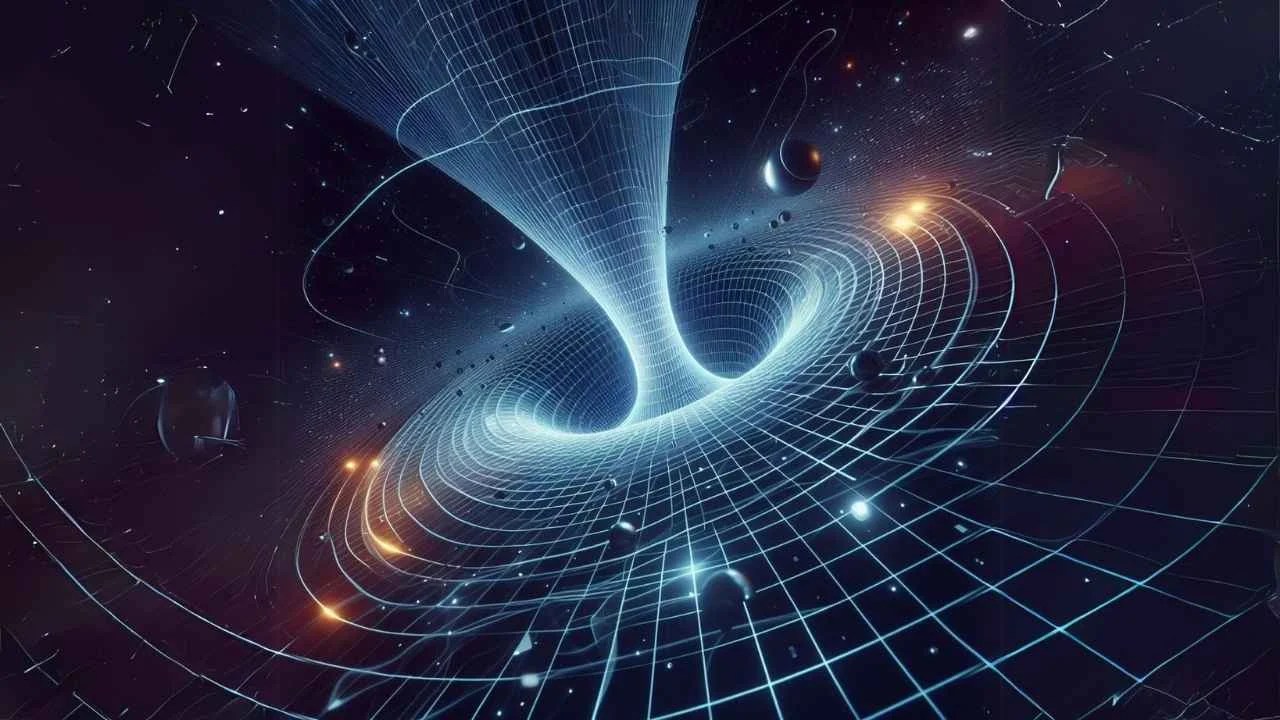
We don’t know why things fall. We have a name for it – gravity – and we can predict how things react to this gravity stuff (though our predictions get squirrely when we take them to a large scale and start moving things fast) but we don’t know what it is. It behaves like a force by drawing things toward one another, but we cannot isolate or identify that force. We’re left with the unsatisfying conclusion that it’s just an artifact of the shape of the universe. Hmm.
About 90% of the universe is unaccounted for. We call it “Dark Matter,” which is not to be confused with Darth Vader. Our observations say it has to be there, but we can’t find it or even describe it. Given that it’s 90% of the universe, it’s not like looking for a needle in a haystack. It’s more like looking for hay in a haystack. Here we are, deep in the haystack, and we can’t find the hay.
The universe began with a bang, says our best theory. Before this big bang, there was nothing – no time, no things, not even empty space. Then everything came out of nothing. We don’t know why and we don’t know how.
Back to quantum mechanics. Scientists have experimentally proven that there can be “action at a distance.” If two protons (or other objects) are “entangled,” then a change to one simultaneously effectuates a change to the other even if it’s a million miles away.
This simultaneous action-at-a-distance would seem to violate Einstein’s settled conclusion that nothing can travel faster than the speed of light – including information. But physicists have ideas as to why it doesn’t violate Einstein. They call those ideas “theories.” Those theories will be tested, validated, invalidated, modified, remodified and, if appropriate, discarded.
I suspect that some of the great unanswered questions will never be answered because the applicable theories cannot be tested. How everything – the universe – came into existence from nothing, is one of those unanswerable questions. The nothingness before the big bang was empty of both time and events, and so it left no tracks. All we know and ever will know about the time before time and the nothing before everything, is nothing.
Which brings us back to that dice player.
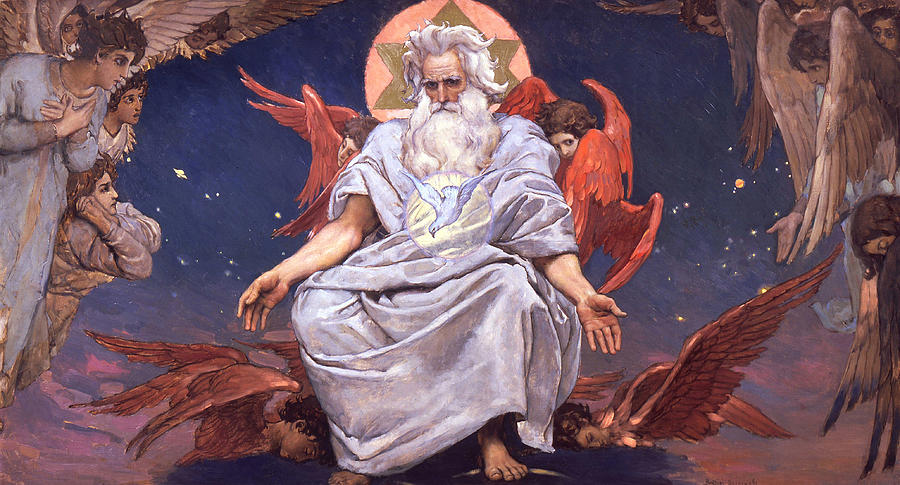
The best we can say is this. Creation was created and, perforce, it was by a creator, the nature of which or whom is a question best left to philosophers and theologians.
Next time someone tries to win an argument by invoking “science,” have a little fun with them. Start with “Do you think water is life?” and go on from there.
Political assassinations in America are usually committed by nutjobs. Lee Harvey Oswald was a communism-sympathizing loser. James Earl Ray was a career criminal who copped a guilty plea to avoid the death penalty and then falsely maintained his innocence until the day he died in prison.
This time feels different. This murderer looked normal. He earned college credits while in high school. He was a straight-A student. He had no criminal record.
He lived at home with his parents, two registered Republicans active in their Mormon church in conservative Utah. The family all talked ‘round the dinner table, as families used to.
One of those family dinner table talks early this week was about Charlie Kirk, who was due to visit the area on Thursday.
You know the rest of the story. As Charlie was talking in his trademark sort of way – not ranting, not raving, not cursing, but simply sitting and talking in a normal conversational way – the murderer shot him in the neck from a rooftop with a high-powered rifle. Charlie bled to death in seconds.
After video of the murder scene circulated, the murderer’s father turned him in with the help of a family friend who was retired from law enforcement.
Apart from the murder (but how was the play, Mrs. Lincoln?) the whole scene looks like a Norman Rockwell painting – a perfect glimpse of Americana.
Over a half a century ago, philosopher and writer Hannah Arendt wrote Eichmann in Jerusalem: A Report on the Banality of Evil. She was struck by the pedestrian personality of Eichmann in his trial and before his hanging in Jerusalem. He was not evil in the obvious ways. He had no horns, no cape, no devilish laugh, no foaming at the mouth, no apparent Hitlerisms.
Rather, Eichmann was a not-very-bright technocrat who’d dropped out of high school. He believed he was not just following orders (he was) but that he was following the law. He exhibited no hatred for the Jews, apart from his role in killing six million of them.
If Adolf Eichmann had been born into modern America, he might have become a mid-level manager in the EPA, the IRS or the Social Security Administration. He lacked both the credentials and ideology to be in the White House of either Joe Biden or Donald Trump, and he certainly lacked the passion.
Which brings me back to Charlie Kirk’s murderer. He was a devotee of the vapid echo chambers of online “discussion” but he exhibited little nuttiness or passion, until Thursday anyway.
Yes, he was a straight-A student, but in today’s schools that barely puts a kid in the top half of the class. Yes, he earned college credits while in high school, but then dropped out of a fourth-rate college. Yes, he participated in discussions at the family dinner table, but why was he living at home and eating his mother’s cooking at age 22?
The kid was a casual underachiever just going through the motions of an unlived life. He was the picture of banality.
The banal evil of Adolph Eichmann was six million times worse than the banal evil of Charlie Kirk’s murderer, but here’s what gives me pause: There are at least six million of these kids out there.
On Easter Sunday, I awoke with the thought that I would go to church, something I seldom do. Not just any church but the one where I grew up. Where the pastor of my youth was an intellectual and spiritual giant, and a very nice guy. Where my parents were members and volunteers for half a century. Where they still reside – their ashes dwell in the adjacent glen.
So I looked up the church to find the time of Easter service. Their website was plastered graffiti-like with the phrase, “We are love” in translucent cursive so you could still see the words and pictures of the page. I wasn’t sure of the biblical source of that phrase, or exactly what it means, but it’s not a bad marketing slogan for a church.
On the other hand, it seemed a little cheesy and self-important. It reminded me of the virtue-signalling yard signs that sprouted like weeds a year or two ago, shouting that the inhabitants of the houses where they were planted were very, very good and smart people – much more smart and good than the reader of the sign.
I clicked into a page on the church’s website entitled “What We Believe.” I saw nothing there about Jesus or God. But I did see their boast that “We are extravagantly inclusive.” Of everybody except Jesus and God, apparently. At that point, I abandoned my Easter mission.


 the Aspen beat