The only hotness in Hogg is that he’ll soon be bacon

The Democrat who goes by the initials AOC is the hottest Democrat in Congress. I know that’s a low bar, but still.

It’s the main reason Democrats like her. Be honest: Who would you like to share a voting booth with – AOC or Nancy Pelosi? And then there’s also the possibility of voting from home . . . .

I’ll admit it’s a bit creepy to see Her Hotness and 163-year-old Bernie Sanders together on a stage performing Dem-porn acts such as “the rich don’t pay taxes” and “Republicans are a threat to Democracy” before at least one of them gets driven to one of Bernie’s mansions.

But in creepy cradle-robbing and grave-robbing stunts, they have nothing on the Republicans. Have you seen Bill Belichick’s new 24-year-old girlfriend? (I thought the guy was just a great football coach. Turns out, he’s a god!)

And then there’s a new kid on the block named David Hogg. He’s a hero because he was at school one day when a nutcase went ballistic with a gun.

Hogg saved several students. Well, no, he didn’t.

Hogg disarmed the gunman. Well, no he didn’t.

Hogg went to confront the gunman. Well, no he didn’t.

Hogg hid in a closet. Yes, he did.

Hogg has made a living selling the day he hid in a closet. His pitch is that we should ban guns. Forget about police protection in the schools. Forget about mental health issues. Forget about arming the teachers. No, we should ban guns.

Because then, the gunmen couldn’t get a gun legally at a gun store, and they’d have to get them illegally instead. They’d have to get one or more of the 400 million that are in circulation in America.

Democrats love this pitch. Not because it would reduce gun violence – remember the 400 million guns already out there?

No, Dems love the pitch for two reasons. One, it punishes gun owners, and they hate gun owners. Or at least they think they do. They forget that most gun owners are not pickup-drivin’ beer-drinkin’ tobacky-chewin’ GOP-votin’ rednecks. Most don’t drop their drawers or even their g’s. Most are people like you and me. Well, at least me.

Two, banning guns makes Dems feel virtuous. It means they’re doing something and, more importantly, it means they can say they’re doing something. In the world of Democrats, it doesn’t matter if what you do is effective. It only matters that you do it and talk about doing it.

Hogg rode this pitch all the way to the Democrat National Committee Vice Chairmanship. (I won’t make a comment about the Chairman of Vice, not with Belichick on the page.) Hogg became a male AOC. White smoke rose from the DNC office, and it wasn’t because they were burning emails. They all but christened him “His Hotness.”

Then he started saying some things apart from his DNC-approved gun-taking pitch. He suggested that the old Democrats should retire to make way for young ones. He himself, coincidentally, happens to be a young one.

But not all old Democrats should retire, he said. Only the powerless ones he thought he could risk offending. That wouldn’t include 85-year-old Nancy. She’s fine, he assured us. Really not even old!

He miscalculated. Turns out, the old powerless ones he said should retire do, in fact, have some power.

Hogg is now being ousted from his Chairman of Vice position. He’s cooked. He’s fried. He’s bacon.

But he’s still got his gun-taking schtick. Expect more books and speeches.

Mexico sues Smith & Wesson, Supreme Court shoots them down

One summer day in 1924, a train stopped at a station on Long Island. A man carrying a harmless-looking package ran to catch it. He struggled to board the train as it departed. One of the train employees on board reached for his hand as another on the platform gave him a boost from behind.

The package fell onto the tracks. It turned out to be a package of fireworks. The fireworks exploded. 

So, the exploding fireworks injured someone, right?

Not exactly.

The court opinion was written by Benjamin Cardozo, the brilliant judge who was then on the New York state supreme court (which they called, and still call, the New York Court of Appeals). Cardozo later became a storied member of the U.S. Supreme Court. In his words:

“The shock of the explosion threw down some scales at the other end of the platform, many feet away. The scales struck [Helen Palsgraf], causing injuries for which she sues.”

Today, of course, the phrase “injuries for which she sues” is redundant.

This case has been studied by generations of first-year law students. The legal question presented is, should the railroad be liable for Mrs. Palsgraf’s injuries?

Cardozo said the answer is no. People who are negligent are not liable for all the consequences of their negligence. They are liable for only those consequences that are reasonably foreseeable.

Cardozo seemed to accept for purposes of argument that the railroad employees were negligent in boosting the package-carrying man onto the train, and implied that the railroad might be liable if the package were labeled as combustible and the injury had occurred to that man.

But Mrs. Palsgraf was just too far away physically and causatively. The employees could not have reasonably foreseen (1) that their normal boost to a passenger carrying a harmless-looking package would knock the package out of his hands, (2) that the package would land on the hard tracks, (3) that the package would contain combustible fireworks, (4) that the fireworks would explode, (5) that the explosion would knock down heavy scales at the other end of the platform, (6) that the scales would fall onto Mrs. Palsgraf, and (7) that she would thereby be injured.

This principle in law is called “proximate cause.” A person committing a negligent act is generally liable for only the consequences that are “proximate” to that act – the ones that are reasonably foreseeable.

If the law were otherwise, imagine the weird outcomes. If you negligently run a red light, and three miles later someone jumps in front of your car, then you could be liable for his injuries. Because, after all, you would not have been at that exact spot at that exact time if you had not negligently run the red light three miles back.

Which brings us to Mexico.

Like America, Mexico has a gun violence problem. The guns are manufactured mostly in the United States, and smuggled illegally into Mexico. There, the guns are used by bad “we-don’t-need-no-stinkin’-badges” Mexicans to shoot good Mexicans.

Mexico has not been willing and able to address their gun violence problem any more than Chicago has. Putting gangsters in jail would cost them their votes, and might well cost them their lives.

So Mexico thought of another approach. They sued the American gunmaker Smith & Wesson back in 2021 for manufacturing and selling guns in the United States that were transported across the border into Mexico.

You see, Mexico is less interested in stopping gun violence by gun-toting gangsters who have, shall we say, “leverage” over the Mexican government, and more interested in profiting from the gun violence by taxing the manufacturers of the guns.

Mexico faced two obstacles in their case. First, there was the formidable Mrs. Palsgraf. The “proximate cause” between Smith & Wesson’s manufacture of the guns and the guns’ misuse by Mexican bandits was doubtful.  

Second, the United States had enacted legislation on this very point in 2005. Even if Mexico were to get past Mrs. Palsgraf, a law called the Protection of Lawful Commerce in Arms Act (the “PLCAA”) expressly insulates firearm manufacturers from blanket liability for the wrongful use of firearms that they legally sell.

Mexico filed suit anyway.

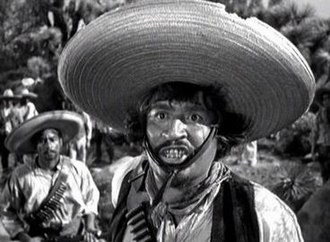
They didn’t file in San Antonio, which you’ll remember was the site of their last great victory over the Yanquis. And they didn’t file in Tennessee, where Smith & Wesson are located along with their friends Jack Daniels and Phillip Morris.

(Speaking of which, “Alcohol, Tobacco and Firearms” should be the name of a convenience store, not a government agency.)

Mexico instead filed suit in a federal district court located in . . . Massachusetts.

That was clever.

But it didn’t work. The District Court judge tossed the case.

Mexico then appealed to the federal court of appeals sitting in . . .  c’mon, you know . . . Boston.

That did work. The Court of Appeals reversed, in deciding that Mexico had a viable case.

Don’t think the fix was in at the Court of Appeals, however. The opinion was written by a judge appointed by a President with a distinctly un-Mexican name, Barack Obama.

Smith & Wesson then appealed to the Supreme Court, now dominated by six conservative-ish Justices, three of whom were appointed by our conservative-ish President. The Supreme Court is not in Boston and is not even in Massachusetts. These days, it’s in Heaven.

The formal opinion of the Supreme Court won’t be issued until around June, but the Justices were not exactly poker-faced at this week’s oral argument. The conservative Justices practically laughed at the arguments of the American lawyer who represented Mexico.

Even two of the three libs asked questions that seemed hostile to Mexico’s case. That included a Justice who is liberal but (or is it “and”?) very smart, Justice Kagan.

What’s the lesson? Sometimes, the wheels of justice turn slowly, but grind exceedingly fine. Adios amigos.

Glenn K. Beaton practiced law in the federal courts, including the Supreme Court.

“You loot, we shoot” is Americans’ answer to the left’s plot to enslave them

Governor Ron DeSantis is a very good governor. He may or may not out-debate the California pretty boy governor if that debate actually happens, but he sure out-governs him. The guy can run a big state, which historically suggests he could run a big country. See, Reagan, Ronald; but see, Carter, Jimmy.

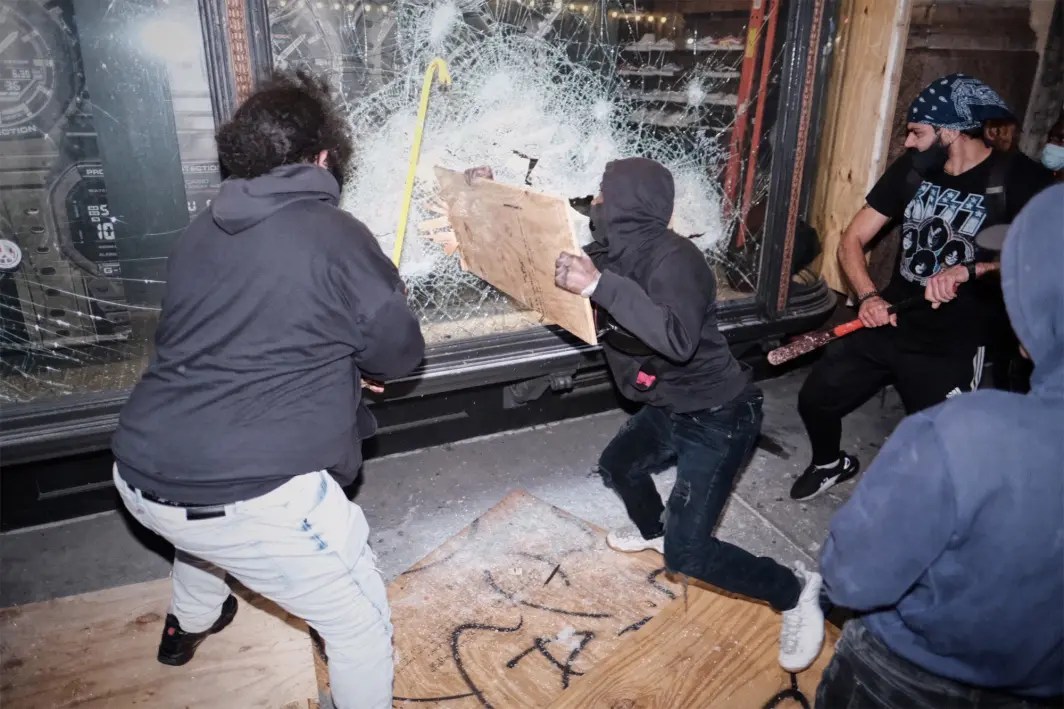
DeSantis gave a speech the other day about the aftermath of a hurricane that barreled through Florida. Concern had been expressed about looting in the wake of the disaster. DeSantis expressed a similar concern – in the guise of a concern for the looters:

“People have a right to defend their property. This part of Florida, you got a lot of advocates and proponents of the Second Amendment, and I’ve seen signs in different people’s yards in the past after these disasters, and I would say it’s probably here – ‘You loot, we shoot.’”

He all but said “Make my day.”

Continue reading

Lauren Boebert is “present” but that’s about all

l

A couple of centuries ago, an extraordinary group of 56 men on the eastern seaboard of our continent declared the independence of their lands. At the close of their Declaration of Independence, they further declared, “We mutually pledge to each other our lives, our fortunes and our sacred honor.”

I think Lauren Boebert would have voted “present.”

The Founders weren’t just being melodramatic. Had they lost the Revolutionary War, they’d have met their end at the end of a rope. They took that risk to found this amazing democratic republic, one that Abraham Lincoln later noted was “conceived in liberty.” He might have added “with undaunted courage and against all odds.” 

Continue reading