In California – and probably your state – illegals easily get driver’s licenses and are automatically registered to vote

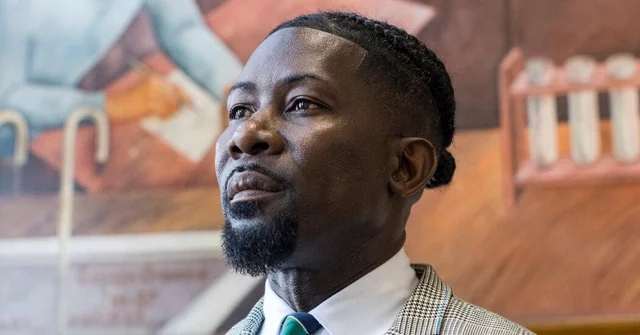
There’s an odd little side show that caught my attention in the vaudeville act of “Dr.” Ian Roberts, the illegal immigrant from Guyana whom the Des Moines School District hired, heroized, and paid $300,000/year. (None of those particular things caught my attention in themselves, since they’re all par for the illegal immigrant course, these days.)

What caught my attention is that he’s registered to vote in Maryland, which was one of his waypoints on his grand and illegal tour through America. How, I wondered, did he manage to register to vote in Maryland?

It’s easy. In fact, it’s automatic.

Like about 18 other states, Maryland allows illegals to get driver’s licenses. Yes, it’s illegal for an illegal to be in America but, no, it’s not illegal in those states for them to get a driver’s license to drive around. Their presence is illegal, but their driving is not.

Okay, fair enough. On second thought, that’s not fair at all to the rest of us who wind up dodging illegals whose driving “skills” are the product of the roads and customs of such places as Guadalajara while we see our insurance premiums skyrocket.

But, anyway, there’s more.

In about 24 states, when the state issues a driver’s license, it automatically registers the person to vote – completely and willfully ignorant of whether the person is an American citizen.

Re-read that last paragraph. Yes, you got it right.

This scheme has a name. (The Democrats are great at branding things. See, e.g., “Affordable Housing,” “Reproductive Rights,” and “Me Too.”) They call this one “Automatic Voter Registration” or “AVR.” Democrats boast that AVR makes it easier to vote.

About that, they’re right.

Back to the erstwhile “Dr.” Ian Roberts. He got a driver’s license in Maryland while he happened to be on-the-lam there. Under their AVR system, Maryland automatically registered him to vote, as other states with AVR would have done.

Voila! He was in the country illegally, but had a valid driver’s license to drive around and was duly registered to vote.

Nothing odd or extraordinary took place. What happened undoubtedly happens thousands of times every day. It’s supposed to happen that way. There was no breakdown in the system. His voting registration was not a mistake.

The mistake was a bigger one. The mistake was a failure of American government. One political party has hijacked the levers, arms and dials of American government to produce deliberate and systematic voting fraud.
The Wall Street Journal debases itself in a misleading Trump headline

I’ve read the Wall Street Journal for many years. I’ve even had a piece published in the Journal. The opinion page is excellent (even when I disagree with the opinions expressed there) and the news page is reliable (though it has drifted leftward over the years).

I was therefore surprised and disappointed to see the Journal’s coverage of a recent interview that President Trump gave to NBC News.

Trump was asked about the due process protections he should afford illegal aliens being deported. Here’s the transcript of the relevant part, as presented by NBC News itself:

“But even given those numbers [of illegals] that you’re talking about, don’t you need to uphold the Constitution of the United States as president?” Welker asked.

“I don’t know,” Trump replied. “I have to respond by saying, again, I have brilliant lawyers that work for me, and they are going to obviously follow what the Supreme Court said.”

A fair reading of that exchange is: (1) the interviewer asked Trump whether he would uphold the Constitution in connection with his deportation of illegals, (2) he replied that he’s not a lawyer, so he doesn’t know what the legal requirements are, (3) he has many brilliant lawyers who will tell him, and (4) they’ll “obviously follow what the Supreme Court” says.

The Journal presented the clip, but accompanied it with a very misleading headline. The headline read,

“Asked if He Has to Uphold the Constitution, Trump Says ‘I Don’t Know’”

That headline was misleading in at least three ways. First, it leaves out the context, thereby implying a context much broader.

The question asked of Trump was not the general question of whether he “has to uphold the Constitution.” Rather, it was a very specific question: It was whether Trump has to afford due process protections to illegals being deported.

Second, the headline omits the rest of Trump’s answer. He immediately went on to note in connection with this Constitutional issue that he is not a lawyer.

That’s not just a quibble. Even most lawyers would struggle to define the necessary due process protections for illegals. Do they get a full-blown jury trial? Do they get summary adjudication by an administrative judge? Do they get something in-between? Even the Supreme Court has not been crystal clear on this point.

Third, Trump wound up his answer by explicitly stating that he would defer to whatever the Supreme Court says.

In context, it’s hard to see what Trump said wrong. He did indeed start his answer with “I don’t know” but immediately explained why he didn’t know, and gave assurance that he would do as told by people who do know — namely, the Supreme Court.

The Journal’s headline parrots a similar headline from the outlet that did the interview, NBC News. I was not surprised to see NBC sink this low to rake up muck, but I was indeed surprised to see the Journal follow them down there.

Glenn Beaton practiced law in the federal courts, including the Supreme Court.

Liberal judges to violent, criminal illegals: “You’re Trump’s enemy, so that makes you my friend”

Judges lately often exhibit acute cases of TDS. One in Milwaukee was preparing to preside over the trial of an illegal who’d been charged with domestic abuse. In layman’s language, he was charged with beating his girlfriend and others to the point that some required hospitalization. Federal agents showed up outside the judge’s courtroom with a warrant to arrest the man, presumably to deport him.

The judge stalled the agents for a bit by sending them down the hall, then returned to the courtroom. While the agents were away, she spirited the violent illegal out the side door.

The agents suspected a ruse, and went outside. They intercepted the man on the street, though it took a potentially dangerous rundown to catch him.

A judge in New Mexico was harboring three illegals who were apparently members of a notorious Venezuelan gang. The judge gave them guns. The judge also took a hammer to the phone belonging to one, evidently because it contained pictures of beheaded victims. He didn’t want the incriminating evidence to be discovered.

These acts by judges are not just intemperate and illustrative of bad, well, judgment. They’re also crimes. It’s a federal crime to conceal illegal immigrants. It’s a federal crime to interfere with the investigations of federal law enforcement officials. It’s a federal crime to lie to them. It’s a federal crime to destroy relevant evidence of a crime. The statutory punishment can involve decades in the federal penitentiary.

Ordinarily, these judges would not side with a wife-beater, or with a gang member with photos of his beheaded victims on his phone. Even judges who are Democrats are not that loony.

So why did the judges do so in these cases? Here’s my theory.

The reason the judges sided with criminals in these cases was because the person who was after them was Donald Trump.

These Democrat judges perceive Trump as their enemy (probably correctly) and they perceive these criminals as Trump’s enemy (certainly correctly) and so that makes the criminals their friend.

“My enemy’s enemy is my friend” is a crude and amoral way to pick friends, but I suppose people have the prerogative to use whatever criteria they like in such personal matters.

But judges sitting in their courtroom are not engaged in personal matters. They’re engaged in public matters. Their job is to judge, and they’ve sworn to do so in accordance with the law. They don’t have the luxury of putting the law aside in favor of personal prejudices such as “the enemy of my enemy is my friend.” If they did, then they could decide that criminals are innocent simply because they happen to dislike the prosecutor. Or guilty because they happen to like the prosecutor.

I’m from the old-fashioned school, and so are almost all other lawyers and almost all judges and almost all civilized legal systems. In that school, the guilt or innocence of a defendant is based on what he did, not who he’s a friend or enemy of.

These judges know that, and they would agree with it – in the abstract. If offered a hypothetical where the evidence shows the defendant is guilty but the prosecutor is someone the judge abhors, the judges would say that’s the way the cookie crumbles. The defendant would be convicted on the basis of the good evidence presented, not exonerated on the basis of the bad prosecutor presenting it.

But in these particular cases – the real-life ones in Milwaukee and New Mexico mentioned above – the judges have become prisoners to their emotions. Their hate for Trump is so strong that they literally cannot think straight.

The judge’s best defense to the charges against them for aiding the criminal illegals, therefore, is a plea of insanity. And I think that plea is a pretty good one.

They’re deranged, and I mean that in a clinical way. Donald Trump has a way of doing that to Democrats. This derangement is not helping them with voters.

Glenn Beaton practiced law in the federal courts, including the Supreme Court.