Wolves roamed Colorado for millions of years. At the end of the last ice age, they managed to survive the mass extinctions of megafauna such as mammoths, mastodons, sabertooth tigers, giant cave bears, and huge sloths, an extinction event that was probably caused in part by the arrival of humans from Asia at about the same time.
Until the much later arrival of Europeans, those early Americans were living in the stone age. Their weapons were stone-tipped spears and arrows. They didn’t even have horses. But they hunted in a way that was deadly to large herding animals and the predators of the herds: They used fire.
Don’t believe the myth that they killed only whatever they could eat. They didn’t eat all the six-ton wooly mammoths, believe me.
The truth is that they killed as humans are known to kill: They killed only whatever they could.
The wolves survived those humans and their fires. As large-ish mammals go, wolves are smart. Pack hunting involves a lot of socialization, planning, communication, hierarchy, and cooperation.
If you think you and a pack of friends could bring down a moose with your bare hands, try it sometime. And you weigh much more than a wolf.
It wasn’t until Europeans arrived just a few centuries ago with firearms, poison traps, and the intention to raise cattle and sheep on the open range, that humans succeeded in exterminating wolves in Colorado.
Even then, it took a while. The last wild wolf was seen in Colorado as late as the mid-1940s. The last known wild grizzly bear in Colorado was not killed until 1979. Mountain lions never went extinct in Colorado, and now there are about 4,000 of them here.
To some of the people who spent their lives hiking, climbing, adventuring, and growing up in Colorado, the absence of wolves seemed a pity, an upsetting of the age-old natural order.
I’m in that group.
Apart from sentimentality, there’s a biology issue. Biologists say that the absence of wolves has produced huge destructive herds of their natural prey – elk. The elk overgraze the grasslands, leaving it prone to erosion. Ironically, this is to the detriment of the grazing cattle and sheep for whose benefit the wolves were eliminated.
More elk are now in Colorado – over a quarter million – than in any other state, including Alaska, Montana and Wyoming.
That surprised me. For animals that can weigh nearly half a ton and stand tall as a man, these Wapiti – or “ghosts of the forest” – are very shy. In a long lifetime of hiking thousands of miles of the Colorado backcountry, I’ve seen them fewer than a couple dozen times.
I may not see elk often, but I may finally be granted my wish to dance with wolves. A citizens’ referendum a few years ago put to the people the question whether wolves should be reintroduced in Colorado. It passed.
It hasn’t been hard to find wolves for the reintroduction task. They never went extinct in most of the west, including Wyoming, Montana, Idaho, Oregon, Washington, California, Arizona, Alberta and British Columbia. They’re also in Michigan, Wisconsin and Minnesota.
The Colorado referendum provided that ranchers would be compensated fairly for the livestock the wolves prey upon. Nobody in their right mind believed that wouldn’t happen.
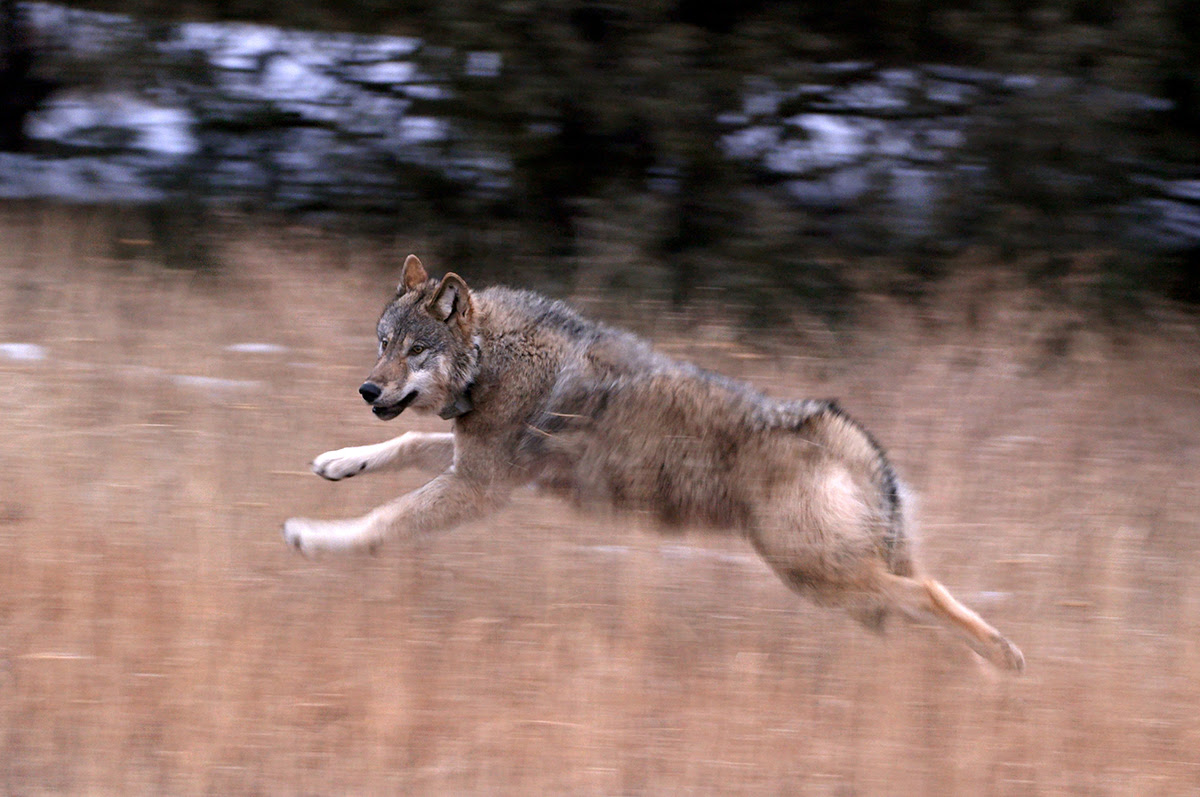
And it has. We now have about 30 reintroduced wolves in Colorado, and they kill a few dozen cattle and sheep a year.
Let’s put those numbers in context. Those 30 wolves are less than 1% of the 4,000 mountain lions. In case you’re worried about being eaten, wolf attacks on humans are practically non-existent, while mountain lion attacks on humans, labradoodles and other semi-intelligent domesticates occur with some regularity.
Those 30 Colorado wolves are about 0.001% of the 2.6 million cattle here. Colorado cows outnumber wolves by nearly 100,000 to 1.
The few dozen wolf predations on livestock don’t compare to the thousands of cattle and sheep lost to winter weather, lost to collisions with cars, and sometimes just plain lost – or stolen – on the wide-open range of National Forest lands where ranchers lease grazing rights on the cheap.
At the rate wolves are eating Colorado cattle, it would take them approximately a quarter million years to finish dinner – but dinner has a life span of only about 18 months.
I know those figures are cold comfort to a dead cow preyed upon by a wild wolf. But being dead and eaten is the fate of that cow anyway, right?
As for the cow’s owner, the taxpayer money paid as compensation to ranchers for wolf predation is generous.
As for the taxpayers who pay that compensation, even at generous rates it doesn’t amount to much because it happens so seldom. The total is only something in the low to mid-six figures a year. That’s roughly a nickel per year per Colorado resident.
I’m happy to pay my nickel. If the nickel is a sore spot with you, I’ll pay yours too.
Apart from the dollars, cents and sense at issue here, the debate over wolf reintroduction rages emotionally. I’ve noticed a certain tribal aspect to it. It’s my tribe – conservatives – who tend to be opposed to wolf reintroduction, while it’s the opposing tribe – liberals – who support it.
I’m not sure why. Teddy Roosevelt was both a conservative of sorts and a conservationist who was instrumental in protecting Yellowstone and the wildlife there. I’m certain he would support wolf reintroduction to Colorado.
Nonetheless, the range war goes on, Hatfield and McCoy style. Somehow, somewhere along the way, wolves got thrown to the wolf-bin of environmental issues – that grab bag of global warming, wind power and plastic straws. The more one side supports it, the more the other side opposes it.
Wolves have become collateral damage in the culture wars. People on each side, who don’t know or care much about the substance of the issue, bark and howl at their counterparts on the other side.
To my tribe of conservatives, wolves are equated with globalist transexuals in fur coats who are after their children. To the opposing tribe of liberals, wolves are seen as sacred angels of Gaia.
Both are wrong and destructive. The wolves deserve better than to be tools in this ridiculous culture war that they didn’t start, don’t fight, and can’t win.
And we deserve better. Forget about Gaia. We conservatives and conservationists deserve a God-given land with the natural creatures He put there. We conservatives would do well to conserve well.
Glenn Beaton has lived over 60 years in Colorado, has climbed 50 of the Colorado 14ers, and is a former Full Member of Mountain Rescue Aspen.

 the Aspen beat