Glenn K. Beaton is a writer and columnist living in Colorado. He has been a contributor to The Wall Street Journal, RealClearPolitics, Powerline, Instapundit, Citizen Free Press, American Thinker, Fox News, The Federalist, and numerous other print, radio and television outlets. His most recent book is "High Attitude — How Woke Liberals Ruined Aspen"
The Republicans finally did something great that I thought they never would have the stones to do. They reduced the funding for the government-controlled media outfit called The Corporation for Public Broadcasting.
Hallelujah!
CPB was established half a century ago with the good intention of providing television and radio services to rural America in a day long before cable TV and megawatt radio stations made television and radio ubiquitous, and long, long before the internet made them obsolete.
Fine.
Then they expanded into children’s programming like Sesame Street and Mr. Rogers, to give children an alternative to Saturday morning cartoons.
Fine. But notice the inevitable expansion. Taxpayer-funded enterprises have a way of doing that.
Then they expanded into cultural offerings like Masterpiece Theater and British comedy.
Not so fine. Why do the wealthy elites who watch Masterpiece Theater and British comedy (or is it “comedy”?) need taxpayer subsidies? And why do we allow cultural offerings selected by semi-government bureaucrats and apparatchiks to use taxpayer money to undermine the competing cultural offerings on commercial TV and the internet?
Then they went woke.
Everyone knew CPR was woke, and then a long-time editor wrote a piece for The Free Press (you should check out TFP, by the way) that amounted to a full blown exposé. He revealed their conscious attempt to bury the Hunter laptop story, to trumpet the false Russian collusion story, to dismiss the lab-origins of COVID, and so on. NPR had become a Democratic government mouthpiece.
He reported that at the headquarters of their radio arm, NPR, there were 87 registered Democrats and 0 Republicans. Unsurprisingly, Democrats were staunch supporters of NPR, and vice versa. Republicans, not so much.
For that exposé, NPR suspended the editor temporarily and ostracized him permanently. Consider the Pravda-esk irony that a government organization charged with reporting news punishes an employee for doing exactly that, because the particular news he dares to report is that the organization is biased in reporting the news. He ultimately resigned.
This week, the Republican Senate voted to claw back about a billion dollars in taxpayer-money allocated to CPB over the next two years. All Democrats voted against the claw-back. Two purported Republicans joined them, but the measure passed the Senate and later passed the House. It’s now on President Trump’s desk for signature.
So, what will happen? CPB and its labyrinth of entities have always simultaneously maintained that (1) they receive hardly any taxpayer money, and (2) taking away their taxpayer money will cripple them.
Both are lies. They do receive a lot of taxpayer money – a billion dollars over two years isn’t chicken feed – and they will not be crippled by losing it. If nothing else, the Democratic National Committee will toss them a few hundred million, directly or laundered through George Soros and his minions.
The CEO of NPR had a few choice words:
“I’m so done with late-stage capitalism.” “America is addicted to white supremacy.” “White silence is complicity.” “I’m grateful those who have pointed out my phrasing could be understood as trans-erasure.” “Horses inspire awe and foster a sense of identity. More kids should have access to these incredible animals. But most horse spaces are white spaces.” “I know that hysteric, white woman voice. I was taught to do it. I’ve done it. That’s whiteness” “What is the deranged racist sociopath ranting about today? I truly don’t understand.” “Donald Trump is a racist.”
Oops, those are her tweets over the years. Gee, how could anyone accuse them of bias?
After losing to the one guy they were certain they could beat, Democrats are making a show of puzzling over how to win elections.
It’s not really much of a puzzle. They simply need to get on the right side of some easy 80/20 issues. Like illegal immigration. Like men competing in women’s sports. Like catching and punishing criminals. Like the First Amendment. Like disclaiming Marxism.
Why can’t the Democrats see this?
Well, they can. Democrats are just pretending they can’t because they don’t want to alienate . . . Democrats.
Do the math. If only 20% of voters are on the liberal side of an issue, and essentially all of those 20% are Democrats, and registered Democrats comprise about 37% of the voters (the other 63% being Republicans and Independents), that means that, among Democrats, about 54% are on the 20 side of those 80/20 issues. (54% of the 37% of voters who are registered Democrats equals about 20% of the total voters.)
Most Democrat politicians can do this math. And so, they understand that getting on the winning side of these 80/20 issues would cost them over half of registered Democrats – the kind that vote, donate money, speak out, and get CNN spots.
Even the Democrats who can’t do this math (here’s looking at you, AOC) can sense it from their interactions with their base, which is about the only kind of interactions they have with the public.
One solution is for Democrats to trick their base into believing they are still on the 20 side of these 80/20 issues while actually migrating to the 80 side in order to get some of the 80 side voters.
But it’s hard for politicians to trick their base. That’s because the base tends to be passionate and aware. Moderates, on the other hand, are easier to trick. Moderates are moderates because they aren’t paying much attention.
So, what do you do if you’re a Democrat?
You trick the people who can be tricked – the moderates. You put on an insincere, hand-wringing act pretending that you’re considering switching to the 80 side on the 80/20 issues, all while winking and nodding to your hard-left base to tell them you’re really not.
But now the jig is up. Zohran Kwame Mamdani (if you’re a Republican, you couldn’t wish for a better name for him) has put the Democrats on the spot.
He wants government-owned grocery stores because he thinks (or just believes) they’ll be less expensive and more equitable. He wants government control over rent and real estate prices. He wants government-paid public transportation. He wants government child care. He wants, well, you get the picture.
He has lots of wants, and he wants those wants to be satisfied by the government.
Except the police. His only want from the police is that they cease to exist.
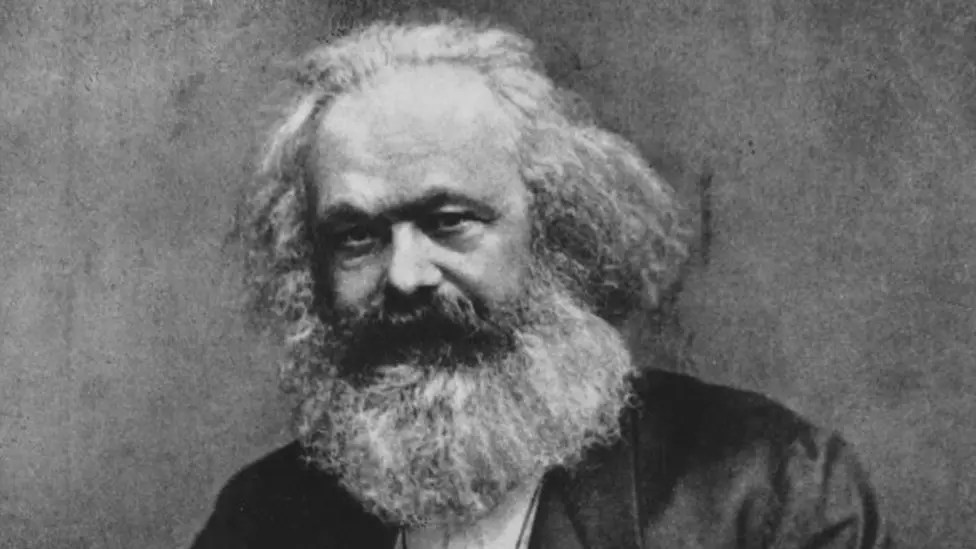
He let slip – nah, he bragged – that the government should seize control over “the means of production.” It’s not clear where he learned that phrase, but it was in fact coined by Karl Marx.
He’s an actual, registered socialist. And he’s not a European-style one. He’s more like a Cuban-style one or Venezuelan-style one or Soviet Union-style one.
Democrats, who have crept, slouched, and sometimes flown toward socialism like bats into hell over the last 25 years since Bill Clinton left office, are mortified. Not because Mamdani favors socialism – they all do – but because he says it out loud.
By saying it out loud, Mamdani smokes out those fellow Democrats. They have to either agree or disagree. They can no longer pretend moderation in order to garner votes from unengaged moderates while winking and nodding to their hard-left base.
Mamdani is forcing socialist Democrats into the thing that socialists abhor most – honesty.
He’s currently the favorite to be elected. The result will be a disaster for New York City. But it will also be a disaster for the Democrats. I’m willing to accept both disasters if it’s a package deal.
The first to say that was Julius Caesar. After his crushing win over a Persian/Greek king in what is now Turkey, Caesar reported to the Roman Senate with characteristic immodesty and uncharacteristic brevity: “Veni, vidi, vici.”
I came, I saw, I conquered. Caesar had a flair for drama.
He similarly came, saw and conquered most of Gaul – what is now France – in an era well before the invention of B2 stealth bombers. Travelling from Rome to Gaul was an arduous multi-month sea and land adventure. Conquering the barbarians there was a crazy idea for anyone but Caesar.
He laid the foundation for the greatest and longest-lasting empire the world has ever seen. It’s impossible to travel in Europe without marveling at ubiquitous, still-majestic two-thousand-year-old ruins of that empire.
Caesar came from a privileged but not powerful family. Ambitious from the outset, he clawed his way up the political ladder of the Roman republic, a place with a governing structure that we vaguely recognize.
Indeed, we should. Aspects of our own republic consciously imitate Rome, such as the naming of our Senate after the Roman Senatus and even the Greco-Roman architecture of our capital.
Caesar’s foreign exploits were not just to conquer foreign lands. They were to conquer his homeland, Rome. He wanted conquests because he wanted attention because he wanted power – in Rome.
But he also did want to conquer those foreign lands. The Romans were keenly aware of their legendary cousins across the Ionian Sea, and Caesar knew all about the astonishing conquests of Alexander the Great.
When Ceasar was still relatively young (but, he was painfully aware, already older than the age of Alexander when he’d conquered much of the world) he was chosen to be something akin to a prime minister.
Later, during a period of increasing social turmoil in an unwieldy republic deteriorating toward civil war, Caesar was named dictator for life and offered a crown.
He made a show of publicly refusing the crown, but he did not refuse the powers that went with it.
After five years as dictator, at age 56, Caesar was stabbed 23 times by senators. Brutus, too, was one of those senators.
Myth has it that this assassination was because Rome wanted to reclaim its republic from the dictator. The truth is more prosaic – particular senators opposed particular policies of Caesar.
Indeed, the dictatorship, itself, survived and thrived after Caesar’s death. Rome became an empire ruled by a succession of emperors.
That sounds terrible, right?
It wasn’t. It was the best thing that ever happened in the ancient world. For the next centuries, the Pax Romana ensured relative peace, prosperity and enlightenment. There’s a reason that what followed the ultimate crumbling of the Roman Empire is called the Dark Ages and the subsequent period is called the Renaissance or “rebirth” of the civilization that preceded that dark age.
Some Roman emperors were great and good, such as Augustus, Trajan and Hadrian. Rome was at its biggest and best as an empire ruled by emperors, notwithstanding the occasional lunatics like Caligula and Nero. Similarly, Britain achieved the most when it was ruled by kings and queens. Same for Spain and France. There’s a lot to be said for benevolent dictators, so long as they aren’t crazy.
But Americans are taught, or at least used to be taught, that democracy is the ultimate and natural evolution of political governance. Isn’t it wonderful and equitable, say the propagandists, that everyone gets one vote, regardless of what they contribute, what they know, and what they merit?
Isn’t it genius that we rely on ordinary Americans, 50% of whom are stupider than average, to select our leaders?
To ask those questions plainly stated is to answer them. So why have America and other western democracies been so successful?
Arguably, their success is not so much because democracy works well, but despite the fact that it doesn’t. What has worked well instead is something quite different.
It’s technology. The last two hundred years entailed the industrial revolution, the electronics age, and the ongoing computer revolution. Productivity is through the roof, even as people work far less than ever before.
Today’s average westerner is consequently much richer than the kings and queens of yesteryear. He has air conditioning, a house, one or two cars that take him anywhere he wants, only 1.7 children to feed, and a gadget in his pocket to get all the information in the world – and entertainment too – on a magical screen.
It wasn’t democracy that got him all that. It was technology.
If democracy is so great, then why aren’t companies managed by democracies? Shouldn’t we have employees elect their boss by popular vote, just as we elect our political representatives? Shouldn’t there be company-wide referendums by the employees to vote on how hard they have to work and what they get paid for that work?
Again, to ask those questions is to answer them. That system just wouldn’t work. So, what makes us think that such a system works in political governance?
I submit that democracy is not the ultimate evolution of political governance. “One man, one vote,” regardless of merit, does not work over the long run any better now than it did in Athens or Rome – and now we’ve corrupted it still further with universal suffrage and voting by mail.
In the end, this democratic feel-goodery conflicts with meritorious substance. Almost by definition, the meritorious will win that conflict one way or another. Veni, vidi, vici.
Girls don’t usually fight. There are sound reasons for this – reasons of general decorum, biology, hormones, jewelry, dresses and hairdos.
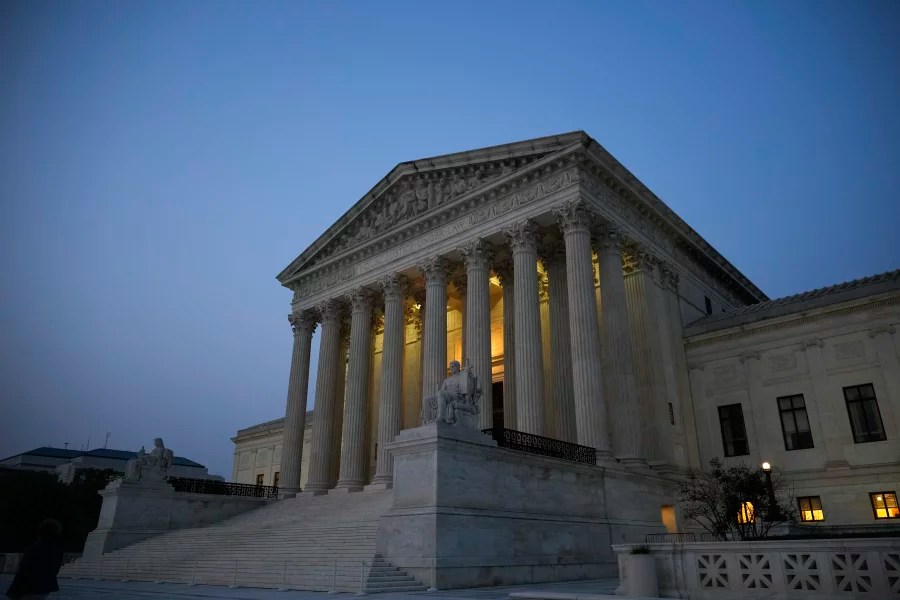
But when they do, boy oh boy, it can be a doozy. It happened yesterday at the Supreme Court.
The case was an appeal of a district court order issuing a “universal injunction” against President Trump’s executive order seeking to abolish “birthright citizenship.”
Birthright citizenship is the kind you get if you’re born in America even if your parents are here illegally. The 14th Amendment seems to provide for it, although there is a non-frivolous argument that it does not.
A universal injunction is one that binds the enjoined party even against persons not involved in the lawsuit.
The district court judge in this case found Trump’s executive order against birthright citizenship to be in violation of the 14th Amendment, and issued an injunction forbidding its enforcement against the plaintiff in the case.
Here’s where it gets dicey. The judge’s injunction applied not just for the benefit of the named plaintiff, but for the benefit of all other people in the country even though they weren’t parties to the case. It was a universal injunction.
Trump appealed the universal injunction on two grounds: (1) you should not get citizenship merely by being born in America if your mother was here illegally – in other words, the 14th Amendment does not provide for birthright citizenship – and (2) the universal injunction barring enforcement of the executive order even against people who were not parties to the case was an unconstitutional overreach by the judge.
The Supreme Court heard the latter argument on universal injunctions, and reserved the substantive birthright citizenship issue for another day.
It was a typical 6-3 political decision, meaning the six Republican-appointed Justices beat the three Democrat-appointed ones. (Elections have consequences, as President Obama once pointed out.)
The opinion for the Court was by Justice Amy Coney Barrett. She walked through the history of universal injunctions, noting that they scarcely existed until recent times.
Now that they do exist, they are prone to abuse. A political plaintiff can choose to file his suit in a district that is notoriously favorable to his politics. Then he gets a favorable decision – typically without even a trial but instead on a preliminary basis – that applies for the benefit of all potential plaintiffs everywhere.
In theory, the district court’s decision could be reversed after a trial, but that’s years away, and, in reality, the trial decision from the same judge will be the same anyway. (On many of these issues, there’s no right to a jury trial.)
It’s actually even worse than that. Say for a moment that the plaintiff somehow loses his bid for a universal preliminary injunction in a favorable district. There’s nothing to stop another plaintiff from filing the same suit in a different favorable district. If the second plaintiff wins in that second case in that second district, he can expect to get the universal preliminary injunction that the first plaintiff was denied.
The defendant – the government in this case – is thus not only required to win in one district favorable to the other side, but is required to win every case in every district where every plaintiff files. One loss, and all are lost.
Weirdly, the universal preliminary injunction obtained by the second plaintiff – or third or fourth – who prevailed could even have the effect of reversing the loss by all earlier plaintiffs. The earlier, losing plaintiffs wind up getting unlimited bites at the apple by enjoying the repeated re-litigation of the matter by later plaintiffs.
The Supreme Court via yesterday’s opinion by Justice Barrett finally put a stop to routinely issued universal injunctions. Trump is doing well at the Supreme Court, and this was his biggest win. Our system in largely working.
Justice Ketanji Brown Jackson Issued a peptic dissenting opinion. You’ll recall Jackson. She is the woman who was asked at her Senate confirmation hearing, “Can you define the word ‘woman’?”
It was obviously a gotcha question which Jackson wanted to avoid answering. A smart and articulate woman — not too much to ask for in a Supreme Court Justice — could have dodged the question with a little BS such as, “Well, that word is used in many different ways, Senator. There’s a biological way, a social way, a behavioral way, a gender way, and . . . blah blah blah . . . mumble mumble . . . ”
Instead, Jackson gave the Republicans a sound bite for the ages: “I can’t . . . Not in this context. I’m not a biologist.”
Bob Dylan said you don’t need to be a weatherman to know which way the wind blows. He never met Ketanji Brown Jackson.
Questioner: Can you tell me which way the wind blows, Ms. Jackson?
Say what? A Justice of the Supreme Court is openly worrying, or pretending to, that their decisions might be viewed as sympathetic to “corporate interests”?
First, the Court is supposed to apply the law to the facts, public perception be damned. Second, the allusion to “corporate interests” is amateur activism. Is the Court supposed to disfavor corporations? What about large partnerships? What about LLCs? Non-governmental organizations? Charitable foundations? Sole proprietorships?
Is the law different depending on the choice of entity that one party made when they set up their organization?
Back to yesterday’s universal injunction case. Jackson’s dissent warned that the decision was “an existential threat to the rule of law.”
That’s a serious allegation. Her allegation is that the Supreme Court whose job is to interpret the law is threatening its very existence.
I have three responses to Jackson’s allegation. One, yawn. Two, notice how people who aren’t very smart like to use the phrase “existential threat” as if it makes them a French philosopher or something. Three, if abolishing universal injunctions threatens the rule of law, then how did the rule of law survive for two centuries without them?
Justice Barrett in response wrote that Jackson’s dissent “is at odds with more than two centuries’ worth of precedent, not to mention the Constitution itself.” She observed that Jackson “decries an imperial Executive while embracing an imperial Judiciary.”
Barrett wasn’t done: “Observing the limits on judicial authority – including, as relevant here, the boundaries of the Judiciary Act of 1789 – is required by a judge’s oath.”
Finally came Barrett’s knockout punch: “Justice Jackson would do well to heed her own admonition: ‘Everyone, from the President on down, is bound by law.’ That goes for judges too.”
In the cloistered confines of the Supreme Court, that constitutes a beating. Jackson was rightly condemned in a written opinion joined by six of the Justices for advocating a position contrary to two centuries of precedent and the Constitution itself, endorsing an imperial judiciary, violating the judge’s oath, and refusing to be bound by law even as she wildly accuses the Court of threatening the very existence of law.
Justice Barrett as the author of that take-down put to rest any doubts. She’s all woman, and she’s got a pair.
CNN last week got their hands on a classified document stolen from the National Security Agency. That’s a felony punishable by ten years in prison, by the way.
The stolen document guessed that the efforts by Israel and America to neutralize Iran’s nuclear weapon program had set back the program by only “a few months.”
CNN and the rest of the media cabal could hardly contain their glee. They celebrated the failure of America and Israel.
Hardly mentioned in CNN’s report was that the document itself noted that its conclusions were merely “preliminary” and were expressed with only “low confidence.”
This week, a more considered report was published by the Institute for Science and International Security (which, ironically, has been going by the acronym ISIS since long before the ISIS terrorists came around).
ISIS – the good one – is a non-partisan think tank and investigatory group. If anything, it might lean a bit to the left, as its financial supporters include left-leaning organizations such as the McArthur Foundation, the Ford Foundation and the Rockefeller Foundation.
The Wall Street Journal reported on ISIS’s findings. (The Journal’s report is behind their paywall here, but you can click into ISIS’s underlying report here.)
ISIS concluded that Iran’s nuclear weapons program has been “effectively destroyed.”
That conclusion is supported in their report by extensive review and detailed analysis of the attacks and the videos, aided by intimate knowledge of the layouts of the Iranian facilities and interviews with international inspectors of those facilities.
In some particulars, the ISIS report shows that the stolen preliminary report as characterized by CNN is simply wrong on the facts about what facilities were attacked, and how.
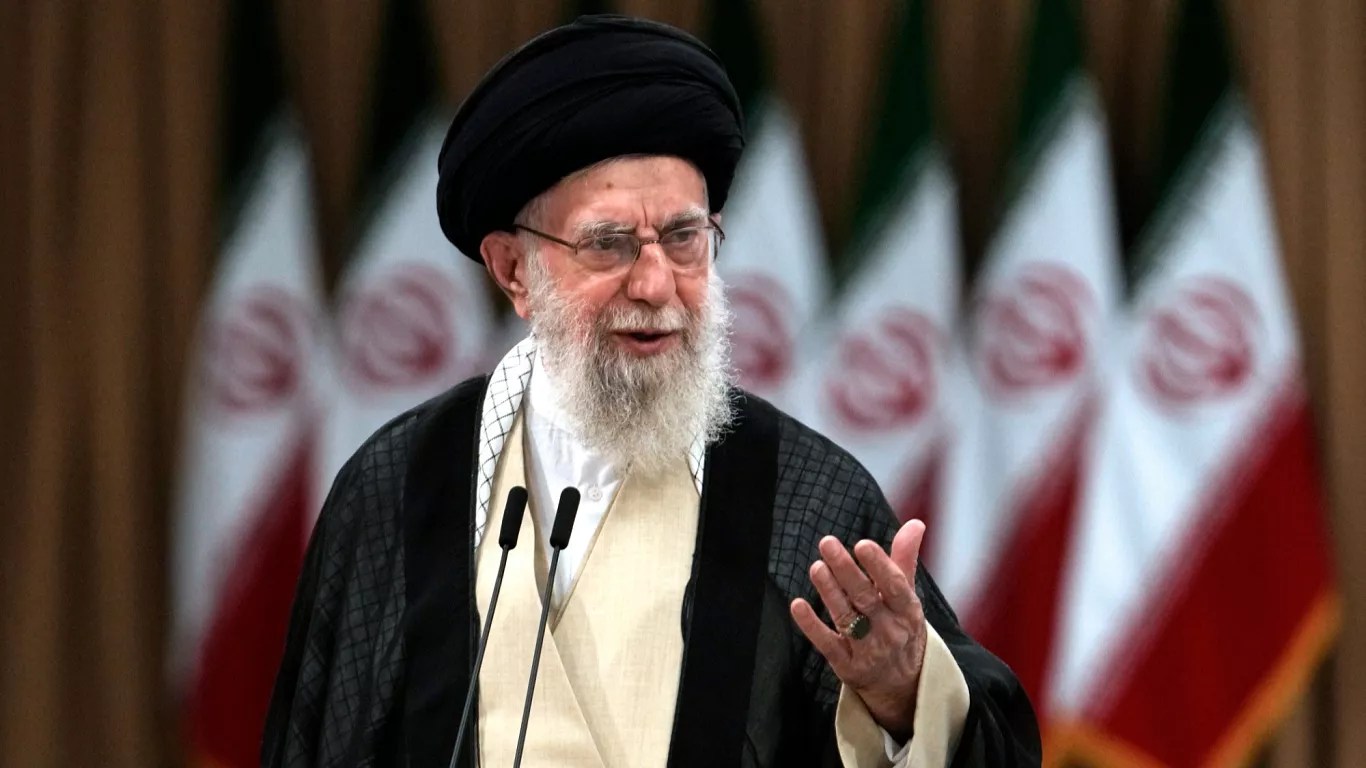
Meanwhile, Iran has congratulated itself on its “decisive victory.” The Ayatollah proclaimed that Israel has “almost collapsed and been crushed” and America has been delivered “a slap in the face.”
CNN has not gone that far, yet. But as of this writing, the stolen, erroneous NSA preliminary report is still on CNN’s website – with little of the contradictory reports mentioned.
Why do the media (with the notable exception of the Wall Street Journal in this case) distort or even lie about facts, to make Iran look good and strong and make America look bad and weak?
In what is already being called “The 12-Day War,” the bad guys have surrendered.
It took a bit longer than its namesake, The Six-Day War, but it was every bit as heroic. Israel beat an opponent that outnumbered it nine to one. An opponent that was on the verge of nuclear weapons to make good on its decades-old threat to obliterate Israel from the River to the Sea. An opponent that has fomented terrorism throughout the Mideast. An opponent that militarily, financially and logistically supported the horrible October 7 pogrom, a slaughter of unspeakable cruelty.
This time, Israel got some help in the end. Only one country on earth is willing to publicly ally itself with the Land of Abraham, Isaac and Jacob. Fortunately for Israel and the world, that country is the United States of America, a country still armed with the most powerful military in history – a country that is still the arsenal of democracy.
Israel pilots (the second best in the world), Israeli intel, and Israeli stones did the dirty work of neutralizing the Iranian air defenses.
Then, it was the U.S. of A. that destroyed the Iranian nuke sites with stealth bombers that Iran never saw coming and couldn’t have intercepted if they had, carrying bunker-buster bombs that went half way to China. (Are you listening, China?)
In a face-saving move of retaliation, Iran then lobbed a few missiles toward an American air base. Although there was no danger of them hitting their target, Iran made sure by phoning in an advance warning.
The Democrats and the Never-Trumpers have been waiting and praying for a catastrophe for 12 days now. Sadly for them but happily for the world, it seems there won’t be one. But they will continue to hope.
OK, it’s not technically a surrender by Iran. It’s merely a permanent cease fire. Technically, it’s possible that Iran could restart hostilities if they decide they’d like another dose.
I’m betting against that.
I’m also betting that Slo Joe and Kamala-lala would not have had the stones or the brains to pull this off. For that matter, I’m not sure George W. Bush or Richard Nixon would have.
President Trump did.
I admit that I’ve had my issues with Donald Trump. In fact, I recently expressed doubt that he would follow through on Iran. I’ve had other issues with him, as well.
But on balance I’ll take him over any of the alternatives. That – and this – is why I voted for him three times. God bless him.
You’ll recall that a federal judge in California ruled against Trump in the dispute over his use of the National Guard to protect federal buildings in Los Angeles from rioters who demand a permanent open border.
That judge happened to be the 83-year-old semi-retired little brother of 86-year-old liberal retired Supreme Court Justice Stephen Breyer.
Big Brother must have been so proud.
First, a word about federal judges that most people are not aware of. Federal judges can go on “Senior Status” as they get old. That means they get full pay and benefits including perks such as secretaries, beautiful offices, and young and attractive law school graduates to do their research and listen to their genuflections.
Oh, and a palatial courtroom for their exclusive use (though it sits empty 90% of the time), a fancy black robe, and a guy to shout “ALL RISE” when they walk in. (You’re supposed to remain standing until the judge mutters, “Be seated.” That’s one of many, many things they don’t teach in law school, but you quickly learn it on the job.)
These Senior Status judges are expected to do a bit of work. But only as much work as they feel like doing. They can work 35 hours a week, or 15. Unlike ordinary judges, they can turn down any case. The cases they turn down go back into the hopper to be assigned randomly to another judge.
It shouldn’t come as a surprise to you that most federal cases are very boring matters. Senior Status judges turn them down left and right.
Did I mention that they get full pay, benefits and perks fit for a king including a guy to shout “ALL RISE”?
It’s a good gig. So much so that in the federal district covering Colorado, for example, 9 of the 17 judges have elected “Senior Status.” In other words, over half of the federal District Court judges in Colorado are part-time but receiving full pay, benefits and perks.
There was a day when federal District Court judges didn’t exploit Senior Status. After all, they had to share the elevator and lunchroom with full-time colleagues who were tasked with the boring cases that the Seniors had turned down. And they were cognizant of the financial burden they and their entourage and appurtenances imposed on taxpayers.
That day seems to have passed.
Back to California. The Little Brother who ruled against Trump in the federal District Court there has been on “Senior Status” for the last 14 years. As a Senior Status judge, Little Brother could have turned down this case. He didn’t. He took it, heard it, and issued a decision against Trump.
Ah, but not all is lost. Even this case is not lost. The Trump administration appealed Little Brother’s order. Unfortunately, the appeals court covering Little Brother’s district court is the liberal Ninth Circuit. But fortunately, the liberal Ninth Circuit overturned Little Brother’s order. Trump won his appeal.
Appeals are heard by a three-judge panel of appellate judges selected at random from the sitting judges of that circuit. Trump was very lucky in that two of the three were Trump appointees. Before you conclude that the fix was in for Trump, be aware that the third was a Biden appointee and he, too, ruled in favor of Trump.
The decision was not a close call. The appellate judges noted that the President does not have wholly unfettered authority to call out the National Guard – there are statutes limiting that – but in general the President is entitled to some deference.
In this particular case, there was rioting in the streets. That’s enough.
The case now could be re-heard by the Ninth Circuit in an “en banc” hearing of 11 appellate judges randomly selected from the 29 active appellate judges in the Circuit.
Then, or even before then, the losing party can appeal to the Supreme Court where six of the nine Justices are Republican appointees. It’s likely that Trump will win there.
Apart from the merits or demerits of this particular case, here’s the point I want to make. The American federal judiciary still works.
It’s true that some of the judges don’t work as well, or as hard, as they could, or they should, but as a general rule they do indeed work in every sense of the word. Virtually all of them are very bright men and women with outstanding credentials, though some are too old for the job.
One more related point. The inflammatory allegation that federal court judges are “bought off” or otherwise corrupt is utterly unsubstantiated and, in my personal experience, unfounded. Despite the abuse of Senior Status, and despite the age-related limitations of some judges, never once in my career did I see the slightest evidence of corruption in any of them.
Justice Breyer’s Little Brother may be an ideologue, and that’s bad, but there’s no evidence that he’s corrupt. There’s a remedy when a judge is an ideologue. It’s called an appeal. It works.
Glenn Beaton practiced law in the federal courts, including the Supreme Court.
This war has been distinctly one-sided so far. It’s been all Israel and no Iran.
But we won’t know for days or weeks how successful the Israeli Defense Forces were in their main objective of disabling Iran’s nuclear weapon program.
Israel says it intends to pound Iran for two weeks. If that pounding entails anything like the strikes yesterday which involved about 200 aircraft, and if Iran’s air defenses don’t improve (in fact, they are apt to deteriorate even more from the bombings) then Iran could be crippled for decades.
I’m all for it. But here are some known unknowns:
First, Iran might already have nukes. We think that’s not the case, but, as everyone now knows, that thought is only as good as our intel on the matter. When it comes to intel, remember Russiagate? Remember Hunter’s laptop? I’m betting that the Mossad has better intel operations than we do, but that bet is no sure thing.
Let’s assume the intel on Iran’s development of nukes is accurate – that they’re still weeks away from enriching uranium to bomb-level enrichment concentrations.
That doesn’t mean Iran doesn’t have a bomb. There are thousands of nukes in the world, held by bad guys that are friendly to Iran because Iran is hostile to the west. That includes North Korea, Russia, China, Pakistan and India on some days. Nothing would stop one or more of those bad guys from simply flying or trucking a nuke over to Tehran, especially if Iran paid them some real money to do so.
The explosion from a nuclear bomb is all out of proportion to its size. A bomb that fits in an ordinary truck – not even a semi – could easily take out Tel Aviv.
Ah, you say, but Iran lacks the hardware to mount this bomb-in-a-truck onto one of their thousands of ballistic missiles. So how would they deliver their bomb-in-a-truck to Tel Aviv?
In the truck.
The Ukrainians delivered truckloads of drones thousands of miles across Russia. Surely a single truck could be smuggled into Israel and parked in a storage unit in Tel Aviv.
Nukes are most destructive if they are detonated a few hundred feet above the ground. So, this bomb-in-a-truck detonated in a storage facility in Tel Aviv would be only, say, 30% as destructive as it could have been if detonated a few hundred feet in the air.
It could still easily take out Tel Aviv.
Ever since I was an aerospace engineer for Boeing, I’ve been puzzled by the inordinate interest in bomb delivery vehicles. Cruise missiles can deliver a warhead across a thousand miles of complicated terrain by flying a few feet off the ground – under radar detection. That’s marvelous, I thought, but why don’t we just rent a U-Haul?
I assume (though I was never privy to such information even when I had a security clearance from Boeing) that we did indeed rent U-Hauls, and so did the Soviets. I assume that we had nukes tucked into strategic locations across the Soviet Union, and they similarly had nukes tucked into strategic locations across the U.S. I assume that Russia took over control of those nukes when the Soviet Union fell, as they took over the rest of the Soviet Union’s nukes. I assume that China, similarly, has nukes residing in the U.S.
It would be military malpractice not to. I’m afraid that the answer to the question I asked myself at Boeing – why don’t we just rent a U-Haul? – is, “Because Boeing doesn’t make U-Hauls.”
The million-dollar question is, does Iran have a nuke – or access to the detonator of a nuke – in Tel Aviv? We’ll probably know one way or another within days.
In a life prior to law school, Glenn Beaton was an aerospace engineer for Boeing.
President Trump enjoys campaigning. The first campaign was in 2016 when he criticized the ill-advised deal that Obama had struck with Iran the year before.
Under that deal, Iran promised not to develop nukes – but only for a few years. Moreover, the inspection requirements were toothless, and Iran began violating them immediately by continuing its nuke program.
Trump rightly called that deal “a disaster” and “the worst deal ever” (which is saying quite a lot when it comes to deals made by Obama). After he was elected in 2016, Trump cancelled the deal.
And Iran continued its nuke program.
Trump’s second campaign was in 2020 when he promised that “as long as I am President of the United States, Iran will never be allowed to have a nuclear weapon.” Trump lost the election.
And Iran continued its nuke program.
Trump’s third campaign was in 2024 when he declared that if elected, he would exert “massive, maximum pressure” on Iran to end its nuclear program. He won that election.
And Iran continues its nuke program.
Trump’s “massive, maximum pressure” has not included new sanctions on Iran, even while the United States Senate is considering bipartisan bills to impose those sanctions whether Trump likes it or not.
Trump’s fourth campaign is ongoing as you read this. He seems unconcerned that there’s no election going on; campaigning is what he does. Tweets, anyone?
When it comes to Iran, his campaigning substitutes for governing. Tough talk substitutes for tough action – or even moderate action.
Even the tough talk gets watered down. A couple of weeks ago, Trump announced that he was “very close” to a new deal with Iran, as if he could close the gap with wishes and charm.
On Wall Street, stock traders evaluating the tariffs have an acronym. It’s “TACO,” which stands for Trump Always Chickens Out. In the face of a stock market rout, the tariffs Trump announced in April have quietly been withdrawn or at least re-drawn.
Note that Wall Street doesn’t say “TACO” as a political attack. They’re in the business of making money, not the business of politics. They say “TACO” in the same way they say, “Buy low, sell high.” It’s a truism.
Wall Street’s smart money has probably judged Trump correctly; being correct is why they’re on Wall Street while you and I are just on Main Street.
And so, we should expect a similar chickening out by Trump with respect to the Iranians. The Iranians themselves certainly do.
There will be a deal, alright. Trump will compromise to the point that it will be much the same as the 2015 deal that Obama struck. There will be promises by the Iranians, again, but no real teeth in the deal to enforce those promises, again. And there will be a zillion-dollar payment to the Iranians, again, which they’ll use to fund worldwide terrorism, again.
In short, the Iranians will get their nukes, and we’ll give them money to fund terror – and Trump will campaign on his success in striking a fake deal for them not to get their nukes.
Just like Obama.
In the big picture, western leaders have resigned themselves to a nuclear Iran. The fake deals are merely to mollify the masses. The leaders know that Iran will break the deals and get its nukes, and are already planning to say, “I’m shocked! They broke the deal!”
I’m not surprised that the Europeans act out this dishonest dance. Nor am I surprised that the Obama/Hillary/Biden crowd join in. But I expected something different from Trump – because he promised something different.
Ah, but there’s a wild card in this charade. It’s the Israelis. If the Ukrainians can take out a third of the strategic bomber fleet of Russia, imagine what the Israelis can do to the nuke program of Iran.
When it comes to the Jews saving the world, you know, there’s a precedent.
At the outset, let me state my bona fides. I voted for Trump three times. I publicly supported his candidacy back when the media deemed him and his supporters like me stupid racists.
That was back when “Trump is literally Hitler” was the meme of the moment amongst the kind of people who don’t know the meaning of Hitler and don’t know the meaning of “literally.” Which is to say, most of the current mainstream media.
For the record, Trump is not Hitler, not literally or metaphorically, nor is he a fascist.
Contrary to popular belief engendered by the lamestream media, the word “fascist” does not mean “Republican.” Nor does it mean “very conservative.” In fact, Republicans and other politically conservative people are nothing like fascists at all.
He’s missing the race component. Indeed, many of his political appointments have been racial or ethnic minorities.
Some people would say, “Oh, but those minorities don’t count because they’re conservatives.” To those people, I have a question: So, who’s the bigot here when you’re the one willing to deny the color of a person’s skin because he lacks the “correct” viewpoints?
The nationalistic component is a closer call. Trump shows little interest in invading Poland or France, but does seem to hanker for a little elbow room up north in Greenland and Canada. Still, forcible conquest doesn’t appear to be on his radar. (But what exactly is the purpose of his conquistador callings?)
As for a belief in a natural social hierarchy . . . gimme a break, the guy’s a real estate developer. If there were a natural social hierarchy, real estate developers would be at the bottom.
Here’s the component that worries me: He doesn’t suffer disagreement lightly.
It would be one thing if Trump shot down disagreement with brilliant argument and nuanced analysis. In doing that, my favorite commentator on the conservative side – or any side, for that matter – was William F. Buckley. He won arguments in such eloquent, understated style that the people he persuaded to his side left thinking they had agreed with him all along.
Trump, not so much. If you agree with him at the outset, he’ll draw cheers from you. But that’s not a persuader; that’s a cheerleader.
As for those who disagree with him, he quickly escalates – or, rather, gutter-stoops – to name-calling, arm-twisting and outright bullying.
There’s a place for that tactic, to be sure. Army boot camp comes to mind.
In politics and people, however, such an approach tends to backfire. You can bully people only so far, and you can’t bully strong people at all.
Moreover, the bullying itself can backfire. For example, how is Vladimir Putin supposed to back down once Trump tells him to? Even the girly-men at Harvard have stood their ground (sort of) once Trump publicly told them to take a knee. The first rule of effective bullying is to do it in private where the object of your bullying doesn’t need to save face.
But this self-pleasing bullying, this autocratic nature, is in Donald Trump’s DNA. Recall that this man took time away from making billions in order to be on a stupid TV reality show where he gloried in screaming “You’re fired!”
The most recent “You’re fired” moment came this week when Trump lashed out at some judges – one of which he appointed – for striking down his tariff program as non-enabled by the laws he’s citing. The judges may or may not be right, but it’s a matter that will be decided by the Supreme Court on appeal, as it should be, not by playground bullies. Meanwhile, calling the judge names is not an effective strategy for a litigant.
The judges that disagree with him are reinforced in their disagreement when he tries to bully them. They have lifetime tenure and no fear of Trump. And the judges who agree with him, give pause. What self-respecting judge (and judges have a lot of self-respect) wants to be known as a Trump toady?
Oh yeah, the Supreme Court. He lashes out at them, too, though he appointed three of the nine. And he lashes out at the conservative Federalist Society for helping him choose the judges he lashes out at. I’m sure he’s just one lash away from lashing out at the people who helped him choose the Federalist Society to help him choose the judges.
Maybe all this plays well with a certain component of the base, and so it’s all clever triangulation by Trump. More likely, it seems to me, he just has the nature of an authoritarian bully.
It’s his greatest weakness. And I will not be voting for him a fourth time.






 the Aspen beat