Glenn K. Beaton is a writer and columnist living in Colorado. He has been a contributor to The Wall Street Journal, RealClearPolitics, Powerline, Instapundit, Citizen Free Press, American Thinker, Fox News, The Federalist, and numerous other print, radio and television outlets. His most recent book is "High Attitude — How Woke Liberals Ruined Aspen"
Although this is not what I hoped for, it is what I predicted. The Supreme Court struck down the bulk of the Administration’s tariffs. All three liberal Justices went against the tariffs, and half of the six conservative ones did as well – which included two appointed by President Trump.
Not bothering with any legal analysis, the President instead declared that the six Justices who went against him are “very unpatriotic” and “fools” that he’s “ashamed of.”
He went on to call them “pooh-pooh breaths.” OK, I made that one up.
Years ago, another public figure employed similar language to criticize the Supreme Court. He characterized the Justices as “black-robed despots” for whom he had “utter contempt.”
That was after the Court unanimously declared racially segregated schools to be unconstitutional. That public figure was Alabama Governor George Wallace.
Bullying the Supreme Court didn’t work back then, and it’s not working now.
Let’s take the President’s name-calling one epithet at a time. First, the President says the Justices are “unpatriotic.”
OK, Mr. President, here’s something non-legal that you should be able to understand. At big law firms, each of these Justices could be making ten to twenty times their present income. They instead choose to be judges to serve the people as best they can.
Deciding a case against you, Mr. President, does not make them unpatriotic.
They’re “fools” you say? At least seven of the Supreme Court Justices are extraordinarily smart lawyers with sterling backgrounds, and the other two are no slouches.
In contrast, your own legal background consists of being sued a lot.
And, Mr. President, you say you’re “ashamed of” the Justices?
Frankly, it comes as news to the country that you’re capable of shame. I voted for you three times, and your shamelessness continues to astonish me.
So, disagree with the Supreme Court – I sometimes do. Criticize their legal reasoning – it’s occasionally wrong.
But recognize that the job of a judge is not to be a Republican or a Democrat. The job is to apply the law of the land to the facts of the case.
If you personally don’t understand the law applicable to a case, or if you don’t have all the facts, then you aren’t criticizing. You’re just spouting off.
When that spouting off crosses the line into name-calling of dedicated professionals, you’re just being childish. I want more than that in my President.
Glenn K. Beaton practiced law in the federal courts, including the Supreme Court.
In a Supreme Court term with several important cases on executive power, two stand out. Both will be decided this Spring.
One is the tariffs case, argued a few weeks ago. The three liberal Justices will go against Trump, of course, because Orange Man Bad. But even the conservative Justices – especially the three appointed by Trump – appeared skeptical that the President could unilaterally impose broad tariffs.
Tariffs are much like a tax. The taxing power is generally held by Congress, not the President.
Yes, there is a loophole allowing for emergency actions by the President, but the Justices were not buying the argument that there was an emergency requiring tariffs on coffee from South America, wine from France, machines from Germany, pharmaceuticals from Switzerland, cars from Japan, etc. etc. etc.
(Apart from the legal issue, I’ve written that the tariffs are somewhat defensible from an economic perspective.)
You may argue that the “emergency” is the overall trade deficit. That trade deficit emergency, goes the argument, requires sweeping action.
I won’t argue the point. I’m just telling you that the Supreme Court is not buying it. Expect a 7-2 decision against Trump, or maybe even a 9-0 decision.
Already, companies that have paid the tariffs (including some that we assume are on the righthand side of the political spectrum, such as Costco) have filed lawsuits against the government for a refund of the tariffs they’ve paid.
Confusion will ensue. The decision is likely to be fractured with multiple opinions expressing different reasoning, and will also be complicated since the tariff scheme itself is complicated.
The other case at the Supreme Court concerns whether the President has the power to fire the leaders of so-called “independent agencies.” Trump will win this one.
Independent agencies are curious creatures. Scour the Constitution, and you’ll never find a mention of them. They are largely the creation of New Deal legislation from the 1930s. Over the ensuing century, they took on a life of their own in the fertile and fecund federal bureaucracy, like slimy salamanders spontaneously generated from warm mudpuddles.
There’s no doubt the President can fire ordinary agency leaders, but these independent agency leaders seem to have a special status in the minds of Washington politicians.
They clearly are part of the executive branch, since they’re not part of the judicial or legislative branch, but purportedly cannot be fired by the chief executive – the President – because they’re “independent.” They effectively make policy and enact legislation without oversight from Congress or the President.
This raises two questions. First, how can Congress delegate away its legislative power under the Constitution to entities never mentioned in the Constitution?
Could Congress also delegate away their legislative power to private foundations like the Gates Foundation and foreign entities like the United Nations? (Congress thinks the answer is yes, and to some extent they already have.)
In any event, it’s quite ironic that the defenders of these independent agencies accuse Trump of violating the law by firing the agency leaders, when the very existence of the agencies is in violation of the Constitution.
The second question is, if the President cannot fire the leader of an independent agency, then who can?
Not Congress, since Congress wields no hiring and firing power beyond its own internal staffing. Outside that, its power to hire people is non-existent and its power to fire people is limited to the draconian and rarely-used power to impeach.
And not the judiciary, either. Judges have no power to hire or fire members of the executive branch. They can barely hire and fire their clerks and secretaries.
So, if the President has no power to fire these independent agency leaders, then they are virtually untouchable.
Presidents and Congressmen come and go, but bureaucracies go on and on – especially if their leaders cannot be replaced. The deep state lives forever.
But it’s also the outcome desired by a certain cohort of never-Trump Republicans. It’s amusing to see their pseudo-scholarly rhetoric decrying the administrative state – until it’s Trump (gasp!) who proposes modest control over it. Then, and only then, reining in the unaccountable, unconstitutional administrative state run by unelected bureaucrats is . . . you know what’s coming . . . a threat to democracy.
The Supreme Court decision on this will likely be less hypocritical than those pseudo-scholar never-Trumpers. All nine Justices know that the administrative state of Democrats spawned by independent agencies is an unconstitutional cancer on democracy, and that the only means to rein it in is through the President.
Based on that common understanding, the six conservative Justices will side with the President and the three liberals will side against him.
Girls don’t usually fight. There are sound reasons for this – reasons of general decorum, biology, hormones, jewelry, dresses and hairdos.
But when they do, boy oh boy, it can be a doozy. It happened yesterday at the Supreme Court.
The case was an appeal of a district court order issuing a “universal injunction” against President Trump’s executive order seeking to abolish “birthright citizenship.”
Birthright citizenship is the kind you get if you’re born in America even if your parents are here illegally. The 14th Amendment seems to provide for it, although there is a non-frivolous argument that it does not.
A universal injunction is one that binds the enjoined party even against persons not involved in the lawsuit.
The district court judge in this case found Trump’s executive order against birthright citizenship to be in violation of the 14th Amendment, and issued an injunction forbidding its enforcement against the plaintiff in the case.
Here’s where it gets dicey. The judge’s injunction applied not just for the benefit of the named plaintiff, but for the benefit of all other people in the country even though they weren’t parties to the case. It was a universal injunction.
Trump appealed the universal injunction on two grounds: (1) you should not get citizenship merely by being born in America if your mother was here illegally – in other words, the 14th Amendment does not provide for birthright citizenship – and (2) the universal injunction barring enforcement of the executive order even against people who were not parties to the case was an unconstitutional overreach by the judge.
The Supreme Court heard the latter argument on universal injunctions, and reserved the substantive birthright citizenship issue for another day.
It was a typical 6-3 political decision, meaning the six Republican-appointed Justices beat the three Democrat-appointed ones. (Elections have consequences, as President Obama once pointed out.)
The opinion for the Court was by Justice Amy Coney Barrett. She walked through the history of universal injunctions, noting that they scarcely existed until recent times.
Now that they do exist, they are prone to abuse. A political plaintiff can choose to file his suit in a district that is notoriously favorable to his politics. Then he gets a favorable decision – typically without even a trial but instead on a preliminary basis – that applies for the benefit of all potential plaintiffs everywhere.
In theory, the district court’s decision could be reversed after a trial, but that’s years away, and, in reality, the trial decision from the same judge will be the same anyway. (On many of these issues, there’s no right to a jury trial.)
It’s actually even worse than that. Say for a moment that the plaintiff somehow loses his bid for a universal preliminary injunction in a favorable district. There’s nothing to stop another plaintiff from filing the same suit in a different favorable district. If the second plaintiff wins in that second case in that second district, he can expect to get the universal preliminary injunction that the first plaintiff was denied.
The defendant – the government in this case – is thus not only required to win in one district favorable to the other side, but is required to win every case in every district where every plaintiff files. One loss, and all are lost.
Weirdly, the universal preliminary injunction obtained by the second plaintiff – or third or fourth – who prevailed could even have the effect of reversing the loss by all earlier plaintiffs. The earlier, losing plaintiffs wind up getting unlimited bites at the apple by enjoying the repeated re-litigation of the matter by later plaintiffs.
The Supreme Court via yesterday’s opinion by Justice Barrett finally put a stop to routinely issued universal injunctions. Trump is doing well at the Supreme Court, and this was his biggest win. Our system in largely working.
Justice Ketanji Brown Jackson Issued a peptic dissenting opinion. You’ll recall Jackson. She is the woman who was asked at her Senate confirmation hearing, “Can you define the word ‘woman’?”
It was obviously a gotcha question which Jackson wanted to avoid answering. A smart and articulate woman — not too much to ask for in a Supreme Court Justice — could have dodged the question with a little BS such as, “Well, that word is used in many different ways, Senator. There’s a biological way, a social way, a behavioral way, a gender way, and . . . blah blah blah . . . mumble mumble . . . ”
Instead, Jackson gave the Republicans a sound bite for the ages: “I can’t . . . Not in this context. I’m not a biologist.”
Bob Dylan said you don’t need to be a weatherman to know which way the wind blows. He never met Ketanji Brown Jackson.
Questioner: Can you tell me which way the wind blows, Ms. Jackson?
Say what? A Justice of the Supreme Court is openly worrying, or pretending to, that their decisions might be viewed as sympathetic to “corporate interests”?
First, the Court is supposed to apply the law to the facts, public perception be damned. Second, the allusion to “corporate interests” is amateur activism. Is the Court supposed to disfavor corporations? What about large partnerships? What about LLCs? Non-governmental organizations? Charitable foundations? Sole proprietorships?
Is the law different depending on the choice of entity that one party made when they set up their organization?
Back to yesterday’s universal injunction case. Jackson’s dissent warned that the decision was “an existential threat to the rule of law.”
That’s a serious allegation. Her allegation is that the Supreme Court whose job is to interpret the law is threatening its very existence.
I have three responses to Jackson’s allegation. One, yawn. Two, notice how people who aren’t very smart like to use the phrase “existential threat” as if it makes them a French philosopher or something. Three, if abolishing universal injunctions threatens the rule of law, then how did the rule of law survive for two centuries without them?
Justice Barrett in response wrote that Jackson’s dissent “is at odds with more than two centuries’ worth of precedent, not to mention the Constitution itself.” She observed that Jackson “decries an imperial Executive while embracing an imperial Judiciary.”
Barrett wasn’t done: “Observing the limits on judicial authority – including, as relevant here, the boundaries of the Judiciary Act of 1789 – is required by a judge’s oath.”
Finally came Barrett’s knockout punch: “Justice Jackson would do well to heed her own admonition: ‘Everyone, from the President on down, is bound by law.’ That goes for judges too.”
In the cloistered confines of the Supreme Court, that constitutes a beating. Jackson was rightly condemned in a written opinion joined by six of the Justices for advocating a position contrary to two centuries of precedent and the Constitution itself, endorsing an imperial judiciary, violating the judge’s oath, and refusing to be bound by law even as she wildly accuses the Court of threatening the very existence of law.
Justice Barrett as the author of that take-down put to rest any doubts. She’s all woman, and she’s got a pair.
You’ll recall that a federal judge in California ruled against Trump in the dispute over his use of the National Guard to protect federal buildings in Los Angeles from rioters who demand a permanent open border.
That judge happened to be the 83-year-old semi-retired little brother of 86-year-old liberal retired Supreme Court Justice Stephen Breyer.
Big Brother must have been so proud.
First, a word about federal judges that most people are not aware of. Federal judges can go on “Senior Status” as they get old. That means they get full pay and benefits including perks such as secretaries, beautiful offices, and young and attractive law school graduates to do their research and listen to their genuflections.
Oh, and a palatial courtroom for their exclusive use (though it sits empty 90% of the time), a fancy black robe, and a guy to shout “ALL RISE” when they walk in. (You’re supposed to remain standing until the judge mutters, “Be seated.” That’s one of many, many things they don’t teach in law school, but you quickly learn it on the job.)
These Senior Status judges are expected to do a bit of work. But only as much work as they feel like doing. They can work 35 hours a week, or 15. Unlike ordinary judges, they can turn down any case. The cases they turn down go back into the hopper to be assigned randomly to another judge.
It shouldn’t come as a surprise to you that most federal cases are very boring matters. Senior Status judges turn them down left and right.
Did I mention that they get full pay, benefits and perks fit for a king including a guy to shout “ALL RISE”?
It’s a good gig. So much so that in the federal district covering Colorado, for example, 9 of the 17 judges have elected “Senior Status.” In other words, over half of the federal District Court judges in Colorado are part-time but receiving full pay, benefits and perks.
There was a day when federal District Court judges didn’t exploit Senior Status. After all, they had to share the elevator and lunchroom with full-time colleagues who were tasked with the boring cases that the Seniors had turned down. And they were cognizant of the financial burden they and their entourage and appurtenances imposed on taxpayers.
That day seems to have passed.
Back to California. The Little Brother who ruled against Trump in the federal District Court there has been on “Senior Status” for the last 14 years. As a Senior Status judge, Little Brother could have turned down this case. He didn’t. He took it, heard it, and issued a decision against Trump.
Ah, but not all is lost. Even this case is not lost. The Trump administration appealed Little Brother’s order. Unfortunately, the appeals court covering Little Brother’s district court is the liberal Ninth Circuit. But fortunately, the liberal Ninth Circuit overturned Little Brother’s order. Trump won his appeal.
Appeals are heard by a three-judge panel of appellate judges selected at random from the sitting judges of that circuit. Trump was very lucky in that two of the three were Trump appointees. Before you conclude that the fix was in for Trump, be aware that the third was a Biden appointee and he, too, ruled in favor of Trump.
The decision was not a close call. The appellate judges noted that the President does not have wholly unfettered authority to call out the National Guard – there are statutes limiting that – but in general the President is entitled to some deference.
In this particular case, there was rioting in the streets. That’s enough.
The case now could be re-heard by the Ninth Circuit in an “en banc” hearing of 11 appellate judges randomly selected from the 29 active appellate judges in the Circuit.
Then, or even before then, the losing party can appeal to the Supreme Court where six of the nine Justices are Republican appointees. It’s likely that Trump will win there.
Apart from the merits or demerits of this particular case, here’s the point I want to make. The American federal judiciary still works.
It’s true that some of the judges don’t work as well, or as hard, as they could, or they should, but as a general rule they do indeed work in every sense of the word. Virtually all of them are very bright men and women with outstanding credentials, though some are too old for the job.
One more related point. The inflammatory allegation that federal court judges are “bought off” or otherwise corrupt is utterly unsubstantiated and, in my personal experience, unfounded. Despite the abuse of Senior Status, and despite the age-related limitations of some judges, never once in my career did I see the slightest evidence of corruption in any of them.
Justice Breyer’s Little Brother may be an ideologue, and that’s bad, but there’s no evidence that he’s corrupt. There’s a remedy when a judge is an ideologue. It’s called an appeal. It works.
Glenn Beaton practiced law in the federal courts, including the Supreme Court.
I’ve read the Wall Street Journal for many years. I’ve even had a piece published in the Journal. The opinion page is excellent (even when I disagree with the opinions expressed there) and the news page is reliable (though it has drifted leftward over the years).
I was therefore surprised and disappointed to see the Journal’s coverage of a recent interview that President Trump gave to NBC News.
Trump was asked about the due process protections he should afford illegal aliens being deported. Here’s the transcript of the relevant part, as presented by NBC News itself:
“But even given those numbers [of illegals] that you’re talking about, don’t you need to uphold the Constitution of the United States as president?” Welker asked.
“I don’t know,” Trump replied. “I have to respond by saying, again, I have brilliant lawyers that work for me, and they are going to obviously follow what the Supreme Court said.”
A fair reading of that exchange is: (1) the interviewer asked Trump whether he would uphold the Constitution in connection with his deportation of illegals, (2) he replied that he’s not a lawyer, so he doesn’t know what the legal requirements are, (3) he has many brilliant lawyers who will tell him, and (4) they’ll “obviously follow what the Supreme Court” says.
The Journal presented the clip, but accompanied it with a very misleading headline. The headline read,
“Asked if He Has to Uphold the Constitution, Trump Says ‘I Don’t Know’”
That headline was misleading in at least three ways. First, it leaves out the context, thereby implying a context much broader.
The question asked of Trump was not the general question of whether he “has to uphold the Constitution.” Rather, it was a very specific question: It was whether Trump has to afford due process protections to illegals being deported.
Second, the headline omits the rest of Trump’s answer. He immediately went on to note in connection with this Constitutional issue that he is not a lawyer.
That’s not just a quibble. Even most lawyers would struggle to define the necessary due process protections for illegals. Do they get a full-blown jury trial? Do they get summary adjudication by an administrative judge? Do they get something in-between? Even the Supreme Court has not been crystal clear on this point.
Third, Trump wound up his answer by explicitly stating that he would defer to whatever the Supreme Court says.
In context, it’s hard to see what Trump said wrong. He did indeed start his answer with “I don’t know” but immediately explained why he didn’t know, and gave assurance that he would do as told by people who do know — namely, the Supreme Court.
The Journal’s headline parrots a similar headline from the outlet that did the interview, NBC News. I was not surprised to see NBC sink this low to rake up muck, but I was indeed surprised to see the Journal follow them down there.
Glenn Beaton practiced law in the federal courts, including the Supreme Court.
I won’t leave you in suspense. I’m a lawyer, so the answer is sometimes yes, sometimes no.
If you’re in the tribe that thinks whatever Trump does is wrong, or the opposite tribe that thinks whatever Trump does is right, then read no further. Just skip the analysis and instead warm up your cheers or your jeers for the Comments below, as your tribe dictates.
But if you’re in neither tribe, but are just a political partisan (which is different than being in a tribe) or a political neutral (are there any these days?) then read on.
It’s important to recognize at the outset that Presidents push legal limits all the time, and they often lose when the matter is adjudicated in the courts. The actions of Joe Biden’s administration were frequently struck down as being in violation of applicable laws or Constitutional provisions. That includes actions on important matters concerning the immigration laws, the environmental laws, the deference to administrative agencies, the wage laws, and student loan forgiveness.
It would be a simpler world if the good guys and bad guys and all the rest of us always knew exactly what’s legal and what’s not. We’d just send the bad guys to jail when they did something that’s not. We wouldn’t need trials, courts, judges and juries.
But our world is complicated and fact-dependent, and so is the law.
That’s why I have no problem with President Trump testing the limits. If he didn’t, he wouldn’t be doing his job – a job I voted for him to do, three times (in three elections, I hasten to add).
A good example is the issue of birthright citizenship. The 14th Amendment appears to state that a person born in this country is automatically a citizen of the country, regardless of whether the mother is in the country legally.
But the Amendment contains a vague qualifier “subject to the jurisdiction thereof.” Trump’s argument is that this qualifying phrase excludes from citizenship a baby born in this country if its mother is here illegally.
Although I hope Trump’s argument will succeed, I think it ultimately will not. But it’s a non-frivolous argument, and I would not be shocked if the Supreme Court ultimately buys it (though I would indeed be surprised).
In such a case, it’s fine for President Trump to make the argument. Let it go up to the Supreme Court, as Trump has requested, and let them decide the matter. That’s the way the system is supposed to work, and it nearly always does.
By the way, six of the nine Supreme Court Justices were appointed by Republicans who might lean toward Trump’s view of the matter.
(Here’s where you can complain that some of the Republican-appointed Justices are not “real conservatives.” Fine. But if that’s the case, then the blame lies with the Republican Presidents who appointed them – who was President Trump in his first term in the case of three of the six.)
Now here’s where things get dicey. What happens if Trump’s argument on birthright citizenship fails at the Supreme Court?
Trump himself has said he has no intention of violating court orders. That should end the matter. If it doesn’t, then we truly have a crisis, and I don’t mean that in a good way.
A judge ordered that they not be deported for another two weeks so that the matter could be given minimal due process. Meanwhile, the individuals were safely in the DOJ’s custody.
The judge at a hearing explicitly told the DOJ that they should instruct any planes already in the air to turn around. However, the judge’s subsequent written order did not include that instruction.
Be aware that judges often issue orders orally. There’s no magic about reducing an order to writing.
But the White House has contended that the absence of the judge’s oral turn-around order in his written order meant that it was no longer in effect. Therefore, they say, they were free to let the planes proceed without intending any violation of the court’s order.
I find that argument dubious.
But I’m very glad they made that argument, rather than simply stating “We don’t follow court orders we don’t like from judges we don’t respect.”
That sort of belligerence would be unconstructive, and would cost Trump the support of most Americans. We’ve come too far to lose it all in an ill-advised cafeteria food fight.
Unfortunately, however, that’s the belligerence I’m seeing in some of the internet commentary from the tribe.
Let’s look at the big picture. In virtually all democracies (almost by definition), the final interpretation of laws is made by the judicial branch, not by an executive branch. The Constitution that we conservatives hold dear requires the executive to defer to the courts in interpreting the nation’s laws.
If the executive doesn’t like a law, his remedy is to get the law changed if the people’s representatives concur. It’s not to say “I can do whatever I want because the people elected me.”
That could be our system, but it clearly is not. If it were, then all the judges – and, for that matter, all the legislators – could just go home. But it would be to a very different home.
Glenn K. Beaton practiced law in the federal courts, including the Supreme Court.
The Republican-appointed Justices on the Supreme Court are now six of the nine. Unsurprisingly, the ideological tilt of the Court is more conservative than it’s been in two or three generations.
It shows. Last year, the Court took the conservative side in reducing deference to administrative agencies; deciding expansively in favor of presidential immunity (which of course benefits both liberal presidents and conservative ones, but the particular case that was decided benefited a conservative one, namely Donald Trump); limiting the obstruction of justice laws (which could also benefit liberals, but the particular case decided concerned the Jan. 6 protestors); allowing the removal of vagrants from public property; and striking down a ban on “bump stocks” that are used to convert a legal semi-automatic rifle into something akin to a “machine gun.”
But that’s not enough, some of our tribe are howling. Some of the six Justices appointed by Republicans are not toeing the party line, they complain.
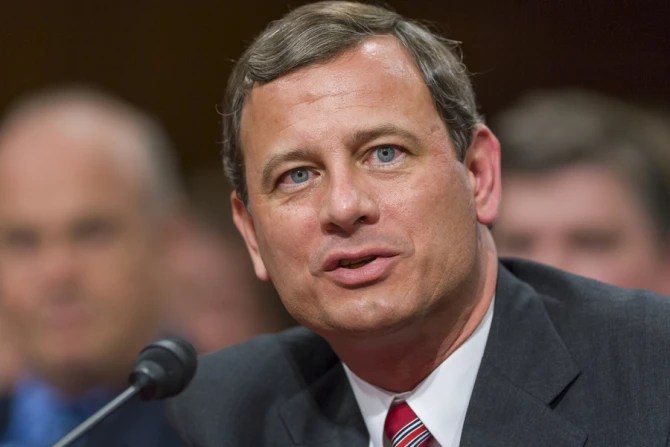
Indeed, in a few recent cases, Chief Justice Roberts and Justice Amy Coney Barrett, in particular, and, to a lesser degree, Justice Kavanaugh, have failed to come out on the “right” side of cases. And so, they’re derided as something less than “real conservatives” because they have failed occasionally to vote with the conservative “block.”
The critics point to the three liberal Justices, who typically do vote as a “block.” Getting a fix on this, however, is not easy. As I noted above, sometimes it’s not obvious which side of the law is doctrinairely the liberal one and which is the conservative one, apart from the liberal and conservative litigants who happen to be litigating that particular case.
For example, if President Trump wants to do something in the next four years that is legally equivalent to canceling student loans, what people see as the “liberal” side and the “conservative” side of Presidential power could flip.
But I will admit that on other issues, the liberal and conservative sides are ascertainable apart from the identity of the particular litigants in the case. On those issues, it is fair to say that in recent cases the three liberals have pretty much voted as a block, while the six conservatives sometimes have not.
In support of that conclusion, one source notes that in the ten politically-charged decisions last year that were 5-4 decisions (meaning at least one conservative “defected”) the three liberals voted as a block every time, while the six conservatives split seven times.
Some in my conservative tribe shout that the conservative Justices should vote as a conservative block, just as the liberals vote as a liberal block. Fight fire with fire, goes the reasoning.
I see two problems with that approach. One is practical and the other is moral.
The practical problem, as I’ve already stated at least twice, is that it’s not always apparent which side of the law – apart from the particular litigants in that case – is the “conservative” side and which is the “liberal” side. Today’s case decided on an expansive reading of the Second Amendment could, tomorrow, present a compelling opposite decision on law-and-order grounds.
You see, individual rights – whether they’re Second Amendment or First Amendment or simply common law or statutory rights – do not exist in a vacuum. For every “right” held by one person there is a corresponding obligation on other persons to permit the exercise of that right. One person’s right to free speech means other people have an obligation to hear or at least tolerate that speech.
That obligation sounds trivial, until the speech by one person that others are obligated to tolerate is speech advocating, for example, another Holocaust or a speech mocking a child’s disabilities or a speech that arguably incites violence or perhaps is defamatory or maybe it’s just simply untrue.
The task of the law is to balance rights of one set of people with the obligations of the rest of the people.
It’s not easy. To say simplistically that conservatives stand for lots of “rights” for some people gets you nowhere, because it is to say, simultaneously, that they stand for lots of obligations for other people.
That’s the practical problem with demanding that conservatives vote as a block just because liberals do.
The moral problem is that we conservatives are better than that. In war – which, after all, is just politics in another form – one side sometimes commits war crimes. That does not justify war crimes by the other side. If it did, where would that end?
I’m glad Americans don’t commit war crimes just because our adversaries sometimes do, and I’m glad Supreme Court conservatives vote for the law, not for the litigants.
One summer day in 1924, a train stopped at a station on Long Island. A man carrying a harmless-looking package ran to catch it. He struggled to board the train as it departed. One of the train employees on board reached for his hand as another on the platform gave him a boost from behind.
The package fell onto the tracks. It turned out to be a package of fireworks. The fireworks exploded.
So, the exploding fireworks injured someone, right?
Not exactly.
The court opinion was written by Benjamin Cardozo, the brilliant judge who was then on the New York state supreme court (which they called, and still call, the New York Court of Appeals). Cardozo later became a storied member of the U.S. Supreme Court. In his words:
“The shock of the explosion threw down some scales at the other end of the platform, many feet away. The scales struck [Helen Palsgraf], causing injuries for which she sues.”
Today, of course, the phrase “injuries for which she sues” is redundant.
This case has been studied by generations of first-year law students. The legal question presented is, should the railroad be liable for Mrs. Palsgraf’s injuries?
Cardozo said the answer is no. People who are negligent are not liable for all the consequences of their negligence. They are liable for only those consequences that are reasonably foreseeable.
Cardozo seemed to accept for purposes of argument that the railroad employees were negligent in boosting the package-carrying man onto the train, and implied that the railroad might be liable if the package were labeled as combustible and the injury had occurred to that man.
But Mrs. Palsgraf was just too far away physically and causatively. The employees could not have reasonably foreseen (1) that their normal boost to a passenger carrying a harmless-looking package would knock the package out of his hands, (2) that the package would land on the hard tracks, (3) that the package would contain combustible fireworks, (4) that the fireworks would explode, (5) that the explosion would knock down heavy scales at the other end of the platform, (6) that the scales would fall onto Mrs. Palsgraf, and (7) that she would thereby be injured.
This principle in law is called “proximate cause.” A person committing a negligent act is generally liable for only the consequences that are “proximate” to that act – the ones that are reasonably foreseeable.
If the law were otherwise, imagine the weird outcomes. If you negligently run a red light, and three miles later someone jumps in front of your car, then you could be liable for his injuries. Because, after all, you would not have been at that exact spot at that exact time if you had not negligently run the red light three miles back.
Which brings us to Mexico.
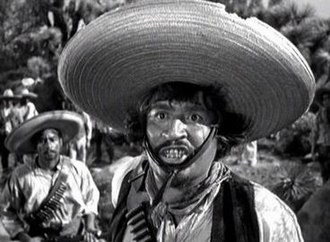
Like America, Mexico has a gun violence problem. The guns are manufactured mostly in the United States, and smuggled illegally into Mexico. There, the guns are used by bad “we-don’t-need-no-stinkin’-badges” Mexicans to shoot good Mexicans.
Mexico has not been willing and able to address their gun violence problem any more than Chicago has. Putting gangsters in jail would cost them their votes, and might well cost them their lives.
So Mexico thought of another approach. They sued the American gunmaker Smith & Wesson back in 2021 for manufacturing and selling guns in the United States that were transported across the border into Mexico.
You see, Mexico is less interested in stopping gun violence by gun-toting gangsters who have, shall we say, “leverage” over the Mexican government, and more interested in profiting from the gun violence by taxing the manufacturers of the guns.
Mexico faced two obstacles in their case. First, there was the formidable Mrs. Palsgraf. The “proximate cause” between Smith & Wesson’s manufacture of the guns and the guns’ misuse by Mexican bandits was doubtful.
Second, the United States had enacted legislation on this very point in 2005. Even if Mexico were to get past Mrs. Palsgraf, a law called the Protection of Lawful Commerce in Arms Act (the “PLCAA”) expressly insulates firearm manufacturers from blanket liability for the wrongful use of firearms that they legally sell.
Mexico filed suit anyway.
They didn’t file in San Antonio, which you’ll remember was the site of their last great victory over the Yanquis. And they didn’t file in Tennessee, where Smith & Wesson are located along with their friends Jack Daniels and Phillip Morris.
(Speaking of which, “Alcohol, Tobacco and Firearms” should be the name of a convenience store, not a government agency.)
Mexico instead filed suit in a federal district court located in . . . Massachusetts.
That was clever.
But it didn’t work. The District Court judge tossed the case.
Mexico then appealed to the federal court of appeals sitting in . . . c’mon, you know . . . Boston.
That did work. The Court of Appeals reversed, in deciding that Mexico had a viable case.
Don’t think the fix was in at the Court of Appeals, however. The opinion was written by a judge appointed by a President with a distinctly un-Mexican name, Barack Obama.
Smith & Wesson then appealed to the Supreme Court, now dominated by six conservative-ish Justices, three of whom were appointed by our conservative-ish President. The Supreme Court is not in Boston and is not even in Massachusetts. These days, it’s in Heaven.
The formal opinion of the Supreme Court won’t be issued until around June, but the Justices were not exactly poker-faced at this week’s oral argument. The conservative Justices practically laughed at the arguments of the American lawyer who represented Mexico.
Even two of the three libs asked questions that seemed hostile to Mexico’s case. That included a Justice who is liberal but (or is it “and”?) very smart, Justice Kagan.
What’s the lesson? Sometimes, the wheels of justice turn slowly, but grind exceedingly fine. Adios amigos.
Glenn K. Beaton practiced law in the federal courts, including the Supreme Court.
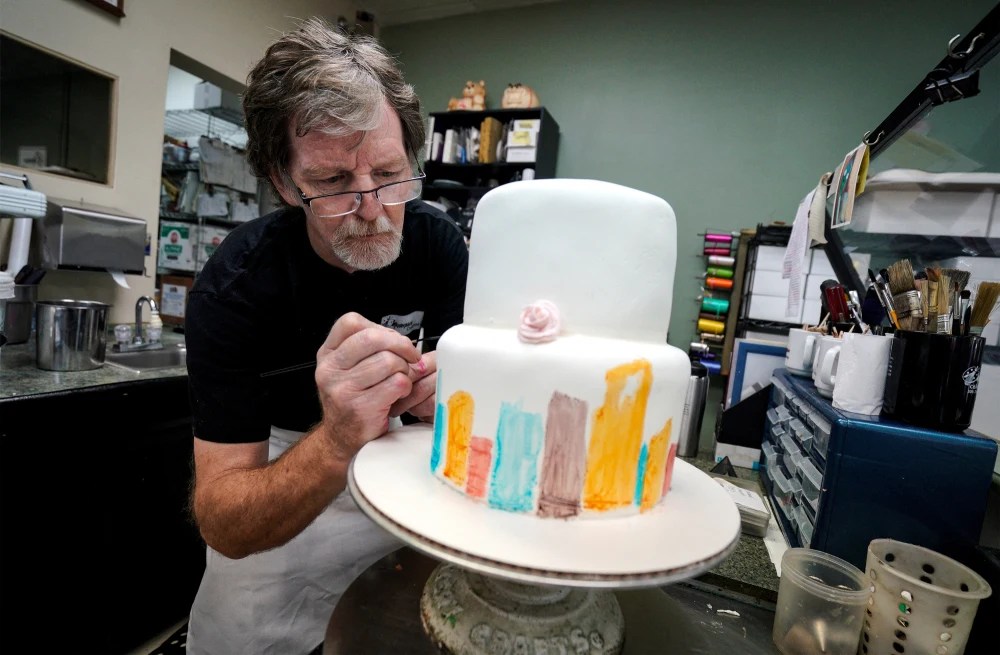
The left has hounded artistic Colorado baker Jack Phillips for over a decade. It started back in 2012 when a gay couple demanded that he create a “gay wedding cake” with two figurine husbands on top.
Of course, the gay couple could have gotten their gay cake created by many other bakers. They seem to have chosen Phillips not despite, but because, creating such a object was contrary to his religious beliefs.
Phillips politely said he would happily bake a cake for them, but not a gay cake. That’s an important point. Phillips did not simply refuse to serve the couple on the grounds that they were gay. Rather, he refused to create a special “gay cake” for them.
Phillips thus refused to create an artistic expression that was contrary to his religious beliefs.
The gay couple were something like a couple seeking out a Kosher restaurant, demanding that the Jewish chef cook up an elaborate pork dish, and then contending that they’d been discriminated against when told that pork is not on the menu.
It’s actually worse than that. The gay couple thought Phillips’ beliefs were not just discriminatory, but should be illegal. So, they schemed to establish that as a legal matter.
First, they brought an action against Phillips before the Colorado Civil Rights Commission, and won. The case then went to a Colorado appellate court, and they won there too.
Phillips finally filed for review in the Colorado Supreme Court, where all seven Justices are Democrat appointees. Those Colorado Justices refused to even hear the case on the grounds there was zero merit to Phillips’ appeal.
Then Phillips filed for an appeal in the U.S. Supreme Court. It’s the court of last resort in America, and they accept only a few percent of the appeals lodged there.
To everyone’s surprise, the U.S. Supreme Court decided that Phillips’ case was worth hearing. Not only that, but after hearing the case they reversed the Colorado decision. They decided that the Colorado Civil Rights Commission had exhibited an unfair antipathy toward Phillips’ religious-based actions.
Let that sink in. The U.S. Supreme Court – the highest court in the land – found that the Colorado Civil Rights Commission and state courts had shown six years of unfair antipathy toward Phillips’ ordinary Christian religious beliefs.
At least they didn’t feed him to the lions. But what happened next was almost as bad, as anyone who’s been a defendant in a lawsuit will tell you.
On the very day the U.S. Supreme Court issued its decision in favor of Phillips, a self-described “devil worshipper” demanded by email that Phillips bake a cake celebrating the devil’s birthday – complete with a dildo on top. (It’s not clear what is bedeviling about dildos.)
As before, Phillips politely explained that he could not bake such a cake because it was contrary to his religious beliefs.
Before then, on the very day that the U.S. Supreme Court agreed to hear Phillips’ appeal of the “gay cake” case, someone came into Phillips’ bakery and demanded that he create a “transgender cake” depicting transgender stuff.
You can see the pattern.
As before, Phillips refused to create the “transgender cake.” As before, the transgender person brought an action before the Colorado Civil Rights Commission. As before, he/she won. And as before, the case eventually went up to the Colorado Supreme Court.
This time, the Colorado Supreme Court took the case (perhaps feeling stung by the U.S. Supreme Court’s reversal of the Colorado decisions the earlier time).
But the Colorado Supreme Court dodged a decision on the merits. Instead, they dismissed the case on a technicality.
It was a win for Phillips, but it didn’t establish any precedent for other Christian bakers or anyone else who wants protection for his religious beliefs.
Pity the Colorado Supreme Court. They were faced with either (1) defying the earlier U.S. Supreme Court decision by ruling against Phillips, or (2) defying their woke principles by ruling in his favor.
Ah, they were torn between the law of the land and the law of the woke. They found a clever way to choose neither.
But trust me, they’ll be back. The devil-worshipping transexuals, the kangaroo state courts and “civil rights” commissions stacked with Democrat appointees, and the rest of the totalitarian wokerati – they’ll all be back, lawless as ever.
They want to outlaw religious beliefs that they don’t believe in, and that’s almost all of them.
Here’s how the First Amendment debate over governmental prohibitions on free speech has been framed:
The Democrats want the government to prohibit people from spreading “disinformation” that they don’t like.
The Republicans correctly point out that the First Amendment, in general, prohibits such a prohibition.
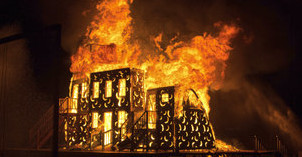
The Democrats then respond that the First Amendment does not apply because disinformation is like falsely shouting FIRE in a crowded theater – people’s safety is at risk.
Republicans then point out that the analogy between political speech and falsely “shouting FIRE in a crowded theater” is rooted in a Supreme Court case dating back to WWI. In that case, the Court upheld a restriction on speech in opposition to the wartime draft. The Court decided that political speech opposing the draft was like falsely shouting FIRE in a crowded theater, in that it could cause America to lose the war. It was a stretch, but that was the Court’s analogy.
But, say the Republicans, that Supreme Court case was later rejected during the Vietnam War in 1969 (a much less popular war than WWI) and was essentially overruled. Political speech today clearly is protected by the First Amendment – even if it’s highly unpopular or even untrue.
So far, so good. But many Republicans have gone on to imply that the Supreme Court’s overruling of the “shouting fire in a crowded theater” analogy means that the First Amendment gives people the right to falsely shout FIRE in a crowded theater.
This was a mistake for two reasons. The first is strategic and the second is legal.
The strategic reason is that contending the First Amendment gives people the right to say things to cause an immediate, panicked mayhem violates common sense and tends to discredit the First Amendment. Casual thinkers start to casually think, “Gee, if the First Amendment gives people the right to cause dozens of trampling deaths in minutes, just to watch people get trampled, then maybe the First Amendment is not such a good thing.”
The legal reason it’s a mistake to imply that the Supreme Court ultimately decided falsely shouting FIRE in a crowded theater is protected by the First Amendment, is that the Supreme Court never did.
Rather, what the Court held in that later case was that political speech is simply not the same as falsely shouting FIRE in a crowded theater. The latter is false and may produce immediate maiming and death, while the former is a political statement which might be false (or might not be) but is not likely to produce immediate maiming and death.
If the Supreme Court is ever confronted with a case where someone is prosecuted for causing immediate maiming and death by falsely shouting FIRE in a crowded theater, I am confident that the Supreme Court will not decide that his grotesque mischief is protected by the First Amendment.
But, you say, isn’t the First Amendment absolute?
No, it is not. For example, there is no First Amendment right to tell material lies in the sale of a product – to engage in false advertising. The First Amendment does not give a business the right to falsely state that their snake oil has cured cancer in 29,385 people if it hasn’t, or falsely state that customers can return goods for a cash refund if they can’t.
There is no First Amendment right to state falsehoods on your tax return. You can’t tell the IRS that you earned X dollars when you really earned X + Y dollars, as Hunter Biden has learned to his dismay (along with thousands of other citizens over the years, notoriously including Al Capone).
There is no First Amendment right to lie under oath. That’s perjury, and it’s a crime – and it’s not protected by the First Amendment.
There is no First Amendment right to make or distribute child pornography.
But most other speech is indeed protected by the First Amendment, particularly political speech. Saying that Donald Trump colluded with the Russians, or that Barack Obama or Vladimir Putin is running the White House, or that the 9/11 attack was orchestrated by the CIA or by aliens, or that your uncle was eaten by cannibals, is all generally protected as political speech – whether it’s true or not.
Such political speech is not the same as shouting FIRE in a crowded theater to cause an immediate mob scene of trampled human bodies.
Whether there’s a political price to be paid for false speech is, of course, a separate issue. Sometimes there is, and oftentimes there’s not. Either way, that’s not a legal matter, but a political matter.
Our nation stands nearly alone in the protections of the First Amendment. In most of Europe, you can be sent to jail for “hate speech” that a judge finds offensive. And many people have been. That is not the law in America, yet.
The Republicans have by far the better of this First Amendment debate, but they’ve expressed their argument poorly by implying that you can indeed shout FIRE in a crowded theater.
The proper argument is: Granted, you can’t falsely shout FIRE in a crowded theater, but political speech is nothing of the sort.
Glenn K. Beaton practiced law in the federal courts, including the Supreme Court.


 the Aspen beat