
Maybe we should pay bad parents money to be sterilized

A good part of a person’s success in the game of life is a product of nature and nurture – his genes and the parenting he received. People who were unlucky enough to receive bad genes, or bad parenting, or both, tend to be unsuccessful.

Tragically for America, these people who are unsuccessful at life are the very people who are disproportionately successful at having babies. Those babies tend to inherit their parents’ bad genes and learn their bad parenting.

When those babies grow up (or, often, just partially grow up) they, like their parents, are unsuccessful at life but disproportionately successful at having babies. Those babies, in turn, wind up short-changed by both nature and nurturing.

What I’ve just described already takes us through three generations. In the end, there’s no end. We’ve set up a vicious and expanding cascade of poverty and failure.

The effect is a policy of survival – and propagation – of the un-fittest. Charles Darwin would predict adverse consequences for our species.

Before you take offense, I hasten to add that general rules often are riddled with exceptions. I grew up in in a family of six with modest means. We all turned out OK. But the fact that it sometimes rains in the desert doesn’t disprove the general rule that deserts are dry.

The welfare state makes it all the worse. This was recognized as early as 1965 by intellectuals such as Daniel Patrick Moynihan, the future Democrat Senator from New York back when the Democratic Party sometimes produced rigorous thinking rather than identity politics. Moynihan’s work focused on poor Black families but it’s not a Black issue per se; it’s a poverty issue.

Moynihan criticized social welfare policies where we pay unsuccessful people to have unsuccessful babies to propagate their failure at life, thereby amplifying this vicious cascade of poverty.

The more babies they have, the more money we pay them. Then their babies have babies, and we’re off to the races.

Perhaps our policy should be exactly the opposite. Perhaps we should discourage unsuccessful people from having unsuccessful babies.

A smart start to getting out of this hole would be to stop digging. We should stop paying unsuccessful people to propagate. To that end, eliminate the $3,000 child tax credit.

Then go a step further. Pay people not to have babies. A simple way to accomplish that would be to pay them to undergo sterilization.

That sounds cruel, but is it really? If “my body my choice” justifies people aborting unborn babies because they’re inconvenient, then surely it justifies people accepting money to prevent the babies’ conception. For gosh sakes, the manufacturers of condoms accept money to prevent the conception of babies.

Moreover, many if not most of the babies these people have are utterly unplanned. If it’s cruel to prevent unwanted pregnancies, then why haven’t we outlawed those condoms – along with birth control pills, the rhythm method, premature withdrawal, abstinence and chastity?

I recognize that courts are wary of government measures that produce sterilization. Courts might view a system where the government pays people taxpayer money conditioned on them being sterilized as tantamount to the government sterilizing them involuntarily.

So don’t do it through the government. Let foundations and philanthropists administer the system with private funds. A foundation or a rich guy (Elon, do you hear me?) could say, “Here’s $3,000 for anyone under 50 who wants to get sterilized. And we’ll pay the medical bills, too.”

The people that we want not to have babies would find that offer tempting, because $3,000 is a lot of money to those people. But the people we want to have babies would not find that offer tempting, because that’s not a lot of money to them.

Over time, we just might reduce the population of undesirables (not to be confused with deplorables).

You might ask, what about America’s fertility crisis? Yes, it’s a fact that American (and European) birthrates are less than what’s required to maintain the current populations. And so, the argument goes, we should provide incentives for people to procreate.

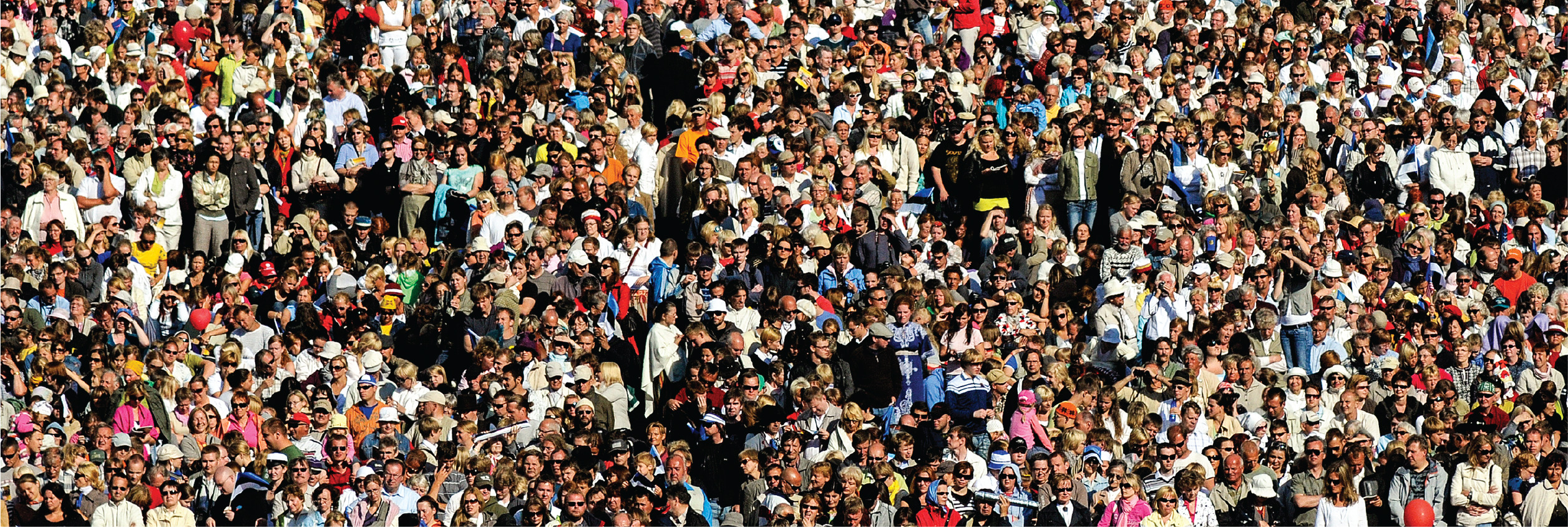
That argument is premised on the notion that when it comes to people, the more the better. I question that notion, especially when I’m forced to endure crowded freeways, crowded hiking trails, and crowded crowds.

We have eight billion of us. Is that not enough? I don’t know about you, but I rarely think, “Gee, I wish there were more people here.”

From a pure financial perspective, it’s true that an ever-increasing population is necessary to continue our Ponzi scheme called Social Security, where we need more and more workers to support more and more retirees who live longer and longer (though the effects of rationed medical care – which seems inevitable and already encroaching upon us – will partially solve that problem).

I submit that the way to fix the Ponzi scheme of Social Security is not to produce infinitely expanded pools of young suckers to support it, but to phase out the scheme. Like all Ponzi schemes, it’s unsustainable. We cannot increase our population forever to produce an ever-increasing pool of hard-working suckers to support an ever-increasing number of long-lived retirees. At some point, we run out of space, resources and suckers.

Even if the number of suckers we breed to support the burgeoning population of retirees is sufficient in quantity, they are apt to be insufficient in quality. How many generations of bad nature and nurture can a society withstand?

Trans was transient and now “they” are all gone

Back when Sleepy Joe Biden was “President” and someone with a Tourette’s laugh named KAMala or KaMALa or something, was his trustless assistant, we had a fashion fest.

You know, sort of like hula hoops, or streaking, or socialism, or The Twist.

First it was COVID, the disease that was not leaked from a Chinese bioweapons lab, except that it was. The Chinese and their allies in the teachers’ unions successfully produced a generation of illiterate Americans. (But those Americans would have been illiterate anyway because, after all, their teachers are in the teachers’ unions.)

Then came Russian collusion – the fact that Donald Trump colluded with the Russians, somehow, to get himself elected back in the Dark Ages of Trump 1. That fact was not factual but it was still a good fad. Call it a fadt.

Hot on the heels of that came the false fact that Sleepy Joe’s drug-addicted, deadbeat, foreign-favors-receiving criminal son left his incriminating laptop at a repair shop. That false fact, however, turned out to be a true fact, but it was fashionable to sneer that it wasn’t – that it was just something planted by the Russians. (Those Russians were everywhere!)

Believe you me, it was a crazy time.

But the craziest craziness was when attention-starved boys decided to pretend to be girls.

It worked. They got lots of attention and even cheers – from parents, classmates, teachers (in the teachers’ unions, naturally), and women’s athletic teams who didn’t like the little pervs in the women’s locker room, which not only garnered attention for them but also made them victims.

Being a victim at the center of attention was about the highest achievement in the land. And if you were a pervert to boot, well, that’s god-like (lower case “g” for this crowd).

Here’s where we need to be careful about our terminology. There are transvestites and there are transexuals. Transvestites are men who like to dress up as women.

Disclosure: I confess that in college I once dressed up like a woman on a Halloween about three hundred years ago. We all thought it was funny, but I can’t say I particularly enjoyed my costume.

Some men do enjoy that costume. They really enjoy that costume, if you know what I mean. Scientists say that men who enjoy dressing up as women, not just on Halloween and not just every three hundred years, are “transvestites.”

Importantly, a transvestite man doesn’t think he’s a woman, and has no desire to become one. He’s simply (if I can use the word “simply” here) a man who for sexual pleasure likes to dress up as a woman.

Transvestites in history are not unheard-of, but they’re usually unheard from. They get their jollies in a private sort of way. They’ve generally been pretty harmless.

Rumor is that J. Edgar Hoover was a transvestite. That rumor has been mostly debunked, and historians now say he was merely gay, with a close aid as his long-time lover.

Interestingly, as Director of the FBI, Hoover liked to keep files on the sexploits of politicians, with a special emphasis on possible homosexuality for the purpose of blackmailing them if necessary, and, perhaps, because he just liked gathering and keeping those files.

Transsexualism is something different. A man who is transexual wants to be a woman. Some have surgeons surgically remove their genitals and carve a vagina into the bottom of their torso. Such a man wants not just female clothing but also female parts and female pronouns. He wants to be a she.

Unlike transvestites who typically do their thing in private, transexuals seem to crave the limelight. It’s not enough to pretend to be a woman, it’s not enough to dress like a woman, and it’s not even enough to surgically mutilate themselves to look like a woman when they’re naked.

They want you to know they are transexuals. They want you to know that they’re men who “have become” women. And they want you to acknowledge that they actually are women.

That last thing – demanding that you acknowledge that a man pretending to be a woman actually is one – is their sure-fire attention-getter. Demanding that you sign onto something that is patently untrue is sure to get your attention.

Transexuals are very rare. Scientist estimate that far fewer that 1% of men are transexuals. It’s safe to say that evolution has not favored men who go around pretending to be women, mutilating their genitals, and demanding that you admit that they really are women.

But in the fashion-fest of a few years ago, young people were signing up to be transexuals like crazy. The numbers reached something like 5-7%.

Ah, but fads fade, and this one did too. In the latest surveys, the number is something like half that, and dropping fast.

Odd, that, since we were told that transexuals were “born that way.” These folks “born that way” seem to be about half in number that they were a year ago.

Maybe the fade in this fashion has something to do with the association between transsexualism and cold-blooded murder. And maybe not, since cold-blooded murder seems rather fashionable too these days.

More likely, it’s just a fad that ran its course. Fads are that way.

I can imagine a fashion-conscious tranny today. “Now where do I go to get my penis back?”

AI is real, it can think, and it will change everything

“Epic” is how a lengthy article in the Wall Street Journal last week described the current investment in AI. In today’s dollars, it dwarfs the investment in the railways in the 1800s. It dwarfs the investment in electrifying America in the early 1900s. It dwarfs the investment in the interstate highway system in the mid-1900s. It dwarfs the investments in the internet at the end of the last century.

So, went the gist of the Journal’s article, it must all be an investment bubble – right? – that will come crashing down the way Pets.com and other internet stocks did.

Or didn’t. Bear in mind that Amazon, Facebook, Google and Microsoft are internet companies, too.

A competing article in the Journal last week describes how Walmart plans to manage AI. They say AI will change every job in the company – all 2.1 million of them. They anticipate substantial growth in their revenues and store count, but see their employee count staying flat. They intend to use AI to do more work without more people.

Along the same lines, the Chief Executive of Ford Motor Company said last summer, “Artificial intelligence is going to replace literally half of all white-collar workers in the U.S.”

The average person has limited experience with AI. They do know that when they need a gas station, they no longer have to type “gas station” into Google Maps. Instead, they can tell AI, “Find me a gas station,” and – voila! – it does. It’s like having a wife who can read maps!

(Ladies, please direct your correspondence to WGates@Microsoft.com.)

Several criticisms are often leveled at AI. One is that it’s great at gathering information off the internet, but its conclusions are only as good as the information it gathers. This criticism is valid. How could it not be? Like you and me, the machine is only as good as the information it relies upon.

On the other hand, the machine’s use of information is getting better and better as the algorithms mature. It is learning, for example, that quantity does not equal quality. Just because something is said many times on the internet does not make it right, and just because something is said seldomly on the internet does not make it wrong.

It makes this discernment both by considering the credibility of the information sources and also . . . [drum roll] . . . by reasoning.

That’s right, AI can think. It can look at a piece of information and say, “Nah, that cannot be accurate. It cannot be accurate that it takes days for sunlight to reach the Earth, given that the Earth is X miles from the sun and light travels at Y mph.”

In my judgment, that constitutes thinking. The machine is not specifically asked how long it takes for sunlight to reach the earth. Rather, in the course of answering the question it is asked, it rejects information that it reasons cannot be accurate.

Here’s another example of AI thinking. Already, you can give it information about a building site for a house, such as the location, the topography and the boundaries, and tell it:

“Give me some birds-eye views (yes, it will understand that colloquialism) of potential house designs for a client who likes midcentury architecture and passive solar, and wants four bedrooms and a wine cellar. Oh, and bear in mind the Building Code of Pitkin County, Colorado and the HOA rules at this address.”  

In seconds, the machine will churn out diagrams of such houses. It doesn’t scour the internet for diagrams to copy; it generates its own. It becomes an architect – one with the benefit of Frank Lloyd Wright, Leonardo da Vinci, Antoni Gaudí, and all the others firmly in its “head” together with an instantaneous ability to figure out the workability of the designs it conceives.

If you want to tinker with a design, it will let you do so. You can say, “I like this one, but it’s kinda tall. Can you make it shorter and with a bigger footprint?” Or, “Let’s get into the HVAC and plumbing details on this one. Give me some schematics.”

To me, that’s high-level thinking again.

In medicine, AI already has the capability (though it hasn’t been tasked with this yet) to have on-file a patient’s lifetime medical history. A technician could say, “This patient is now experiencing sharp pain in his left-side torso and recurring headaches. What do you think?” AI might respond:

“It’s not his left kidney, because this patient had his left kidney removed in 2013. I recommend the following tests . . .  By the way, be careful with poking him – he’s on blood thinners. And he’s had claustrophobia in the MRI chamber before. Note his family history of diabetes.”

To me, that’s high-level thinking yet again.              

Ah, you say, that’s all just problem-solving. The machine still cannot dream, cannot feel. It knows the cost of everything, but the value of nothing.

Maybe, but the same can said of many people.

As for AI’s ability as an aesthete, I asked ChatGPT the following (with deliberate misspellings):

“Make me a 3-dimentional wall hanging about 3 x 5 feet made out of scrap steel welded together to make an abstract sculture.”

Here’s what it came up with:

I probably wouldn’t hang this on my wall, but, then again, I probably wouldn’t hang on my wall what passes for modern abstract masterpieces in museums today, either.

Now a word about the purported downside of AI – the Luddite notion that it will put everyone out of work and so we’ll all starve to death.

Economists know this is bunk. Technology certainly produces dislocations. The invention of refrigeration put thousands of ice men out of work. The invention of the automobile put millions of buggy-makers out of work. The invention of the internet is gradually putting late-night comedians out of work.

But overall, these technological wonders improve the efficiency of society – and, therefore, the wealth of society. If an invention can improve a worker’s efficiency by 50%, that doesn’t mean half the workers get laid off and starve. In the big picture, it instead means workers can get paid the same for working half the hours, or get paid double for working the same hours, or some blend of those two outcomes.

That’s what has happened throughout history in response to technological innovation. We work fewer and fewer hours, even as we have more and more things. (Whether that makes us happier is different question.)

We also live longer and longer. With AI, could we live forever?

Maybe. AI might not just cure disease and treat injury, but also stop the biological mechanism of aging.

Or AI might have the ability to receive an upload of a person’s memory – his life – before his body dies. A memory in a durable machine that can interact with humans would seem no less valid than a memory in a failing brain that increasingly cannot.

Could that AI embodiment of a person, residing on the computer cloud (maybe Heaven really is in a cloud!) continue to interact with the flesh and blood world? I don’t see why not. And what it experiences would of course add to the experiences that were originally uploaded. “You” would continue to “live.”

The AI “you” would undoubtedly be the object of real love by flesh-and-blood humans (let’s call them “humies”). After all, people routinely experience real love for inanimate objects like dolls and teddy bears and sports cars. They could surely love an image that talks with them, especially if they loved that image before its humie got buried.  

In receiving that upload of a person’s memory, would the machine also receive his soul? I cannot answer that question, nor, I suspect, can AI.

Dem pundits ask, “Why aren’t we marching in the streets?” Here’s why:

It’s amusing to see them pose the question to themselves. It’s not really a question; rather, it’s rhetorical. Posing the question, “Why aren’t we marching in the streets?” is their way of saying that they really should be.

But even after considerable angst, self-incrimination, and rhetorical excesses about not marching, they’re still not marching.

As for why, there’s a simple answer and a complicated one. The simple answer is, because it’s cold outside.

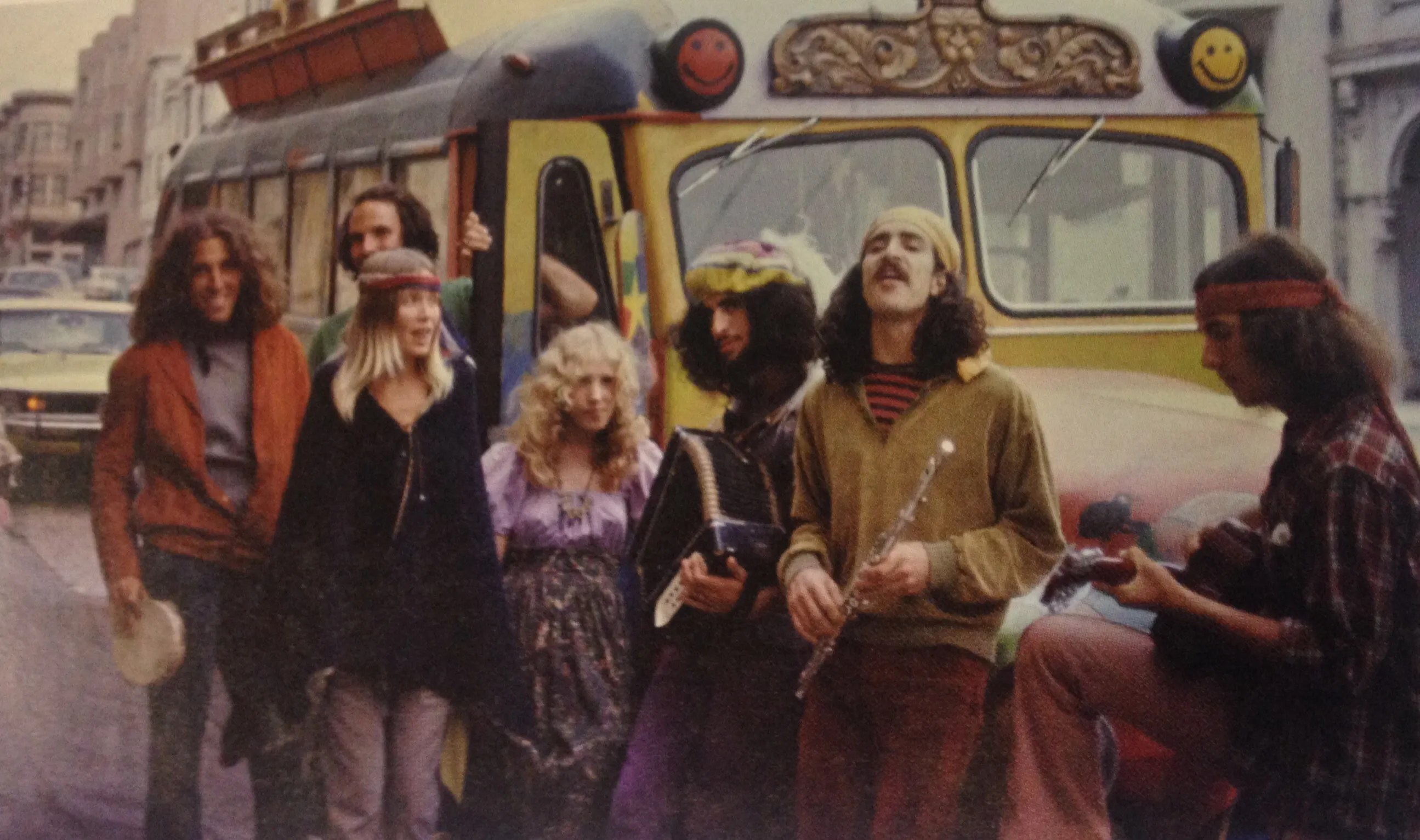
Remember the “protest era” of the 60s and early 70s? College kids would organize protests and sometimes riots with two goals in mind:

  • Ending the Vietnam War (or, really, just ending the draft); and
  • Ending Spring finals.

You might reasonably ask, what about Winter finals? Well, they wanted to end Winter finals, too, but, baby, it’s cold outside when Winter finals roll around. What fun is it to protest outside in the cold?

So, the hippies conveniently decided that the Vietnam War – or at least the draft – needed ending mainly in the spring, not the winter.

Along the way, the hippies appointed themselves as the outsiders, the disrupters, the independent thinkers, the anti-establishmentarians who were rightly skeptical of government.

Such images were useful in fitting in with the cool kids, and picking up chicks.

Here we are, two generations later. The hippies are now grown up, kind of, and have jobs, sort of, at businesses, of a type, such as colleges and media outlets tasked with setting the cultural norms.

Those hippie-run institutions survive on some tuition from suckers (or advertising in the case of the media), huge donations of money from foundations that they and their friends run, and grants from a government that, again, they and their friends run.

In short, the hippies who sought to tear down the establishment are now . . . the establishment. Ironically, and with an utter lack of self-awareness, they continue their quixotic tilting at The Man, even as they themselves have morphed into him. 

There’s one particular man they loath. This Bad Orange Man is an outsider, a disrupter, an independent thinker, an anti-establishmentarian who is rightly skeptical of government. 

Does that sound familiar?

He’s everything the hippies imagined themselves to be two generations ago, and still fantasize that they are now, even as they rake in money and power from the establishment they simultaneously condemn and control.

Bad Orange Man is therefore not just a threat to their creature comforts, but to their self-image. For that, they deem him stupid, diabolically clever, fascist, Hitlerian, and a pooh-pooh breath with corny hair. They’d say he’s a communist, if only they disliked communism.

Yes, he’s as bad as they get. But who wants to stand on the streets of DC in the semi-freezing winter?   

That’s the simple answer to the question “Why aren’t we protesting in the streets?”

Here’s the complicated answer. They feel just a twinge of admiration and empathy for Bad Orange Man. Maybe they know, deep in their subconscious, that he’s not The Man they protested against, but is the man they always imagined themselves to be.

Then again, that credits them with both a consciousness and a conscience.

We’ll see come spring. Until then, the brave resistance of the aging hippies will remain mostly pixel protests composed in keyboard comfort. Come spring, they might get out a bit more. But those achy knees . . .