Mexico sues Smith & Wesson, Supreme Court shoots them down

One summer day in 1924, a train stopped at a station on Long Island. A man carrying a harmless-looking package ran to catch it. He struggled to board the train as it departed. One of the train employees on board reached for his hand as another on the platform gave him a boost from behind.

The package fell onto the tracks. It turned out to be a package of fireworks. The fireworks exploded. 

So, the exploding fireworks injured someone, right?

Not exactly.

The court opinion was written by Benjamin Cardozo, the brilliant judge who was then on the New York state supreme court (which they called, and still call, the New York Court of Appeals). Cardozo later became a storied member of the U.S. Supreme Court. In his words:

“The shock of the explosion threw down some scales at the other end of the platform, many feet away. The scales struck [Helen Palsgraf], causing injuries for which she sues.”

Today, of course, the phrase “injuries for which she sues” is redundant.

This case has been studied by generations of first-year law students. The legal question presented is, should the railroad be liable for Mrs. Palsgraf’s injuries?

Cardozo said the answer is no. People who are negligent are not liable for all the consequences of their negligence. They are liable for only those consequences that are reasonably foreseeable.

Cardozo seemed to accept for purposes of argument that the railroad employees were negligent in boosting the package-carrying man onto the train, and implied that the railroad might be liable if the package were labeled as combustible and the injury had occurred to that man.

But Mrs. Palsgraf was just too far away physically and causatively. The employees could not have reasonably foreseen (1) that their normal boost to a passenger carrying a harmless-looking package would knock the package out of his hands, (2) that the package would land on the hard tracks, (3) that the package would contain combustible fireworks, (4) that the fireworks would explode, (5) that the explosion would knock down heavy scales at the other end of the platform, (6) that the scales would fall onto Mrs. Palsgraf, and (7) that she would thereby be injured.

This principle in law is called “proximate cause.” A person committing a negligent act is generally liable for only the consequences that are “proximate” to that act – the ones that are reasonably foreseeable.

If the law were otherwise, imagine the weird outcomes. If you negligently run a red light, and three miles later someone jumps in front of your car, then you could be liable for his injuries. Because, after all, you would not have been at that exact spot at that exact time if you had not negligently run the red light three miles back.

Which brings us to Mexico.

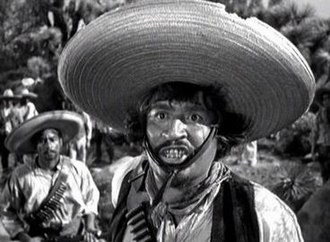
Like America, Mexico has a gun violence problem. The guns are manufactured mostly in the United States, and smuggled illegally into Mexico. There, the guns are used by bad “we-don’t-need-no-stinkin’-badges” Mexicans to shoot good Mexicans.

Mexico has not been willing and able to address their gun violence problem any more than Chicago has. Putting gangsters in jail would cost them their votes, and might well cost them their lives.

So Mexico thought of another approach. They sued the American gunmaker Smith & Wesson back in 2021 for manufacturing and selling guns in the United States that were transported across the border into Mexico.

You see, Mexico is less interested in stopping gun violence by gun-toting gangsters who have, shall we say, “leverage” over the Mexican government, and more interested in profiting from the gun violence by taxing the manufacturers of the guns.

Mexico faced two obstacles in their case. First, there was the formidable Mrs. Palsgraf. The “proximate cause” between Smith & Wesson’s manufacture of the guns and the guns’ misuse by Mexican bandits was doubtful.  

Second, the United States had enacted legislation on this very point in 2005. Even if Mexico were to get past Mrs. Palsgraf, a law called the Protection of Lawful Commerce in Arms Act (the “PLCAA”) expressly insulates firearm manufacturers from blanket liability for the wrongful use of firearms that they legally sell.

Mexico filed suit anyway.

They didn’t file in San Antonio, which you’ll remember was the site of their last great victory over the Yanquis. And they didn’t file in Tennessee, where Smith & Wesson are located along with their friends Jack Daniels and Phillip Morris.

(Speaking of which, “Alcohol, Tobacco and Firearms” should be the name of a convenience store, not a government agency.)

Mexico instead filed suit in a federal district court located in . . . Massachusetts.

That was clever.

But it didn’t work. The District Court judge tossed the case.

Mexico then appealed to the federal court of appeals sitting in . . .  c’mon, you know . . . Boston.

That did work. The Court of Appeals reversed, in deciding that Mexico had a viable case.

Don’t think the fix was in at the Court of Appeals, however. The opinion was written by a judge appointed by a President with a distinctly un-Mexican name, Barack Obama.

Smith & Wesson then appealed to the Supreme Court, now dominated by six conservative-ish Justices, three of whom were appointed by our conservative-ish President. The Supreme Court is not in Boston and is not even in Massachusetts. These days, it’s in Heaven.

The formal opinion of the Supreme Court won’t be issued until around June, but the Justices were not exactly poker-faced at this week’s oral argument. The conservative Justices practically laughed at the arguments of the American lawyer who represented Mexico.

Even two of the three libs asked questions that seemed hostile to Mexico’s case. That included a Justice who is liberal but (or is it “and”?) very smart, Justice Kagan.

What’s the lesson? Sometimes, the wheels of justice turn slowly, but grind exceedingly fine. Adios amigos.

Glenn K. Beaton practiced law in the federal courts, including the Supreme Court.

 Denver’s mayor is out to lunch – but he might be the only one

Have you seen the Denver restaurant scene? Me neither. It’s dead and gone.

In a one-year period, the number of restaurants in Denver declined by 183. Of all the restaurant closures in Colorado last year, 82% were in Denver – a place that has only about 12% of the population of Colorado.

Average profits at the few surviving Denver restaurants are only 3-5%. Anyone who dines out knows that this isn’t because prices are down. It’s because costs are up. Restaurant wages in Denver are up 89% since 2019.

The main reason is Denver’s minimum wage of $18.81/hour for ordinary workers and $15.79 for tipped workers. For comparison, in New York City the minimum wage for both is $16.50.

That’s right, the minimum wage for ordinary workers in Denver such as kitchen staff is much higher than in New York City, and for tipped workers such as servers it’s almost as high. For both, it’s higher in Denver than in Aspen.

The mayor has a solution for the unprofitability and resulting demise of Denver restaurants. His solution is . . [drum roll] . . . to slap an extra tax on your tab to make dining out even more expensive.

He proposes tacking a 20% surcharge onto every restaurant tab. The proceeds, he says, would be distributed not to the restaurant owners, but to the non-tipped restaurant staff – the kitchen workers who already enjoy a 20% higher minimum wage than the tipped staff. He says the system that has ruled restaurants forever, where servers who are tipped for good service often take home more money than kitchen staff who are not, is “inequitable.”

That’s not what the market says. The market says the tipped servers have a combination of people skills, hard work, charm, and the ability to remember the orders of half a dozen patrons at once, that makes them very valuable. In other words, they merit more money for their work because their work has more merit.

But what does the market know in comparison to the mayor of Denver? You see, we can’t let merit as defined by the market get in the way of “equity” as defined by the mayor.

As is usually the case with socialist redistribution schemes, there’s a sneaky something in this for the government, too. The 20% surcharge would be “topline” and so the city and state sales tax of 8.81% would apply to it.

That’s right, the city would tax their own surcharge – they would tax their own tax. The total surcharge would thus amount to 20% plus 8.81% of 20%, for a total of almost 22%.

Unsurprisingly, the Colorado Restaurant Association is not thrilled about the mayor’s proposal, to put it mildly.

“It’s government policy that is causing the problem in the first place,” said one member of the Association. “Basic economics tells you that when you want to encourage sales, you lower prices — not add 20% more plus tax to everyone’s costs,” said another. “This won’t fill restaurants any more than raising rents would fill empty office buildings,” said a third.

The remark about empty office buildings in Denver hits another nerve, which I’ll save for another column.

The mayor is on quite a roll. Last year, he spent zillions of dollars of Denver taxpayer money on two pet projects: Attracting more illegal immigrants and attracting more vagrants. He succeeded in both.

Along the way, he taunted the federal immigration authorities. He said after the election that he was willing to get himself arrested and sentenced to prison for interfering with their enforcement of the nation’s laws. He boasted that his little insurrection might put him on the wrong side of the law, but the right “side of history.”

Sounds a little like another Democrat from another era, Bull Connor.

The response of the Feds was along the lines of “Make my Day.”

The mayor’s vanity projects don’t come cheap, and money is scarce, especially as the mayor risks losing federal grants. After spending millions on vagrants and illegals, Denver lacks money to pay for basic services such as parks and libraries.

But the mayor has a solution to that problem too. He proposes to borrow money.

Notice the shell game here. The mayor took ordinary city funds that would ordinarily be spent on ordinary city services, redirects them to spend on illegals and vagrants instead, and then seeks to borrow money to replace those ordinary funds in order to fund the ordinary city services.

Does he imagine that we’re unable to see that the economic reality is that he’s borrowing money to pay for the illegals and vagrants?

The mayor didn’t say how much he wants to borrow, as he doesn’t want to lock himself into an amount that he’ll then exceed. It’s like the Left’s reply when you ask them to put a number on the “fair share” that people who have more money than they do should pay in taxes. Their number is “more.”

I don’t usually resort to name-calling. It’s a primitive form of debate, it’s not very persuasive, and it’s not very enjoyable. The most important Latin I learned as a lawyer was res ipsa loquitur.

But I’ll make an exception here. The mayor of Denver is a nut job.

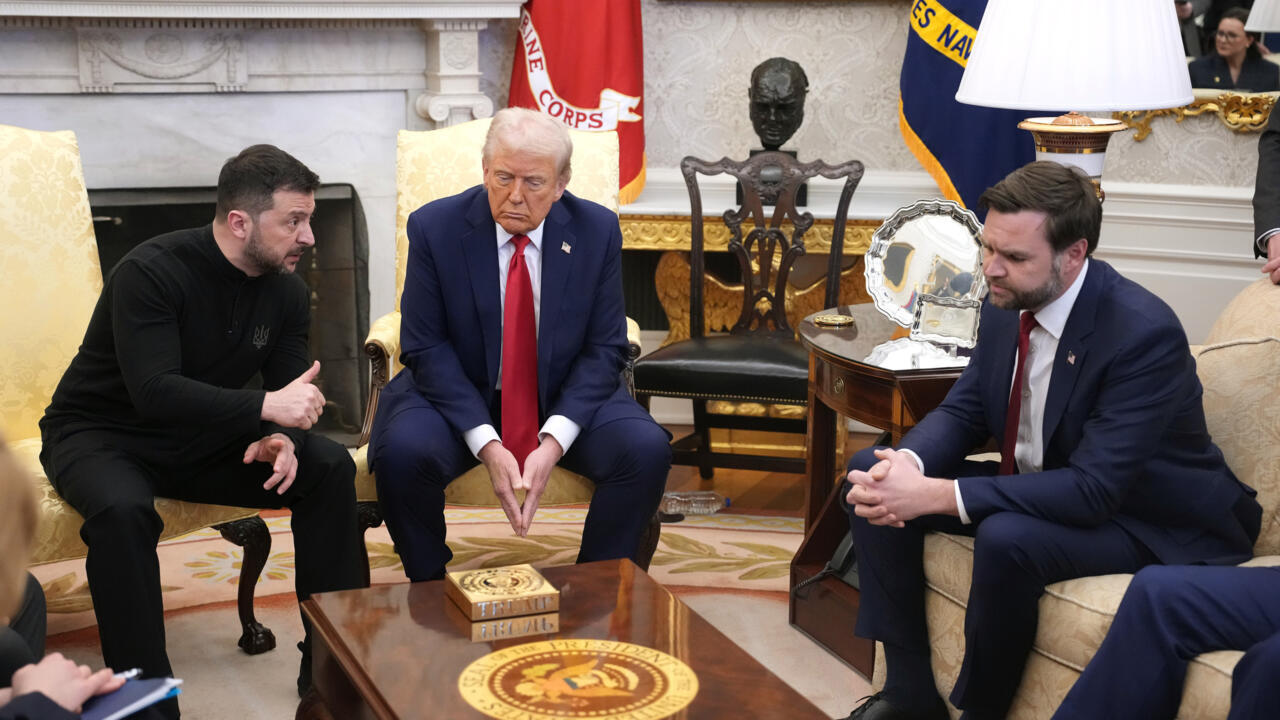
Trump v. Zelensky cage match: Whaaat?

The White House event “Trump and Zelensky Meeting Staged for Media” somehow turned into “Trump v. Zelensky Cage Match.”

How did that happen? My theory is that it wasn’t exactly an accident, but it didn’t play out the way either side intended.

Bear in mind that both leaders are experienced actors – Trump as a reality TV host and Zelensky as a stand-up comedian. (Yes, Trump really was a reality TV host!) Both saw the meeting as a stage. They intended to communicate not with one another – that could have been done better in private – but with millions of viewers.

Trump is eager to end the Ukraine war. So too is Zelensky. However, they obviously differ on the terms of peace. Trump wants more Ukrainian concessions than Zelensky wants to give.

That’s particularly true in the real estate department. To a guy like Trump with some knowledge of real estate, the path to peace is simple: Ukraine should give up some potato fields, beneath which are more land mines than potatoes at this point.

To Zelensky, those potato fields are Ukrainian, and he’ll be damned if he’ll give a single potato to the Huns from the east. Those potatoes are owned by Huns from Ukraine, by golly.

Trump’s team (probably with J.D. Vance in a lead role) arranged this meeting not to achieve a meeting of the minds. They don’t care to meet Zelensky’s mind, and, even if they did, why make a reality show out of it?

The reason for the public meeting was to lock Zelensky into a deal, sort of. Everyone would make nice. Trump would suggest a vague peace-for-land exchange. Zelensky would nod – noncommittally, but he’d still nod. After all, the real estate of war-torn eastern Ukraine is not exactly Mar-a-Lago. 

The end result would be a step toward peace where Ukraine gives up some land, Russia goes home, mostly, and Trump takes credit.

“Mr. President, the Nobel Prize Committee in on line four!”

Zelensky had probably been briefed on the outlines of this show. He had time to get truly outraged, and time to script some faux outrage as well.

By the way, who shows up for a televised meeting in the White House with what we used to call The Leader of the Free World wearing a sweatshirt?

Someone who is pretty full of himself, that’s who. When asked by a reporter (reporters are known for their sartorial splendor, you see) whether he even owns a suit, Zelensky replied that he would wear one when the war is over. At the rate he’s winning, his post-war suit might be Captain Kirk’s old one.

In fairness, this Zelensky guy is under some stress these days. That stress showed in the meeting. Zelenski was having none of the peace-for-land deal, and he made that more than clear.

Fine, that land is Ukrainian (though there are a lot of ethnic Russians on it).

Zelensky’s mistake was to get a little too strident. Belligerent, even. He’d apparently been warned in advance not to get into a tussle with Trump, and especially not to get into a televised Trumpian tussle, but he did anyway.

Trump tussled right back, and also tag-teamed to his trusty televised Trumpian tussler, J.D. Vance.

And the cameras rolled.

When Zelensky got really pouty, Trump threw him out. I mean that figuratively (or literally, as the illiterates would say these days).

The losers in this misplayed reality show are Zelensky, the Ukrainian people, and Trump, in that order.

Zelensky and Ukraine lose because they have no options. Europe is not willing to defend Europe to the extent America has – with weapons, money and intel. Without America, Ukraine is borscht.

As for Trump, he lost the Nobel Prize that day, but the Nobel Committee will never give it to him anyway. He also lost some negotiation leverage with Vladimir Putin, but the deal he’s negotiating isn’t his. It’s Ukraine’s, so who cares?

He knows Zelensky will be back, and might even be wearing a suit this time. Meanwhile, he perhaps turned American public opinion harder against the sweatshirt-wearing little comedian with no sense of humor.

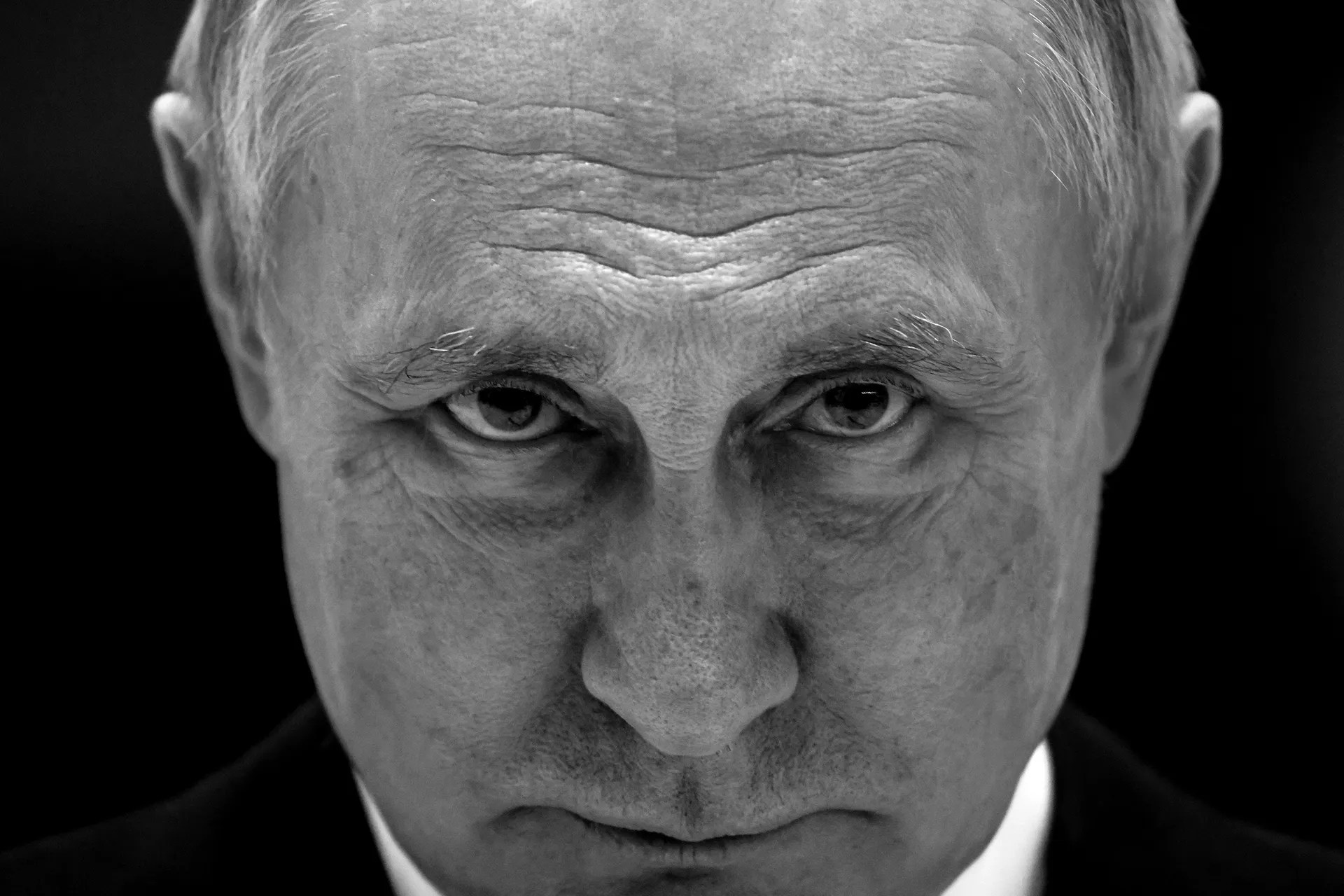
There will be a land-for-peace cramdown on Ukraine because that’s the only peace that Putin will accept. After three years of ugly war, Putin has shown he might not be able to conduct much of a war, but he’s very patient.

Zelensky’s belligerence served to increase the amount of Ukrainian land that will be given up, and decrease the amount of peace that it will be given up for. Ironically, in making a bad deal worse, he made it all the easier for Trump to sell it to a war-story-weary American public.

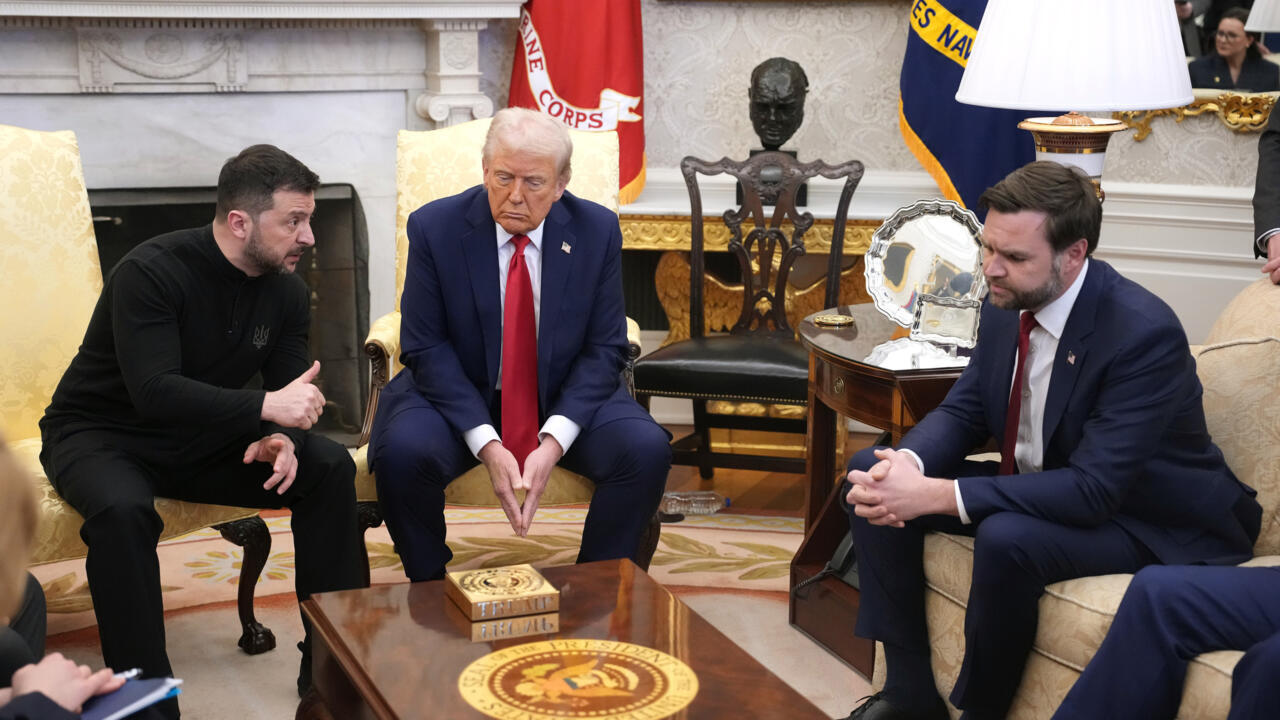
Trump v. Zelensky cage match: Whaaat?

The White House event “Trump and Zelensky Meeting Staged for Media” somehow turned into “Trump v. Zelensky Cage Match.”

How did that happen? My theory is that it wasn’t exactly an accident, but it didn’t play out the way either side intended.

Bear in mind that both leaders are experienced actors – Trump as a reality TV host and Zelensky as a stand-up comedian. (Yes, Trump really was a reality TV host!) Both saw the meeting as a stage. They intended to communicate not with one another – that could have been done better in private – but with millions of viewers.

Trump is eager to end the Ukraine war. So too is Zelensky. However, they obviously differ on the terms of peace. Trump wants more Ukrainian concessions than Zelensky wants to give.

That’s particularly true in the real estate department. To a guy like Trump with some knowledge of real estate, the path to peace is simple: Ukraine should give up some potato fields, beneath which are more land mines than potatoes at this point.

To Zelensky, those potato fields are Ukrainian, and he’ll be damned if he’ll give a single potato to the Huns from the east. Those potatoes are owned by Huns from Ukraine, by golly.

Trump’s team (probably with J.D. Vance in a lead role) arranged this meeting not to achieve a meeting of the minds. They don’t care to meet Zelensky’s mind, and, even if they did, why make a reality show out of it?

The reason for the public meeting was to lock Zelensky into a deal, sort of. Everyone would make nice. Trump would suggest a vague peace-for-land exchange. Zelensky would nod – noncommittally, but he’d still nod. After all, the real estate of war-torn eastern Ukraine is not exactly Mar-a-Lago. 

The end result would be a step toward peace where Ukraine gives up some land, Russia goes home, mostly, and Trump takes credit.

“Mr. President, the Nobel Prize Committee in on line four!”

Zelensky had probably been briefed on the outlines of this show. He had time to get truly outraged, and time to script some faux outrage as well.

By the way, who shows up for a televised meeting in the White House with what we used to call The Leader of the Free World wearing a sweatshirt?

Someone who is pretty full of himself, that’s who. When asked by a reporter (reporters are known for their sartorial splendor, you see) whether he even owns a suit, Zelensky replied that he would wear one when the war is over. At the rate he’s winning, his post-war suit might be Captain Kirk’s old one.

In fairness, this Zelensky guy is under some stress these days. That stress showed in the meeting. Zelenski was having none of the peace-for-land deal, and he made that more than clear.

Fine, that land is Ukrainian (though there are a lot of ethnic Russians on it).

Zelensky’s mistake was to get a little too strident. Belligerent, even. He’d apparently been warned in advance not to get into a tussle with Trump, and especially not to get into a televised Trumpian tussle, but he did anyway.

Trump tussled right back, and also tag-teamed to his trusty televised Trumpian tussler, J.D. Vance.

And the cameras rolled.

When Zelensky got really pouty, Trump threw him out. I mean that figuratively (or literally, as the illiterates would say these days).

The losers in this misplayed reality show are Zelensky, the Ukrainian people, and Trump, in that order.

Zelensky and Ukraine lose because they have no options. Europe is not willing to defend Europe to the extent America has – with weapons, money and intel. Without America, Ukraine is borscht.

As for Trump, he lost the Nobel Prize that day, but the Nobel Committee will never give it to him anyway. He also lost some negotiation leverage with Vladimir Putin, but the deal he’s negotiating isn’t his. It’s Ukraine’s, so who cares?

He knows Zelensky will be back, and might even be wearing a suit this time. Meanwhile, he perhaps turned American public opinion harder against the sweatshirt-wearing little comedian with no sense of humor.

There will be a land-for-peace cramdown on Ukraine because that’s the only peace that Putin will accept. After three years of ugly war, Putin has shown he might not be able to conduct much of a war, but he’s very patient.

Zelensky’s belligerence served to increase the amount of Ukrainian land that will be given up, and decrease the amount of peace that it will be given up for. Ironically, in making a bad deal worse, he made it all the easier for Trump to sell it to a war-story-weary American public.

Dem pundits ask, “Why aren’t we marching in the streets?” Here’s why:

It’s amusing to see them pose the question to themselves. It’s not really a question; rather, it’s rhetorical. Posing the question, “Why aren’t we marching in the streets?” is their way of saying that they really should be.

But even after considerable angst, self-incrimination, and rhetorical excesses about not marching, they’re still not marching.

As for why, there’s a simple answer and a complicated one. The simple answer is, because it’s cold outside.

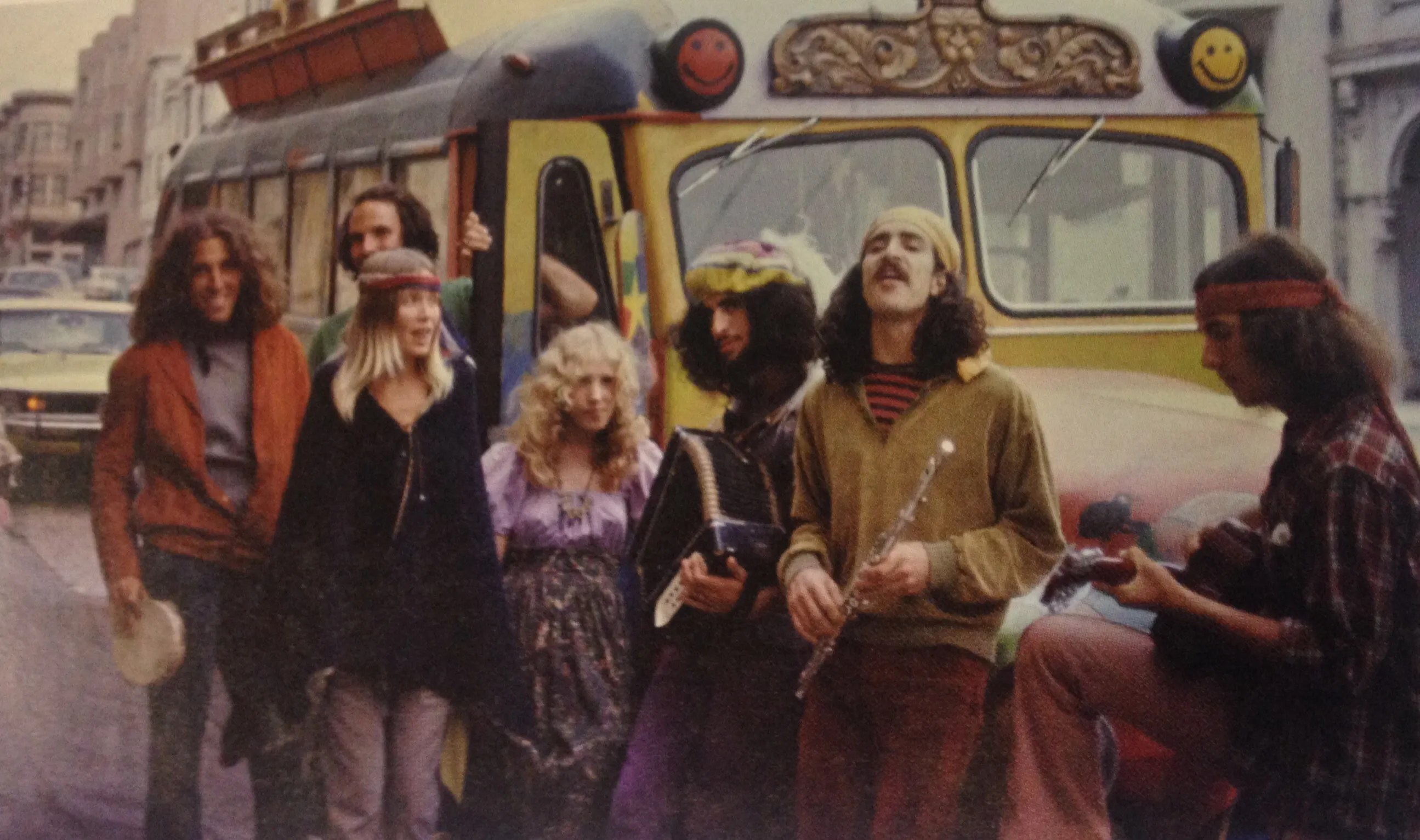
Remember the “protest era” of the 60s and early 70s? College kids would organize protests and sometimes riots with two goals in mind:

  • Ending the Vietnam War (or, really, just ending the draft); and
  • Ending Spring finals.

You might reasonably ask, what about Winter finals? Well, they wanted to end Winter finals, too, but, baby, it’s cold outside when Winter finals roll around. What fun is it to protest outside in the cold?

So, the hippies conveniently decided that the Vietnam War – or at least the draft – needed ending mainly in the spring, not the winter.

Along the way, the hippies appointed themselves as the outsiders, the disrupters, the independent thinkers, the anti-establishmentarians who were rightly skeptical of government.

Such images were useful in fitting in with the cool kids, and picking up chicks.

Here we are, two generations later. The hippies are now grown up, kind of, and have jobs, sort of, at businesses, of a type, such as colleges and media outlets tasked with setting the cultural norms.

Those hippie-run institutions survive on some tuition from suckers (or advertising in the case of the media), huge donations of money from foundations that they and their friends run, and grants from a government that, again, they and their friends run.

In short, the hippies who sought to tear down the establishment are now . . . the establishment. Ironically, and with an utter lack of self-awareness, they continue their quixotic tilting at The Man, even as they themselves have morphed into him. 

There’s one particular man they loath. This Bad Orange Man is an outsider, a disrupter, an independent thinker, an anti-establishmentarian who is rightly skeptical of government. 

Does that sound familiar?

He’s everything the hippies imagined themselves to be two generations ago, and still fantasize that they are now, even as they rake in money and power from the establishment they simultaneously condemn and control.

Bad Orange Man is therefore not just a threat to their creature comforts, but to their self-image. For that, they deem him stupid, diabolically clever, fascist, Hitlerian, and a pooh-pooh breath with corny hair. They’d say he’s a communist, if only they disliked communism.

Yes, he’s as bad as they get. But who wants to stand on the streets of DC in the semi-freezing winter?   

That’s the simple answer to the question “Why aren’t we protesting in the streets?”

Here’s the complicated answer. They feel just a twinge of admiration and empathy for Bad Orange Man. Maybe they know, deep in their subconscious, that he’s not The Man they protested against, but is the man they always imagined themselves to be.

Then again, that credits them with both a consciousness and a conscience.

We’ll see come spring. Until then, the brave resistance of the aging hippies will remain mostly pixel protests composed in keyboard comfort. Come spring, they might get out a bit more. But those achy knees . . .

Light-skinned Neanderthal Europe was conquered by dark-skinned modern humans 40,000 years ago

When fossilized Neanderthals (or “Neandertals” if you prefer) were discovered in caves in Europe back in the mid-1800s, it was assumed that they were stupid, ape-like brutes. Indeed, they did possess compact, muscular bodies with short legs.

We’ve learned in the past few decades that our stereotype of Neanderthals was wrong. These were fully human creatures who hunted with spears, created art, made boats, fished, ceremonially buried their dead, and almost certainly spoke to one another. They were as advanced as any other hominid of the time period.

They were the related to, but not direct descendants of, Homo Erectus, which had migrated out of Africa and into Eurasia over a million years ago. By the time they got to Europe, they had evolved.

Neanderthals, alone, owned Europe for nearly half a million years, through the course of multiple ice ages.

The living wasn’t easy. Much of their diet was the resident megafauna of mammoths, bison, elk, and mastodons, and whatever other protein they could kill and eat. Their stone-age existence was probably not much different than the pre-Columbian existence of the plains Indians in North America.

“Modern” humans finally arrived in Europe around 45,000 years ago. For about 5,000 years thereafter, or more, the two subspecies shared Europe and shared their cultures.

And shared body fluids. Neanderthal DNA accounts for about 1-2% of today’s human DNA outside Africa.

Neanderthals finally died out. Another way of looking at it, however, is that the newcomers overwhelmed the Neanderthals with their sheer numbers. If a population of, say, 20,000 Neanderthals is absorbed into a population of one million modern humans, the Neanderthal DNA will account for only 2% of the resulting population – without any Neanderthals being harmed in the process.

What actually happened is probably somewhere in the middle. To some extent, Neanderthals were simply absorbed. And to some extent, they were out-competed and even killed.

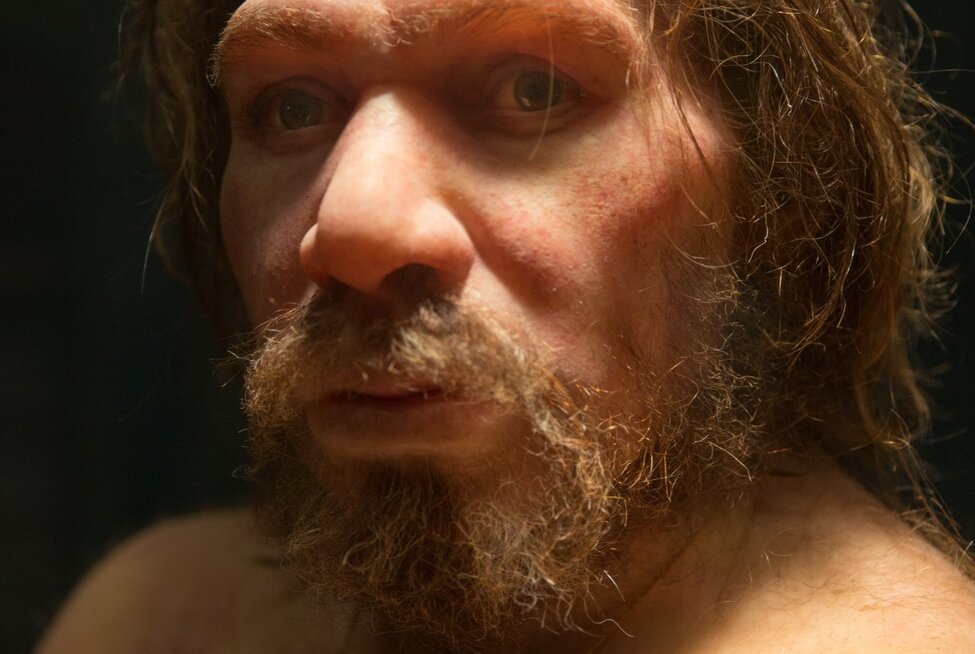
The visual appearance of Neanderthals is debated. Some scientists contend that they could be dressed in a suit and stroll down Madison Avenue without getting a second look (other than looks from people wondering why anyone would wear a suit these days). Other scientists contend that their heavy brow ridges and musculature would surely merit a second look, regardless of their garb.

But giving a person a second look for his appearance is not the same as shrieking “Yikes, a caveman!” Many modern humans have an appearance that is outside the normal range.

Here’s something interesting about Neanderthals’ appearance that we do know. We know from DNA analysis of their remains that they were light-skinned and probably had blond or red hair.

This should be no surprise. Human skin uses sunshine to manufacture vitamin D. In the northern latitudes, such as Europe, the reduced sunshine results in less manufactured vitamin D. Light skin is a natural adaptation, because it permits more sunshine to penetrate the skin.

Here’s another skin pigmentation fact that did come as a surprise, at least to me. While Neanderthals had light skin for hundreds of thousands of years from living in northern latitudes, light skin in modern humans did not develop until much more recently.

Light skin is a complex phenotype for which no single gene is responsible, but the general view is that the various genes did not produce light skin in modern humans until about 10-30,000 years ago – sometime after the migration of modern humans out of Africa.

That more recent time – 10,000 years ago – barely puts it prior to the advent of agriculture and cities in the Levant.

Moreover, both the recent time of 10,000 years ago for the development of light skin in modern humans and the more distant time of 30,000 years ago put it after modern humans migrated into Europe, the domain of the Neanderthals.

The upshot is this. The meeting between the original Europeans – the Neanderthals – and modern humans was a meeting between light-skinned European Neanderthals and migrating dark-skinned modern humans.

It’s tempting to conclude that the source of the light-skin genes in modern humans was the Neanderthals with whom they interbred after arriving in Europe. But paleo-geneticists say that’s not the case. The genes for light skin are different between Neanderthals and modern humans, which suggests that the two lines of humans developed light skin independently – but for the same reason of optimizing vitamin D synthesis in northern latitudes.

What’s all this have to do with immigration along the southern border, conservative wins in the German election, and The Aspen Beat? Nothing, but I thought it was interesting.

Trump is thinking outside the Ukrainian box

Inside the box, and the Beltway, the thinking all along has been that we must draw a line at Ukraine, else Putin and the barbarians will soon be on the steps of Warsaw and then Berlin and Paris.

Besides, Russian aggression and aggressors are morally bad. We owe it to posterity and civilization not to crumble before them.

Those are valid points. On the other hand:

We are where we are. Where we are, is Vladimir Putin make some understandable miscalculations.

One, he miscalculated America’s willingness to support foreign countries. After all, he had witnessed Joe Biden’s Afghanistan surrender debacle.

Second, he underestimated the Europeans. After seeing them under-commit to military defense for generations, he reasonably assumed they would not stand in the way of his little conquest.

Imagine his shock that they and the Americans did. Consider his awe that his little adventure served to increase the military expenditures of NATO nations, and drove into NAT0 two new members, Sweden and Finland (which shares an 830-mile border with Russia).

Third, Putin underestimated the skill, resources and resolve of Ukraine itself. Again, that’s understandable. When Russia took over the Crimean Peninsula of Ukraine six years earlier, Ukraine offered little resistance, while Barack Obama and NATO offered none at all.

Fourth, Putin overestimated the skill, resources and resolve of his own military. Russia’s historical strength militarily has been sheer manpower, but manpower alone is not enough in modern wars. A war that Russia was supposed to win in weeks has turned into a three-year standoff where Putin is resorting to cannon fodder in the form of untrained conscripts, prison inmates and North Korean mercenaries.

Stalin beat the Nazis faster than Putin has beat the Ukrainians.

So that’s where we are. Ukraine cannot win, simply because they lack the military to invade and subdue Russia.

However, Russia could lose, in theory. If the war stands unchanged for another three years and another million casualties, you can call it a loss for Russia, even though it won’t be much of a win for Ukraine.

But I doubt Ukraine can hold on for another three years. Moreover, I doubt that Putin is willing to let another three years pass in the present status quo.

To change the stalemate, Putin has four options. The first three are (1) just go home, which he won’t do, (2) up the ante with even more men and machines, which will sacrifice more lives and treasure on both sides, and (3) go ballistic.

The ballistic option is meant literally. The Russian military might be inept in conventional warfare, but they do have a full nuclear arsenal including both nuclear bombs and “dirty” nuclear weapons. Russia has already hinted at “dirty” nukes in bombing the containment structure of Chernobyl, site of the worst nuclear radiation accident in history.

Ukraine is helpless against Russian nukes. They can only hope that a retaliatory strike by NATO against Russia would deter Putin.

But Putin has shown himself to be a gambler. He might gamble that there would be hell to pay – a soft hell in the form of sanctions – but no retaliatory nuclear strike.

He’s probably right about that. After all, Ukraine is not even a NATO member. NATO would probably not risk ending the world over Ukraine.

The inside-the-box thinking, unfortunately, is still focusing on winning the last war – the initial war of invasion. But the way to win that war was to make sure it was never fought – by making clear to Russia that NATO had the commitment, resources and power to make an invasion a fool’s errand.

The West failed to make that clear. Before the first shot was fired, Obama, Biden and the pusillanimous Europeans lost the war of invasion – even though Russia has still failed to win it.

The current Ukrainian war is the war of attrition. It’s a stalemate that is costing hundreds of billions of dollars, euros and rubles, and millions of casualties.

This war of attrition won’t last forever, because Putin has his Option (3). Namely, the next Ukrainian war – the nuclear war.

So that leaves Option (4). Isn’t it in everyone’s interest to negotiate a compromise where Ukraine gives up some real estate and regroups, while the Russians mostly go home saving face?

There’s an amount of real estate in appropriate locations that should be acceptable. The areas now controlled by Russia are populated with people who already tilt toward Russia in comparison to the rest of Ukraine. And this isn’t Mar-a-Lago; the real estate of Ukraine is mostly cheap farmland.

Ukraine has plenty of it. It’s bigger than France, Spain, Germany, Italy and Poland. Apart from Russia, it’s the biggest country in Europe. It sounds crass, but Ukraine can afford to pay for peace with a little of their own real estate.

Does that mean it’s morally right that they do? Of course not. But we’re being pragmatic about the world as it is. We’re thinking outside the box, right?

OK, you say, but there’s another issue related to the moral repugnance of a peace-for-property deal. It rewards Putin for his foreign aggression, thereby encouraging more such aggression. See, Hitler, Poland 1939.

That’s a valid criticism. On the other hand, in contrast to Hitler in Poland, Putin in Ukraine has paid an exorbitant price in money, lives, prestige, and geopolitical power. He never would have agreed in advance to this price, and it’s unlikely he’ll be willing to pay a similar price next time.

If a sliver of Ukraine is Putin’s conquest, he can’t afford another. And he knows it. Putin has been taught his lesson. Now, he’s a cornered Russian bear.

Colorado wolves are casualties in the culture wars

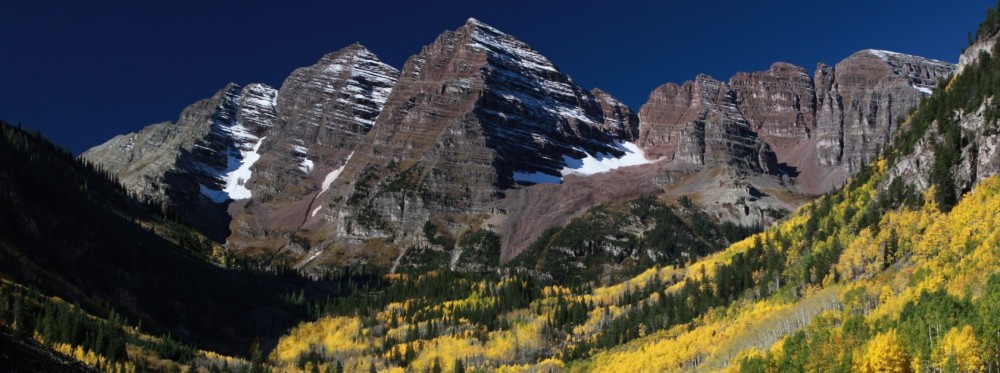
Wolves roamed Colorado for millions of years. At the end of the last ice age, they managed to survive the mass extinctions of megafauna such as mammoths, mastodons, sabertooth tigers, giant cave bears, and huge sloths, an extinction event that was probably caused in part by the arrival of humans from Asia at about the same time.

Until the much later arrival of Europeans, those early Americans were living in the stone age. Their weapons were stone-tipped spears and arrows. They didn’t even have horses. But they hunted in a way that was deadly to large herding animals and the predators of the herds: They used fire.

Don’t believe the myth that they killed only whatever they could eat. They didn’t eat all the six-ton wooly mammoths, believe me.

The truth is that they killed as humans are known to kill: They killed only whatever they could

The wolves survived those humans and their fires. As large-ish mammals go, wolves are smart. Pack hunting involves a lot of socialization, planning, communication, hierarchy, and cooperation.

If you think you and a pack of friends could bring down a moose with your bare hands, try it sometime. And you weigh much more than a wolf.  

It wasn’t until Europeans arrived just a few centuries ago with firearms, poison traps, and the intention to raise cattle and sheep on the open range, that humans succeeded in exterminating wolves in Colorado.

Even then, it took a while. The last wild wolf was seen in Colorado as late as the mid-1940s. The last known wild grizzly bear in Colorado was not killed until 1979. Mountain lions never went extinct in Colorado, and now there are about 4,000 of them here.

To some of the people who spent their lives hiking, climbing, adventuring, and growing up in Colorado, the absence of wolves seemed a pity, an upsetting of the age-old natural order.

I’m in that group.

Apart from sentimentality, there’s a biology issue. Biologists say that the absence of wolves has produced huge destructive herds of their natural prey – elk. The elk overgraze the grasslands, leaving it prone to erosion. Ironically, this is to the detriment of the grazing cattle and sheep for whose benefit the wolves were eliminated.

More elk are now in Colorado – over a quarter million – than in any other state, including Alaska, Montana and Wyoming.

That surprised me. For animals that can weigh nearly half a ton and stand tall as a man, these Wapiti – or “ghosts of the forest” – are very shy. In a long lifetime of hiking thousands of miles of the Colorado backcountry, I’ve seen them fewer than a couple dozen times.

I may not see elk often, but I may finally be granted my wish to dance with wolves. A citizens’ referendum a few years ago put to the people the question whether wolves should be reintroduced in Colorado. It passed.

It hasn’t been hard to find wolves for the reintroduction task. They never went extinct in most of the west, including Wyoming, Montana, Idaho, Oregon, Washington, California, Arizona, Alberta and British Columbia. They’re also in Michigan, Wisconsin and Minnesota.  

The Colorado referendum provided that ranchers would be compensated fairly for the livestock the wolves prey upon. Nobody in their right mind believed that wouldn’t happen.

And it has. We now have about 30 reintroduced wolves in Colorado, and they kill a few dozen cattle and sheep a year.

Let’s put those numbers in context. Those 30 wolves are less than 1% of the 4,000 mountain lions. In case you’re worried about being eaten, wolf attacks on humans are practically non-existent, while mountain lion attacks on humans, labradoodles and other semi-intelligent domesticates occur with some regularity.

Those 30 Colorado wolves are about 0.001% of the 2.6 million cattle here. Colorado cows outnumber wolves by nearly 100,000 to 1.

The few dozen wolf predations on livestock don’t compare to the thousands of cattle and sheep lost to winter weather, lost to collisions with cars, and sometimes just plain lost – or stolen – on the wide-open range of National Forest lands where ranchers lease grazing rights on the cheap.

At the rate wolves are eating Colorado cattle, it would take them approximately a quarter million years to finish dinner – but dinner has a life span of only about 18 months.

I know those figures are cold comfort to a dead cow preyed upon by a wild wolf. But being dead and eaten is the fate of that cow anyway, right?

As for the cow’s owner, the taxpayer money paid as compensation to ranchers for wolf predation is generous.

As for the taxpayers who pay that compensation, even at generous rates it doesn’t amount to much because it happens so seldom. The total is only something in the low to mid-six figures a year. That’s roughly a nickel per year per Colorado resident.

I’m happy to pay my nickel. If the nickel is a sore spot with you, I’ll pay yours too.

Apart from the dollars, cents and sense at issue here, the debate over wolf reintroduction rages emotionally. I’ve noticed a certain tribal aspect to it. It’s my tribe – conservatives – who tend to be opposed to wolf reintroduction, while it’s the opposing tribe – liberals – who support it.

I’m not sure why. Teddy Roosevelt was both a conservative of sorts and a conservationist who was instrumental in protecting Yellowstone and the wildlife there. I’m certain he would support wolf reintroduction to Colorado.

Nonetheless, the range war goes on, Hatfield and McCoy style. Somehow, somewhere along the way, wolves got thrown to the wolf-bin of environmental issues – that grab bag of global warming, wind power and plastic straws. The more one side supports it, the more the other side opposes it.

Wolves have become collateral damage in the culture wars. People on each side, who don’t know or care much about the substance of the issue, bark and howl at their counterparts on the other side.

To my tribe of conservatives, wolves are equated with globalist transexuals in fur coats who are after their children. To the opposing tribe of liberals, wolves are seen as sacred angels of Gaia.

Both are wrong and destructive. The wolves deserve better than to be tools in this ridiculous culture war that they didn’t start, don’t fight, and can’t win.

And we deserve better. Forget about Gaia. We conservatives and conservationists deserve a God-given land with the natural creatures He put there. We conservatives would do well to conserve well.

Glenn Beaton has lived over 60 years in Colorado, has climbed 50 of the Colorado 14ers, and is a former Full Member of Mountain Rescue Aspen.

I wish Trump were right about birthright citizenship, but he’s probably not

In determining citizenship, the United States has a very unusual approach. You’re a citizen if you were born here. (You’re also a citizen if you were born abroad under certain circumstances, but that’s a different issue.)

That’s a bit crazy, because it means that if a woman (aren’t you glad we don’t have to refer to them as “child-birthing persons” anymore?) makes it into the United States, legally or illegally, in time to give birth – right on the north bank of the Rio Grande, for example – her baby is an American citizen.

The mother doesn’t magically become an American citizen by giving birth in America, but through this loophole in the law her American-born baby does.

This has happened literally millions of times over the last few decades, though not always on the north bank of the Rio Grande. It happened especially after Joe Biden abolished the southern border.

The upshot is that millions of people are American citizens merely because their mothers managed to illegally enter the country to give birth here. Very few countries allow this.

I’m sure Joe Biden would have done this by Executive Order, or some such thing, just as he opened the southern border by Executive Orders, but he didn’t need to.

You see, this loophole isn’t just the law; it’s the Constitution. In the aftermath of the Civil War, the 14th Amendment was passed to ensure the citizenship of former slaves. The first sentence states:

“All persons born or naturalized in the United States, and subject to the jurisdiction thereof, are citizens of the United States and of the State wherein they reside.”

It’s tempting to blame today’s outcome – millions of new American citizens born to illegal immigrants – on the people who wrote and passed the 14th Amendment.

Didn’t they anticipate that the American people over the next century and a half would permit the accumulation of extraordinary, extra-Constitutional power in the hands of the Presidents, and that the people would permit a particular senile, corrupt President to exercise those powers to abolish the southern border and thereby ensure citizenship to millions of babies born to illegal immigrants entering through that abolished border?

To ask that question is to answer it. The answer is no, they didn’t anticipate that. They thought their descendants would be smarter and more careful than that.

Ah, but there’s a loophole in this citizenship loophole, say those who are desperate to find one. The loophole, they say, is the qualifying phrase “subject to the jurisdiction thereof.” The immigrant babies, they say, are not “subject to the jurisdiction” of the United States.

But they are.

People without special immunities are subject to the jurisdiction of the United States simply by being present within the United States. That’s true of a tourist from France or an illegal immigrant from Mexico. That Frenchman and that Mexican are bound by our laws while they’re in our country, just as we are bound by their laws when we are in their countries.

So, what is the purpose in the 14th Amendment of the qualifying phrase “subject to the jurisdiction thereof”?

It was almost certainly to exclude rare individuals such as the babies of diplomats. A woman who is a diplomat or the wife of a diplomat has diplomatic immunity from the jurisdiction of the United States, as does her newborn baby. Therefore, that diplomatically immune baby, even if born in a Washington DC hospital, is not an American citizen.

Similarly, at the time the Amendment was passed, Native Americans (called “Indians” at the time, but at least they were never called “birthing persons”) on reservations were not United States citizens and therefore not subject to the jurisdiction of the United States. Consequently, their children, likewise, were not United States citizens. (This was revised by statute in 1924.)

In short, I wish it were otherwise, but intellectual honesty (the only kind I have, so-called friends say) compels me to conclude that the 14th Amendment guarantees citizenship to the America-born babies of illegal immigrants.

This issue has been addressed in the last month by two Federal Courts, and each has concluded that the analysis set forth above is correct, and that it’s not even a close call. If this issue goes to the Supreme Court, the likely outcome is a 9-0 ruling.

There are other solutions to the problem. The 14th Amendment could be revised by a new Constitutional Amendment. But that takes an Act of Congress and the ratifying vote of three-fourths of the states. 

Alternatively, we could secure the border to address this problem going forward, and we should, while embracing the citizens who became such, as newborns, when the border was open.

After all, they did not choose their womb or its location at the time of their birth. Those fortuitously born Americans are as likely as other new citizens to fulfill the American dream. Joe Biden dealt us a bad hand. Let’s not play it badly, too.

Glenn K. Beaton practiced law in the Federal Courts, including the Supreme Court.
Kennedy had a cult-like following. So did Obama. Personally, I’ll take Trump.

The Trump-is-Hitler crowd dismisses the 77 million Americans who elected Donald Trump to the Presidency, for the second time, as a cult.

They aren’t suggesting that these 77 million people are a cult because they were opposed to another four years of Joe Biden’s drooling corruption. Rather, they’re suggesting that these people are card-carrying, Kool Aid-drinking Trump worshippers.

Let’s put this in context. One of the defining characteristics of cults is that they idolize a charismatic, authoritarian leader. Such leaders get away with a lot. Think about a leader who says such things as:

“Ask not what your country can do for you, ask what you can do for your country.”

That’s a catchy slogan, but there’s a sinister side. The charismatic speaker was sloganeering people to subordinate their own needs to the needs (and wants) of a geopolitical entity – namely, their country.

Not coincidentally, the needs and wants of that country to which the speaker urged the people to subordinate their own needs, were defined by that very same speaker.

How convenient for the speaker, who happened to be the President of the most powerful country in the history of the world. In less flowery language, he could have said, “Just do what I tell you.”

Such sentiments have prevailed for thousands of years, but the Founders of the country that speaker was leading had something new in mind. They imagined a nation that, in the words of Abraham Lincoln, was “of the people, by the people, and for the people.”

In the course of a great civil war, Lincoln with those words reminded the people that the purpose of this nation so conceived and dedicated – this nation Lincoln wanted not to perish from the earth – was to serve its people, not to be served by them.

Or think about a leader about whom it is declared:

“He is the one.”

If such a declaration conjures up the Gospels, that’s because it’s supposed to.

As if atheists comparing a politician to a messiah is not bad enough, consider that this “one” (or is it this “One”?) was worshipped (by the stupid media anyway) as the “smartest President ever.”

Their IQ evidence was as thin as their messiah evidence.

Which brings us to the so-called Cult of Trump, some 77-million strong and counting.

But alas, no one suggests that Trump is the messiah. No one suggests that our personal needs and wants should be Trumped.

Trump never uses the phrase “Ask not . . .”

He’s not known for flowery language at all. His best and most persuasive speech was to repeat a single word three times. Blood flowed down his face as he stumbled to his feet and shouted: “FIGHT, FIGHT, FIGHT!”

I don’t worship Trump. His human flaws are painfully obvious at times. He’s certainly no messiah, and his White House is no Camelot. But this is not the time for a messiah, and Camelot never actually existed in either medieval England or 60s America.

What America needs is a course correction. We need to get government back on a path that serves us.

I believe that, with the help of talented people, a bit of luck, and Providence, Trump might be able to make that correction. That makes me an optimist, not a cultist.