Liberals imposed their racial discrimination by attaching strings to federal money. How’s that working out now?

Executive orders and administrative agency rules going back to the 1960s required businesses contracting with the U.S. Government to engage in “affirmative action.”

That was the euphemism of the day for racial discrimination. They couldn’t just call it “racial discrimination” because that term had, naturally and appropriately, developed a negative connotation. It suggested a world where people were judged not by the content of their character, but the color of their skin. 

Over the ensuing decades, that euphemism “affirmative action” developed a similar negative connotation. By favoring people with certain skin colors, “affirmative action,” just like “racial discrimination” before it, suggested a world where people were judged not by the content of their character, but the color of their skin.

And so, the euphemism “affirmative action” was retired in favor of a new euphemism, “Diversity, Equity and Inclusion.” Capitalizing the words was evidently to make the term look grander.

Moreover, the capitalized words lent themselves to acronymizing into “DEI.” We thus doubly disguised “racial discrimination” with the use of an acronym for a euphemism.

But the double disguise was deliberately transparent. Everyone knew “DEI” meant “Diversity, Equity and Inclusion,” which meant “affirmative action,” which meant “racial discrimination,” which meant that people were judged not on the content of their character, but on the color of their skin. 

These farcical theatrics reached their comedic conclusion with “President” Joe Biden, who promulgated Executive Orders, probably signed by autopen while he was mindlessly eating ice cream cones, requiring that companies doing business with the government submit written statements certifying their commitment to judging their employees by the color of their skin and not by the content of their character.

The requisite commitment to racial discrimination was not limited to government contractors. Practically everyone receiving federal money – and that’s practically everyone – had to show they were committed to racial discrimination. Schools receiving DOE money, cities receiving HUD money, states receiving DOT money, anybody getting any money from any government alphabet – hell, the whole world – had to show its DEI commitment.

But alas, DEI, like its predecessor euphemisms, had already taken on a negative connotation of being what it was – an acronym for Diversity, Equity and Inclusion, which was a euphemism for affirmative action, which was a euphemism for racial discrimination.

It was time for a new euphemism. Conveniently, a new President had just been elected.

But the new President did something no President had done in generations. He effectively said, “No more racial discrimination, regardless of what acronym or euphemism you choose to call it by.”

He said he was reversing the Executive Orders and abolishing the federal regulations that required companies, schools, cities and states to certify their commitment to racial discrimination.

He even said he would require the opposite from them – he would require them to certify that they do not engage in racial discrimination. And he has threatened to withhold federal money from them if they continue their racial discrimination.

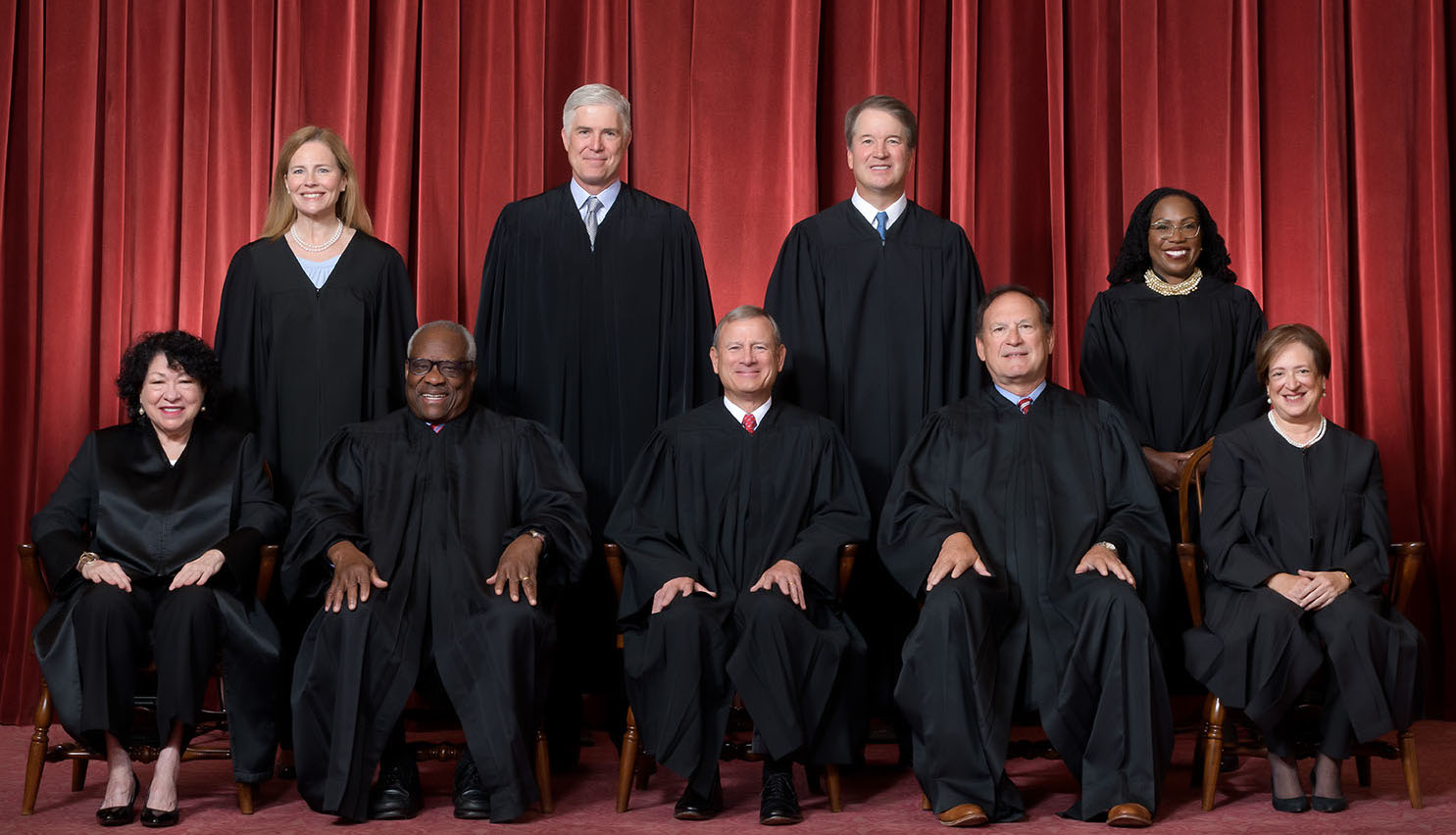
In all of this, he appears to have the Supreme Court on his side. Chief Justice John Roberts declared in a case some years ago that:

“The way to stop discrimination on the basis of race is to stop discriminating on the basis of race.”

For that tautology, liberals of course called him a racist. But he and a majority of the Supreme Court finally followed through in a case two years ago outlawing racial discrimination at the liberal establishment’s headquarters, Harvard University.

Of course, some schools and companies will simply provide false certifications. They will certify that they don’t engage in racial discrimination, even as they continue to. People who employ acronyms and euphemisms to disguise their actions can be expected to similarly employ lies to conceal those same actions.

But this is a start. And to put teeth into it, the President has at his disposal an entire Department of Justice which appears newly devoted to real justice – not the social kind.


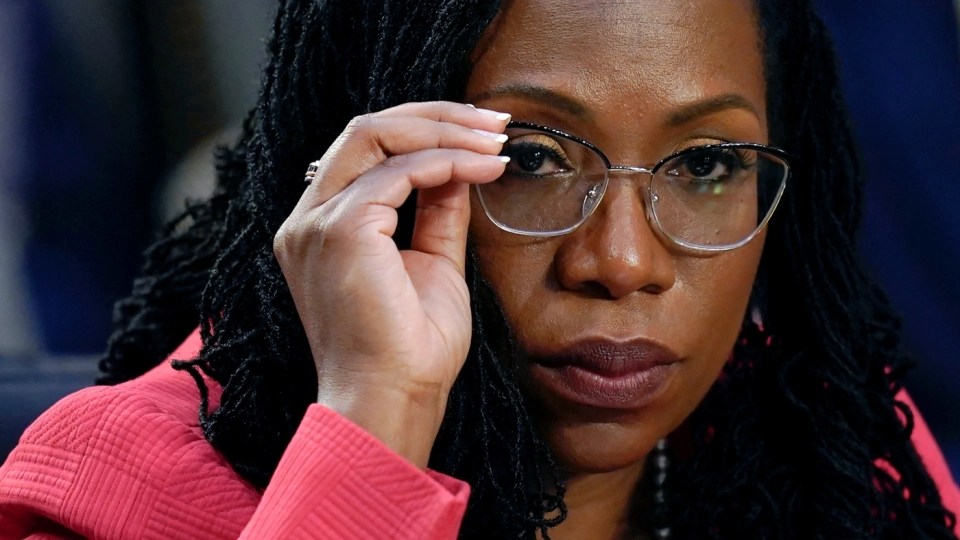
Justice Ketanji Brown Jackson says some foolish things

The Justices of the Supreme Court make their living with words. They read them, they write them, they speak them, they listen to them, and they rule with them. We currently have a Justice who uses words very poorly.

At her confirmation hearing before the Senate, Justice Jackson was asked to give a definition of “woman.” That’s a legitimate question, since many legal matters depend on whether a given person is a woman or a man.

Her answer was:

“I can’t. Not in this context. I’m not a biologist.”

Jackson was of course dodging the question. Fine, that’s what you do when you’re being cross examined by a hostile questioner. But the unartfulness of her dodge was striking. A person trained and working with the tool of words should have been able to craft an answer along the lines of:

We all know that words can mean different things in different settings. In the case of the word “woman,” there is of course a traditional definition in genetics which is ‘a person with two X chromosomes.’ We also know that there are people in the world without two X chromosomes who view themselves as women. I respect their views of themselves, just as I respect the views of geneticists. I can’t say without the particular facts of a case in front of me how those views should be weighed, if at all, in a court of law.”

Blah, blah, blah, right? Yes, but that’s the point of an artful dodge – don’t give the questioner a sound bite. Jackson didn’t seem to recognize that she’d handed her questioner – and her present and future critics – a sound bite that will live forever.

Continue reading

Will we use reverse discrimination to “correct” the gender gap the way we disastrously “corrected” the racial gap?

A persistent myth is that, for the same job, women in America are paid only 84 cents for every dollar that men are paid.

I explain below, first, why that myth is false and, second, why it’s dangerous.

There are the several reasons why it’s false. The figures use a category of “full time work” for their comparisons. That’s defined as any work over 35 hours per week. That means a man working 55 hours a week is compared to a woman working 36. So, a man making, say, $30/hour for those 55 hours for a total of $1650/week is deemed to be making $210 more for a “full time” job than a woman making $40/hour for 36 hours for a total of $1440/week for a “full time” job – even though in point of fact, the woman is making $5/hour more.

It’s not like this all balances out in the end because women and men overall work the same number of hours. They don’t. The high-hour work is mainly by men.

Continue reading

Diversity czars are getting the ax

You should pity czars. Things never end well for them.

The reign of diversity czars began a few years ago when a jury found that a violent drug-addled Black criminal was murdered by an idiotic white police officer ostensibly trying to subdue him.

This rarely happens, thankfully. In fact, more cops get murdered by Black criminals than the other way around. And when Black criminals do get murdered by cops, the cops are usually Black themselves (though the left would say cops are never Black even if their skin color is black because, after all, cops promote white justice and not Black Justice).

Anyway, the establishment decided they had to make a show of their opposition to Black people getting murdered by white cops, even if it hardly ever happens. This little minstrel show was called Black Lives Matter. Corporations gave millions to a few Black people to whom Black Lives Matter mattered a lot, moneywise. 

Continue reading

Will Justice Jackson be woman enough to admit and correct her arithmetic mistake?

Pornography used to make its way to the Supreme Court regularly.

In a 1964 case, Justice Potter Stewart had one of the most colorful lines ever in a Supreme Court opinion, despite or perhaps because his line was not particularly scholarly. It was a case where the Court struggled to define “hard-core” pornography that was not protected by the First Amendment versus soft core stuff that was.

The Justices were reluctant to admit to any expertise in the subject. Stewart, however, declared in his concurring opinion “I know it when I see it.”

In that particular case, Stewart didn’t see it; he said the movie at issue was not pornographic. He later expressed regret for “I know [pornography] when I see it” being his most famous line. But he could have done worse in the annals of history. Justice Roger Taney is remembered for stupidly saying in the 1857 Dred Scott decision that Blacks were “altogether unfit to associate with the white race.”

Which brings us to Justice Ketanji Onyika Brown Jackson, the Court’s newest member who is an accomplished woman that happens to be Black. (These days you’re supposed to notice and applaud that, unless they’re politically conservative, and she’s not.)

Continue reading

Fewer racial minorities in college will help racial minorities

In a methodical and scholarly decision written by Chief Justice John Roberts, the Supreme Court this week did what I predicted last fall they would do. They said racial discrimination in college admissions is unconstitutional.

Several other Justices joined Roberts’ decision while also writing their own concurrences, including Justice Clarence Thomas in an emotion-packed opinion of Constitutional originalism that would do proud his old mentor, Justice Antonin Scalia.

It’s a landmark decision that is far more important than last year’s Dobbs decision overturning Roe v. Wade (unless you happen to be a fetus). I take personal delight that the named defendant that history will saddle with the loss is Harvard, a place that once rejected my application to law school and, more importantly, is the vanguard of the liberal intelligentsia.

Continue reading

Democrats will defy the Supreme Court’s upcoming decision outlawing racial discrimination in schools, just as they did in Brown v. Board of Education

The Supreme Court in 1954 unanimously declared in Brown v. Board of Education that racial discrimination in schools is unconstitutional.

The reaction of Democrats was indignation and defiance. Democrat Arkansas Governor Orval Faubus called out the state National Guard to prevent Blacks from entering white schools.

Democrat Virginia Senator Harry Byrd organized the “Southern Manifesto” calling for Brown to be reversed and vowing never to implement it. It was signed by 99 Democrats but only two Republicans, including all but two of the Democrat senators from states in the former Confederacy. Democrats in Virginia passed the Stanley Plan, named after Democrat Virginia Governor Thomas Stanley, barring any state school receiving state funds from following the Brown ruling.

Democrat-controlled legislatures across the South closed many schools to avoid having to integrate them. The Democrat legislature of Florida passed a resolution declaring Brown “null and void.” A Democrat member of the Ku Klux Klan murdered a Black civil rights activist for daring to file a lawsuit to enforce Brown in Mississippi.

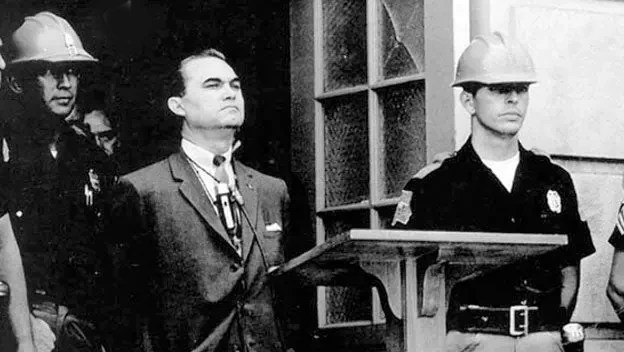
Democrat Alabama Governor George Wallace personally stood in the doorway to block Black enrollment at the University of Alabama.

Continue reading

Supreme Court poised to outlaw racial discrimination, again

The Supreme Court on Monday considered the arguments of Harvard and the University of North Carolina justifying their racial discrimination in admissions. The schools will probably lose.

The schools argue their racial discrimination (they refuse to call it that, of course) is just one of many factors they consider in admissions. But the data show it’s by far the most important one. For example, at UNC a white person with a given set of test scores, grade point average and other factors, with 10% chance of getting admitted, would have a 98% chance with the same qualifications if he were black.

At Harvard, the case was brought by an Asian student group. The data show that at Harvard an Asian needs an SAT score about 400 points higher than a black person with comparable other qualifications. That 400-point difference is huge. It’s the difference between an excellent student with a score of 1500 and an average one with a score of 1100, or a good student with a score of 1200 and a poor student with a score of 800.

Continue reading

Aspen Skiing Company instructs its employees to discriminate in favor of blacks

Aspen is hosting the National Brotherhood of Skiers, which is advertised to be “the largest black ski group in the United States.”

That’s nice. Welcome to Aspen, my friends.

A hearty welcome was not enough, however, for Mike Kaplan, the liberal white CEO of Aspen Skiing Company. He found it necessary to issue a memo to all employees instructing them how to behave around black people.

Kaplan instructed employees to greet the black guests “lovingly and intentionally.” He says employees ordinarily treat all guests this way but instructed them “to make an even greater effort” with the black ones. He goes on to tell employees the reason for this special effort for blacks.

It’s because “standard or even slightly bad service can easily be interpreted as bias.” And so, employees should avoid saying to customers who are black things that might be interpreted as racist, such as “that parking spot is just for hotel guests” or “you can’t park there” or “my restaurant isn’t open now, come back at 5.”

I’m not making this up – these are quotes from Kaplan’s memo.

Continue reading

Two conservatives will join the three Supreme Court liberals in upholding discrimination against Asians

Harvard actively and obviously discriminates against Asians. To get admitted, Asians need an SAT score 140 points higher than whites and 450 points higher than blacks.

Harvard’s justification for this discrimination is almost as painful as the discrimination itself. Harvard says that the Asian applicants have poor personalities.

The way Harvard evaluates an applicant’s personality is not with any standardized test, but with an in-person interview by a bureaucrat – where it just so happens that the bureaucrat can take note of the applicant’s skin color

Asian applicants sued. The suit was in Boston before a federal judge appointed by President Obama. The judge sided with Harvard.

Continue reading