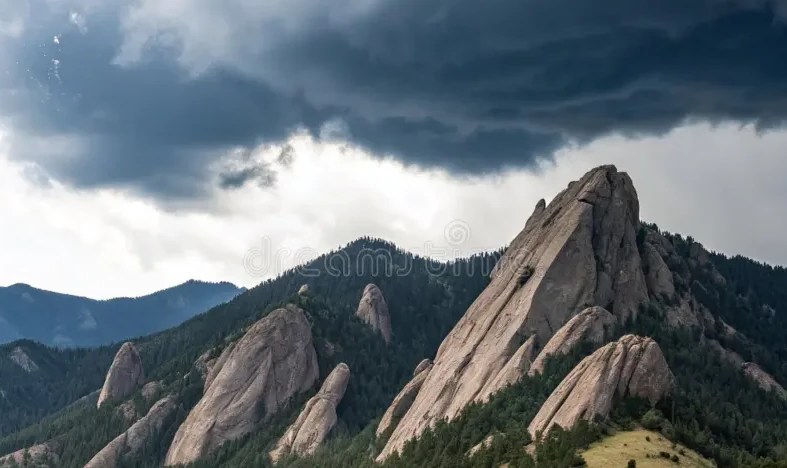
The death of skiing may be the rebirth of Colorado

Colorado is a much different place from when I grew up in Colorado Springs in the 60s. That was before the Eisenhower Tunnel on I-70 was drilled under 11,990’ Loveland Pass. It was before the gondola at Aspen and it was before Snowmass was founded. Vail Pass was a treacherous gravel road, and the town of Vail did not exist.

It was wonderful.

Our family had one of those pop-up tent trailers and we went camping several times a year. Getting there was half the fun.

Our family of six would pile into the station wagon with the trailer in tow. My father would floor it, seeking momentum and speed – maybe 60-65 mph – to get a run at Ute Pass which was the two-lane road serving as the gateway from Colorado Springs into the Rocky Mountains. He’d invariably get slowed by a truck in front, curse, and we’d struggle up the pass at about 35 mph.

But we got there. “There” would be one of hundreds of campgrounds with spots for tents, trailers and tent-trailers like us. There were only a few RVs back in those days. They literally looked down on us from their perches high above the ground, but we figuratively looked down on them for not being real campers.  

Only rich people stayed in motels. We weren’t rich.

I learned many years later that, unsurprisingly, my mother hated camping – for all the reasons that an 11-year-old boy loved it.

What’s not to love? Fishing with worms, walking and wandering, climbing trees, making forts, getting dirty, shooting imaginary Indians and, most importantly, camp fires!

It was wonderful.

This fun was limited to summertime, of course. Winter was too cold for even intrepid would-be mountaineers such as that 11-year-old boy.

Winter brought skiing, but it was an oddity. Skis were long and straight with “bear trap” cable contraptions for bindings. Boots were leather. Clothing, at least in my case, was an army surplus jacket, cotton jeans, a stocking cap and work gloves.

I once rode a two-person chairlift with a stranger. It moved excruciatingly slowly, as they all did in those days. As I shivered, the stranger scolded me, “Kid, you’re gonna shake us off the lift!”

Given the slowness of the lifts, you were lucky to get six or seven runs into a day. But the price of a daily lift ticket was commensurate – about six or seven dollars.

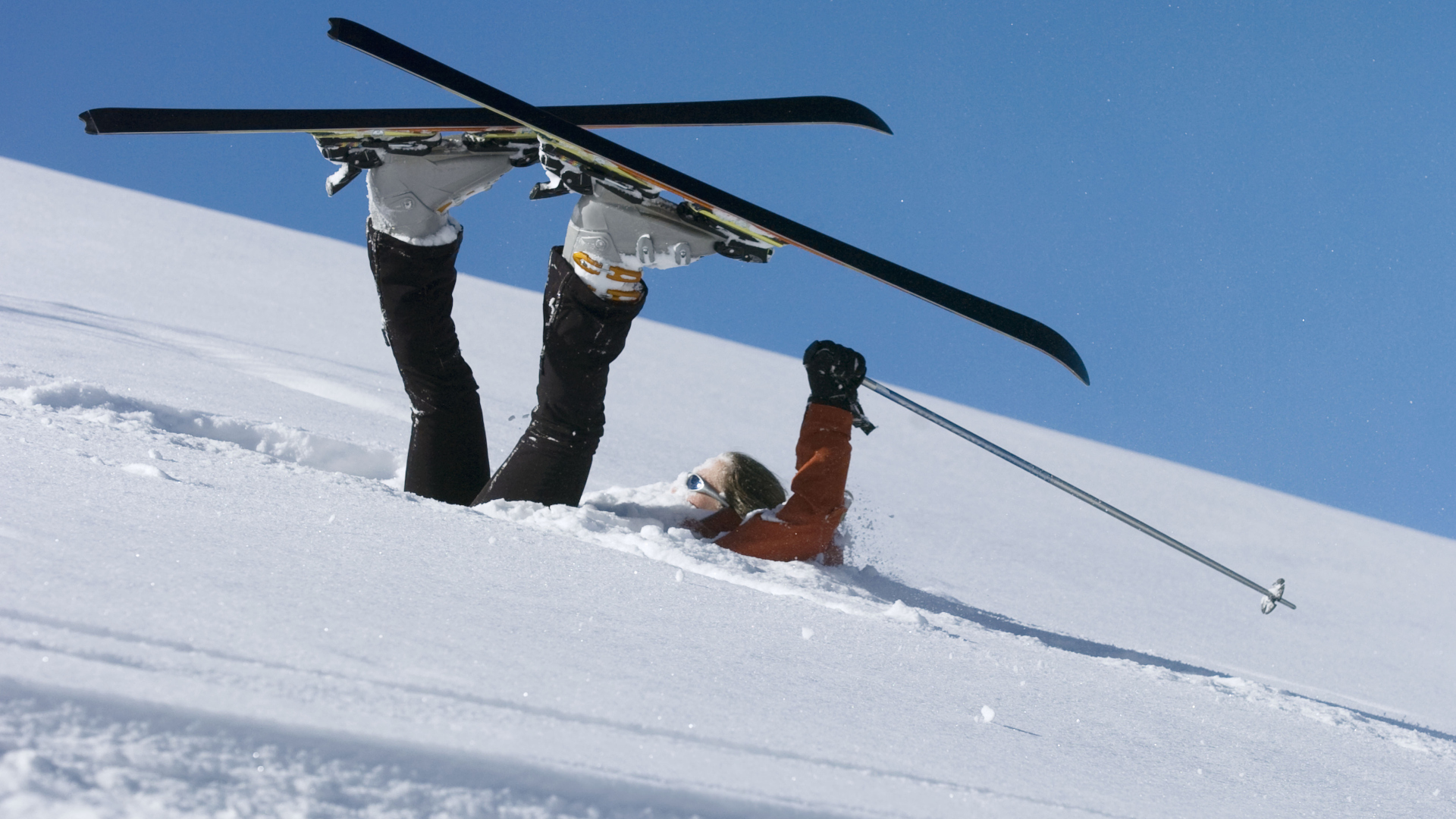
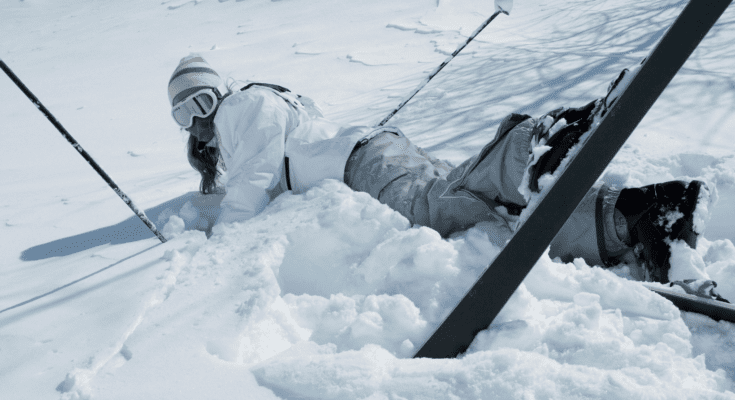
You had to be a good skier to get down the mountain in one piece. I wasn’t. I could guarantee a “yard sale” most days, where a wipeout would scatter over the slope my assorted apparel, skis, poles and boots (well, not the boots).

It was wonderful.

Things are different now. Skiing is big business, and lift tickets are upward of $250. Vail Resorts is a public company listed on the New York Stock Exchange. Slopes are finely groomed with both natural and man-made snow, and equipment is vastly improved, such that an ordinary Joe on his third day can ski easy slopes without falling down.

It’s terrible.

Traffic is horrendous. I-70 is jammed with stop-and-go traffic heading into the mountains on Friday afternoon and headed back to Denver on Sunday evening. A two-hour drive between Denver and Vail often takes four, and more if there’s an accident or snowstorm.

Which highlights the irony of skiing. For a real skier interested in challenging terrain, the snow is good only for a day or two after a storm. But that’s when the mountain roads are clogged with rental SUVs from Texas and California (don’t even get me started on the Australians) driven by so-called drivers who attempt to drive on snow only once a year when they come to ski Colorado.

When the snow is good, the driving is horrendous. And when the driving is good, the snow is horrendous.

Driving has been exceptionally good this winter. It’s no exaggeration to say that Colorado has had record-good driving this winter.

The only solution to this cruel paradox is to live at the ski resort. In Aspen, that’s perfectly doable for about $9 million for a three-bedroom condo. (It’s only about $6 million in Vail, but then you have to live in – ugh! – Vail.)

With that condo, you do get to live in Aspen (or – ugh! – Vail). That’s great if you like crowds (and, in the case of Vail, you like the interstate highway passing right through the center of town).

And it’s great if you like locals who despise you for having earned money as an investment banker in New York working 70-hour weeks while they were ski-bumming their youth away in Aspen (or dodging the interstate in – ugh! – Vail) while bitchin’ about the rich tourists who hire them for ski lessons at $1,500/day, plus tip.

This devolution of the State of Colorado has coincided with the state’s legalization of pot and the color shift from a red state to a blue state, but that’s a story for another day.

OK, enough snark. My point is, skiing brought boatloads, planeloads and shitloads (well, OK, maybe a little more snark) of people to the Colorado mountains. I miss the Colorado of my boyhood.

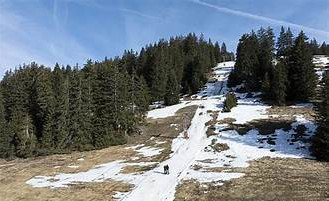
But there’s hope. Skiing may be dying. As I hinted, snow conditions this year are really terrible. The snowpack on top of Vail (ugh!) Pass when I drove over it last week was about 4 inches. As my hero Dave Barry might say, I’m not making that up. There’s less snow than I’ve ever seen for this time of year, and very little in the upcoming forecast.

And this isn’t just a one-year drought. I’m pleased to report that the stock price of Vail (ugh!) Resorts, Inc. is down 64% from its peak some four years ago as the recreational tastes of the baby boomer generation ages from downhill skiing at high altitude into flat ocean cruises at, as you might expect, sea level.

I’m praying that this season of good driving continues next winter, and the winter after that. With three consecutive good-driving winters and the continued aging of the Boomers, we just might reclaim Colorado for 11-year-old boys, of all ages.

Aspen Skiing Company joins “The Resistance”

Your correspondent has reviewed a memo labelled “For Internal Distribution Only” from the CEO of the company that owns and operates the skiing operations at Aspen and Snowmass (referred to locally as “SkiCo”).  

It’s a doozy.

Everyone knows that Aspen is rich and liberal. The billionaires crowded out the millionaires decades ago. What passes for “thinking” by think-tanks like the Aspen Institute is the notion that “balance” means hard-leftists like Madeline Albright and Jonathan Capehart on one side and soft-leftists like David Brooks and Liz Cheney on the other.

Years ago, SkiCo decried Donald Trump’s enforcement of America’s immigration laws. Enforcement of those duly enacted American laws, they declared, was un-American. (Coincidentally, enforcement of the immigration laws also impacted SkiCo’s supply of low-paid workers.)

So maybe it shouldn’t be a surprise to see SkiCo’s reaction to the election. Still, it’s worth noting, especially if you happen to be one of their customers.

The memo from the CEO to employees begins by bemoaning “the gravity of what just occurred.” A majority of voters, he said, chose “a vision that can be viewed as openly at odds with some of the values [SkiCo] stands for.”

In case you don’t get the drift, the CEO helpfully spells it out. SkiCo’s self-declared “values” with which he contends over half of America is “openly at odds” are:

“Equality, democracy, civility, compassion, tolerance, sustainability, open-mindedness, gratitude, freedom, integrity, and justice.”

In short, in the public opinion of the CEO of SkiCo, the election represents a triumph of the opposite of all that. It represents a triumph of inequality, anti-democracy, incivility, unsustainability, close-mindedness, ingratitude, tyranny, and injustice.

He fails to explain how an open election, in which a candidate won a majority of both the people and the Electoral College, is anti-democratic. Perhaps he meant anti-Democrat.

Oh, and intolerance. With no sense of irony or self-awareness, the CEO of SkiCo – the leader of a prominent company offering services to the public with the power to fire employees – declares to those employees that half the country with whose votes he disagrees are intolerant.

In closing, he muses, “Clearly, the approach of trying to model, speak aggressively, and ‘teach’ others is not sufficient.” (The scare quotes around “teach” are his.)

That sounds slightly threatening. After failing in his effort to “teach” the deplorable, unteachable garbage that constitute half of America, is he perhaps considering limiting access to the gondolas to card-carrying Democrats?

I can see the gondola operators to the line of skiers:

“Papers? Papers? No, I don’t care about your lift ticket, I want your voter registration papers!”

The First Amendment probably does not protect the employees of SkiCo who happen to be Republicans (yes, there are some) and have received the CEO’s coercive political memo, since SkiCo is not an arm of the government. On the other hand, SkiCo does enjoy numerous leases of Forest Service lands owned by the government. Also, its gondola and chair-lift operations could make it a “common carrier.”

And some states offer state law protections that could be implicated. If SkiCo has any employees in California, for example, the memo could be in violation of California state law. (Talk about irony.)

But the legalisms are a column for another day. Today’s point is that the operator of Aspen and Snowmass considers you persona non grata if you’re in the half+ of the country that voted for Donald Trump. Maybe you should consider them resorta non grata.

The Colorado Secretary of State says she now trusts the people to make the decision she didn’t trust them to make four months ago

The cabal that calls itself the Democratic Party of Colorado nearly pulled a coup last fall. Unburdened by any inconvenient process that might have been due, a Democrat state judge decided that Donald Trump was an insurrectionist. Therefore, under a clause of the 14th Amendment designed to prevent former Confederates from running for federal office, Trump was ineligible to run for president.

Never mind that Trump had never been convicted or even charged with the crime of insurrection.

On appeal, four of the seven Democrat-appointed justices on the Colorado Supreme Court agreed. The other three in their strident dissent all but wondered out loud what kind of Colorado-legal weed the majority was smoking.

Continue reading