Democracy destroyed America

“A democracy is nothing more than mob rule”
-Thomas Jefferson

The other Founders were similarly scornful of pure democracies. John Adams proclaimed:

“Democracy… while it lasts is more bloody than either aristocracy or monarchy.

James Madison said:

“Pure democracies have ever been spectacles of turbulence and contention.”

Alexander Hamilton warned:

“Pure democracy is as much a fallacy as the idea of eternal vows and permanent alliances.”

Ah, you might say, but what about the democracy of ancient Athens?

I’m glad you brought that up. Athens was indeed a pure democracy in the sense that the people voted directly on matters of governance. But not all the people.

There was no vote for slaves, women, foreigners (meaning foreign to Athens), or people who had even one parent who was a foreigner. After all the winnowing down, only about 10-20% of adult Athenians had the right to vote.

Even that limited democracy of Athens was problematic. No less than Plato complained that “Democracy . . . is continually subject to the influence of demagogues and the passions of the multitude.”

Rome was more pragmatic in governance, as in everything else, and more successful. While Athens was never more than a city-state that faded in a couple hundred years, Rome expanded its empire to embrace about 60 million people – about a third of the population of the entire ancient world – and lasted nearly a thousand years.

It’s no coincidence that Rome was never a pure democracy, but was initially a quasi-republic. The people did not vote directly on matters of governance, but instead voted (sometimes) for representatives who made those decisions.

Rome eventually morphed from a republic into an empire ruled by an emperor, a transition precipitated by Julius Caesar. After conquering Gaul, he led his army east and then south, crossing the Rubicon River to invade Italy from the north – in defiance of the Senate – and journeying on to Rome to declare himself dictator. In Rome, there was enough popular adulation for the conquering hero that he got away with his coup for a while. His great nephew Augustus cemented the role of emperor, and Rome became greater than ever.

Eventually, nearly all of Europe became Roman, and also a good part of northern Africa and England. We still see the remnants of their incredible buildings and culture. Latin is the world’s biggest unspoken language and is the root of French, Spanish, Italian and a good part of English.

Fast forward a few empires, to the American one.  Benjamin Franklin was asked in the course of the Constitutional Convention what kind of government they were establishing. He famously answered, “A democracy, of course!”

Just kidding. His real answer was, “A republic, if you can keep it.”

They would be appalled by Americans today who pride themselves on tossing that republic into the ash bin of history. The people brag of being exactly what the founders feared – a “democracy.”

The Founders consciously sought to avoid that outcome by incorporating several basic buffers from the mob.

For one, the American mob doesn’t generally decide matters of governance. Rather, as in a republic, they vote for representatives who make those decisions. The thinking of the Founders was that informed gentlemen are more apt to make good decisions than passionate, uniformed mobs.

The Electoral College is another example of a buffer from the mob. Today, the Electoral College is a mere formality. In each state, they all vote for the presidential candidate that won the most votes in that state. But originally, the Electoral College was free to vote contrary to the majority of the state they represented, and they sometimes did. Again, the intent was to put a layer of sanity between the hoi polloi and the decisions of government.

Another buffer between informed decision-making and uninformed mob rule took the form of voting restrictions. As in Athens, women and slaves were not permitted to vote in early America. In the pre-Civil War south, that literally excluded a majority of the adults.

The Civil War of course abolished slavery and finally enfranchised former slaves and their descendants. But in the Jim Crow South, literacy tests were used to bar many Blacks from voting on the rationale that illiterate people lacked the necessary sophistication to vote.

In many states in early America, voting was prohibited unless the voter owned real property, the thinking being, again, that persons without property lacked the sophistication necessary to choose good representatives. Those prohibitions continued for about half a century.

Women were not enfranchised until the 19th Amendment was ratified in 1920.

I personally am glad that we now allow voting by women, minorities and renters, though I’m not fond of renters.

But we’ve gone well beyond that. The Founders would be mortified to see the current trend toward what we champion as “democracy” and what those Founders would decry as mob rule.

For example, people are allowed to vote without presenting simple proof that they’re who they say they are.

They’re allowed to vote in many states even though they’re not citizens.

They’re often allowed to vote even though they’re dead.

They can vote multiple times – one time from their main residence, another time from their vacation home in a different state, and another time by mail.

They’re allowed to fill out ballots for their elderly grandmother, sign her name to it, and drop it off or mail it in. They can do that for as many grandmothers as ballots they can get their hands on.

This loosening of voting requirements coincides with a dumbing down of the voters. People are allowed to vote even though they graduated from public high schools in Democrat-controlled cities where they didn’t learn anything. In fact, they’re allowed to vote even though they graduated from no high school at all.

And even the ones who graduated from high school lack a basic education. A recent survey at the University of California at San Diego (ranked one of the leading universities in America) found that 25% of incoming freshmen cannot solve for X in the equation:

7 + 2 = X + 6

I wonder if they could solve for X in the equation:

7 + 2 = X + 2

Or the equation:

7 + 2 = X

Or the equation:

7 = X

These freshmen have no idea how many students make up 25% of the incoming class of 4,000. But I suspect they do know to label me a misogynist for using the term “freshmen.”

We can and should re-establish literacy tests for voting. They were outlawed generations ago on the grounds that they discriminated against illiterate Blacks, but today that objection is gone – we’re all illiterates now!

Is it any wonder that the state of the union is bad? We have a polarized government of mean girls (most of whom have penises) who don’t even try to solve problems. They just play to the mob that elects and reelects them.

And so, the minority party shuts down the government unless they get to act like they’re the majority party. They don’t really expect that to happen, but it’s great theater for a while for the mob in the nickel seats.

And there’s Epstein 24/7, as if anyone really needs to see the emails to know that Donald Trump’s relationship with a creep who exploited teenage girls might have been worth a whole chapter in The Art of the Deal.

And there’s a kooky Jew-hater who’s never had a job getting elected in a place that a kooky Black man once dubbed “Hymie-town” on a platform of arresting the Prime Minister of Israel and giving everyone free stuff paid for by the Jewish billionaires he’ll fleece on their way out of town.

And there’s a governor in California running for President on the platform “OMG, get a look at my hair!”

And 70% of the younger generation approve of socialism, while 45% disapprove and 17% aren’t listening to the survey question and 81% pick the New England Patriots by 7.

What’s the fate of our once-great republic now that it’s descended into mob rule?

History offers some lessons. Witness the mob of the French Revolution and the mob of the Weimar Republic. The path out of mob rule typically goes through despotism, and a lot of people get hurt.

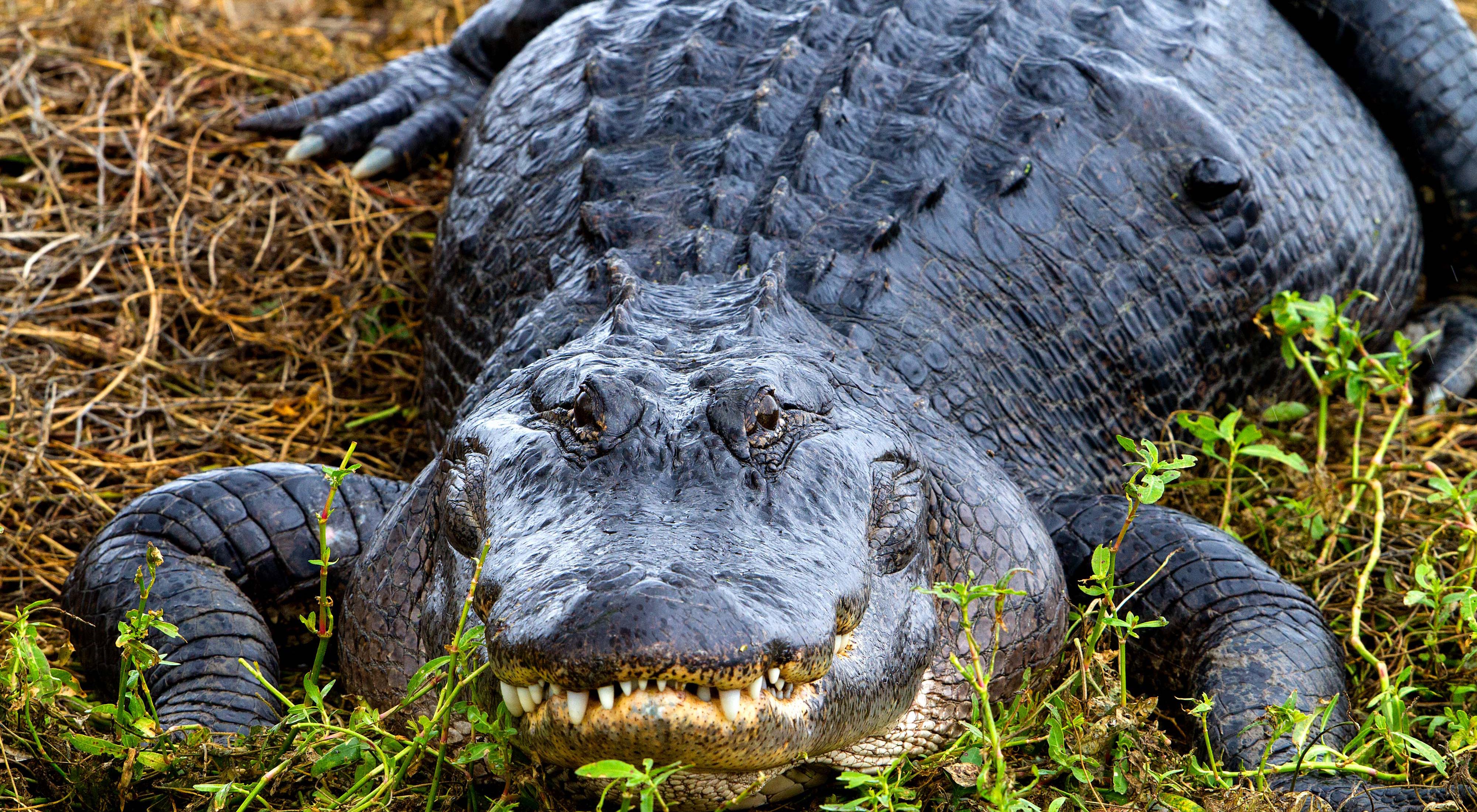
Should we kill all the alligators, or get out of the swamp?

Lawyer advising client engaged in expensive litigation: The goal should be to get out of the swamp, not to kill all the alligators.

Dishonest media-alligators undermined President Trump’s first Presidency with bogus charges of Russian collusion. Corrupt deep state-alligators fabricated allegations to defeat his re-election in 2020. Partisan prosecutor-alligators in New York and Georgia brought bogus charges in trying to derail his election last year.

Overreaching judge-alligators in some of the federal district courts now seek to undermine his national security policies – an area that the Constitution largely reserves to the President. 

It’s a testament to Trump’s courage and stamina – and to the nation’s structure and people – that he has fought and mostly beaten the alligators over the last ten years. In his spare time, he got himself elected President twice and survived two assassin-alligators.

He’s been up to his elbows in alligators. I understand why he’s going after them now. I probably would, too.

It’s also important to note, in fairness to Trump, that we didn’t elect him to get us out of the swamp; we elected him to drain it. Draining the swamp is inevitably hard on the alligators who feed there.

But here’s the issue. Not all of Trump’s targets today are alligators and not all are even in the swamp. 

Such as Big Law.

I don’t expect you to feel sorry for girly men and manly girls pulling down seven-figures to say res ipsa loquitur. And it’s a fact that Big Law (which I’ll define as the several dozen American law firms with over 1,000 lawyers) is a mostly liberal crowd. That is evident from their political contributions which are largely to Democrats, and from their pro bono activities which are mostly for liberal causes.

But you could say the same thing about nuns. (Not the seven-figures part.)

In my practice, seldom did I see Big Law behaving like a political institution. In fact, the firms that comprise Big Law are rivals which rarely act concertedly or even cooperatively. Rather, they make a good living by fighting with one another on behalf of their opposing clients.

Those clients are notably moderate, since the executive ranks of the Fortune 500 include very few radicals. In their choice of lawyers to represent them in their next billion-dollar merger or bet-the-company antitrust case, they aren’t exactly looking for Che Guevara.

As for individual lawyers, the recipe for success in Big Law has nothing to do with political leanings. The recipe is: do great work, have great clients, and bill great hours. (I had at least one of those ingredients when I was in Big Law, and wound up doing OK.)

Big Law is simply not an alligator, and, even if it is, it’s not in the D.C. swamp (with the possible exception of the firm that was involved in the Steele Dossier, an involvement from which the firm has distanced itself after the departure of a key lawyer).

Even if Big Law firms are indeed Democrat institutions, notwithstanding what I’ve pointed out above, being a Democrat merely makes a person hypocritical, socialistic, loathsome, and halitotic. It doesn’t make them a criminal.

So, is it appropriate to bring the enormity of the U.S. Government to bear on private enterprises like Big Law for the sin of choosing one political doctrine over another?

If so, then why limit it to Big Law? Why not have the government go after Big Business for their political leanings? Why not go after Big Billionaires for theirs? Why not go after Big You and Big Me for ours?

Why not go after Big Nuns?

Before you moan “damned straight!” consider the fact that someday there will be another Democrat President, someday there will be another Democrat Congress, and someday there will be another Democrat Supreme Court.

If America is to continue, it will be as a nation of predictable laws and sound principles, not a series of regimes exacting revenge on their predecessor regimes.

That said, I can hardly wait for Trump and Musk to bring down the teachers’ unions.

Glenn K. Beaton practiced law in the federal courts, including the Supreme Court.

Hey, this election is not about your precious feelings!

The choices in this election are evidently Donald Trump and Not-Donald Trump. Nobody is voting for Trump’s chimeric, charlatanic opponent, but many are voting against Trump.

Those Against-Trump voters fall into three camps.

Camp 1 comprises people who genuinely disagree with Trump on the issues. I think these voters are mostly wrong, but I grudgingly respect them. At least they’re analyzing the issues, even though they’re coming to the wrong conclusion.

So, OK . . .

  • If they think Trump is wrong to tighten up the southern border;
  • If they think Trump is wrong to extend the tax cuts (which disproportionately benefited middle- and low-income Americans);
  • If they think Trump is wrong to keep nukes out of the hands of the Ayatollahs;
  • If they think Trump is wrong to encourage oil and gas production at home at reasonable prices and under stringent environmental safeguards rather than in places like Russia and Venezuela where they produce it dirtily and then sell it to us expensively;
  • If they think Trump’s economy of 1.4% inflation and low unemployment was bad compared to much higher inflation and unemployment under his successor;
  • If they think Trump is wrong to oppose racial discrimination in hiring and in college admissions; and
  • If they think Trump is wrong in his desire to slim down the Federal government;

. . . then I think they’re mistaken. But if they believe those things, then they’re probably right to vote against Trump. I say “probably” because it’s hard to be certain that Trump’s opponent is in their camp, since she waffles daily and hides her positions (with the aid of a complicit, biased media).

Camp 2 of Against-Trump voters are those who sincerely believe he’s a “threat to democracy.” I have a bit less respect for those voters because I think they’re being melodramatic rather than analytic.

Some of them are at least sincere and are voting the way they think serves the country. Others, however, are just parroting the “threat to democracy” line to rationalize their true reasons for being against Trump, namely that they are in Camp 1 or 3.

As for the threat Trump poses to democracy, Camp 2 points to Trump’s action and inaction on Jan. 6, 2021. Indeed, it was not his finest hour.

But the notion that we almost lost the Republic that day – to a hooligan in a buffalo-horn hat and his unarmed sidekicks who made a ruckus and swiped some souvenirs from the Capitol Building – is overblown, at best. Note that the Supreme Court ultimately decided that the gross offenders were grossly overcharged by the Democrat prosecutors, and the Court threw out the most serious charges.

This Camp 2 also points to Trump’s personality. Bellicose is perhaps a word to describe it. In a prior life, the guy had fun with a reality TV show where his punch line was “You’re fired!” In a more serious vein, Trump has bragged that he fired people right and left in his first administration.

Sometimes people do need to be fired. But good bosses don’t relish firing people. Moreover, a boss who frequently fires people should be looking a bit at his own failings in hiring and supervising such people to begin with.

But none of that makes Trump a “threat to democracy.” If you want to talk seriously about a threat to democracy, then talk about an administration that:

  • Refuses to physically protect to its political opponents;
  • Routinely characterizes its opponents as “threats” to the nation;
  • Calls for a “bullseye” to be put on its opponents;
  • Pressures media outlets to censor news and opinions they don’t like;
  • Hides the encroaching senility of the Democrat President, acknowledges it only when they get caught, and then replaces him behind the scenes with a woman who helped hide his senility to begin with and has never won a Democrat delegate in her life – while they still keep the senile President in the office of “Leader of the Free World” even as they acknowledge that he’s too senile to run for that office;
  • Seeks to put skin color ahead of merit in hiring and college admissions;
  • Frequently compares their opponents to Nazis:
  • Repeatedly overreaches in legal matters to the point that their court record on challenges is abysmal;
  • Refuses to follow Supreme Court rulings, and slams the Court as “illegitimate.”

In other words, talk about the Democrats.

That brings us to Camp 3. These are the voters I respect least, even though they’re the most amiable on the surface. These are the voters who mostly agree with Trump on the issues, but they simply don’t like his personality.

Trump is certainly not a slickster. He didn’t even graduate at the bottom of his law school class like the current Delaware beach bum and sometimes Oval Office occupant. In fact, he never went to law school at all. I doubt he even knows how to say “Pass the sweet-and-sour shrimp.”

But despite, or perhaps because of, all those things, I have a hunch that I might like the guy in person.

On the other hand, if I wouldn’t, so what? We’re not electing Homecoming Queen. We’re electing someone to preserve and enhance the interests of America and the world.

The left knows that. That’s why they hate Trump. It’s because he protects the interests of the country and culture they hate: America and Western Civilization. (If they lived in Africa or Southeast Asia, they’d hate them too, but that’s another column.)

If you’ve read this far, you’re not a leftist. But maybe it makes you feel good to join the left in voting against a person you find tacky and bellicose – someone you deem beneath you in social graces, polish, and good hair – even though he protects American and Western interests. Well, fine.

But actually, not fine at all. The price for your personal feel-goodery is to put our people, our nation, our civilization, and our world, at risk. This election is about something bigger than your feelings.

As for those who will vote neither for nor against Trump, my question is this: Do you really think Trump and his opponent are exactly equally bad at protecting our country and culture? Are you seriously contending that you graded them out on the issues and each of them came to a grade of, say, 73.41?

C’mon, man. You know which came out higher. Your refusal to vote for him is an exercise in virtue-signaling to yourself and others.

But this isn’t about you and your virtue and your signals. Get over yourself, and do the smart thing. The world is at stake.

A respectful response to never-Trump Republicans

This piece isn’t for confirmed Democrats. They are not persuadable.

They’ll vote against Donald Trump and call him “Hitler” to boot, just as they did with Richard Nixon, Ronald Reagan, George H. W. Bush, Bob Dole, George W. Bush, John McCain, and Mitt Romney.

Never mind that Hitler’s party was the National Socialist German Workers’ Party. In the greatest rebranding coup of history, today it’s not the socialist Democrats but the capitalist Republicans that are deemed just like the National Socialist German Workers’ Party.

No, this piece is instead for my Republican friends who still refuse to support the party’s soon-to-be nominee in the presidential race against Joe Biden (or whomever). This piece is for the never-Trumpers.

I understand that Trump is a mixed bag. Aren’t we all? In one side of the bag, he pushed through potent tax cuts that produced the best (or is it the goodest?) economy in three generations. Contrary to the claim of the current White House occupant, inflation was not 9% but less than 2% at the close of Trump’s term and unemployment was at record lows.

He engineered the Abraham Accords in a major step toward peace in the Middle East. He kept Russia and China on the margins cowering in the dark while squeezing more money out of NATO countries for their own defense.

He nominated three solid conservative Supreme Court justices (one or two of whom could become great) and got all three confirmed. He supported the crash development of a COVID vaccine while staying skeptical of calls for shutting down schools and businesses.

In the other side of the bag, Trump had a tendency to talk before thinking. He was deliberately provocative. Perhaps the worst thing he did was something he didn’t do – he didn’t immediately call on the January 6 rioters to go home. He also unsuccessfully pressured Vice President Pence to refuse to certify the Electoral College votes against his reelection.

It’s those two things that Democrats and their never-Trump allies point to as a “threat to democracy.”

Fine; but other Presidents have been mixed bags, as well. John F. Kennedy inspired millions and promised to put a man on the moon, but he also suffered the Bay of Pigs fiasco where he tried but failed to create a counterrevolution in an independent foreign country.

That attempted counterrevolution was not exactly democracy at work.  

Reagan won the Cold War but also tolerated and then covered up the Iran-Contra affair where his administration illegally sold arms to the Ayatollahs in Iran to generate cash for the rebels in Nicaragua.

Not very democratic.

Bill Clinton governed mostly from the center-left, effectively, but he also had Monica Lewinski (and she him).

OK, that one was probably democratic, though Hillary presumably didn’t get a vote.

George W rallied the nation after 9/11, but he also made false claims (though probably unknowingly) of weapons of mass destruction to justify the invasion and regime change in Iraq, all while letting the administrative deep state grow unchecked.

That exploding deep state is the most antidemocratic phenomenon in American history.

Nixon masterfully played China off Russia to recalibrate the Cold War in a way that changed history for the better, but, alas, went along with a criminal coverup of a two-bit burglary of the Democrats at the Watergate Hotel.

Covering up a burglary? Not very democratic.

Joe Biden, on the positive side . . . well . . . I’ll get back to you on that. On the negative side, he produced near-runaway inflation with a series of mega-moola payouts to encourage people not to work.

He catastrophically surrendered in Afghanistan, leaving billions of dollars of weapons behind for the Taliban in a show of incompetence and weakness that likely encouraged the Russian invasion of Ukraine and Hamas invasion of Israel – two of the bloodiest wars in those parts of the world since WWII.

He not only ignores Supreme Court rulings, but brags that he does so. He refuses to enforce the immigration laws, to the point that we have tens of millions of unscreened illegal aliens in the country. He vehemently opposes laws to prevent non-citizens from voting.

He, his influence-peddling family, and his White House courtiers have deliberately, fraudulently and venally concealed his mental and physical decline – at the expense of their party, their people, their country, and the world.

Talk about a threat to democracy.

I don’t see myself socializing with Donald Trump. He’s not my type. I don’t play golf. I do drink wine and whiskey. I tend to be respectful of women, and sometimes even men. I like to think my name-calling is more creative than “Little Marco” or “Crazy Bernie.”

But I do see Trump as my President. That vision takes very little imagination. After all, we saw it in real life just four years ago, though it seems longer ago than that.

It was before inflation took a bite out of everyone, before the epidemic of wokeness, before Cabinet members were chosen on the basis of skin color and bedroom habits, before America and her President were a laughing stock around the world.

It was before our democracy became frayed, torn and soiled under a load of incompetence and corruption.

Donald Trump could have taken his marbles and gone home to Mar-a-Lago three years ago to live ever after in his version of happiness. Instead, at age 78 but still going strong, he’s making another run at the office of presidency that he filled well for four years. In doing so, he’s been the target of the opprobrium of effete elites (See? I told you my name-calling was more creative!) and numerous unfair “lawfare” attacks from true threats to democracy.

I don’t believe Trump is doing this because he wants to be a dictator for the limited years left in his life, nor is he doing it to cash in on some small-time influence peddling scheme for himself or his family.

Rather, he’s doing it because he loves America and wants to serve – and to serve well, as he once mostly did. For that, I don’t love him. But I do admire him, I do respect him, and I do intend to vote for him.

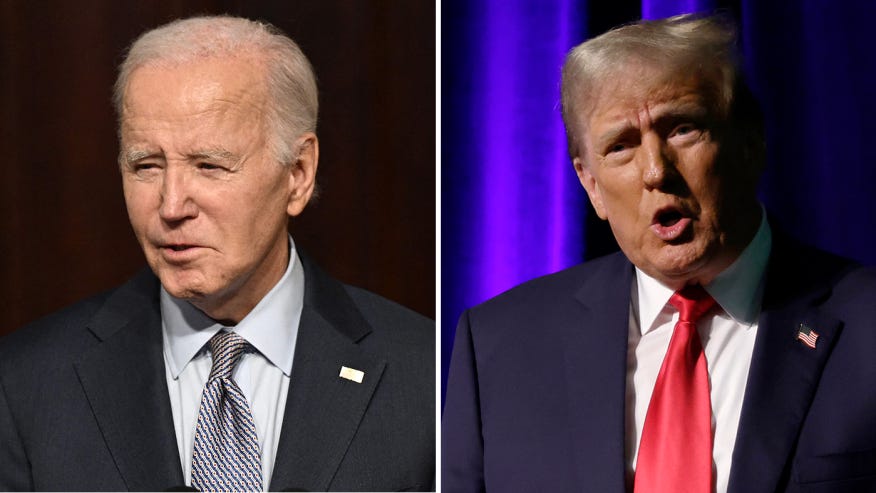
Their combined age is 158; let that sink in

I sometimes forget to zip up after using the bathroom. Thankfully, I don’t have to take my pants off in the bathroom because, if I did, I’m sure I would sometimes forget to put them back on. I would lose pants and party invitations the way I used to lose umbrellas and girlfriends.

In my prime, I occasionally beat the chess computer. Those days are gone. Nowadays, I’m lucky if I can find the goddam chess computer.

My fast ball? It left so fast it left my head spinning.

I’ve lost my keys so many times that I bought a gizmo to put on my keychain so that I can use my phone to make the keychain ring. Now if only I could find my phone. Soon I’ll be trying to start the car with my phone and trying to telephone people with my keys.

Mea culpa. I admit it. I stipulate to it. I confess. I do not have the mental capacity or physical strength to be president of these United States.

We’re on the brink of nominating for president two men older than I, who are even less physically and mentally fit for that job.

Continue reading