Ketamine, Elon, and me

Elon Musk – a man I admire greatly but not unreservedly – used ketamine. It’s not just a rumor. He wrote about it in a series of posts on what was then Twitter.

Ketamine is a manufactured drug that was originally designed as an anesthetic, and is still used for that purpose. However, it was noticed some years ago that in doses much lower than the anesthetic dose, it produces hallucinations. The effect is similar to that of other hallucinogenic drugs like LSD or naturally-occurring psilocybin (“magic mushrooms”). 

Ketamine, LSD, psilocybin and many other hallucinogens are thought not to be physically addictive (though, like other things that people enjoy, they may be habit-forming and psychologically addictive). In that respect, they are very different than, say, opiates such as heroin and morphine or, for that matter, coffee and alcohol.

Hallucinogens were investigated for years as treatments for emotional disorders such as depression and PTSD. But the “war on drugs” put a chill on that research.

As mind-altering drugs go, ketamine has a much better “brand” than LSD or psilocybin. That might be because letamine came into use as a medical anesthesia, not a street drug, and because a ketamine dose under medical supervision is easily controlled. That contrasts with street LSD and magic mushrooms, both of which are notoriously variable in their potency.

Equally important, a ketamine trip lasts about an hour while an LSD trip lasts more like a day.

Finally, ketamine has a better champion in Elon Musk than LSD had in Timothy Leary. Endorsements are everything, you know.

Given all that, together with some credible clinical studies, the FDA has approved ketamine in inhaler form for so-called “treatment resistant depression.” That’s defined as depression that resists other treatments such as the ubiquitous SSRI drugs.

The biochemical mechanism of ketamine on severe depression is not well understood. In layman’s terms, it seems to have a “resetting” effect similar to electroshock treatment – but without the occasional burn marks.

Ketamine treatment protocols are still evolving. A typical protocol involves half a dozen treatments over the course of several weeks. But sometimes the patient improves with just one or two treatments.  

Like other hallucinogens, ketamine is recognized as something that can be dangerously abused as a recreational drug. 

Elon said his use of ketamine was not for recreation, but was with a prescription under medical supervision to treat depression. (It says something about the sinister nature of depression that the richest person in the world could be afflicted with it.) Elon says he no longer uses it.

I have a personal experience with ketamine. Regular readers are aware that I had open heart surgery a week before Christmas to replace a defective aortic valve.

Due to the particular nature of my valve defect, the preferred method of aortic valve replacement where the valve is installed via a vascular catheter – a procedure something like a transcatheter angiogram – was not feasible for me.

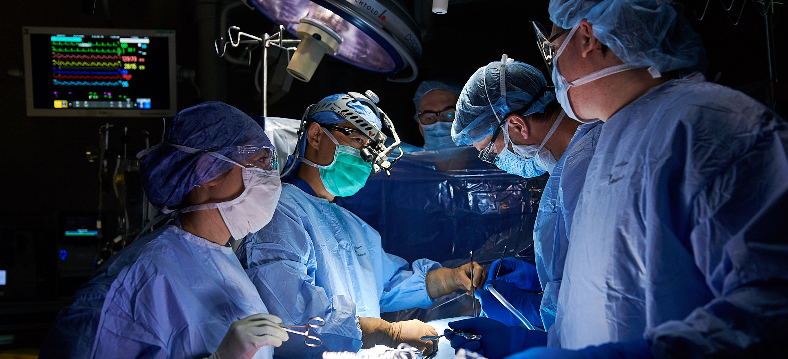
My procedure instead went the old-fashioned route – through the chest. They sliced open my chest, sawed open my sternum lengthwise, pried my chest apart, accessed my beating heart, put me on a heart-lung bypass machine, injected a drug to stop my heart, cut into my heart, carved out my ruined aortic valve, and sewed in a replacement valve made from bovine tissue – from a cow.

They sewed up my heart, took me off the bypass machine, restarted my heart, wired my sternum shut, and sewed up the big wound through my chest.

Surgery took four or five hours, and I was under anesthesia for a total of six or seven. 

My recovery proved problematic. Although the wound healed well and I was up and about in a few days, I soon developed severe heart arrhythmias of various types. The surgical trauma to the heart from open heart surgery often disrupts the electrical pathways that control the beating of the four chambers, such that they don’t beat synchronously.

By then, I was about three months out from my surgery. Mechanically, my heart was doing very well. The new valve fashioned from the heart tissue of a cow was properly seated and functioning. I liked to say that I was doing much better than the cow.

But the electrical system regulating and synchronizing the contractions of my four heart chambers was all messed up. I was like a British sports car – mechanically I was not bad but the electrical system was reliably unreliable.

My random heartbeats not only wore me down, but also interfered with my sleep. Between the arrhythmias themselves and the sleep deprivation they produced, I was fatigued. I was indefatigably fatigued.

Unrelatedly, I had surgery on my forehead that was expected to be routine. That was bad timing. The surgery required a big, deep, star-shaped incision to carve out some skin cancer. I wound up with 19 external stitches plus another 25 dissolving subcutaneous ones. I looked like a hatchet murder victim, but was less active.

Also unrelatedly, my little brother died.

My reliably unreliable cardio-electrical system along with my indefatigable fatigue landed me in the Emergency Room. I was accompanied by a close friend who had helped me through my surgery in the months leading up to and following that.

In the ER, they did what they do in ERs. That is, they decided I was not at risk of dying that day, and they started to send me home.

The attending physician, however, began asking me questions about my situation. He had a ponytail. I liked him anyway, and I told him my recent story.

The doc suggested ketamine. I had never heard of ketamine, but my friend had. She said it killed Mathew Perry, the co-star of “Friends.”

The doc assured us that Perry had taken a huge dose or several doses of street ketamine the day he died, without medical supervision, and died in a swimming pool or hot tub – he might actually have drowned.

In my desperation, and after noting the absence of any swimming pools or hot tubs in this ER, I agreed to try this ketamine stuff. As the nurse was setting up an IV, we asked her whether I would feel anything. She answered that I would feel the pin-prick of the IV when she put it into my arm, but then I would feel nothing.

Maybe I asked the wrong question. After starting the IV, the nurse walked out of the curtained ER cubical, leaving me alone with my friend amid the gentle whirring of the machine slowly infusing ketamine into my vein.

The “disassociation” effect came first. Now I know what they mean by “out of body.”

Then came the hallucinations. They were something like a 70s light show, but crazy-intense and three dimensional – at least. I floated through walls of brilliant lights and gyrating shapes and wild colors.

Nothing had prepared me for this. I have never used recreational drugs. I had never heard of ketamine. The nurse had told me just minutes before that I would not feel anything. So, it was alarming. I whispered something like,

“. . . Oh . . . my . . . God . . .”

I wondered if I’d been given the wrong drug. I wondered if I’d been given an overdose. I wondered if this might be the end of the world, or at least the end of me.

At the same time, the feeling was freeing and exhilarating. I had the sensation of opening up and releasing tension and turbulence. I could see it – or hallucinate it – streaming out of me.

As I flew, I dimly felt that I needed to stay in sight of the ground. I asked my friend if she was still there. She answered yes. I asked her to keep talking. She did. About what, I don’t remember. But her voice reassured me that there was still an Earth, and that I was still on it, even as I floated in the cosmos.

It seemed that the whole treatment lasted no more than a few minutes, but in fact it was about 40 minutes. After the infusion stopped, the hallucinations stopped almost immediately. I was utterly spent.

The doc returned. I told him of my experience. He remarked, “Oh, maybe I should have warned you about that.”

I thought, “Yeah, duh.”

But I later decided that his little surprise was probably part of the treatment. My overall assessment of this physician is that his treatment of me was creative and certainly aggressive, but controlled and safe.

The next day at home, I researched ketamine, and I learned what I’ve written at the outset above.

I was very tired. Events leading up to the ketamine treatment, the sleep deprivation, and then the treatment itself, had physically and emotionally drained me.

But this tiredness was different than the indefatigable fatigue I’d had for months. Within a couple of days, I was much better than before the treatment. Over the ensuing weeks, my heart arrhythmias gradually disappeared. Maybe I’d been “reset.”

Note to readers: Don’t try this at home. Street ketamine can kill you.
Join the debate: Should old men be screened for prostate cancer?

Joe Biden’s office reported last week that he has been diagnosed with prostate cancer that has metastasized to his bones. They’ve also reported that he went the previous 11 years without a PSA test to screen for it.

At this point, his treatment options are limited. It’s impossible to cure metastasized prostate cancer. Hormone treatment can slow the cancer, but such treatment has side effects – it’s essentially reversible chemical castration, which reduces testosterone to about 5-10% of normal or less.

We’ll never know how much, if at all, Biden’s cancer is related to his cognitive impairments that are now widely acknowledged.  

As for his failure to get PSA tests for 11 years, his office and his media allies point out that some (but not most) medical authorities recommend against PSA tests for men over a certain age, typically something like 70 or 75.

In my opinion, that cutoff, even if adopted, should not apply to a person tasked with Joe Biden’s responsibilities, but that’s a different column. This column is about using such a cutoff for ordinary men.

Here are some of the pros and cons of skipping PSA tests for ordinary old men. Join the debate in the comments section below if you wish.

Cons for the PSA test in old men:

*Prostate cancer usually grows slowly. It’s a fact that more men die with prostate cancer than of it. The expected life span of a 75-year-old American man according to the actuarial tables is about 12 years. The expected life span of that man newly diagnosed with prostate cancer, if not treated, is not much shorter. It’s about 8 years, though the quality of the last few of those years is very poor.

*Given that prostate cancer is usually slow-growing, some cases are overtreated. The man winds up with the trouble of treatment, but no lengthening of his life span, because he dies anyway of something else. If the PSA test is not given to a man, and so the cancer is not discovered, then we can be assured that he will not be overtreated for it.  

*Treating prostate cancer costs taxpayers. The usual treatment is a prostatectomy or radiation therapy or sometimes both. In the case of men over 70, these costs are borne mainly by the Medicare system. It’s reasonable to assume that treating a man with prostate cancer costs somewhere between several tens of thousands of dollars up to a hundred thousand dollars or more.

*The PSA test sometimes produces a “false positive.” That is, a man will have an elevated PSA level suggestive of prostate cancer when, in fact, he does not have the cancer. This will lead to further testing to disprove the cancer. That testing would not have been necessary if the PSA test had not been given.

Pros for the PSA test:

*The PSA test itself costs hardly anything. The retail cost of a PSA test at LabCorp is $69. Medicare gets it for less.

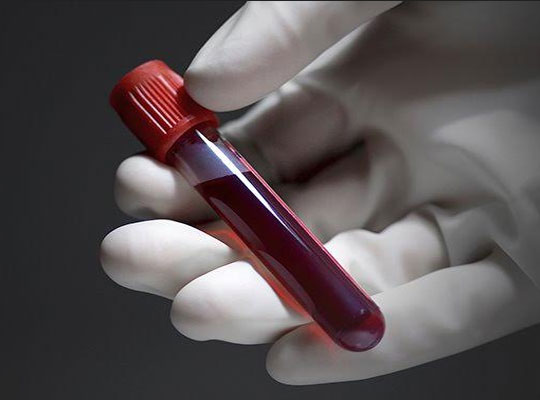
*The PSA test is easy. It’s just one more little vial of blood filled from the same blood draw as the rest of an ordinary blood panel at a man’s annual physical.

*False positives are easily addressed. It is sometimes said that the occasional false positives of a PSA test result in “unnecessary treatment” but that’s not true. What it results in is further investigation in the form of non-invasive imaging and perhaps a tissue biopsy. The imaging is painless, though the biopsy is less so.

*Some prostate cancers kill quickly. The quick-killing ones, once discovered, can be distinguished from the slow-growing ones by ongoing monitoring. If warranted, they can be treated. If Joe Biden had received PSA tests as part of his ordinary annual medical exams, his rapidly advancing cancer would have been detected and would have been treated. Such treatment probably would have saved him from the cancer.

*Overtreatment in a minority of cases does not justify ignorance and non-treatment in the majority of cases. The solution to the problem of overtreatment of slow-growing cancers is not to stay ignorant of all cancers; it’s to avoid overtreating the slow-growing ones.

*Prostate cancer does kill. While it is true that the majority of men survive prostate cancer, it remains the number two cancer killer among American men (second only to lung cancer) simply because it’s very wide spread. It’s true that death by prostate cancer is usually slow but, to me, that makes it all the worse.

My personal opinion is that we should give the PSA test to old men, but use common sense in treating the cancers that are found. A slow-growing prostate cancer in a 78-year-old man with numerous co-morbidities and a life expectancy three years is a different story from a fast-growing prostate cancer in an otherwise healthy 73-year-old man with a life expectancy of 15 years.

Feel free to weigh in with your thoughts.

The Bidens must have known about his cancer for years

First, my sympathies for the Biden family. I’ve been there.

Now, here’s my puzzlement. Prostate cancer is notoriously slow-growing. Although prostate cancer is the second-leading cause of cancer deaths among men (second to only lung cancer), that’s not because it’s so deadly, but because it’s so common. It’s a fact that more men die with prostate cancer than of it.

Of those who die, the typical mechanism of death is by the cancer cells metastasizing to other organs and/or to the bones. It takes years for that to happen – typically something like 5-10 years even without treatment, and even longer with treatment.

Even after the metastasizing occurs, death is usually half a dozen years away or more. After all, the cancer cells are still slow-growing prostate cancer cells, even though they’re now in a new home in another organ or in the bones.

The usual treatment for prostate cancer is to remove the prostate gland, a walnut-sized gland “down there” whose main function is to provide the ejaculate that is the vehicle for sperm cells produced in the testicles. After a prostatectomy, a man can still have an orgasm, and it’s a much tidier affair. The surgery is usually done with what’s often called a “robot” but, in reality, is a human-operated arthroscopic system that utilizes fine motor controls and a viewing system.  

An alternative treatment that is often elected is radiation treatment. The prostate is irradiated five times a week for about six weeks. In one of nature’s happy coincidences, prostate cancer cells are more vulnerable to radiation than normal cells. The intended result is for the prostate cancer cells to die (or, more accurately, be sufficiently damaged that they cannot reproduce) while the other cells survive.

In practice, the radiation damages other cells to some extent, which sometimes inconveniences the patient with regard to, for example, urinary and sexual functions.

Neither approach is thought to directly impact a man’s cognitive function. But it should be mentioned that prostate cancer is a disease of older men. Radiation five times a week for six weeks has an effect on older men, even when the radiation is all below the waist. And being under anesthetic for four hours for a prostatectomy is not trivial trauma for a 75-year-old man.

Both treatments are effective, but recurrences are common. A prostatectomy tends to leave at least a few viable cancer cells behind in the prostate “bed” from which the prostate gland is removed. Radiation treatment, too, is known not to kill all the prostate cancer cells. The hope is that it kills enough of them that the man dies of something else before the remaining ones regroup and reproduce.

If the cancer has spread beyond the prostate – i.e., it has metastasized – then all bets are off. Neither a prostatectomy nor radiation treatment are directed toward anything other than the prostate gland.

The announcement from the Bidens is that he has “an aggressive form” of prostate cancer which has metastasized to his bones. The particular bones are not specified, but the hips and pelvis are the most likely. Nor is it specified to what extent the bone metastasis has taken place.

In advanced stages, metastasizing will spread to many bones. The common symptom is worsening bone pain, a deep, achy, persistent and ultimately agonizing sensation.  

Prostate cancer is usually detected long before any symptoms are noticeable. A routine blood test, which is part of every older man’s annual physical, measures a compound called “prostate specific antigen” or PSA.

Elevated levels of PSA suggest, but do not prove, prostate cancer. The doctor typically orders up further tests to confirm the suspicions. The ultimate confirming test is a biopsy.

Here’s my puzzlement. How is it that Biden’s first inkling that he has prostate cancer is when it has metastasized to his bones, given that metastasizing takes years and he presumably has been getting PSA tests at least annually?

My guess is that the Bidens have known of his cancer for a long time. It’s quite possible – nay, it’s likely – that he has undergone radiation treatment for it. (Prostatectomy treatment appears out of the question, because reports are that a nodule was discovered on his prostate; so it’s still there.)

The radiation treatment appears to have ultimately failed, as it not infrequently does. When the cancer became detectable again, it would have produced elevated PSA levels. By the time it was metastasizing, those levels would be very high.

Again, this does not happen in a matter of weeks or months, but years. It’s inconceivable that the Bidens were unaware of this cancer last November.

Put this on your bucket list: open heart surgery

“I can hardly wait to see your nine-incher, Glenn!” Those were the words of a dear hiking buddy with whom I’ve had a long platonic friendship.

But I’m getting ahead of myself.

Beginning last summer, I felt less than my usual acerbic, aerobic self, especially when hiking at altitude with my group around Aspen. I finally awoke one morning feeling downright crappy, and a little light-headed. I’m not prone to illness. I haven’t vomited for at least 30 years, and my last cold was over ten years ago. I figured something was wrong.

I drove myself to the local emergency room. Cleverly, or so I thought, I skipped breakfast because I figured they’d want to draw blood for tests.

They did draw blood, and did lots of imaging. They found nothing wrong.

Except I passed out. That alarmed me and everyone else until we figured out it was due to plummeting glucose levels. That’s what happens in early afternoon if you haven’t eaten a thing for 20 hours. So much for my cleverness in skipping breakfast.

Over the next two months, I became a regular in the ER and in the medical offices. Each time was with the same symptoms: Intense fatigue, light-headedness, and now some cognitive and memory issues. Each time, they found nothing wrong.

They did notice my bicuspid aortic valve – a defect that I was born with and have been aware of for many years. The aortic valve is the exit from the heart to the aortic artery. All the blood pumped to your body goes through it. It’s supposed to be three-leafed, but about one percent of the population gets short-changed in the aortic valve line at birth and gets only a two-leafed version.

A bicuspid aortic valve is usually not fatal. Many people never realize they have it. But it’s not as efficient, and it can deteriorate over time.

They saw my bicuspid aortic valve through a routine echocardiogram. They apply an echo transducer to the chest, something like the transducers applied to a woman’s belly to generate an image of a baby in the womb.

The echocardiogram showed that I had “mild regurgitation” through my bicuspid aortic valve, and would need to have it replaced sometime in the next few years. But it was not an emergency and did not account for my symptoms.

I was starting to think my symptoms were imagined, and the docs probably were too.

Almost on a lark, I saw yet another cardiologist. This one was suspicious about the echocardiogram images showing only mild regurgitation at my defective aortic valve. He ordered up a different sort of echocardiogram. For this one, they put me under an anesthetic and put the transducer down my trachea to get a view of the valve from a different angle.  

That angle showed the regurgitation at the bicuspid aortic valve was not mild, but “severe.” The valve had deteriorated to the point that blood was backflowing from the aorta back into the heart. They checked me into the hospital that very day and performed open heart surgery to replace the valve as soon as they could round up a surgical team.

The lead surgeon happened to be a petite blond woman. Her blondness was of no consequence, medically speaking, but I noticed her small, strong fingers that would soon be fishing around in my chest. I thought, “That makes sense – all surgeons should be petite women.”

For the replacement valve, they can use a mechanical prosthesis or a biological one. We chose the biological one. It’s fabricated from natural bovine heart tissue. So, I have a bit of Bessy in me. At least it wasn’t porcine tissue.

Surgery entails a nine-inch incision lengthwise over the sternum (hence the remark by my friend which I quoted above). Then they cut through the sternum, still lengthwise, and pry open the split sternum and chest cavity with a steel prying cage that looks like something from a tire store.

That exposes the beating heart. A vein and an artery are accessed with catheters connected to a heart-lung bypass machine to maintain the oxygenation of the blood. The heart is then stopped with drugs, and remains stopped for an hour or two during the next steps.

The surgeon cuts into the heart to expose the aortic valve, carves it out, takes measurements, and sews in the prosthetic valve of the right size. Then the heart is closed with stiches, the bypass machine is disconnected from its arterial and venous access points, the heart is restarted, the prying cage is closed and removed, the sternum is stapled or wired together, and the skin incision is stitched up. The whole operation usually takes 4-6 hours.

I once had simple knee surgery where they used an epidural to numb me from the hip down. I elected to stay conscious the whole time and observed the surgery on a video monitor.

That was not an option for the heart surgery.

I awoke that evening with a tube down my throat. My first assigned task was to convince them that I was well enough for them to remove it. I succeeded, and they did.

I spent another four nights in the hospital. With encouragement, I was able to walk to the bathroom right away, and each day I walked a bit farther down the hallway. By the last day, I was walking a single flight of the stairwell. It wasn’t exactly the Matterhorn, but you have to start somewhere.

At home, it was tricky to get around without feeling pain in the sternum and thereabouts. After about three months, the direct pain was pretty much gone, except there would be odd bouts of intense pain or cramps in the intercostals between the ribs.

Heart arrhythmias are common after open heart surgery because the surgical incisions cut through established electrical pathways. The body finds alternative pathways that are incorrect and mistimed.

I got the full measure of arrhythmias. Atrial fibrillation was first, where the heart races and flutters. My heart rate would be 64, then 42, then 163, then 81, all in the span of a few seconds.

For that, I underwent the usual treatment of “cardioversion” where the patient is anaesthetized and the heart is shocked with a high-voltage current to reset the proper electrical synchronization. The burn marks left on the chest are usually small and heal quickly.

Then there were the premature ventricular contractions, or PVCs, where the sensation is that the heart is skipping a beat. All people get a few PVCs now and then, and they tend not to be dangerous, but mine would go on for hours or days. They were typically loud enough to keep me awake all night. Eventually, they subsided (I think).

The whole experience is disruptive to one’s metabolism, one’s head, and one’s emotions. I sincerely believe I’m a different person now.

That person is not yet as mentally acute. There’s a name for the symptom of brain fog after heart surgery involving a heart-lung bypass pump. They call it “pump head.” I confess to having a bit of pump head. It often improves over time.

I’m also not as aerobically strong. That, too, may improve – especially now that I have a proper and efficient aortic valve for the first time in my life. I’m not ready to hang up my hiking boots quite yet, or my spurs.

And I’m different in my personality. I’m relearning things, relearning people, and relearning myself. I choose to see it as a blessing. How many people get the chance to reinvent themselves, free of the baggage of who they were?

Meanwhile, I’ve got this nine-incher. Got that going for me.

Like everything else, the debate over alcohol is turning into a bar fight

Jesus turned water into wine. Modern-day abolitionists want to turn that wine into poison, and modern-day drinkers want to chase them out of town. We’re come a long way baby.

Not.

Let’s start with some facts:

As a long-time drinker, I can say with some authority that alcohol is a toxin. Half a quart of hard liquor in half an hour will probably leave you unconscious. More than that can kill you.

However, people rarely drink that much, that fast. Those who do are probably engaging in many other reckless behaviors, too, that will kill them long before the alcohol does.

The big question is, what about the millions of people who do not drink themselves into oblivion, but just into a mild buzz? And what about people who don’t drink for the buzz at all, but despite it – they’re drinking because they simply like the taste of a beverage, especially with dinner, that happens to contain a small amount of a nuisance toxin?

Most wine drinkers fall into this category, myself included.

As you might expect, the matter has been studied. Most recent studies suggest a strong link between heavy drinking and many different diseases – no surprise – but also a tenuous link between even moderate drinking and some cancers and vascular disease.

(Please don’t rebut these studies with a story about your long-living great aunt who drank every day.)

This link between alcohol and illness is, however, difficult to get a real fix on, because it is confounded by many variables. For example, people who drink moderately tend to be moderate in many of their other habits as well. And moderation is usually a healthy thing.

As for people who don’t drink at all, they tend to be moderate in all things including moderation. That’s why their alcohol consumption is not moderate, but is highly immoderate – it’s zero. These immoderate individuals very often engage in immoderate activities like ultra-marathons and are immoderately ultra-fit.

Comparing the health of a teetotaling ultra-marathoner with a moderate-drinking three-times-a-week treadmill exerciser will produce skewed and misleading results tending to show better health in the former that appears to be, but is not, a result of his teetotalling. Correlation very often does not equal causation.

Here’s another example of a confounding factor. Heavy drinkers tend to die young. People who die young are never included in studies of populations that are not young. Therefore, studies of not-young people will tend to show that drinkers are healthier than they really are, since the unhealthiest drinkers are dead and unincluded in the study.

The Surgeon General last week re-ignited this controversy-for-the-millennia by suggested that warning labels be put on alcohol, much as we’ve done on cigarettes for many years and as we already do on alcohol as it pertains to pregnant women.

As a sign of our times, the reaction was along party lines, but not in the way you might have expected. Strait-laced conservatives were outraged that anyone would dare warn them of the health hazards of getting intoxicated (even if the warning is only a warning and not a ban) while libertine liberals applauded the suggestion.

In reading the commentary, you might think the SG’s suggestion drove conservatives to drink, while it sent liberals onto their wagons.

That partisan reaction seems odd until you realize that the SG is a Democrat. In today’s charged political climate, that means many Democrats will reflexively like whatever he says, while many Republicans will dislike it.

In the mostly-conservative Wall Street Journal, for example, a member of the Editorial Board (with a BA in American Studies – owwwhh!!!) wrote an editorial unburdened by any supporting data announcing that the Surgeon General (a graduate of Yale Medical School) was simply wrong.

Other conservative commentators with similar “qualifications” weighed in with similar sentiments. The common theme was that the SG’s suggestion was yet another example of governmental overreach. It was Democrats trying yet again to control your life by warning you about things that might hurt you.

Well, maybe. But it seems to me that a fine-print warning that alcohol can be unhealthy is not exactly in the same category of, say, a warning that coffee can burn you or water can drown you. This is particularly true in view of widely published studies some years ago suggesting that moderate alcohol consumption is actually good for you – studies that were later debunked as having been confounded by the sort of lifestyle factors mentioned above.

And even if alcohol warnings are indeed in the same category as coffee-can-burn-you warnings and water-can-drown-you warnings, what’s the harm? It seems the protesters doth protest too much. A wee bit defensive, are we?

But that’s the current political world we live in. Messages are judged not by their content or other objective standards, but by the identity of the messenger. In my lifetime, America has never been so tribal. That’s bad.

By the way, I wonder about the position of our current tribal chief, for whom I’ve voted thrice now and whose performance as de facto president is great. (I especially like the idea of annexing Greenland, where we’ve had an early warning Air Force base for many years.) He is a known and admitted teetotaler. (Thank goodness – can you imagine Donald Trump intoxicated?) Wouldn’t the world be turned upside down if he were to side with the Democrat SG?

Along the same lines, I wonder how politically conservative, teetotaling Mormons reacted to the liberal SG’s suggestion.

As for me, from time to time I consider reducing my alcohol consumption, and maybe even ending it. It’s probably not the healthiest of my habits, nor the least expensive. But I hope I’m already knowledgeable enough that a silly new warning label won’t persuade me to stop, and I hope I’m mature enough that it won’t persuade me not to. 

“Transgender Miners at the Supreme Court . . .”

. . . Is how a headline reads in today’s Wall Street Journal. To which my reaction was, what next?

First, the trannies were in the closet. Then they came out, apparently just to go to the bathroom. The one for girls.

Then they were in the Cabinet of the future former President and current organized crime boss who both commits and pardons family criminal acts. (One stop shopping, is he.)

The next thing we knew, they were competing in athletic contests against real women – or, as much of the media dubs them, “birthing persons” or “menstruating persons” or “persons with a bonus hole” or (my personal favorite) “non-transgender women.”

Now, no less than the Wall Street Journal informs us that we have transgender miners. Yep, they’re in the mines. Those would be the mines on federal land, no doubt.

“Glory Hole” takes on a whole new meaning.

Not only that, but these transgender miners have a case today before the Supreme Court – a Court that is not especially sympathetic to identity politics (though they did rule a few years ago – centuries ago in terms of the cultural climate – that businesses cannot discriminate against tranny employees).

Given the composition of the Supreme Court, one might expect a miner of all people to know that the first thing to do when you’re stuck in a ditch is to stop digging.

What’s that you say? The WSJ headline refers to “minors” and not “miners”? And the Supreme Court case is about transgender children, not transgender miners?

Nehva mind . . .

In that case, let me put on my legal hat.

The claim being heard by the Supreme Court is that state laws prohibiting hormone manipulation and gender mutilation (er, “affirmation”) of children having some growing pains are a violation of the Equal Protection clause of the Constitution.

The gist of the argument is: If a boy who thinks he’s a boy can get certain hormones to affirm his boyhood, then why can’t a boy who thinks he’s a girl get other hormones to affirm his girliness? If the second boy can’t get his hormones, then you’ve discriminated against him on the basis of sex. The boy got the hormones, and the boy who thinks he’s a girl was refused them.

The argument has a circular quality to it. The boy thinks he’s a girl, and so he’s entitled to receive hormones to make him one. To refuse him those hormones is to discriminate against a boy who thinks he is a girl but is not  because he hasn’t received the hormones, and so it’s sex discrimination.

If you can follow that, you should be a lawyer.

There’s another, more basic flaw to the argument that boys who think they’re girls have a Constitutional right to receive hormones to make them girls (sorta). Recent studies in Europe have shown that gender “affirmation” treatment generally has a poor outcome. To be sure, a boy who becomes a “girl” has his genitals mutilated. But also – as if the genital mutilation is not a bad enough outcome – gets nowhere in his psychological well-being. He’s just a prone to suicide, for example – an act that is tragically common among trannies.

Moreover, many “transitioned” children later regret their transition, and seek to “de-transition.” If you thought the transition surgery was dicey, imagine the de-transition surgery.

Countries in Europe have now stepped back from gender “affirmation” treatment for children, and several have outlawed it – just as many states here have.

So, the Supreme Court can dodge the Constitutional Equal Protection issue that even lawyers have a hard time articulating, and decide the case in a more basic way that even you and I can understand.

They can say: This treatment is controversial and unproven. The states can, in the exercise of the plenary powers reserved to them, make a reasonable judgment that it should not be performed on children.

This is anything but unprecedented. Note that most states prohibit children from getting tattoos. But now there’s supposed to be a Constitutional right for them to mutilate their genitals in the interest of a faddish identity group that is recruiting them?