Glenn K. Beaton is a writer and columnist living in Colorado. He has been a contributor to The Wall Street Journal, RealClearPolitics, Powerline, Instapundit, Citizen Free Press, American Thinker, Fox News, The Federalist, and numerous other print, radio and television outlets. His most recent book is "High Attitude — How Woke Liberals Ruined Aspen"
This war with Iran is one that had to be fought, and so we were right to fight it on our terms at a time before it became harder to win. The way Iran has lashed out at civilians everywhere, including with indiscriminate killing machines it denied having, has confirmed that.
But I recognize that there are arguments and counterarguments. Some of those are just the lame “Orange Man Bad!” or “Orange Man Good!” type, but others are more principled.
Here are two arguments – one against the war and one for it – that sound principled, even scholarly, but at the core are just sophistry.
First is the one that is against the war. It says, “Another Vietnam catastrophe!” (Yes, the argument is typically presented replete with the exclamation point, which should give you a clue that you’re about to receive more heat than light.)
But Vietnam was not really a catastrophe. It was indeed poorly conducted, but it achieved for a time its main objective: to stop the Communist advance through Southeast Asia.
The Communists eventually did get South Vietnam (and ironically have turned it into a haven of export enterprise) but we delayed that by at least 15 years.
And the Communists never did get Indonesia, Malaysia, or the Philippines, to say nothing of Australia and New Zealand. Was that worth 50-some thousand Americans? History’s jury is still out.
The point here is that Vietnam was not the debacle that kids today are taught in “schools” where they are indoctrinated by the teachers’ union arm of the Democratic National Committee – an organization sworn to pacifism except when their opponent is America.
When comparing Iran to Vietnam, here’s the bigger point. Vietnam was 60 years ago. Vietnam was literally much closer in time to World War One in the year 1918 (that’s One, not Two) than to today in the year 2026.
It should not need to be said that weapons, battlefield tactics, global economies and world alliances are vastly different now compared to 60 years ago.
We saw that in the first hours of the Iran war when the U.S. and Israel eliminated the Iranian leader and many of his subordinates. That’s the first time that’s ever happened in a modern war.
On the other side, we see the Iranians responding with inexpensive but sometimes effective missile and drone attacks throughout the Middle East, and a dramatic show of their capability of launching a missile as far as London or Berlin. (The accuracy of those missiles, and how long before their stock is depleted, are separate questions.) We also see them blocking the flow of 20% of the world’s oil supply.
In short, this is not Vietnam. This is not your dad’s war.
On the other side, supporters of the war sometimes compare it to the Suez Crisis in 1956. That’s when Egypt nationalized the Suez Canal, ousting the U.K. and French interests that had controlled it. The U.K. and France tried to reclaim it, but backed down in the face of international pressure. The U.S. through President Dwight Eisenhower sided against the U.K. and France.
Since then, the U.K. and France have never held much sway in the Middle East. According to supporters of the Iran war, the lesson to be learned is “never back down in the Middle East.” Or “Damn the torpedoes, full speed ahead!”
But this “lesson” forgets the broader context. The U.K. and France don’t hold much sway anywhere, not just in the Middle East. Their economies and militaries were never completely rebuilt after being ravaged in WWII.
Even more ravaged were their national psyches. The cultural collapse we’re seeing today in the U.K. and France was not triggered by Suez. Rather, Suez was triggered by their already-emerging cultural collapse.
An equally valid – or invalid – lesson might be learned from the Camp David Accords in 1979 when Jimmy Carter in probably the best feat of his Presidency (I know that’s not saying much) moderated a lasting peace between Egypt and Israel. In that peace deal, both sides compromised – both sides backed down.
Of course, the Camp David Accords don’t teach us much about the Iran war, either.
The most that can be gleaned from the events of history is usually allegorical. Platitudes about history are of little use in another time under different circumstances. They are no substitute for hard analysis. In analyzing Iran, they’re about as useful as Aesop Fables.
The crux of the hard, real analysis on Iran is the point I made at the outset. Whether Donald Trump is a genius or a fool, war was inevitable. We were smart – it was the product of hard analysis – to choose the time and circumstances.
So, when should the war end? Again, it will take more than history to answer that question. Again, it will take hard analysis – of the costs, benefits, risks and rewards. Let’s have the patience and courage to undertake that analysis. Damn the Midterms.
Half a century ago, American children were taught in elementary school that “representative democracy” was the highest form of government.
Part of me wondered even then, why should everyone get an equal say in things? That wasn’t how it worked in my elementary school, I observed, even as they taught that creed. The students and the janitor didn’t get the same say as the principal and the teachers.
Some people are smarter, more diligent, better educated, work harder, and pay more taxes. Shouldn’t they get more of a say in how those taxes are spent than people who are not smart, not diligent, don’t work, aren’t educated, and don’t pay taxes?
The only plausible answer to that question as to why everyone should get an equal say, is that everyone should feel like a stakeholder in the nation.
That’s a nice sentiment, but there are several problems with it. First, allowing – nay, begging – stupid lazy people to vote is a high price to pay to make them feel like stakeholders. Second, it doesn’t work. They still don’t feel like stakeholders.
Third, if you want people who don’t pay taxes to feel like stakeholders in the nation, maybe a good first step would be to ask them to pay some of the nation’s taxes.
As it stands today, the bottom 40% of earners pay about one percent of federal income taxes. Is it any wonder that those so-called taxpayers always want to increase taxes? It’s because they themselves never pay them.
The Founders recognized this fallacy with the democratic republic they created. They recognized that at some point the lazy stupid masses might come to realize that they could vote for a “redistribution” of the wealth of the smart hardworking producers. That’s undoubtedly the reason that the Constitution originally did not allow for income taxes; it took the 16th Amendment. (Nearly all amendments after the first ten were mistakes, BTW.)
In another genius of socialist branding, the stupid lazy masses have dubbed this legalized theft “fairness.”
But let’s leave the tax tangent and get back to the broader failure of American democracy.
What we have now is mob rule. Everyone has a microphone in the form of the internet, including me. With that microphone, they can get “clicks” on what they post. Those clicks are more or less exchangeable for cash.
Human nature being what it is, many people are owned by their desire for cash, and thus many internet posters are owned by their desire for clicks. They post stuff that is designed to generate clicks and cash.
That’s why we now have horrible creatures out there like Tucker Carlson and Candace Owens who are willing to generate clicks/cash with blood libels of the Jews.
Barely better are the people behind “Instapundit” who post misleading headlines appealing to notions in my tribe such as all Democrats are transexuals who want to conduct “gender affirmation” surgery on children in schools while burning the flag in Satanic rituals in the playground. (I’m sure the leftist websites have similarly weird headlines about Republicans, but I don’t see them because I don’t go to those websites.)
It’s political porn; it panders to the worst instincts of political junkies; it’s addictive; and it’s destructive to them, us, and our society.
And it works – for the perpetrators anyway. Ask Tucker.
(I have a friend who says he habitually clicks into Instapundit, but only to get the links. Uh huh. And I’m sure he got Playboy just for the articles.)
Speaker of obscenity, there’s the legislative branch. That’s the branch of government where a majority of the people elected to do the voting are supposed to enact and repeal laws.
Except it takes more than a majority to do both enacting and repealing. The Senate filibuster rule (another thing not in the Founder’s Constitution, or even the current one) means that it takes 60 of the 100 Senators to enact or repeal almost any law.
That means that the minority party – the political party that the people decided should be fewer in number than the other party – has a veto over any enacting or repealing of the laws.
That’s a bit weird. The “rule” is that that majority rules, except that the minority gets a veto. Huh?
It gets worse. Not only does the minority get a veto, they can shut down the government unless the majority concedes its power to them.
The minority shut down the government for over a month last fall, demanding that the majority pretend that the minority was the majority and the majority was the minority, by repealing part of the tax bill that was passed by the majority months earlier.
Now the minority is doing the same on a narrow issue, with the result that people are waiting hours in TSA lines at the airport. (I say fire TSA anyway; it’s all theater.)
The latest is the minority’s filibustering of a law to require photo ID when you vote, just as you’re required to have photo ID when you board an airplane, borrow a book, or cash a check – a law that is supported by 80% of Americans.
Maybe the majority should formally concede that it is effectively the minority. Then they can turn the tables and demand those minority filibuster rights. At which time the minority would say, “Not so fast, we’re the minority, so we’re in charge here!”
Yep, that’s American “democracy.” Don’t even get me started on the European kind.
And sooooo . . . .
Let’s impose this farcical system on Cuba and Iran. Given their history of ecumenical largess (I have no idea what that phrase means, but it popped into my demagogue head; help me here, Tucker) they’ll surely be every bit as successful with it as we currently are.
OK, don’t go away mad. Here’s a tidbit to brighten your day. Donald J. Trump is not a Democrat, and I’m not even sure he’s a democrat.
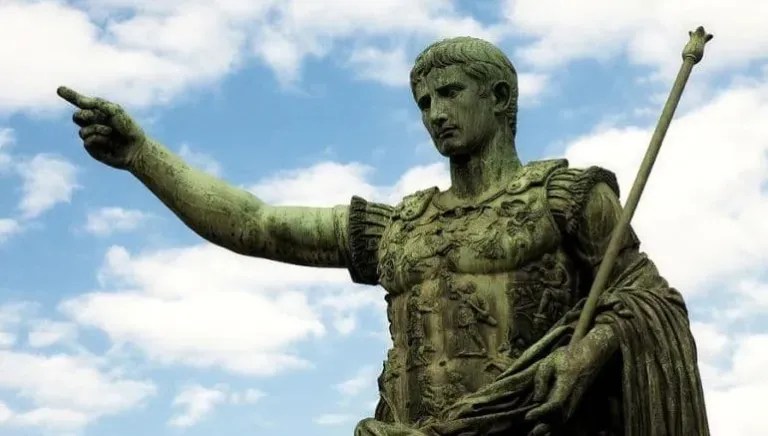
But bear in mind that the greatest leader of the ancient world – the one who brought the greatest good to the greatest number – was Augustus Caesar. He wasn’t either.
Given Iran’s half century of cruel barbarism in the Middle East, it’s hard to understand why the Democrats seem to be rooting for them in the current war. I have two theories.
One is the obvious one. The Dems are not so much rooting for Iran, as rooting against Iran’s enemy. Bad as Iran is, its enemy is even worse in the eyes of the Dems.
Iran’s enemy, you see – or at least the Dems see – has a history of its own cruel barbarism going back to at least 1619. Iran’s enemy has engaged in genocide against native people. Iran’s enemy has wrongly oppressed workers of the world who sought freedom in the workers’ paradises of the Soviet Union, Cuba, Venezuela, Red China and Eastern Europe.
Dems believe that Iran’s enemy has raped the earth, ruined the climate, undermined the sacraments of diversity, equity and inclusion, elected a man with bad orange hair to the Presidency, increased the wealth of everyone but at the cost of especially increasing the wealth of the wealthy, made “woke” a four-letter word, and is rapidly driving Starbucks out of business.
Iran’s enemy is of course America, which happens to be the Dems’ primary enemy as well. So, in a textbook example of “my enemy’s enemy is my friend,” the Dems see Iran as their friend.
That’s all that matters to the Dems. Forget about Iran’s atrocities. Forget about the hostage-taking, the baby-beheadings, the rapes, the murders, the incinerations. Forget about the imprisonment of people for political beliefs, the torture of dissidents for dissenting, the belligerent development of a nuclear bomb for use on Israel, and the throwing of gays off tall buildings for being gay.
(Correction: A reader has informed me that Iran does not throw gays off tall buildings; they pay ISIS to do that. Homer nods.)
Which brings me to my second theory. It has been reported that Iran’s new Supreme Leader who assumed the supremacy after the supreme demise of his supreme father is . . .
. . . gay.
President Trump, a supporter of gay rights, was reportedly pleased by the news. He laughed.
Gayness is not a sin, in my view. It’s barely worthy of mockery. For cheap mockery material, it’s on the order of baldness.
But under these circumstances it’s notable. The new Gay-atollah could be a second reason why the Dems are rooting for Iran.
It would be a DEI “resistance” exercise by the Dems, now that ordinary DEI has been outlawed or at least discredited. As in “I want the gay guy to win!” Or “I want the gay guy to beat Trump!” Or just “I want the gay guy!” (“But the bushy beard? Eww!”)
As for that newly-supreme-and-outed gay man serving as the putative Supreme Leader of the Islamic Republic of Iran while cowering in a corner somewhere, he has yet another thing to watch out for. He has to watch out for not just bombs in the sky, but himself in the sky. Stay away from tall buildings, my friend.
Predictions are hazardous, especially about the future and especially about politics, but the best prediction right now is that the 2028 Republican nominee for President will be either JD Vance or Marco Rubio, and the Democrat nominee will be either Gavin Newsom or Kamala Harris. The ones not nominated for President will likely be nominated for Vice President.
Before we employ these people for these important jobs, let’s do what employers do: Let’s look at their resumes.
(I’ve tried to present this in a neutral manner, unlike Wikipedia which unabashedly spins the tone and even the substance of the bios to favor Harris and Newsom and to disfavor Vance and Rubio.)
JD Vance:
Grew up poor in Appalachia with an alcoholic and drug-abusing mother.
Joined the Marines.
Graduated Ohio State University, summa cum laude.
Graduated Yale Law School where he was an Editor of Yale Law Journal.
Clerked for a prominent federal court judge, and then worked at a prestige law firm.
Worked for Peter Thiel’s venture capital company.
Wrote a NYT best-selling book about his life, later made into a hit movie directed by Ron Howard; the book sold three million copies, and the movie had over four million viewings.
Elected U.S. Senator for Ohio.
Elected Vice President of the United States.
Sports a lousy beard.
Kamala Harris:
Daughter of an Afro-Jamaican father and Indian mother.
Graduated Howard University (no listed honors).
Graduated University of California Hasting College of Law (no listed honors).
District Attorney for Alameda County, then appointed to state positions by an older politician she was dating, Willie Brown.
Elected first woman, first African-American and first South Asian-American Attorney General of California.
Elected Senator from California (first African-American, first South Asian-American, second Black woman).
Elected first woman, first African-American, first South Asian-American Vice President, and given responsibilities for discovering and remedying the “root causes” of illegal immigration under the Biden administration.
Defeated in 2024 election for President.
Marco Rubio:
Born to legal Cuban refugees in Florida.
Graduated University of Florida.
Graduated University of Miami Law School, cum laude.
Elected to Florida legislature, then elected first Cuban-American Speaker of the State House of Representatives.
Adjunct Professor at Florida International University.
Elected U.S. Senator from Florida and served ten years, was member of numerous committees and subcommittees.
Defeated in the Republican nomination for President.
Appointed Secretary of State by President Trump.
Widely considered very active as Secretary of State, with the NYT dubbing him “Secretary of Everything.”
Gavin Newsom:
Born into a prominent San Francisco family, where the father was close friends of the Getty oil family.
Played college baseball.
Started a successful winery with one of the Getty’s, and went on to other successful business ventures.
Appointed to political positions by the same mentor that Kamala Harris had (but didn’t date him).
Elected Mayor of San Francisco.
Elected Lieutenant Governor of California.
Elected Governor of California.
Had “severe dyslexia” as a child according to Wikipedia, and it’s still “pretty severe” according to Newsom.
Sports good hair.
So, there you have their bullet-point (can I still say that?) resumes. Which do you want to run the country?
In the raucous locker room celebration of the Gold Medal win by the men’s hockey team on the final day of the Olympics – an upset win for the ages – the team received a phone call from President Trump. They put the President on the speaker.
In the course of the hilarity and fun, Trump invited the team to this week’s State of the Union Address. Almost before the invitation was out of Trump’s mouth, the team accepted. “We’re in!”
Amid the laughing, shouting and carrying on, Trump quipped, “I must tell you, we’re going to have to bring the women’s team, you do know that!” The team laughed and roared its approval. Trump chuckled, “I do believe I would probably be impeached” if the women (who also won gold) were not invited.
The women’s team were no-shows, citing scheduling conflicts.
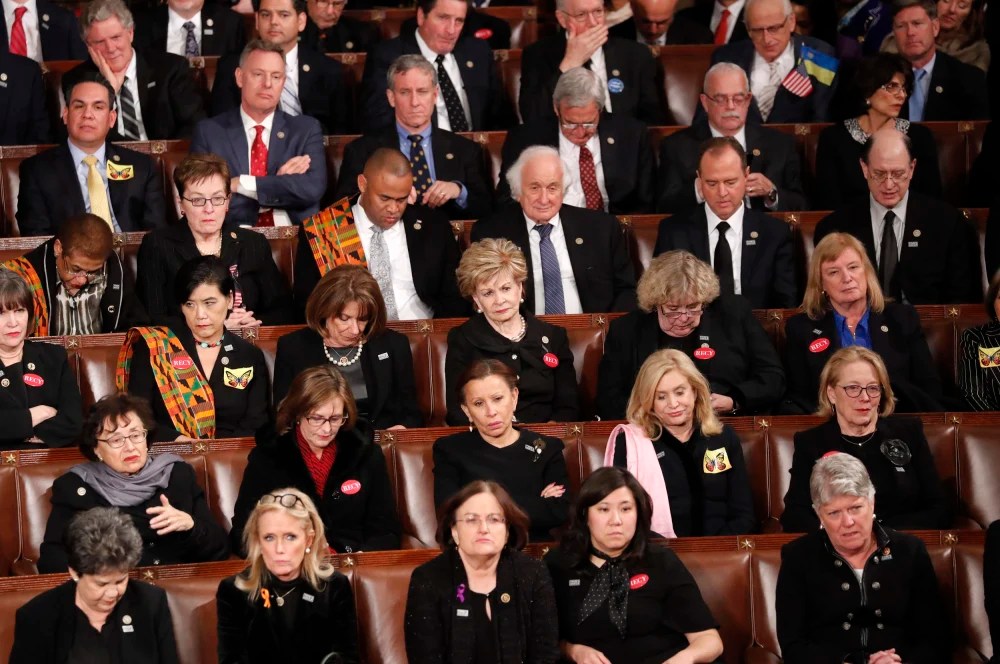
The men, in contrast, were able to clear their conflicts. Chants of “U S A, U S A, U S A” predictably ensued as they entered, for which even the Democrats felt obligated to stand. Mind you, these Democrats would not even stand for:
“If you agree with this statement, then stand up and show your support: The first duty of the American government is to protect American citizens. Not illegal aliens.”
Over the course of the week, the Democrats found a way to be offended by the President’s locker room quip. The offense they settled on was “misogyny.”
The basis for this misogyny, apparently, was that Trump’s quip that he would “have to” invite the women to the SOTU implied that he didn’t really want the women to come, and he was inviting them only to avoid being impeached.
Trump said a lot of true things Tuesday evening – about an hour’s worth too many. None was truer than when he gestured to the silent, stony Democrats and said, “These people are crazy.”
The latest rationalization from the Left for illegal immigration is that nothing is illegal in America because America itself is illegal because it’s on “stolen land.”
That’s a non sequitur. An illegal act does not become legal simply because the victim is a trespasser. If a stranger breaks into your house while you’re on vacation and illegally occupies it, it’s not legal for another stranger to enter the house to shoot the first stranger while he’s sleeping.
Besides, all nations are on “stolen land.” All of Europe, for example, is on land “stolen” from Neanderthals that “modern” humans killed or assimilated. All the land in pre-Columbia America was occupied by Native Americans who “stole” it from other Native Americans who, in turn, “stole” it from other, other Native Americans.
History tells us that people move around. When they find a place they like, they buy it or take it. Every group of people has done this, always.
Of course, the Left cannot condemn all the buyers/takers because that would condemn all of humanity. The Left reserves its condemnation for the buyers/takers who were white European free-marketers.
Why does the left single out white European free-marketers for condemnation?
Well, it’s because they’re white, it’s because they are (or were) European, and it’s because they’re free-marketers. The Left hates those things.
The fact that the Left hates white, European free-marketers might suggest that the Left are a bunch of Black radical socialists. Think Malcolm X.
Well, they certainly are socialists, by definition. But they typically are not Blacks. Most Blacks apart from those who make a living collecting political rents aren’t socialists.
No, the socialists are typically self-loathing, guilt-ridden white women blissfully ignorant of basic principles of economics who are affluent directly (or, more often, indirectly) through the free market that they love to hate, sheep-like, with all the analytical rigor and independent thinking of Glee Club. Ayn Rand and Margaret Thatcher, these women are not.
But that’s a topic for another column. Today’s topic is the Left’s fondness for illegal immigration.
It wasn’t always this way, but, then again, the Left wasn’t always so far left. Bill Clinton condemned illegal immigration. Barack Obama deported millions. Both probably reasoned, correctly, that illegal immigrants were taking jobs from poor and Black Americans who were core constituencies of the Democratic Party.
It wasn’t until President Autopen that the doors to the border were flung open and then unhinged. That’s because the people wielding the autopen of President Autopen were radical America-hating Leftists. While they wielded the pen that ran the country, the President whose name they affixed to Executive actions was asleep at the switch (and at the beach, and at the debate, and . . . you get the point – he slept a lot).
These America-hating Leftists wanted to flood the nation with poor, uneducated immigrants. If they could accomplish that in a way that flouts the nation’s laws, all the better. Not because it would be good for the immigrants, but because it would be bad for America.
The Left likes the illegal immigrants themselves well enough, but only because the illegal immigrants are the enemy of the Left’s enemy – America.
If the Left could find a way to exaggerate a disease in order to shut down America completely, they would do so, and they would very much like that disease.
Oh, wait a minute . . .
Anyway, now the entire Democratic Party is owned by these America-haters. Any Democrat who wants funding from the Soros family, or the teachers’ unions, or Hollywood – all of which have become America-hating Leftists – is required to pass an illegal immigrant litmus test.
The test goes something like this:
Do you favor immigrants coming to America illegally and staying here illegally?
Alex Pretti did something foolish and illegal at the protest in Minneapolis. He interfered with law enforcement agents. There will be debates for days if not years about whether his illegal interference with the cops, the discovery of his gun, and his violent resistance justified them shooting him.
In considering that issue, I urge readers to consider it not from the warm comfort of their recliner while watching slow-motion videotapes interspersed with football highlights, but from the perspective of cops who are being taunted, spat upon, name-called, and threatened with being run over by organized protesters in the bitter cold, who suddenly discover in a scuffle that one of those protesters has a gun hidden in his pants.
(I’m glad to report that speculation that the gun was planted on Pretti by the cops appears to be disproven.)
But let’s put to one side the issue of whether the shooting was justified. Even now, we still don’t have enough facts to make that determination.
Let’s instead consider a threshold issue: Why did Pretti bring a gun?
Note that it’s not illegal in America for ordinary citizens to own a gun. And it’s not illegal to protest non-violently.
It’s not even illegal to bring a gun to a protest (despite claims to the contrary by a Trump Administration official).
In short, whatever illegalities Alex Pretti committed at the protest, he did nothing illegal in putting a gun in his pants and going there.
But why did he? Why did he hide a loaded gun in his pants?
Ordinary people carry guns routinely for lots of reasons. Most of those reasons are poor ones, in my judgment, but not illegal ones. Some ordinary people carry guns simply because it makes them feel secure or even masculine. Some ordinary people carry guns because it plays into boyish fantasies.
And a few ordinary people carry guns because they have legitimate reasons to think they may need them for lawful self-defense and they have the expert skill and excellent judgment to use them properly in that mode.
Pretti seems not to be in the latter category. Rather, he brought a gun to the protest because it made him feel secure or masculine or fulfilled boyish fantasies. Sadly, those feelings and fantasies cost him his life.
Before leaving this incident, there’s a tribal juxtaposition here that is worth noting. Conservatives typically defend and even celebrate owning and carrying a gun, while liberals typically decry the same. Conversely, liberals typically defend and even celebrate protests of law enforcement, while conservatives typically decry the same.
So, conservative and liberal tribalists are left in a quandary when somebody brings a gun to a protest of the immigration laws. Conservatives wonder, do we defend the gun-toter even if he’s protesting? Liberals wonder, do we defend the protester even if he totes a gun?
I like the fact that this quandary forces the tribes to think past tribal identities. Conservatives are forced to acknowledge that owning and carrying a gun may be lawful but there are circumstances where it isn’t smart or right. Liberals are forced to acknowledge that protesting may be lawful but there are circumstances where that, too, isn’t smart or right.
In short, judging an act often requires thought beyond merely identifying the tribe of the person performing that act. A bit more thought and a bit less tribalism would be helpful these days.
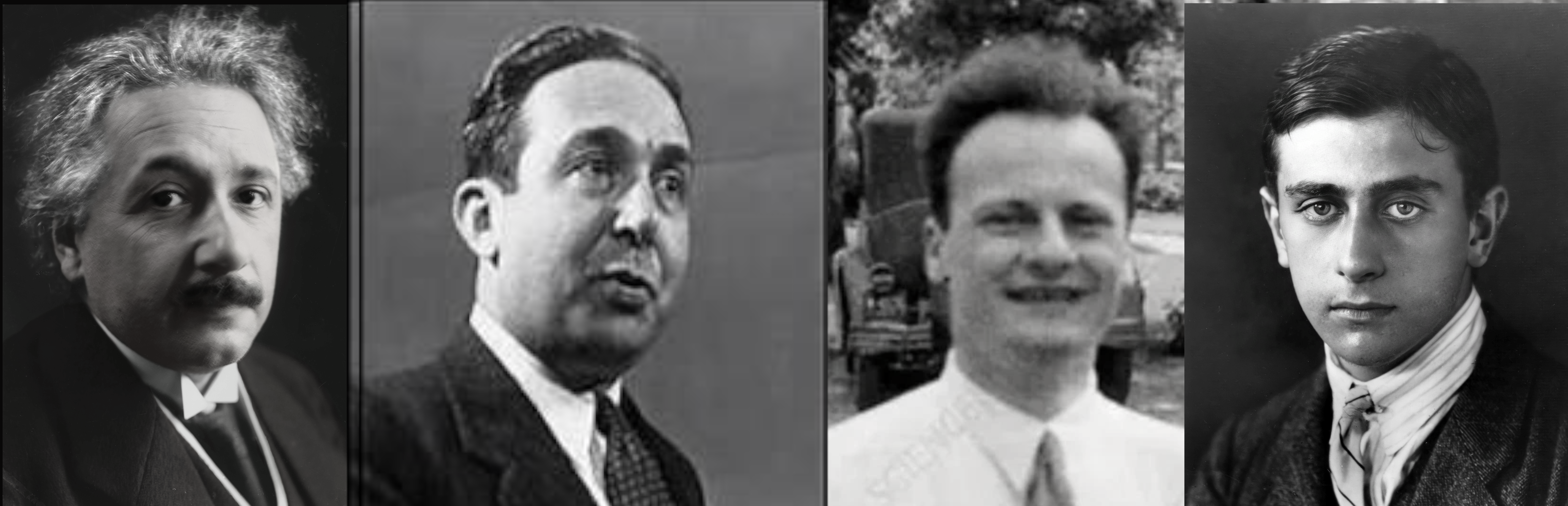
Guess what these men have in common: Albert Einstein, Leo Szilard, Hans Bethe, and Edward Teller.
Everyone knows about Einstein. He won a Nobel Prize for his work on the photoelectric effect, did revolutionary work on the relativity of time and space (all in his mind without a laboratory), fled Nazi Germany in 1933, had wild hair in his later years, and, most importantly, co-authored a letter to President Roosevelt explaining the potential for a nuclear bomb.
That letter is credited with persuading Roosevelt to launch the Manhattan Project. The ensuing nuking of Hiroshima and Nagasaki put an end to WWII. By avoiding a full-scale invasion, the bombs probably saved over a million Japanese, American, British, Australian and Chinese soldiers and civilians.
Einstein became a U.S. citizen in 1944, a year before the bomb was first tested at Los Alamos.
Leo Szilard was the other co-author of that letter. It was Szilard who conceptualized the notion in 1933 that incredible amounts of energy could be released in a nuclear chain reaction by splitting the uranium atom. It might have been the greatest Eureka! moment in science since the day Isaac Newton conceived of gravity when he was hit on the head with a falling apple. Szilard fled Europe in 1938 and became a U.S. citizen five years later.
Hans Bethe was a prominent physicist of the early 20th century. He fled Germany in 1935 at age 29 and became a U.S. citizen in 1941. Like Szilard, he worked on the Manhattan Project. He won the Nobel Prize in 1967 for his work on nuclear reactions over the course of a prolific career, and died in 2005 at age 98.
Edward Teller fled Germany in 1935 and became a U.S. citizen in 1941. He, too, worked on the Manhattan Project. He was later dubbed “the father of the hydrogen bomb.” (While the Hiroshima and Nagasaki bombs used nuclear fission, the hydrogen bomb uses fusion, which delivers much more bang for the buck. Hydrogen bombs have been successfully tested, but never used in warfare.)
OK, one thing these men obviously have in common is that they were all great physicists.
Here’s another thing, perhaps less obvious: They were all Jewish. Indeed, that’s the reason they fled pre-WWII Europe and came to the beacon of hope that is called America. (It should be noted that not all the physicists on the Manhattan project were Jewish. Project leader Robert Oppenheimer was raised in an American Jewish family but did not regard himself as Jewish. Enrico Fermi was an Italian immigrant raised in a Catholic family.)
The Nazis were pretty stupid, considering they fancied themselves clever and strategic. They drove away the greatest physicists of the day – right into the welcoming arms of their adversary.
The result was poetic justice.
Germany’s persecution of the Jews deprived the Nazi war machine of their scientific talents. Imagine if Germany had kept the Jewish scientists at home in Germany to help them invent the bomb before America did. Those V-2 rockets they used to bombard London could have been loaded with nukes.
Fast forward a few generations. We now have some new Nazis to contend with, called radical Islam. Like the German Nazis, these neo-Nazi Islamicists fancy themselves pretty clever and pretty strategic, though at the moment the Trump-Netanyahu alliance has them on the ropes.
Here’s an interesting thought experiment. What if the radical Islamicists somehow manage to subdue what they call “the Little Satan” of Israel? Where will the Israeli physicists and other scientists go?
Not to Europe, which is a hotbed of antisemitism.
They’ll go where brilliant, hard-working people have always gone – they’ll go to America.
In America, we don’t care if they’re Jewish, Lutheran or Buddhists, and we don’t care if they’re Black, white, brown or yellow. We don’t care about who they are, we care only about what they can do.
What that next wave of Jewish immigrants can do is to help us – help humanity – win another world war, this one against radical Islam. In the meantime, they can help us cure cancer or generate limitless electricity or put a man on Mars.
Here’s the bigger point. It’s too simple to say that immigration is bad, or good. It all depends on the skill set of the immigrants. I’ll happily take another Einstein.
Democrat historians outnumber Republican historians by somewhere between 8 to 1 and 19 to 1. The disparity is even worse than those ratios suggest, since many of the Democrat historians are not just Democrats, but hard-left ones, while virtually none of the few Republican historians are hard-right.
There’s a name for hard-left historians. They’re called “tenured professors” and we pay their salaries and give them summers off. There’s also a name for hard-right historians. They’re called “Uber drivers” and we pay their salaries, too, but they don’t get their summers off.
It’s no surprise that historians have not looked at Donald Trump in a historical context. They’re too busy simply bashing him as a “threat to democracy” along with whatever epithet du jour is dished out by the pseudo-academic establishment in concert with the Democratic National Committee.
Admittedly, there are still one or two Republican historians in existence. Not all are Uber drivers. But they, too, have not done much to contextualize Donald Trump. They’re instead simply doing the polar opposite of what the army of leftist historians are doing. They’re cheerleading the Trump Presidency. You know who you are.
When a person is a history professor on the left, or less often on the right, maybe the lure of public grants and private clicks is just too strong to actually profess some history.
In any event, since the historians on both sides are busy practicing politics, your undersigned political junky will practice a little history. Someone has to.
Let’s start small. We could compare Trump to FDR, who bullied the Supreme Court into approving his welfare state even though it plainly ran afoul of the Constitution. He succeeded by threatening to expand the number of Supreme Court Justices to whatever number was necessary and packing it with his toadies.
Or we could compare Trump to the other Roosevelt – the one known as Teddy – because Teddy was a Rough Rider and, well, Trump is a rough rider.
Or we could compare Trump and his Greenlandic hegemony with Jefferson who doubled the size of the young nation by purchasing the Louisiana Territory without Congressional authorization.
Let’s go back a bit further.
Alexander the Great was the son of a Macedonian king who was publicly assassinated when Alexander was only 20. There’s disagreement about whether Alexander was behind the plot but, in view of his subsequent brutality and ambition, there’s no disagreement that such a plot was certainly within his character.
Alexander took the throne and immediately conquered much of the known world at a tender age when much of today’s youth is still on their parents’ health care insurance. He subjugated Athens. He put Persia out of business for about 2,400 years (until Benjamin Netanyahu and Donald Trump had to perform another smack-down last summer).
He founded a city on the coast of Egypt that became one of the great cities of the age. He had the unmitigated self-centeredness to name it after himself, Alexandria. The towering lighthouse he commissioned for the Alexandria coast was one of the Seven Wonders of the Ancient World, and stood for a thousand years.
Alexander himself stood for fewer than 33 years and was in power for only 12. But which do people remember, Alexander or the lighthouse?
(Since we’re on the topic of namesake cities, I can imagine TrumpopolisTM as a city. Send royalty checks for that name, Mr. President, to TheAspenBeat.)
Historians who are still practicing history say Alexander was a thug. He burned down Persepolis, the great Persian city in present-day Iran. He enslaved hundreds of thousands. He was gay (as were many ancient Greeks on occasion) but evidently not happy.
Alexander’s empire didn’t last, but the Greek civilization did. He was a despot, not a democrat, but his worldwide influence permanently chiseled Greek culture into the Roman and Judaic worlds, and ultimately into our own. Alexander wasn’t good, but he was certainly great.
On to another despot, Julius Caesar. Forget about Greenland, this guy invaded France. Then he went home and declared himself dictator. Desperate times call for desperate measures which call for desperate men.
It didn’t end well for Caesar, but it did end well for Rome. The ensuing empire ruled the known world for the next 500 years, establishing the “Pax Romana” that was the most peaceful time in ancient history.
We’ve named things after Julius Caesar – a casino, a surgical procedure, a month in the calendar, and a salad. No battleships, yet.
Then there was Napoleon Bonaparte. The Corsican seized power in France in the aftermath of the French Revolution where a succession of bloodthirsty mobs had made ritual machine-beheading into a spectator sport. It was something like being canceled, but more so.
Napoleon’s reach exceeded his grasp, especially in the Russian winter where half his army was frozen, starved or shot.
For that, Letitia James or some such person got Napoleon exiled. He came back for one last, brief round of glory, but met his Waterloo in 1815. He was then exiled again, and died on a remote island in the South Atlantic.
Like Alexander and Caesar before him, Napoleon wasn’t good but he was great.
America shows some parallels to the waning days of ancient Greece, the deteriorating Republic of Rome preceding the grandeur of the Empire, and post-Revolution France.
By some objective measures, our best days are behind us. National debt is far higher than ever before. Student achievement has plummeted.
A large portion of the population embraces socialism. Experiments over the years have proven socialism to be destructive and divisive, but the adherents are blissfully ignorant of those experiments, as are their teachers.
The basic competence of America’s governing elite is abysmal. Immigrants are allowed to defraud the people out of billions on the grounds that it would be racist to stop them. Trillions were spent on virtue-signaling in the guise of climate-change abatement.
For decades, the border was wide open – the government was even sending airplanes to pick up migrants for the express purpose of illegally plopping them into the country. They get commercial drivers’ licenses, welfare, college scholarships and voting rights, no questions asked.
Public discourse has deteriorated to yard signs, cable TV shouting matches, and internet drive-by commentary.
The democratic republic established by our Founders is nor equipped for this mob rule any better than post-monarchy France was.
Enter Donald Trump. He is not a good man and never will be, but he may prove to be a great man. As in the case of other historical figures, consider his timing, circumstances and luck – and sheer audacity.
What that greatness might mean for America will be revealed by history. But probably not by historians.
Note to Readers: This is the final installment of a three-part series. Part One is HERE and Part Two is HERE. I call this final installment “Choose Your Destructor.”
Part One of this series discussed the rise of Western Civilization from the Greeks and Romans. Part Two concluded with the sad realization that this Western Civilization is falling. The question for this final Part Three is, what will replace it?
It won’t be Russia, “a gas station masquerading as a country,” as John McCain famously put it. McCain died before he could witness Russia proving him right by flailing and failing to conquer it’s eastern neighbor for nearly four years now, a conquering that any competent conqueror could have performed in four weeks.
Of course, by “eastern neighbor,” I’m not talking about the NATO alliance, or even Finland or Sweden. I’m talking about . . . drum roll . . . Ukraine. That’s right. Russia cannot even take over a country most people had never heard of before Russia made heroes of them, and still couldn’t place on a map even if the map were limited to Eastern Europe.
That leaves two powerful forces as candidates for the Destructor of Western Civilization – the nation of China and the imperialist religion of Islam.
China is an ancient civilization going back to the time of the pharaohs. They built their civilization the old-fashioned way — by hard work, merit and an inquisitive culture, much as the Greeks and Romans later built theirs.
The ancient Chinese differed from the Greeks and Romans in an important way, due to geography. The Chinese weren’t located on the friendly pond of the Mediterranean Sea, but rather on the shores of the vast and ferocious Pacific Ocean, and so they never developed an advanced seafaring technology. That limited their ability to expand, since the land to the immediate west of them was high and dry. Eventually, they traded with the West over the Silk Road, but that came late and entailed an arduous journey.
As a result, Chinese culture has always been insular. Until the 20th century, they didn’t give a fig about the West. They were quite sure their system and their people were superior to whatever the West had to offer.
They still often think that way, though now they see that the West – or at least America – does have some things to offer. Such as advanced AI microchips.
With or without the West, Chinese culture is successful by most measures, as one would expect of a bright and numerous people utilizing merit-based approaches to management.
To be sure, communism has corrupted Chinese culture, as it corrupts all cultures it infects. But Chinese communism is a little different. It’s not just an extreme form of socialism. They don’t practice “from each according to his ability and to each according to his needs.” Karl Marx was not Chinese.
The communism practiced by the Chinese is more like a state-regulated capitalism. Small businesses flourish independently in a free market economy. Large ones are often controlled or even owned by the government, but with the goal of maximizing wealth, not redistributing it. Foreign investment in China is encouraged. They emphasize manufacturing and exporting manufactured goods, something no communist country ever achieved during the Cold War.
The political system, too, is pragmatic in a way seldom seen in Marxist communism. People join the Party, they advance by showing ability and alliances, and the most-accomplished become part of an oligarchy or “politburo,” which chooses leaders.
The leaders they choose these days are not dictators in the sense of having absolute power. There’s always the oligarchy/politburo to deal with.
This should sound familiar. The Founders of the United States of America were an oligarchy. They were not elected. Rather, they knew and respected one another and built alliances among themselves to arrive at most decisions by consensus.
Oligarchies are not so bad. I sometimes wish we were now being ruled by the oligarchy of Madison, Jefferson, Hamilton, Monroe, Franklin, Adams and the other Founders, rather than by warring mobs, conspiracy theorists and a lying media.
Chinese culture is generally not imperial. That’s in part due to their geographical isolation and consequent wariness of outsiders and in part, relatedly, because they always thought their culture was too good to share. Whatever the reasons, they don’t have a tradition of subjugating and enslaving their neighbors. The Chinese could own most of Russia and all of Southeast Asia, at a minimum, but they don’t. (Yes, I know about their designs on Tibet and Taiwan.)
Nor are the Chinese a theocracy or regime of ideologues. They’re a pragmatic and patient people. The billion-plus of them will eventually dominate the world, but probably not by brute force. (Yes, I know about the brutality of Tiananmen Square.)
Their strategy in trade is an example. Their days of slave labor and child labor are largely over. With vast numbers of skilled workers, they manufacture huge quantities of goods at high efficiency and sell them at a small margin. The manufacturing skills and trading networks they’re developing will serve them over the long term.
It’s the long term they’re interested in. The Chinese were a civilization in the time of the Egyptians, and well before the Greeks and Romans.
Our assimilation by the Chinese will probably be gradual and not destructive. They’re not interested in killing their customers. They think of Americans the way we think of cattle – big and clumsy, but very useful once you domesticate them.
Don’t get me wrong. I don’t think the Chinese are nice people. They will exploit us, and they already are. Like cattle, we will be milked.
But we won’t be slaughtered.
There are things China admires about us, such as our inventiveness, our technological sophistication, and even our entrepreneurialism (despite or perhaps because of the fact that they themselves are, putatively, anti-capitalist communists).
With any luck, the Greco-Roman-Western culture that still dominates the world but is falling fast will not be extinguished, but will instead live on and be subsumed by China. Who knows, they might even improve on it, just as the Romans improved on the Greeks in some ways and we improved on them both in some ways.
They might even boot the Muslims out of Europe – something that European leaders lack the backbone to do even as the European people demand it.
Which brings us to the other possible group that could be our Destructor. It’s that old nemesis of the Greeks – the Persians. Or, more broadly, the Muslims. Of course, the ancient Persians were not Muslims, since Muhammad was still a millennium in the future, but there’s a straight line between the culture of Persia and the culture of Islam.
I will state some hard truths about the Muslims. Rather than grappling with those hard truths, some will simply dismiss the message by labelling me as the messenger “Islamophobic.”
If “Islamophobic” means fearing people who glorify the beheading of babies, the torturing of hostages, the defenestration of gays, and the raping of women, then I plead guilty. I am indeed Islamophobic.
One of those hard truths about the Muslims is that they have a nasty habit of conquering and converting infidels at the point of the sword – the ones they don’t kill outright, that is. To that end, they’ve invaded Europe multiple times, the most recent being the “mostly peaceful” invasion of the last generation.
They’re like strangers who crashed a house party. The kind hosts reluctantly let them stay. Then they repaid the hosts’ kindness by trashing their house. Now, the hosts are afraid to ask them to leave. Next, they’ll be sleeping in the hosts’ bed, with his wife along with the young girls they brought.
It won’t continue to be mostly peaceful. The party crashers see the hosts as infidels. They contend the hosts have no rightful authority over this house. They must submit and convert and then submit some more, and some more, or be put to death.
In fairness to Muslims, two qualifications should be mentioned. First, violence can be found not only in Muslim writings but also in Judeo-Christian writings. But violence in old Judeo-Christian texts is mostly ignored or viewed as allegorical now. When’s the last time you heard a Christian talk about literal jihad? Or globalizing an intifada? No mainstream Christian theologian preaches that we should invade Saudi Arabia and kill or convert them.
Many mainstream Muslim theologians, on the other hand, do preach that they should invade Europe and America, kill or convert us, and steal our stuff. Their leaders publicly label us Satanic. The great cathedrals of Europe will be converted into Muslim mosques in the next 50 years. Bet on it.
The second qualification is, not all Muslims believe in violence. In fact, the great majority of them do not. But – and this is a big but – when someone commits an atrocity in the name of his religion, others of that religion are obligated to condemn the atrocity and disown the criminal who committed it. Muslims seldom do.
I realize I’m asking for more from good Muslims than I’ve ever asked of myself. I’m asking them to risk everything by standing against religious atrocities, while all I’ve ever risked is losing a few tribal readers by standing against stupid tweets.
But if you don’t stand up to wrongs committed in the name of your religion or tribe, then you forfeit that religion or tribe to the wrong. So far, most Muslims have elected not to bravely stand up to wrongs committed in the name of their religion. They’ve elected to risk their religion rather than risk themselves.
It’s ironic that, once you scratch the surface, this religion cloaked in machismo seems to be 10% barbarians and 90% chickens.
Back to those plodding Chinese. The difference between Chinese and Muslim culture can be seen in a microcosm in their respective immigrants to America. Which do you prefer?
I prefer the Chinese. Given the choice, I choose to be assimilated by pragmatic, exploitative, profit-seeking Chinese rather than being conquered and converted, or worse, by violent, macho, chicken-shit Muslims.
I wish I didn’t have to choose – I wish there were still reason for optimism about the West – but there’s not. Being assimilated into China is our only hope for some semblance of our culture to survive.




 the Aspen beat