
Join the debate: Should old men be screened for prostate cancer?

Joe Biden’s office reported last week that he has been diagnosed with prostate cancer that has metastasized to his bones. They’ve also reported that he went the previous 11 years without a PSA test to screen for it.

At this point, his treatment options are limited. It’s impossible to cure metastasized prostate cancer. Hormone treatment can slow the cancer, but such treatment has side effects – it’s essentially reversible chemical castration, which reduces testosterone to about 5-10% of normal or less.

We’ll never know how much, if at all, Biden’s cancer is related to his cognitive impairments that are now widely acknowledged.  

As for his failure to get PSA tests for 11 years, his office and his media allies point out that some (but not most) medical authorities recommend against PSA tests for men over a certain age, typically something like 70 or 75.

In my opinion, that cutoff, even if adopted, should not apply to a person tasked with Joe Biden’s responsibilities, but that’s a different column. This column is about using such a cutoff for ordinary men.

Here are some of the pros and cons of skipping PSA tests for ordinary old men. Join the debate in the comments section below if you wish.

Cons for the PSA test in old men:

*Prostate cancer usually grows slowly. It’s a fact that more men die with prostate cancer than of it. The expected life span of a 75-year-old American man according to the actuarial tables is about 12 years. The expected life span of that man newly diagnosed with prostate cancer, if not treated, is not much shorter. It’s about 8 years, though the quality of the last few of those years is very poor.

*Given that prostate cancer is usually slow-growing, some cases are overtreated. The man winds up with the trouble of treatment, but no lengthening of his life span, because he dies anyway of something else. If the PSA test is not given to a man, and so the cancer is not discovered, then we can be assured that he will not be overtreated for it.  

*Treating prostate cancer costs taxpayers. The usual treatment is a prostatectomy or radiation therapy or sometimes both. In the case of men over 70, these costs are borne mainly by the Medicare system. It’s reasonable to assume that treating a man with prostate cancer costs somewhere between several tens of thousands of dollars up to a hundred thousand dollars or more.

*The PSA test sometimes produces a “false positive.” That is, a man will have an elevated PSA level suggestive of prostate cancer when, in fact, he does not have the cancer. This will lead to further testing to disprove the cancer. That testing would not have been necessary if the PSA test had not been given.

Pros for the PSA test:

*The PSA test itself costs hardly anything. The retail cost of a PSA test at LabCorp is $69. Medicare gets it for less.

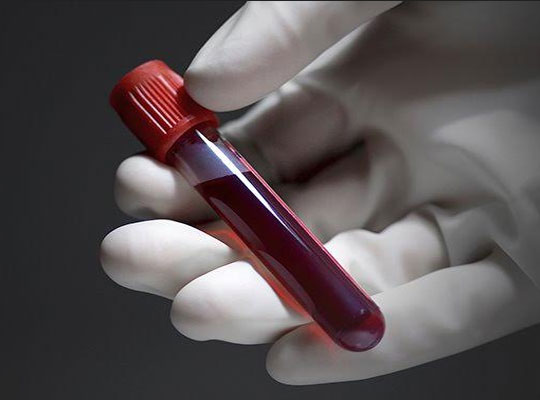
*The PSA test is easy. It’s just one more little vial of blood filled from the same blood draw as the rest of an ordinary blood panel at a man’s annual physical.

*False positives are easily addressed. It is sometimes said that the occasional false positives of a PSA test result in “unnecessary treatment” but that’s not true. What it results in is further investigation in the form of non-invasive imaging and perhaps a tissue biopsy. The imaging is painless, though the biopsy is less so.

*Some prostate cancers kill quickly. The quick-killing ones, once discovered, can be distinguished from the slow-growing ones by ongoing monitoring. If warranted, they can be treated. If Joe Biden had received PSA tests as part of his ordinary annual medical exams, his rapidly advancing cancer would have been detected and would have been treated. Such treatment probably would have saved him from the cancer.

*Overtreatment in a minority of cases does not justify ignorance and non-treatment in the majority of cases. The solution to the problem of overtreatment of slow-growing cancers is not to stay ignorant of all cancers; it’s to avoid overtreating the slow-growing ones.

*Prostate cancer does kill. While it is true that the majority of men survive prostate cancer, it remains the number two cancer killer among American men (second only to lung cancer) simply because it’s very wide spread. It’s true that death by prostate cancer is usually slow but, to me, that makes it all the worse.

My personal opinion is that we should give the PSA test to old men, but use common sense in treating the cancers that are found. A slow-growing prostate cancer in a 78-year-old man with numerous co-morbidities and a life expectancy three years is a different story from a fast-growing prostate cancer in an otherwise healthy 73-year-old man with a life expectancy of 15 years.

Feel free to weigh in with your thoughts.

The Bidens must have known about his cancer for years

First, my sympathies for the Biden family. I’ve been there.

Now, here’s my puzzlement. Prostate cancer is notoriously slow-growing. Although prostate cancer is the second-leading cause of cancer deaths among men (second to only lung cancer), that’s not because it’s so deadly, but because it’s so common. It’s a fact that more men die with prostate cancer than of it.

Of those who die, the typical mechanism of death is by the cancer cells metastasizing to other organs and/or to the bones. It takes years for that to happen – typically something like 5-10 years even without treatment, and even longer with treatment.

Even after the metastasizing occurs, death is usually half a dozen years away or more. After all, the cancer cells are still slow-growing prostate cancer cells, even though they’re now in a new home in another organ or in the bones.

The usual treatment for prostate cancer is to remove the prostate gland, a walnut-sized gland “down there” whose main function is to provide the ejaculate that is the vehicle for sperm cells produced in the testicles. After a prostatectomy, a man can still have an orgasm, and it’s a much tidier affair. The surgery is usually done with what’s often called a “robot” but, in reality, is a human-operated arthroscopic system that utilizes fine motor controls and a viewing system.  

An alternative treatment that is often elected is radiation treatment. The prostate is irradiated five times a week for about six weeks. In one of nature’s happy coincidences, prostate cancer cells are more vulnerable to radiation than normal cells. The intended result is for the prostate cancer cells to die (or, more accurately, be sufficiently damaged that they cannot reproduce) while the other cells survive.

In practice, the radiation damages other cells to some extent, which sometimes inconveniences the patient with regard to, for example, urinary and sexual functions.

Neither approach is thought to directly impact a man’s cognitive function. But it should be mentioned that prostate cancer is a disease of older men. Radiation five times a week for six weeks has an effect on older men, even when the radiation is all below the waist. And being under anesthetic for four hours for a prostatectomy is not trivial trauma for a 75-year-old man.

Both treatments are effective, but recurrences are common. A prostatectomy tends to leave at least a few viable cancer cells behind in the prostate “bed” from which the prostate gland is removed. Radiation treatment, too, is known not to kill all the prostate cancer cells. The hope is that it kills enough of them that the man dies of something else before the remaining ones regroup and reproduce.

If the cancer has spread beyond the prostate – i.e., it has metastasized – then all bets are off. Neither a prostatectomy nor radiation treatment are directed toward anything other than the prostate gland.

The announcement from the Bidens is that he has “an aggressive form” of prostate cancer which has metastasized to his bones. The particular bones are not specified, but the hips and pelvis are the most likely. Nor is it specified to what extent the bone metastasis has taken place.

In advanced stages, metastasizing will spread to many bones. The common symptom is worsening bone pain, a deep, achy, persistent and ultimately agonizing sensation.  

Prostate cancer is usually detected long before any symptoms are noticeable. A routine blood test, which is part of every older man’s annual physical, measures a compound called “prostate specific antigen” or PSA.

Elevated levels of PSA suggest, but do not prove, prostate cancer. The doctor typically orders up further tests to confirm the suspicions. The ultimate confirming test is a biopsy.

Here’s my puzzlement. How is it that Biden’s first inkling that he has prostate cancer is when it has metastasized to his bones, given that metastasizing takes years and he presumably has been getting PSA tests at least annually?

My guess is that the Bidens have known of his cancer for a long time. It’s quite possible – nay, it’s likely – that he has undergone radiation treatment for it. (Prostatectomy treatment appears out of the question, because reports are that a nodule was discovered on his prostate; so it’s still there.)

The radiation treatment appears to have ultimately failed, as it not infrequently does. When the cancer became detectable again, it would have produced elevated PSA levels. By the time it was metastasizing, those levels would be very high.

Again, this does not happen in a matter of weeks or months, but years. It’s inconceivable that the Bidens were unaware of this cancer last November.