
Should we kill all the alligators, or get out of the swamp?

Lawyer advising client engaged in expensive litigation: The goal should be to get out of the swamp, not to kill all the alligators.

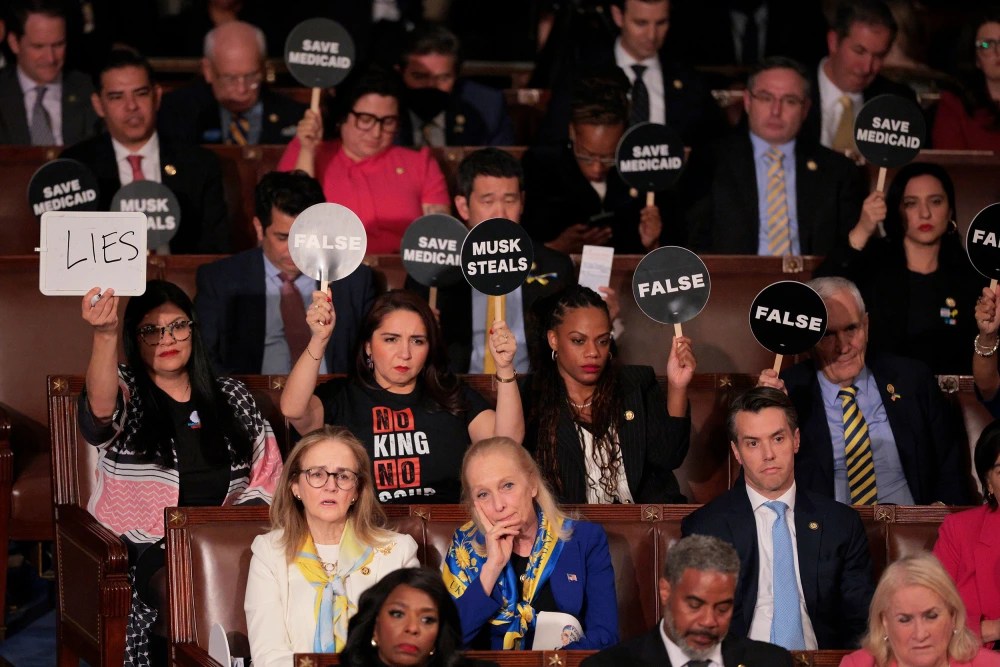
Dishonest media-alligators undermined President Trump’s first Presidency with bogus charges of Russian collusion. Corrupt deep state-alligators fabricated allegations to defeat his re-election in 2020. Partisan prosecutor-alligators in New York and Georgia brought bogus charges in trying to derail his election last year.

Overreaching judge-alligators in some of the federal district courts now seek to undermine his national security policies – an area that the Constitution largely reserves to the President. 

It’s a testament to Trump’s courage and stamina – and to the nation’s structure and people – that he has fought and mostly beaten the alligators over the last ten years. In his spare time, he got himself elected President twice and survived two assassin-alligators.

He’s been up to his elbows in alligators. I understand why he’s going after them now. I probably would, too.

It’s also important to note, in fairness to Trump, that we didn’t elect him to get us out of the swamp; we elected him to drain it. Draining the swamp is inevitably hard on the alligators who feed there.

But here’s the issue. Not all of Trump’s targets today are alligators and not all are even in the swamp. 

Such as Big Law.

I don’t expect you to feel sorry for girly men and manly girls pulling down seven-figures to say res ipsa loquitur. And it’s a fact that Big Law (which I’ll define as the several dozen American law firms with over 1,000 lawyers) is a mostly liberal crowd. That is evident from their political contributions which are largely to Democrats, and from their pro bono activities which are mostly for liberal causes.

But you could say the same thing about nuns. (Not the seven-figures part.)

In my practice, seldom did I see Big Law behaving like a political institution. In fact, the firms that comprise Big Law are rivals which rarely act concertedly or even cooperatively. Rather, they make a good living by fighting with one another on behalf of their opposing clients.

Those clients are notably moderate, since the executive ranks of the Fortune 500 include very few radicals. In their choice of lawyers to represent them in their next billion-dollar merger or bet-the-company antitrust case, they aren’t exactly looking for Che Guevara.

As for individual lawyers, the recipe for success in Big Law has nothing to do with political leanings. The recipe is: do great work, have great clients, and bill great hours. (I had at least one of those ingredients when I was in Big Law, and wound up doing OK.)

Big Law is simply not an alligator, and, even if it is, it’s not in the D.C. swamp (with the possible exception of the firm that was involved in the Steele Dossier, an involvement from which the firm has distanced itself after the departure of a key lawyer).

Even if Big Law firms are indeed Democrat institutions, notwithstanding what I’ve pointed out above, being a Democrat merely makes a person hypocritical, socialistic, loathsome, and halitotic. It doesn’t make them a criminal.

So, is it appropriate to bring the enormity of the U.S. Government to bear on private enterprises like Big Law for the sin of choosing one political doctrine over another?

If so, then why limit it to Big Law? Why not have the government go after Big Business for their political leanings? Why not go after Big Billionaires for theirs? Why not go after Big You and Big Me for ours?

Why not go after Big Nuns?

Before you moan “damned straight!” consider the fact that someday there will be another Democrat President, someday there will be another Democrat Congress, and someday there will be another Democrat Supreme Court.

If America is to continue, it will be as a nation of predictable laws and sound principles, not a series of regimes exacting revenge on their predecessor regimes.

That said, I can hardly wait for Trump and Musk to bring down the teachers’ unions.

Glenn K. Beaton practiced law in the federal courts, including the Supreme Court.
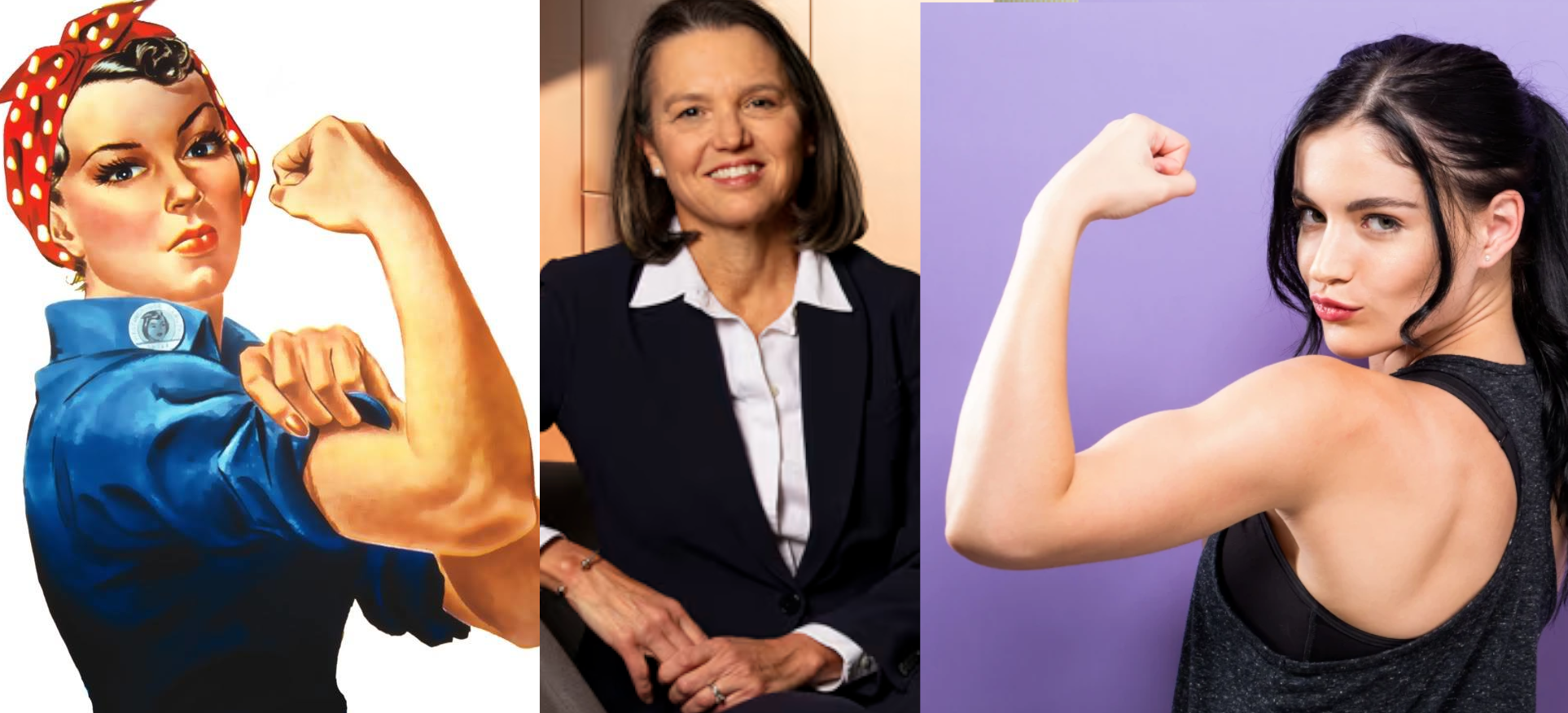
Columbia is led by a mom. They need a leader.

Moms are wonderful creatures. They soothe, and they smooth. They resolve conflict with milk and cookies. Without moms, we wouldn’t be here.

Not all women are moms. Joan of Arc was not a soother or a smoother, and was never a mom. Nor was Amelia Earhart or Queen Elizabeth I.

Even among strong women who were mothers, not all were moms. Golda Meir and Margaret Thatcher had children but, to the public at least, they were not moms. Some women can change from a skirt into pants and back again, depending on the setting, and maybe Meir and Thatcher did. Others can’t.

My point is, a “mom” is a collection of feminine traits possessed usually by women (and occasionally by men) which are very useful in the right circumstances.

Being in charge of Columbia University in the year 2025 is not the right circumstance.

Let’s back up. Universities have been left-leaning for at least two generations. That leftism has been reinforced in recent years by federal money. Both public and private universities receive billions in federal tax dollars. Politicians on the left always liked that, because they liked the leverage they get with that money.

“Promote leftist ideology, or we’ll withhold the money,” they told the universities. It’s not that they needed to bully universities into promoting leftist ideology – the universities were happy to do that without being bullied – but lefty politicians bullied them anyway because they just enjoy bullying people.

After the October 7, 2023 massacre, Columbia became a hotbed of terrorist sympathizers. The sympathizers sought not just to support terror abroad, but to import it into America. They terrorized Jewish students and violently advocated the eradication of Israel along with its Jewish inhabitants.

The leaders of Columbia turned a blind eye to this terror. That’s because Columbia is a leftist place, and the left hates Jews.

The reasons the left hates Jews is a bigger issue, but it boils down to: (1) They see Judaism, correctly, as a pillar of Western Civilization, and they hate civilization; (2) They see Jews as typically being very meritorious, and they hate merit because it interferes with identity politics; and (3) They just hate Jews.

The left often gets a pass for their Jew-hate on the grounds that Jews are usually not dark-skinned. After the horror of 10/7, our leading universities not only equivocated in their condemnation of the terror, they seemed to sympathize with the terrorists.  

The gentlepersons of Congress invited the leaders of Columbia, Harvard, Penn, MIT and other universities to testify about this misplaced sympathy for terrorists.

Those leaders suggested – apparently in coordination beforehand – that calling for the annihilation of Israel, harassing Jewish students, and encouraging violence in antisemitic protests might or might not be acceptable depending on the “context.”

History is still being written on the ultimate outcome of that testimony, but the history-writing is over for at least three of those university leaders. Public outcry forced them out of their presidents’ offices and back to the safe ivory towers of their professorships.

The replacement president of Columbia joins a long and distinguished line of presidents there, including Dwight D. Eisenhower. This new one is a doctor – a real one, not a “Doctor” Jill. She’s a smart woman.

She’s also a mother of three and, as I’m about to explain, a mom.

President Trump is not. As promised, he has taken higher education to the woodshed. He has demanded that universities put an end to their systemic antisemitism. He has threatened to cut off the federal money spigot if they don’t rejoin civilized society.

The mom who is newly in charge at Columbia did what moms do in such circumstances; she smoothed and soothed. Trump had a list of about three principal and principled demands. She said “yes, yes and yes.”

Then she went back to Columbia and got an earful from the leftist faculty there, demanding that she rescind her agreement with Trump. To the faculty, she said “OK, OK and OK.”

Then the Trump administration got wind of her rescission. They demanded that she publicly and humiliatingly reiterate her earlier agreement to their demands. They demanded she rescind her rescission.

She again said, “yes, yes and yes.”

Now neither side trusts her, for good reason. Whatever she does, both sides will suspect and allege she’s not doing what she promised them she would do.

I doubt milk and cookies will smooth this over.

Liberals imposed their racial discrimination by attaching strings to federal money. How’s that working out now?

Executive orders and administrative agency rules going back to the 1960s required businesses contracting with the U.S. Government to engage in “affirmative action.”

That was the euphemism of the day for racial discrimination. They couldn’t just call it “racial discrimination” because that term had, naturally and appropriately, developed a negative connotation. It suggested a world where people were judged not by the content of their character, but the color of their skin. 

Over the ensuing decades, that euphemism “affirmative action” developed a similar negative connotation. By favoring people with certain skin colors, “affirmative action,” just like “racial discrimination” before it, suggested a world where people were judged not by the content of their character, but the color of their skin.

And so, the euphemism “affirmative action” was retired in favor of a new euphemism, “Diversity, Equity and Inclusion.” Capitalizing the words was evidently to make the term look grander.

Moreover, the capitalized words lent themselves to acronymizing into “DEI.” We thus doubly disguised “racial discrimination” with the use of an acronym for a euphemism.

But the double disguise was deliberately transparent. Everyone knew “DEI” meant “Diversity, Equity and Inclusion,” which meant “affirmative action,” which meant “racial discrimination,” which meant that people were judged not on the content of their character, but on the color of their skin. 

These farcical theatrics reached their comedic conclusion with “President” Joe Biden, who promulgated Executive Orders, probably signed by autopen while he was mindlessly eating ice cream cones, requiring that companies doing business with the government submit written statements certifying their commitment to judging their employees by the color of their skin and not by the content of their character.

The requisite commitment to racial discrimination was not limited to government contractors. Practically everyone receiving federal money – and that’s practically everyone – had to show they were committed to racial discrimination. Schools receiving DOE money, cities receiving HUD money, states receiving DOT money, anybody getting any money from any government alphabet – hell, the whole world – had to show its DEI commitment.

But alas, DEI, like its predecessor euphemisms, had already taken on a negative connotation of being what it was – an acronym for Diversity, Equity and Inclusion, which was a euphemism for affirmative action, which was a euphemism for racial discrimination.

It was time for a new euphemism. Conveniently, a new President had just been elected.

But the new President did something no President had done in generations. He effectively said, “No more racial discrimination, regardless of what acronym or euphemism you choose to call it by.”

He said he was reversing the Executive Orders and abolishing the federal regulations that required companies, schools, cities and states to certify their commitment to racial discrimination.

He even said he would require the opposite from them – he would require them to certify that they do not engage in racial discrimination. And he has threatened to withhold federal money from them if they continue their racial discrimination.

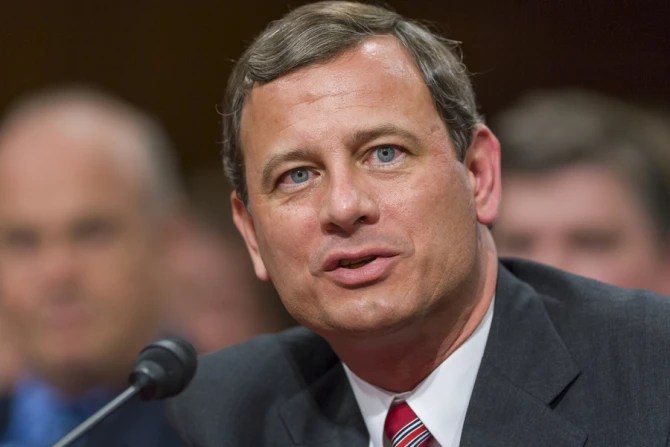
In all of this, he appears to have the Supreme Court on his side. Chief Justice John Roberts declared in a case some years ago that:

“The way to stop discrimination on the basis of race is to stop discriminating on the basis of race.”

For that tautology, liberals of course called him a racist. But he and a majority of the Supreme Court finally followed through in a case two years ago outlawing racial discrimination at the liberal establishment’s headquarters, Harvard University.

Of course, some schools and companies will simply provide false certifications. They will certify that they don’t engage in racial discrimination, even as they continue to. People who employ acronyms and euphemisms to disguise their actions can be expected to similarly employ lies to conceal those same actions.

But this is a start. And to put teeth into it, the President has at his disposal an entire Department of Justice which appears newly devoted to real justice – not the social kind.

Is it productive for Trump to push legal limits?

I won’t leave you in suspense. I’m a lawyer, so the answer is sometimes yes, sometimes no.

If you’re in the tribe that thinks whatever Trump does is wrong, or the opposite tribe that thinks whatever Trump does is right, then read no further. Just skip the analysis and instead warm up your cheers or your jeers for the Comments below, as your tribe dictates.

But if you’re in neither tribe, but are just a political partisan (which is different than being in a tribe) or a political neutral (are there any these days?) then read on.

It’s important to recognize at the outset that Presidents push legal limits all the time, and they often lose when the matter is adjudicated in the courts. The actions of Joe Biden’s administration were frequently struck down as being in violation of applicable laws or Constitutional provisions. That includes actions on important matters concerning the immigration laws, the environmental laws, the deference to administrative agencies, the wage laws, and student loan forgiveness.

Before you exclaim “Yeah, Biden was a crook,” be aware that this is something that just happens with Presidents, including Bush, Obama, Reagan and nearly every other one. Abraham Lincoln illegally suspended the Constitutional habeas corpus rules, thereby precluding wrongly imprisoned American citizens from seeking court reviews of their cases.

(All that said, Biden was indeed a crook.)

It would be a simpler world if the good guys and bad guys and all the rest of us always knew exactly what’s legal and what’s not. We’d just send the bad guys to jail when they did something that’s not. We wouldn’t need trials, courts, judges and juries.

But our world is complicated and fact-dependent, and so is the law.

That’s why I have no problem with President Trump testing the limits. If he didn’t, he wouldn’t be doing his job – a job I voted for him to do, three times (in three elections, I hasten to add).

A good example is the issue of birthright citizenship. The 14th Amendment appears to state that a person born in this country is automatically a citizen of the country, regardless of whether the mother is in the country legally.

But the Amendment contains a vague qualifier “subject to the jurisdiction thereof.” Trump’s argument is that this qualifying phrase excludes from citizenship a baby born in this country if its mother is here illegally. 

Although I hope Trump’s argument will succeed, I think it ultimately will not. But it’s a non-frivolous argument, and I would not be shocked if the Supreme Court ultimately buys it (though I would indeed be surprised).

In such a case, it’s fine for President Trump to make the argument. Let it go up to the Supreme Court, as Trump has requested, and let them decide the matter. That’s the way the system is supposed to work, and it nearly always does.

By the way, six of the nine Supreme Court Justices were appointed by Republicans who might lean toward Trump’s view of the matter.

(Here’s where you can complain that some of the Republican-appointed Justices are not “real conservatives.” Fine. But if that’s the case, then the blame lies with the Republican Presidents who appointed them – who was President Trump in his first term in the case of three of the six.)

Now here’s where things get dicey. What happens if Trump’s argument on birthright citizenship fails at the Supreme Court?

Trump himself has said he has no intention of violating court orders. That should end the matter. If it doesn’t, then we truly have a crisis, and I don’t mean that in a good way.

We had a hint of a crisis this week. The Department of Justice put Venezuelan immigrants alleged to be gang members on planes to deport them. There was apparently no contention that they were here legally, but there was also no due process finding that they were indeed members of the identified gang.

A judge ordered that they not be deported for another two weeks so that the matter could be given minimal due process. Meanwhile, the individuals were safely in the DOJ’s custody.

The judge at a hearing explicitly told the DOJ that they should instruct any planes already in the air to turn around. However, the judge’s subsequent written order did not include that instruction.  

Be aware that judges often issue orders orally. There’s no magic about reducing an order to writing.

But the White House has contended that the absence of the judge’s oral turn-around order in his written order meant that it was no longer in effect. Therefore, they say, they were free to let the planes proceed without intending any violation of the court’s order.

I find that argument dubious.

But I’m very glad they made that argument, rather than simply stating “We don’t follow court orders we don’t like from judges we don’t respect.”

That sort of belligerence would be unconstructive, and would cost Trump the support of most Americans. We’ve come too far to lose it all in an ill-advised cafeteria food fight.

Unfortunately, however, that’s the belligerence I’m seeing in some of the internet commentary from the tribe.

Let’s look at the big picture. In virtually all democracies (almost by definition), the final interpretation of laws is made by the judicial branch, not by an executive branch. The Constitution that we conservatives hold dear requires the executive to defer to the courts in interpreting the nation’s laws.

If the executive doesn’t like a law, his remedy is to get the law changed if the people’s representatives concur. It’s not to say “I can do whatever I want because the people elected me.”

That could be our system, but it clearly is not. If it were, then all the judges – and, for that matter, all the legislators – could just go home. But it would be to a very different home.

Glenn K. Beaton practiced law in the federal courts, including the Supreme Court.
Liberals lost their “cool”

Tesla electric cars were cool a few years ago. They signaled all the virtue of a Toyota Prius, but without the ugly body shape and C-O-E-X-I-S-T bumper sticker. And they were a lot faster.

Electric vehicle devotees – you probably know some – hailed the immigrant behind Tesla as an engineering genius and good green guy. His immigration to the United States was not illegal, but even that wasn’t held against him. He was the liberals’ favorite African-American since the Hawaiian dude.

That’s all so 2023.

Tesla cars haven’t changed much. They’re still electric, still look better than a Prius, still come without the bumper sticker, still get you 0 to 60 mph in the bat of an eye, and still get you 0 to $7,500 with a lightning-fast tax credit paid for by conservative schmucks driving F150s.  

But people didn’t buy Tesla’s for the car, or even the tax credit. They bought them for the cool. Liberals thought or at least believed that they could be cool by saving the planet, while being cool while showing people they were cool, while being cool.

How cool is that?

Ah, but their do-cool lacked due-diligence. Turns out, their darling EV immigrant from Africa is a Republican.

Egad!

And this Republican African-American (call him Uncle Elon) failed to mention his Republicanism when they bought the car.

Liberal buyers just assumed he was one of them. After all, only one of them would sell an overpriced car that might take hours to fill-er-up at electricity filling stations that are spaced wider apart than the car’s range – all for the sake of coolness.

But it turned out that this brilliant entrepreneurial scientist wasn’t one of them at all. Sure, he’d sold them exactly what he promised – a car deemed cool by the enviros – but he himself wasn’t enviro-certified.

By failing to inform his buyers at the point-of-sale that he was not a liberal, Uncle Elon had tricked them.

Liberals were then faced with a choice. Should they save the planet by driving an enviro-car made by a hated Republican, or save their coolness by ditching the car and nurturing their hate for the Republican?

Of course, they chose to save their coolness and nurture their hate. Liberals won’t let the damned planet stand in the way of their coolness and hate.

When it comes to their hate, they won’t even let the law stand in the way. They’re now vandalizing Tesla cars and torching Tesla dealerships.

To my way of thinking, that’s not cool.

There’s a broader point to be made. This Tesla trashing is a microcosm of something bigger. Liberals in general aren’t cool anymore.

Their peak coolness was with that Hawaiian dude. He was destined to stop the rise of the oceans (and he apparently did – they’re barely rising), save the planet, and “fundamentally transform” an America in need of it.

It went downhill from there. Joe Biden is remembered as a lazy, senile, corrupt doofus, stuffing his face with an ice cream cone. He was much worse than that, policy-wise, but you can get away with a lot of bad policy as a Democrat so long as you stay cool (see, Hawaiian dude). Joe didn’t.

Then, the Democrats hopped aboard the tranny train. At first, it seemed kinda cool. It reminded them of scenes they pretended to have participated in, like Woodstock and Selma.

But then the tranny thing got out of hand. There were pre-K tranny story hours, trannies in the girls’ bathrooms, and trannies beating and even crippling girls in sports.

Not cool. Trannies fell out of fashion.

Then, liberals decided to help poor, oppressed Latin Americans yearning to breathe free. All 664 million of them. Their help was in the form of abolishing the southern border to the United States, inviting them in, and giving them drivers licenses and welfare. A good many were criminals – even gang members.  

Not cool. Illegal immigrants fell out of fashion.

So, what do you do?

Well, if you’re a liberal, you figure you can recapture your coolness with a few new props. Ditch the Tesla (tell the insurance company it was stolen) and buy a Ford F150. Get one with monster tires and a big chrome grill, and be sure to tailgate the Tesla in front of you.

And if you’re a conservative, well, you don’t want to be caught dead in a F150. Trade it in for a Tesla. You can get a good deal right now. When the monster pickup behind you tailgates and flashes his lights at you, be sure to tap the brakes and give him the one-finger salute.

And the first one now will later be last, for the times, they are a-changin’

Robert Zimmerman

Chief Justice Roberts isn’t your hired gun

The Republican-appointed Justices on the Supreme Court are now six of the nine. Unsurprisingly, the ideological tilt of the Court is more conservative than it’s been in two or three generations.

It shows. Last year, the Court took the conservative side in reducing deference to administrative agencies; deciding expansively in favor of presidential immunity (which of course benefits both liberal presidents and conservative ones, but the particular case that was decided benefited a conservative one, namely Donald Trump); limiting the obstruction of justice laws (which could also benefit liberals, but the particular case decided concerned the Jan. 6 protestors); allowing the removal of vagrants from public property; and striking down a ban on “bump stocks” that are used to convert a legal semi-automatic rifle into something akin to a “machine gun.”

In the few years prior, the Court took the conservative side in outlawing affirmative action in universities; overturning Roe v. Wade; limiting the president’s power to cancel student loans; and siding with religion over gender rights.

But that’s not enough, some of our tribe are howling. Some of the six Justices appointed by Republicans are not toeing the party line, they complain.

Indeed, in a few recent cases, Chief Justice Roberts and Justice Amy Coney Barrett, in particular, and, to a lesser degree, Justice Kavanaugh, have failed to come out on the “right” side of cases. And so, they’re derided as something less than “real conservatives” because they have failed occasionally to vote with the conservative “block.”

The critics point to the three liberal Justices, who typically do vote as a “block.” Getting a fix on this, however, is not easy. As I noted above, sometimes it’s not obvious which side of the law is doctrinairely the liberal one and which is the conservative one, apart from the liberal and conservative litigants who happen to be litigating that particular case.

For example, if President Trump wants to do something in the next four years that is legally equivalent to canceling student loans, what people see as the “liberal” side and the “conservative” side of Presidential power could flip.

But I will admit that on other issues, the liberal and conservative sides are ascertainable apart from the identity of the particular litigants in the case. On those issues, it is fair to say that in recent cases the three liberals have pretty much voted as a block, while the six conservatives sometimes have not.

In support of that conclusion, one source notes that in the ten politically-charged decisions last year that were 5-4 decisions (meaning at least one conservative “defected”) the three liberals voted as a block every time, while the six conservatives split seven times.

Some in my conservative tribe shout that the conservative Justices should vote as a conservative block, just as the liberals vote as a liberal block. Fight fire with fire, goes the reasoning.

I see two problems with that approach. One is practical and the other is moral.

The practical problem, as I’ve already stated at least twice, is that it’s not always apparent which side of the law – apart from the particular litigants in that case – is the “conservative” side and which is the “liberal” side. Today’s case decided on an expansive reading of the Second Amendment could, tomorrow, present a compelling opposite decision on law-and-order grounds.

You see, individual rights – whether they’re Second Amendment or First Amendment or simply common law or statutory rights – do not exist in a vacuum.  For every “right” held by one person there is a corresponding obligation on other persons to permit the exercise of that right. One person’s right to free speech means other people have an obligation to hear or at least tolerate that speech.

That obligation sounds trivial, until the speech by one person that others are obligated to tolerate is speech advocating, for example, another Holocaust or a speech mocking a child’s disabilities or a speech that arguably incites violence or perhaps is defamatory or maybe it’s just simply untrue. 

The task of the law is to balance rights of one set of people with the obligations of the rest of the people.

It’s not easy. To say simplistically that conservatives stand for lots of “rights” for some people gets you nowhere, because it is to say, simultaneously, that they stand for lots of obligations for other people.

That’s the practical problem with demanding that conservatives vote as a block just because liberals do.

The moral problem is that we conservatives are better than that. In war – which, after all, is just politics in another form – one side sometimes commits war crimes. That does not justify war crimes by the other side. If it did, where would that end?

I’m glad Americans don’t commit war crimes just because our adversaries sometimes do, and I’m glad Supreme Court conservatives vote for the law, not for the litigants.

Mexico sues Smith & Wesson, Supreme Court shoots them down

One summer day in 1924, a train stopped at a station on Long Island. A man carrying a harmless-looking package ran to catch it. He struggled to board the train as it departed. One of the train employees on board reached for his hand as another on the platform gave him a boost from behind.

The package fell onto the tracks. It turned out to be a package of fireworks. The fireworks exploded. 

So, the exploding fireworks injured someone, right?

Not exactly.

The court opinion was written by Benjamin Cardozo, the brilliant judge who was then on the New York state supreme court (which they called, and still call, the New York Court of Appeals). Cardozo later became a storied member of the U.S. Supreme Court. In his words:

“The shock of the explosion threw down some scales at the other end of the platform, many feet away. The scales struck [Helen Palsgraf], causing injuries for which she sues.”

Today, of course, the phrase “injuries for which she sues” is redundant.

This case has been studied by generations of first-year law students. The legal question presented is, should the railroad be liable for Mrs. Palsgraf’s injuries?

Cardozo said the answer is no. People who are negligent are not liable for all the consequences of their negligence. They are liable for only those consequences that are reasonably foreseeable.

Cardozo seemed to accept for purposes of argument that the railroad employees were negligent in boosting the package-carrying man onto the train, and implied that the railroad might be liable if the package were labeled as combustible and the injury had occurred to that man.

But Mrs. Palsgraf was just too far away physically and causatively. The employees could not have reasonably foreseen (1) that their normal boost to a passenger carrying a harmless-looking package would knock the package out of his hands, (2) that the package would land on the hard tracks, (3) that the package would contain combustible fireworks, (4) that the fireworks would explode, (5) that the explosion would knock down heavy scales at the other end of the platform, (6) that the scales would fall onto Mrs. Palsgraf, and (7) that she would thereby be injured.

This principle in law is called “proximate cause.” A person committing a negligent act is generally liable for only the consequences that are “proximate” to that act – the ones that are reasonably foreseeable.

If the law were otherwise, imagine the weird outcomes. If you negligently run a red light, and three miles later someone jumps in front of your car, then you could be liable for his injuries. Because, after all, you would not have been at that exact spot at that exact time if you had not negligently run the red light three miles back.

Which brings us to Mexico.

Like America, Mexico has a gun violence problem. The guns are manufactured mostly in the United States, and smuggled illegally into Mexico. There, the guns are used by bad “we-don’t-need-no-stinkin’-badges” Mexicans to shoot good Mexicans.

Mexico has not been willing and able to address their gun violence problem any more than Chicago has. Putting gangsters in jail would cost them their votes, and might well cost them their lives.

So Mexico thought of another approach. They sued the American gunmaker Smith & Wesson back in 2021 for manufacturing and selling guns in the United States that were transported across the border into Mexico.

You see, Mexico is less interested in stopping gun violence by gun-toting gangsters who have, shall we say, “leverage” over the Mexican government, and more interested in profiting from the gun violence by taxing the manufacturers of the guns.

Mexico faced two obstacles in their case. First, there was the formidable Mrs. Palsgraf. The “proximate cause” between Smith & Wesson’s manufacture of the guns and the guns’ misuse by Mexican bandits was doubtful.  

Second, the United States had enacted legislation on this very point in 2005. Even if Mexico were to get past Mrs. Palsgraf, a law called the Protection of Lawful Commerce in Arms Act (the “PLCAA”) expressly insulates firearm manufacturers from blanket liability for the wrongful use of firearms that they legally sell.

Mexico filed suit anyway.

They didn’t file in San Antonio, which you’ll remember was the site of their last great victory over the Yanquis. And they didn’t file in Tennessee, where Smith & Wesson are located along with their friends Jack Daniels and Phillip Morris.

(Speaking of which, “Alcohol, Tobacco and Firearms” should be the name of a convenience store, not a government agency.)

Mexico instead filed suit in a federal district court located in . . . Massachusetts.

That was clever.

But it didn’t work. The District Court judge tossed the case.

Mexico then appealed to the federal court of appeals sitting in . . .  c’mon, you know . . . Boston.

That did work. The Court of Appeals reversed, in deciding that Mexico had a viable case.

Don’t think the fix was in at the Court of Appeals, however. The opinion was written by a judge appointed by a President with a distinctly un-Mexican name, Barack Obama.

Smith & Wesson then appealed to the Supreme Court, now dominated by six conservative-ish Justices, three of whom were appointed by our conservative-ish President. The Supreme Court is not in Boston and is not even in Massachusetts. These days, it’s in Heaven.

The formal opinion of the Supreme Court won’t be issued until around June, but the Justices were not exactly poker-faced at this week’s oral argument. The conservative Justices practically laughed at the arguments of the American lawyer who represented Mexico.

Even two of the three libs asked questions that seemed hostile to Mexico’s case. That included a Justice who is liberal but (or is it “and”?) very smart, Justice Kagan.

What’s the lesson? Sometimes, the wheels of justice turn slowly, but grind exceedingly fine. Adios amigos.

Glenn K. Beaton practiced law in the federal courts, including the Supreme Court.

 Denver’s mayor is out to lunch – but he might be the only one

Have you seen the Denver restaurant scene? Me neither. It’s dead and gone.

In a one-year period, the number of restaurants in Denver declined by 183. Of all the restaurant closures in Colorado last year, 82% were in Denver – a place that has only about 12% of the population of Colorado.

Average profits at the few surviving Denver restaurants are only 3-5%. Anyone who dines out knows that this isn’t because prices are down. It’s because costs are up. Restaurant wages in Denver are up 89% since 2019.

The main reason is Denver’s minimum wage of $18.81/hour for ordinary workers and $15.79 for tipped workers. For comparison, in New York City the minimum wage for both is $16.50.

That’s right, the minimum wage for ordinary workers in Denver such as kitchen staff is much higher than in New York City, and for tipped workers such as servers it’s almost as high. For both, it’s higher in Denver than in Aspen.

The mayor has a solution for the unprofitability and resulting demise of Denver restaurants. His solution is . . [drum roll] . . . to slap an extra tax on your tab to make dining out even more expensive.

He proposes tacking a 20% surcharge onto every restaurant tab. The proceeds, he says, would be distributed not to the restaurant owners, but to the non-tipped restaurant staff – the kitchen workers who already enjoy a 20% higher minimum wage than the tipped staff. He says the system that has ruled restaurants forever, where servers who are tipped for good service often take home more money than kitchen staff who are not, is “inequitable.”

That’s not what the market says. The market says the tipped servers have a combination of people skills, hard work, charm, and the ability to remember the orders of half a dozen patrons at once, that makes them very valuable. In other words, they merit more money for their work because their work has more merit.

But what does the market know in comparison to the mayor of Denver? You see, we can’t let merit as defined by the market get in the way of “equity” as defined by the mayor.

As is usually the case with socialist redistribution schemes, there’s a sneaky something in this for the government, too. The 20% surcharge would be “topline” and so the city and state sales tax of 8.81% would apply to it.

That’s right, the city would tax their own surcharge – they would tax their own tax. The total surcharge would thus amount to 20% plus 8.81% of 20%, for a total of almost 22%.

Unsurprisingly, the Colorado Restaurant Association is not thrilled about the mayor’s proposal, to put it mildly.

“It’s government policy that is causing the problem in the first place,” said one member of the Association. “Basic economics tells you that when you want to encourage sales, you lower prices — not add 20% more plus tax to everyone’s costs,” said another. “This won’t fill restaurants any more than raising rents would fill empty office buildings,” said a third.

The remark about empty office buildings in Denver hits another nerve, which I’ll save for another column.

The mayor is on quite a roll. Last year, he spent zillions of dollars of Denver taxpayer money on two pet projects: Attracting more illegal immigrants and attracting more vagrants. He succeeded in both.

Along the way, he taunted the federal immigration authorities. He said after the election that he was willing to get himself arrested and sentenced to prison for interfering with their enforcement of the nation’s laws. He boasted that his little insurrection might put him on the wrong side of the law, but the right “side of history.”

Sounds a little like another Democrat from another era, Bull Connor.

The response of the Feds was along the lines of “Make my Day.”

The mayor’s vanity projects don’t come cheap, and money is scarce, especially as the mayor risks losing federal grants. After spending millions on vagrants and illegals, Denver lacks money to pay for basic services such as parks and libraries.

But the mayor has a solution to that problem too. He proposes to borrow money.

Notice the shell game here. The mayor took ordinary city funds that would ordinarily be spent on ordinary city services, redirects them to spend on illegals and vagrants instead, and then seeks to borrow money to replace those ordinary funds in order to fund the ordinary city services.

Does he imagine that we’re unable to see that the economic reality is that he’s borrowing money to pay for the illegals and vagrants?

The mayor didn’t say how much he wants to borrow, as he doesn’t want to lock himself into an amount that he’ll then exceed. It’s like the Left’s reply when you ask them to put a number on the “fair share” that people who have more money than they do should pay in taxes. Their number is “more.”

I don’t usually resort to name-calling. It’s a primitive form of debate, it’s not very persuasive, and it’s not very enjoyable. The most important Latin I learned as a lawyer was res ipsa loquitur.

But I’ll make an exception here. The mayor of Denver is a nut job.

Trump v. Zelensky cage match: Whaaat?

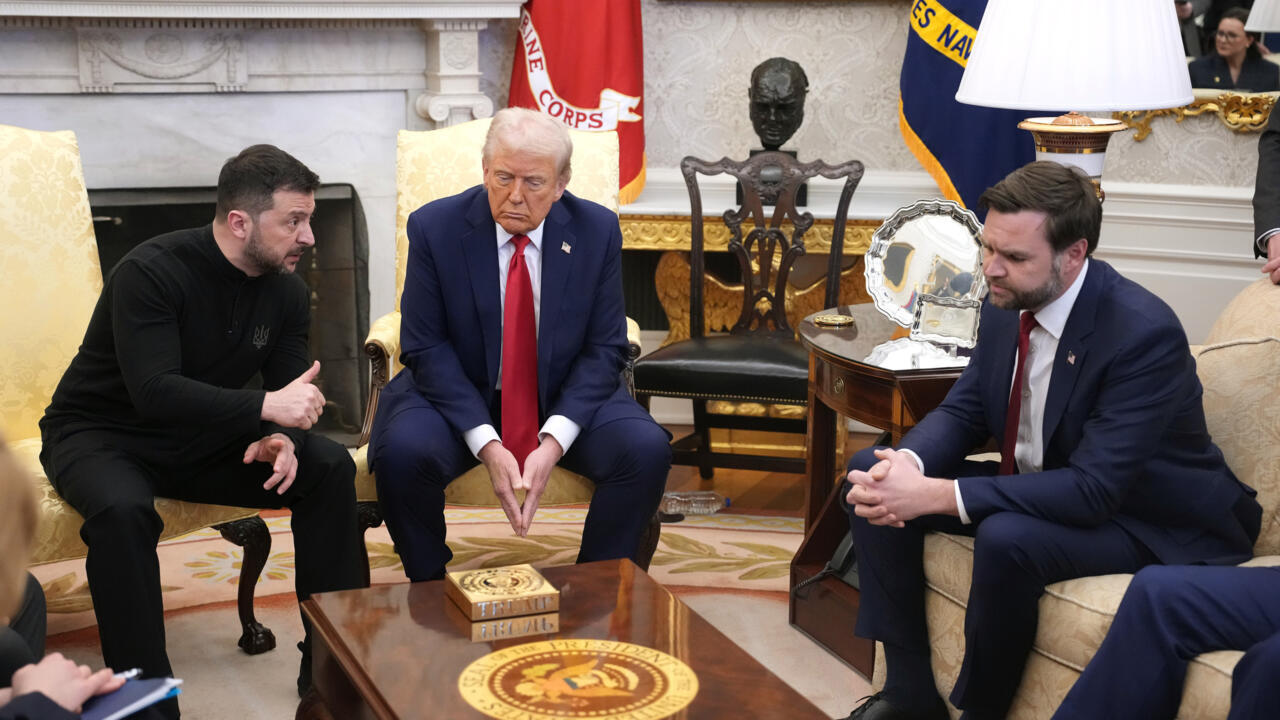
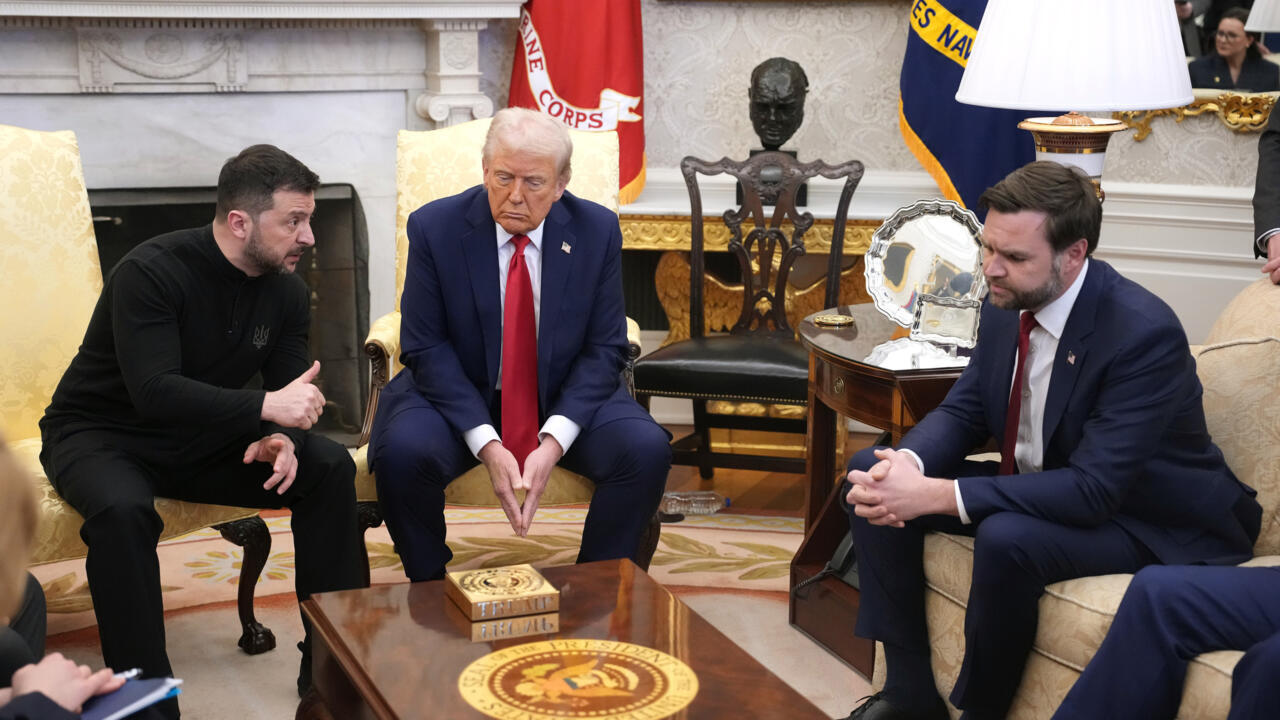
The White House event “Trump and Zelensky Meeting Staged for Media” somehow turned into “Trump v. Zelensky Cage Match.”

How did that happen? My theory is that it wasn’t exactly an accident, but it didn’t play out the way either side intended.

Bear in mind that both leaders are experienced actors – Trump as a reality TV host and Zelensky as a stand-up comedian. (Yes, Trump really was a reality TV host!) Both saw the meeting as a stage. They intended to communicate not with one another – that could have been done better in private – but with millions of viewers.

Trump is eager to end the Ukraine war. So too is Zelensky. However, they obviously differ on the terms of peace. Trump wants more Ukrainian concessions than Zelensky wants to give.

That’s particularly true in the real estate department. To a guy like Trump with some knowledge of real estate, the path to peace is simple: Ukraine should give up some potato fields, beneath which are more land mines than potatoes at this point.

To Zelensky, those potato fields are Ukrainian, and he’ll be damned if he’ll give a single potato to the Huns from the east. Those potatoes are owned by Huns from Ukraine, by golly.

Trump’s team (probably with J.D. Vance in a lead role) arranged this meeting not to achieve a meeting of the minds. They don’t care to meet Zelensky’s mind, and, even if they did, why make a reality show out of it?

The reason for the public meeting was to lock Zelensky into a deal, sort of. Everyone would make nice. Trump would suggest a vague peace-for-land exchange. Zelensky would nod – noncommittally, but he’d still nod. After all, the real estate of war-torn eastern Ukraine is not exactly Mar-a-Lago. 

The end result would be a step toward peace where Ukraine gives up some land, Russia goes home, mostly, and Trump takes credit.

“Mr. President, the Nobel Prize Committee in on line four!”

Zelensky had probably been briefed on the outlines of this show. He had time to get truly outraged, and time to script some faux outrage as well.

By the way, who shows up for a televised meeting in the White House with what we used to call The Leader of the Free World wearing a sweatshirt?

Someone who is pretty full of himself, that’s who. When asked by a reporter (reporters are known for their sartorial splendor, you see) whether he even owns a suit, Zelensky replied that he would wear one when the war is over. At the rate he’s winning, his post-war suit might be Captain Kirk’s old one.

In fairness, this Zelensky guy is under some stress these days. That stress showed in the meeting. Zelenski was having none of the peace-for-land deal, and he made that more than clear.

Fine, that land is Ukrainian (though there are a lot of ethnic Russians on it).

Zelensky’s mistake was to get a little too strident. Belligerent, even. He’d apparently been warned in advance not to get into a tussle with Trump, and especially not to get into a televised Trumpian tussle, but he did anyway.

Trump tussled right back, and also tag-teamed to his trusty televised Trumpian tussler, J.D. Vance.

And the cameras rolled.

When Zelensky got really pouty, Trump threw him out. I mean that figuratively (or literally, as the illiterates would say these days).

The losers in this misplayed reality show are Zelensky, the Ukrainian people, and Trump, in that order.

Zelensky and Ukraine lose because they have no options. Europe is not willing to defend Europe to the extent America has – with weapons, money and intel. Without America, Ukraine is borscht.

As for Trump, he lost the Nobel Prize that day, but the Nobel Committee will never give it to him anyway. He also lost some negotiation leverage with Vladimir Putin, but the deal he’s negotiating isn’t his. It’s Ukraine’s, so who cares?

He knows Zelensky will be back, and might even be wearing a suit this time. Meanwhile, he perhaps turned American public opinion harder against the sweatshirt-wearing little comedian with no sense of humor.

There will be a land-for-peace cramdown on Ukraine because that’s the only peace that Putin will accept. After three years of ugly war, Putin has shown he might not be able to conduct much of a war, but he’s very patient.

Zelensky’s belligerence served to increase the amount of Ukrainian land that will be given up, and decrease the amount of peace that it will be given up for. Ironically, in making a bad deal worse, he made it all the easier for Trump to sell it to a war-story-weary American public.

Trump v. Zelensky cage match: Whaaat?

The White House event “Trump and Zelensky Meeting Staged for Media” somehow turned into “Trump v. Zelensky Cage Match.”

How did that happen? My theory is that it wasn’t exactly an accident, but it didn’t play out the way either side intended.

Bear in mind that both leaders are experienced actors – Trump as a reality TV host and Zelensky as a stand-up comedian. (Yes, Trump really was a reality TV host!) Both saw the meeting as a stage. They intended to communicate not with one another – that could have been done better in private – but with millions of viewers.

Trump is eager to end the Ukraine war. So too is Zelensky. However, they obviously differ on the terms of peace. Trump wants more Ukrainian concessions than Zelensky wants to give.

That’s particularly true in the real estate department. To a guy like Trump with some knowledge of real estate, the path to peace is simple: Ukraine should give up some potato fields, beneath which are more land mines than potatoes at this point.

To Zelensky, those potato fields are Ukrainian, and he’ll be damned if he’ll give a single potato to the Huns from the east. Those potatoes are owned by Huns from Ukraine, by golly.

Trump’s team (probably with J.D. Vance in a lead role) arranged this meeting not to achieve a meeting of the minds. They don’t care to meet Zelensky’s mind, and, even if they did, why make a reality show out of it?

The reason for the public meeting was to lock Zelensky into a deal, sort of. Everyone would make nice. Trump would suggest a vague peace-for-land exchange. Zelensky would nod – noncommittally, but he’d still nod. After all, the real estate of war-torn eastern Ukraine is not exactly Mar-a-Lago. 

The end result would be a step toward peace where Ukraine gives up some land, Russia goes home, mostly, and Trump takes credit.

“Mr. President, the Nobel Prize Committee in on line four!”

Zelensky had probably been briefed on the outlines of this show. He had time to get truly outraged, and time to script some faux outrage as well.

By the way, who shows up for a televised meeting in the White House with what we used to call The Leader of the Free World wearing a sweatshirt?

Someone who is pretty full of himself, that’s who. When asked by a reporter (reporters are known for their sartorial splendor, you see) whether he even owns a suit, Zelensky replied that he would wear one when the war is over. At the rate he’s winning, his post-war suit might be Captain Kirk’s old one.

In fairness, this Zelensky guy is under some stress these days. That stress showed in the meeting. Zelenski was having none of the peace-for-land deal, and he made that more than clear.

Fine, that land is Ukrainian (though there are a lot of ethnic Russians on it).

Zelensky’s mistake was to get a little too strident. Belligerent, even. He’d apparently been warned in advance not to get into a tussle with Trump, and especially not to get into a televised Trumpian tussle, but he did anyway.

Trump tussled right back, and also tag-teamed to his trusty televised Trumpian tussler, J.D. Vance.

And the cameras rolled.

When Zelensky got really pouty, Trump threw him out. I mean that figuratively (or literally, as the illiterates would say these days).

The losers in this misplayed reality show are Zelensky, the Ukrainian people, and Trump, in that order.

Zelensky and Ukraine lose because they have no options. Europe is not willing to defend Europe to the extent America has – with weapons, money and intel. Without America, Ukraine is borscht.

As for Trump, he lost the Nobel Prize that day, but the Nobel Committee will never give it to him anyway. He also lost some negotiation leverage with Vladimir Putin, but the deal he’s negotiating isn’t his. It’s Ukraine’s, so who cares?

He knows Zelensky will be back, and might even be wearing a suit this time. Meanwhile, he perhaps turned American public opinion harder against the sweatshirt-wearing little comedian with no sense of humor.

There will be a land-for-peace cramdown on Ukraine because that’s the only peace that Putin will accept. After three years of ugly war, Putin has shown he might not be able to conduct much of a war, but he’s very patient.

Zelensky’s belligerence served to increase the amount of Ukrainian land that will be given up, and decrease the amount of peace that it will be given up for. Ironically, in making a bad deal worse, he made it all the easier for Trump to sell it to a war-story-weary American public.