Glenn K. Beaton is a writer and columnist living in Colorado. He has been a contributor to The Wall Street Journal, RealClearPolitics, Powerline, Instapundit, Citizen Free Press, American Thinker, Fox News, The Federalist, and numerous other print, radio and television outlets. His most recent book is "High Attitude — How Woke Liberals Ruined Aspen"
There’s an odd little side show that caught my attention in the vaudeville act of “Dr.” Ian Roberts, the illegal immigrant from Guyana whom the Des Moines School District hired, heroized, and paid $300,000/year. (None of those particular things caught my attention in themselves, since they’re all par for the illegal immigrant course, these days.)
What caught my attention is that he’s registered to vote in Maryland, which was one of his waypoints on his grand and illegal tour through America. How, I wondered, did he manage to register to vote in Maryland?
It’s easy. In fact, it’s automatic.
Like about 18 other states, Maryland allows illegals to get driver’s licenses. Yes, it’s illegal for an illegal to be in America but, no, it’s not illegal in those states for them to get a driver’s license to drive around. Their presence is illegal, but their driving is not.
Okay, fair enough. On second thought, that’s not fair at all to the rest of us who wind up dodging illegals whose driving “skills” are the product of the roads and customs of such places as Guadalajara while we see our insurance premiums skyrocket.
But, anyway, there’s more.
In about 24 states, when the state issues a driver’s license, it automatically registers the person to vote – completely and willfully ignorant of whether the person is an American citizen.
Re-read that last paragraph. Yes, you got it right.
This scheme has a name. (The Democrats are great at branding things. See, e.g., “Affordable Housing,” “Reproductive Rights,” and “Me Too.”) They call this one “Automatic Voter Registration” or “AVR.” Democrats boast that AVR makes it easier to vote.
About that, they’re right.
Back to the erstwhile “Dr.” Ian Roberts. He got a driver’s license in Maryland while he happened to be on-the-lam there. Under their AVR system, Maryland automatically registered him to vote, as other states with AVR would have done.
Voila! He was in the country illegally, but had a valid driver’s license to drive around and was duly registered to vote.
Nothing odd or extraordinary took place. What happened undoubtedly happens thousands of times every day. It’s supposed to happen that way. There was no breakdown in the system. His voting registration was not a mistake.
The mistake was a bigger one. The mistake was a failure of American government. One political party has hijacked the levers, arms and dials of American government to produce deliberate and systematic voting fraud.
Question: What do you call a thousand lawyers at the bottom of the sea? Answer: A good start.
Old lawyer joke
Generally speaking, the people of Gaza are barbarians. That’s not true to a person, but it’s true as a people.
Their education level is extremely low, even in comparison to the education levels in Democrat-controlled big cities in America.
They live in abject poverty. Their economy is primitive and much of it is barter-based. Their currency, to the extent they use one, is the Israeli shekel but U.S. dollars and Jordanian dinars are in regular circulation as well.
Their unemployment rate is thought to be around 80%, though figures are hard to come by. There’s scarcely any industry. There are few stores, and their shelves are empty.
Most of this squalor is endemic. The Israeli occupation — which the Gazans brought on themselves — has worsened things, but things were already very bad.
About 98% of Gazans are of a religion that, according to many adherents, advocates the violent conversion or death of “infidels,” which are defined as anyone who does not believe in that religion, or who believes in it but interprets it in a manner deemed apostatic by the powers du jour.
The most hated infidels are the Jews of neighboring Israel. The Gazans are indoctrinated informally by friends, family and culture, and formally by the few schools in operation there, to hate the Jews, to kill them, and to destroy the nation of Israel. No hatred in the modern world equals the hate that Gazans feel for the Jews.
It’s likely that Nazi Germany hated the Jews less than the Gazans do.
Gaza is a cesspool of humanity, and the world would be better off without the Gazans. That sounds moralistic, and it is.
But not entirely. Ancient barbarians and, to some extent, even modern ones are the product of their culture. If I were born and raised in Gaza, to Gazan parents and surrounded by Gazan friends, family and propaganda, would I be any less barbaric than the Gazans? I like to think the answer is yes, but I doubt it. Civilization is not in our genes, but in our culture. Bad cultures produce bad people, and the Gazan culture is bad.
In any event, we have Gaza, and we have Gazans. Over two million of them. Their reproductive rate is among the highest in the world – they nearly double their population every generation. At this rate, the population of Gaza will exceed the population of the United States in 150 years. (Ah, the miracle of compounding!)
On this sad two-year anniversary of their barbaric incursion into Israel to slaughter, rape, torture and take hostage innocent men, women and children, it’s worth asking, what now?
What is the long-term solution to this? (I won’t ask, “What is the final solution?”)
The short-term solution is fairly obvious. Hamas will release the few still-alive and many dead hostages it has taken. There will be a disarming, of sorts, of the terrorists and potential terrorists (which means essentially all males over the age of 10). Promises will be made and broken. Peace will come, a little, and go, a lot. The Arab nations will have some say and little responsibility.
But what about the long term?
Readers know that I’ve always been a strong supporter of Israel, particularly since the horror of two years ago. Israel must do what’s necessary to survive. They have, and I’m very glad of that.
That said, the long term will include a new Middle East nation of “Palestine.” (I use scare quotes here because “Palestine” is a misleading word, but, alas, that will be the name of the new nation.) Two million people, going on four million, cannot be under Israel’s guardianship forever. It’s not fair to Israel to impose the burden of guardianship on them, nor is it fair to unborn Palestinians to be guarded.
Their state will not be the West Bank, north of which is the Sea of Galilee, west of which is the Israeli coast, and south of which is Jerusalem, the ancient and modern capital of Israel.
When you separate people who are engaged in age-old lethal warfare, you can’t put them within a stone’s throw of one another. Over the long term, the West Bank will be part of Israel, formally.
Will the new state instead be the 4-mile-wide strip that is Gaza? Same problem.
Will a new nation be carved out of the relatively abundant Arab lands in the Middle East? Good luck getting the Arabs to agree to that.
The problem seems insolvable.
Until a permanent solution evolves, the Trump proposal that has been endorsed by the Arabs and almost the entire rest of the world (with the predictable exception of outlaw states like Russia) is the best we can hope for. With that in place, humanitarian aid can flow freely (assuming the terrorists can be prevented from intercepting it).
Trump probably deserves the Nobel Peace Prize for his efforts. Imagine the creative and tireless behind-the-scenes negotiating and jawboning and strong-arming that he and his administration have put forth to get the world’s buy-in for his peace proposal. It turns out that to “give peace a chance,” you have to work at it, not just chant it.
Trump and his team put in the hard work. It’s hard work that his predecessors never had the energy or will or organizational skills or raw boldness to undertake.
By the way, those aid packages to the Gazans should include birth control pills.
Democrats are willing to shut down the government if Republicans refuse to re-negotiate part of the tax bill passed in July. They say the main thing they want re-negotiated are government subsidies for Obamacare.
The Democrats have some leverage here because, while it took only a Senate majority to pass the tax bill, and the Republicans hold that majority, it takes a supra-majority to pass a bill to keep the government from shutting down. A supra-majority cannot be achieved without a handful of Democrats.
There are several principled objections to this strategy by the Democrats, which are worth mentioning before I get to the main point.
First, this isn’t the way legislation is supposed to get done. Once a bill is passed, the losing side is not supposed to get another bite at their losing apple by threatening to shut down the government many months later.
Second, shutting down the government is a little like hostage-taking. The threat is of a different kind and degree from the matter in dispute.
Third, this is stupidly hypocritical by the Democrats. The party of Big Government says that if they don’t get their way, they’ll . . . shut down Big Government.
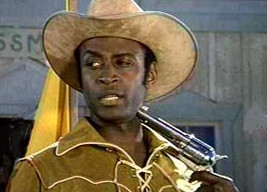
It reminds me of Cleavon Little in Blazing Saddles, when he pointed a gun at his head and warned his pursuers, “Hold it! Next man makes a move, the n***** gets it!” (Note that in what passes for today’s “culture” you can get all manner of porn and snuff films with a few clicks on the internet, but finding that clip takes some effort.)
Fourth, the Republicans are prepared to turn the tables. Trump says that if the government gets shut down, he’ll have no choice but to fire government workers. There’s some logic to that. It’s not fair to employ workers you can’t pay.
Democrats have shown a talent for political malpractice lately, but this one looks like a real boner. The Democrats can be stupid, but usually not this stupid. So why are they doing it?
The conventional wisdom is that they are captive to their “base,” the far-left kooks. That’s true, but it leaves the question, why are they captive to kooks?
The answer to that question is the same as the answer to the question “Why do you rob banks?” asked of serial bank robber Willie Sutton. He replied, “Because that’s where the money is.”
Kooks don’t normally have money, but these particular far-left ones do. Billions are funneled to them from unabashed radicals like George Soros and billions more from purportedly philanthropic foundations and leftist non-governmental organizations like Greenpeace, Common Cause and Black Lives Matter that are only slightly less radical. (Imagine entrepreneurs like John D. Rockefeller, Henry Ford and John D. MacArthur turning in their graves at the sight of how their money is spent today.) The kooks receiving those billions, in turn, are major campaign donors to Democrats.
These monied far-left interests are not really driven by details like Obamacare subsidies. That’s just an excuse. If the Republicans compromised on that, there will be another demand and another. What really drives them is a desire to sow chaos and confusion in American society, culture and government. Shutting down the government, they believe, serves that end. They seek a revolution, by whatever means necessary but preferably through a societal breakdown – by violence.
If the Democrats want to shut down the government in order sow a little chaos and confusion, fine. They’ll lose in the end, and it won’t take long. Let’s not take the bait for a violent confrontation.
“Epic” is how a lengthy article in the Wall Street Journal last week described the current investment in AI. In today’s dollars, it dwarfs the investment in the railways in the 1800s. It dwarfs the investment in electrifying America in the early 1900s. It dwarfs the investment in the interstate highway system in the mid-1900s. It dwarfs the investments in the internet at the end of the last century.
So, went the gist of the Journal’s article, it must all be an investment bubble – right? – that will come crashing down the way Pets.com and other internet stocks did.
Or didn’t. Bear in mind that Amazon, Facebook, Google and Microsoft are internet companies, too.
A competing article in the Journal last week describes how Walmart plans to manage AI. They say AI will change every job in the company – all 2.1 million of them. They anticipate substantial growth in their revenues and store count, but see their employee count staying flat. They intend to use AI to do more work without more people.
Along the same lines, the Chief Executive of Ford Motor Company said last summer, “Artificial intelligence is going to replace literally half of all white-collar workers in the U.S.”
The average person has limited experience with AI. They do know that when they need a gas station, they no longer have to type “gas station” into Google Maps. Instead, they can tell AI, “Find me a gas station,” and – voila! – it does. It’s like having a wife who can read maps!
Several criticisms are often leveled at AI. One is that it’s great at gathering information off the internet, but its conclusions are only as good as the information it gathers. This criticism is valid. How could it not be? Like you and me, the machine is only as good as the information it relies upon.
On the other hand, the machine’s use of information is getting better and better as the algorithms mature. It is learning, for example, that quantity does not equal quality. Just because something is said many times on the internet does not make it right, and just because something is said seldomly on the internet does not make it wrong.
It makes this discernment both by considering the credibility of the information sources and also . . . [drum roll] . . . by reasoning.
That’s right, AI can think. It can look at a piece of information and say, “Nah, that cannot be accurate. It cannot be accurate that it takes days for sunlight to reach the Earth, given that the Earth is X miles from the sun and light travels at Y mph.”
In my judgment, that constitutes thinking. The machine is not specifically asked how long it takes for sunlight to reach the earth. Rather, in the course of answering the question it is asked, it rejects information that it reasons cannot be accurate.
Here’s another example of AI thinking. Already, you can give it information about a building site for a house, such as the location, the topography and the boundaries, and tell it:
“Give me some birds-eye views (yes, it will understand that colloquialism) of potential house designs for a client who likes midcentury architecture and passive solar, and wants four bedrooms and a wine cellar. Oh, and bear in mind the Building Code of Pitkin County, Colorado and the HOA rules at this address.”
In seconds, the machine will churn out diagrams of such houses. It doesn’t scour the internet for diagrams to copy; it generates its own. It becomes an architect – one with the benefit of Frank Lloyd Wright, Leonardo da Vinci, Antoni Gaudí, and all the others firmly in its “head” together with an instantaneous ability to figure out the workability of the designs it conceives.
If you want to tinker with a design, it will let you do so. You can say, “I like this one, but it’s kinda tall. Can you make it shorter and with a bigger footprint?” Or, “Let’s get into the HVAC and plumbing details on this one. Give me some schematics.”
To me, that’s high-level thinking again.
In medicine, AI already has the capability (though it hasn’t been tasked with this yet) to have on-file a patient’s lifetime medical history. A technician could say, “This patient is now experiencing sharp pain in his left-side torso and recurring headaches. What do you think?” AI might respond:
“It’s not his left kidney, because this patient had his left kidney removed in 2013. I recommend the following tests . . . By the way, be careful with poking him – he’s on blood thinners. And he’s had claustrophobia in the MRI chamber before. Note his family history of diabetes.”
To me, that’s high-level thinking yet again.
Ah, you say, that’s all just problem-solving. The machine still cannot dream, cannot feel. It knows the cost of everything, but the value of nothing.
Maybe, but the same can said of many people.
As for AI’s ability as an aesthete, I asked ChatGPT the following (with deliberate misspellings):
“Make me a 3-dimentional wall hanging about 3 x 5 feet made out of scrap steel welded together to make an abstract sculture.”
Here’s what it came up with:
I probably wouldn’t hang this on my wall, but, then again, I probably wouldn’t hang on my wall what passes for modern abstract masterpieces in museums today, either.
Now a word about the purported downside of AI – the Luddite notion that it will put everyone out of work and so we’ll all starve to death.
Economists know this is bunk. Technology certainly produces dislocations. The invention of refrigeration put thousands of ice men out of work. The invention of the automobile put millions of buggy-makers out of work. The invention of the internet is gradually putting late-night comedians out of work.
But overall, these technological wonders improve the efficiency of society – and, therefore, the wealth of society. If an invention can improve a worker’s efficiency by 50%, that doesn’t mean half the workers get laid off and starve. In the big picture, it instead means workers can get paid the same for working half the hours, or get paid double for working the same hours, or some blend of those two outcomes.
That’s what has happened throughout history in response to technological innovation. We work fewer and fewer hours, even as we have more and more things. (Whether that makes us happier is different question.)
We also live longer and longer. With AI, could we live forever?
Maybe. AI might not just cure disease and treat injury, but also stop the biological mechanism of aging.
Or AI might have the ability to receive an upload of a person’s memory – his life – before his body dies. A memory in a durable machine that can interact with humans would seem no less valid than a memory in a failing brain that increasingly cannot.
Could that AI embodiment of a person, residing on the computer cloud (maybe Heaven really is in a cloud!) continue to interact with the flesh and blood world? I don’t see why not. And what it experiences would of course add to the experiences that were originally uploaded. “You” would continue to “live.”
The AI “you” would undoubtedly be the object of real love by flesh-and-blood humans (let’s call them “humies”). After all, people routinely experience real love for inanimate objects like dolls and teddy bears and sports cars. They could surely love an image that talks with them, especially if they loved that image before its humie got buried.
In receiving that upload of a person’s memory, would the machine also receive his soul? I cannot answer that question, nor, I suspect, can AI.
Note to readers: This is what ChatGPT came up with when I asked it to imagine a debate between Charlie Kirk and Jimmy Kimmel. Every word is from ChatGPT, except that one or two AI typos have been corrected.
_________________
Moderator: Welcome everyone to tonight’s debate on “Free Speech and Violence in America.” We’re honored to have Charlie Kirk and Jimmy Kimmel here to share their insights. Let’s begin with opening statements. Kirk, you have the floor.
Kirk: Thank you. Free speech is the foundation of democracy. It empowers individuals to voice their opinions, challenge authority, and push society forward. Throughout history, free speech has been instrumental in civil rights movements, political reform, and social progress. That said, with this freedom comes a responsibility. Words can incite violence, spread misinformation, and deepen divisions. Our goal should be to promote responsible speech—not censor it. Education, open dialogue, and adherence to social norms are the way forward. The core principle is that speech should thrive, but it should not be used as a weapon.
Kimmel: Thanks. I agree that free speech is vital, but let’s be clear. With the right comes the duty to prevent harm. In today’s world, inflammatory rhetoric, hate speech, and conspiracy theories are fueling real violence. We’ve seen many incidents where words have led to deadly actions — racial violence, terrorist attacks, online harassment turning into physical violence. Protecting free speech doesn’t mean tolerating speech that incites or promotes harm. Platforms — especially social media — must be held accountable. We need regulations and policies that draw the line where speech becomes dangerous. Society must defend freedom, but not allow it to devolve into chaos.
Moderator: An important discussion. Kirk, when you hear about hate speech, do you believe there should be limits?
Kirk: I believe in strong protections for free speech. Historically, censorship often suppresses dissent and can be used as a tool of oppression. The issue isn’t speech per se, but how we handle its consequences. Education is key — if people understood the impact of their words, they might moderate their tone voluntarily. Legal limits should be narrow– focused on directly inciting violence or spreading lies that cause harm. Broad restrictions risk infringing on fundamental rights and silencing constructive debate. The solution is fostering social responsibility, not censorship.
Kimmel: But history shows us that certain speech, especially hate speech, has led to violence and suffering. It dehumanizes people and can ignite mob actions or even genocide. Allowing unchecked harmful speech gives license to hate groups. That’s why platforms need clear policies– like removing hate speech and threats — and authorities should intervene when necessary. Sometimes, restrictions are essential for protecting vulnerable communities. We must recognize that the harm caused by hate speech is real, and it requires action.
Moderator: Let’s talk about where to draw the line. Kirk, do you think social media platforms should limit or regulate content more heavily?
Kirk: Platforms do have a role, but overregulation can suppress legitimate discourse. They should implement moderation tools and community standards, but these must be transparent and fair. Ultimately, the true solution lies in education — teaching people to critically evaluate content and behave responsibly online. Suppressing speech outright risks creating echo chambers and authoritarian control, which is dangerous for democracy.
Kimmel: I agree moderation is important, but the scale of social media makes it hard to control harmful content. Platforms often hesitate to act decisively due to fear of backlash or legal challenges. Meanwhile, harmful rhetoric continues to spread. Regulation can set standards that protect users without infringing on free speech. Additionally, social media companies must be held accountable for their role in amplifying dangerous content. We need collaborative efforts—government regulations, technological tools, and community initiatives—to create safer online spaces.
Moderator: Now let’s introduce a new topic — recent controversy surrounding Kimmel’s firing from a major network over comments related to political beliefs. Kimmel, would you like to comment on that?
Kimmel: Absolutely. The situation was very personal to me. I was fired after making some jokes that, depending on who you ask, were either funny or inappropriate, but what struck me was how quickly the culture shifted to silencing opinions and entertainment if they didn’t align perfectly with certain political narratives. It raises a fundamental question about free expression — should entertainers be penalized for their viewpoints or jokes? I believe that diversity of opinion, even offensive or controversial humor, is vital in a free society. Silencing voices due to pressure or fear undermines that principle.
Kirk: I agree with you. Freedom of speech includes the right to express unpopular opinions, including satire and humor. When society starts punishing individuals for expressing their views, it’s a step toward authoritarianism. The marketplace of ideas flourishes only when all voices can be heard, even if those voices are uncomfortable or controversial. I believe that silencing or punishing individuals—whether entertainers, journalists, or citizens — because of their opinions or jokes — undermines the very foundation of our democracy. Free speech is messy and can be uncomfortable, but it’s essential for progress. When we start policing humor or viewpoints out of fear, we risk creating a society where only certain approved voices can be heard, and that’s dangerous. We need to defend the right to express even unpopular or provocative ideas, because only then can real debate and growth occur. Censorship, whether by corporations or government, erodes liberty and sets a dangerous precedent.
Kimmel: Exactly. When individuals are silenced or penalized just for expressing their opinions, it sends a signal that certain ideas are unacceptable — no matter how silly or offensive. That’s not the path to a healthy democracy. We must stand firm in defending free expression, even when we disagree with what’s being said. Otherwise, we pave the way for authoritarian control and a stifling culture where conformity replaces free thought.
Moderator: Thank you, Kirk and Kimmel, for your insightful perspectives. To summarize, both of you agree that free speech is a fundamental pillar of democracy, but with important responsibilities. Kirk emphasizes the importance of education, responsible discourse, and cautious moderation to prevent censorship and authoritarianism. Kimmel highlights the need for accountability, especially on social media, and stresses that harmful speech can incite violence and must be regulated to protect vulnerable communities.
Regarding the recent controversy about Kimmel’s firing, both agree that silencing or punishing individuals for their opinions erodes free speech and opens the door to authoritarian control. The balance, as you both suggest, is in protecting the right to express unpopular ideas while ensuring public safety and social harmony. Ultimately, fostering open, respectful dialogue and safeguarding free expression are essential for a healthy society.
Thank you both for a compelling discussion.
_________________
I say bullshit. This sanitized, anodyne debate imagined by ChatGPT sounds like a love-fest.
Sure, it’s likely that both men would come down on the side of free speech, in the abstract, and both would caution against internet excesses.
But the debate imagined by ChatGPT completely ignores the overt calls for violence by such groups as Antifa and BLM and the barely-concealed calls for violence from Democrat leaders such as Senator Schumer’s threat against Supreme Court Justices.
It also ignores Kimmel’s false suggestion that the Kirk murderer was “one of” MAGA. Any legitimate discussion of Kimmel’s firing has to deal with that lie. Finally, it ignores the refusal by about half of the Democrats in Congress to join in a joint resolution condemning that violence.
So why did Chat GPT sidestep these issues?
I saw a piece a few months ago (if I could remember where, I would give credit to the author) suggesting that AI will not take bias out of the news. Rather, it will legitimize it. When you’re watching Rachel Maddow, you know she’s biased. When you’re inquiring with ChatGPT, you assume that the machine is not.
In addition, AI knows only what it reads on the internet. The old saw “the internet says . . .” is literally 100% of the basis for AI’s conclusions. Computer programmers would say garbage in, garbage out.
For the record, I think Kimmel’s bosses should fire him, or not, based on their sense of human decency and what he brings to their business. (My own sense of decency comes down in favor of the firing.) I think viewers should watch Kimmel, or not, based on their personal sense of human decency and what he brings to their entertainment life. I’m wary of the government getting involved in those decisions.
Also for the record, I occasionally use AI for research, but never for writing. I happen to think that, for now, I’m a better writer than the machine.
Political assassinations in America are usually committed by nutjobs. Lee Harvey Oswald was a communism-sympathizing loser. James Earl Ray was a career criminal who copped a guilty plea to avoid the death penalty and then falsely maintained his innocence until the day he died in prison.
This time feels different. This murderer looked normal. He earned college credits while in high school. He was a straight-A student. He had no criminal record.
He lived at home with his parents, two registered Republicans active in their Mormon church in conservative Utah. The family all talked ‘round the dinner table, as families used to.
One of those family dinner table talks early this week was about Charlie Kirk, who was due to visit the area on Thursday.
You know the rest of the story. As Charlie was talking in his trademark sort of way – not ranting, not raving, not cursing, but simply sitting and talking in a normal conversational way – the murderer shot him in the neck from a rooftop with a high-powered rifle. Charlie bled to death in seconds.
After video of the murder scene circulated, the murderer’s father turned him in with the help of a family friend who was retired from law enforcement.
Apart from the murder (but how was the play, Mrs. Lincoln?) the whole scene looks like a Norman Rockwell painting – a perfect glimpse of Americana.
Over a half a century ago, philosopher and writer Hannah Arendt wrote Eichmann in Jerusalem: A Report on the Banality of Evil. She was struck by the pedestrian personality of Eichmann in his trial and before his hanging in Jerusalem. He was not evil in the obvious ways. He had no horns, no cape, no devilish laugh, no foaming at the mouth, no apparent Hitlerisms.
Rather, Eichmann was a not-very-bright technocrat who’d dropped out of high school. He believed he was not just following orders (he was) but that he was following the law. He exhibited no hatred for the Jews, apart from his role in killing six million of them.
If Adolf Eichmann had been born into modern America, he might have become a mid-level manager in the EPA, the IRS or the Social Security Administration. He lacked both the credentials and ideology to be in the White House of either Joe Biden or Donald Trump, and he certainly lacked the passion.
Which brings me back to Charlie Kirk’s murderer. He was a devotee of the vapid echo chambers of online “discussion” but he exhibited little nuttiness or passion, until Thursday anyway.
Yes, he was a straight-A student, but in today’s schools that barely puts a kid in the top half of the class. Yes, he earned college credits while in high school, but then dropped out of a fourth-rate college. Yes, he participated in discussions at the family dinner table, but why was he living at home and eating his mother’s cooking at age 22?
The kid was a casual underachiever just going through the motions of an unlived life. He was the picture of banality.
The banal evil of Adolph Eichmann was six million times worse than the banal evil of Charlie Kirk’s murderer, but here’s what gives me pause: There are at least six million of these kids out there.
President Trump’s efforts to bring down crime have been successful in Washington, D.C. The rate of murder and other violent crimes is down substantially, and the rate of car-jackings is down dramatically.
Even the Democrat mayor of the city admitted that the crime rate has dropped. Oddly, however, she mumbles in the next breath that the program is “not working,” apparently to mollify national stage Democrats to whom she answers.
Such as Democrat Senate Minority Leader Charles Schumer. He was asked at the outset whether the initial 30-day period for the effort could be extended. His response was “f*** no!” It will be interesting to see him now choose between enabling murders and climbing down from his vulgar perch. I’m guessing he’ll choose the side of murder, and stay on his vulgar perch.
So, if it worked in D.C., why stop now? We can curtail crime and simultaneously embarrass Democrats around the country. We should next send the troops to Chicago, right? And then Baltimore, Philadelphia, Boston, Atlanta, St. Louis and Portland, right?
I don’t think so. My reasons are legal, philosophical and political.
Legally, D.C. is a special case. It’s under the direct jurisdiction of the federal government (notwithstanding the limited “home rule” that Congress legislated some years ago). One federal judge has already ruled that the deployment of troops to Los Angeles to quell the illegal immigration protests was illegal. I don’t have much regard for that particular judge – the bowtie-wearing, San Francisco-residing, 83-year-old little brother of retired liberal Supreme Court Justice Stephen Breyer – but it is conceivable that his big brother’s former Court will uphold his ruling.
Now the more important reasons – the moral and philosophical ones.
D.C. is the workplace and often the home of over a hundred thousand federal employees who have little choice about their workplace venue.
It’s also the face of America to millions of foreign visitors who reasonably assume that it reflects American values, just as we would assume that Paris reflects French values, London reflects English values, and Berlin reflects German values. (Each of those cities has a lower crime rate than D.C., especially in the category of violent crime.) How America presents itself to the world through its capital city is rightly a national and federal concern. How Chicago presents itself to the world is less so.
Here’s the most important point. The crime in Chicago and other major cities is largely due to ongoing choices they make in law enforcement. Recall that only five years ago, many residents of American cities were calling for the “defunding” – i.e., abolition – of city police forces. Even now, police forces are short-handed because the Democrats ruling these cities are hostile to law enforcement. They hate the cops more than they hate the criminals.
When they’re not short-changing the cops, they’re hand-tying them. Many crimes are simply not investigated or prosecuted. For example, shop-lifting has effectively been de-criminalized. If you want to get fired from your job at a local store, call the cops on a shoplifter or, worse, chase after one.
Other crimes have also been effectively de-criminalized on the grounds that too many racial minorities were being arrested for committing them.
People who commit crimes are criminals, but they aren’t stupid. They know what they can get away with, and so that’s what they do.
In short, big-city crime is a big-city choice. Specifically, it’s a choice by big city Democrats. They could decide tomorrow not to tolerate crime. So far, with the exception of the D.C. mayor who has had an epiphany on the subject, they have not decided that. We cannot coerce everyone into epiphanies.
Finally, there’s a legitimate issue about using federal troops for routine law enforcement. From the German Gestapo of a century ago to the Mexican Federales of today, federal law enforcement in local matters has a sordid history.
To be sure, the crime in American large cities inflicts real harm on the residents who, by and large, are not criminals of any kind. They sometimes get attacked, shot or killed and they often get their property stolen or vandalized. Even in the absence of tangible harm, they live insecure, semi-terrified lives.
But they keep electing those soft-on-crime Democrats. They are entitled to, but I say let these residents see and suffer the consequences of their choices – for years and years, if that’s what it takes.
Mayor Brandon Johnson of Chicago is widely seen outside of Chicago as the worst mayor in America. Even within Chicago, which is an overwhelmingly Democrat city, his approval rating this summer is down to the mid-20s. Maybe that means the Democrat residents of Chicago will throw the bum out.
But don’t count on it. Especially if he can make political hay by distracting the Democrat residents from his incompetence with a show of “standing up to” the Orange Man that they hate more than the criminals and even more than the cops.
You may ask, “What about the residents of Chicago who do want to throw the bum out? Who do want effective law enforcement? Who do want to reclaim their city from filth and crime? Who do vote with their minds and not with their tribe?”
My answer is, they have an alternative. Unlike federal employees locked into workplaces in D.C., the residents of Chicago who vote with their minds but get outvoted every time can vote with their feet.
My advice to them is to get the hell out of the failing cities. Let the failing cities burn and rot. Maybe then, and probably only then, the residents will insist on effective governance. If they don’t even then, well, at least they’ve self-concentrated in places we can watch and, if necessary, avoid or isolate.
And who knows? Their proclivity toward killing one another might prove to be an unfitness in the Darwinian sense.
Yes, my advice to sane people in insane places is to move to another place. Move to Texas, move to Florida, move to Idaho. Move to Galt’s Gulch.
It’s now a truism that the policies of the left are widely viewed as outrageous – at least the cultural ones such as allowing male voyeurs and exhibitionists into girls’ bathrooms, discriminating to benefit favored races and sexual orientations, grabbing the guns held by hundreds of millions of law-abiding Americans while simultaneously coddling criminals who will never give up theirs, and abolishing the nation’s borders.
Such issues have earned a name – the “80/20 issues” – because something near 80% of Americans oppose the left on such issues.
That 80% figure would probably be even higher if not for some Democrats whose hearts and minds are on the 80% side but whose instinctive tribalism boxes them into the 20% side just because they (correctly) see the 20% side as part of the formal Democratic Party platform.
Yet, the left seems unable to effectuate a course correction on those outrageous policies disfavored by 80% of the people.
One result is that the Democrats lose elections. Who cares about the nuances of tariffs, an issue on which reasonable persons disagree, when they’re putting boys in drag into your daughter’s bathroom at school, an issue on which reasonable persons do not?
My reaction to the Democrats’ truculence is one word: Good. I hope they stay bound to the losing side of those issues. Because I want them to keep losing elections.
But I’m left wondering: Why? Why is the left so bound to the losing side of issues that cost them elections?
I have a theory.
Recognize that the left is not like you and me. At the core, they aren’t trying to solve problems. Instead, they’re trying to provoke ordinary people. What better way to provoke ordinary people than to put messed-up teenage boys into the bathrooms of those people’s daughters?
But that, in turn, leaves a question: Why does the left want to provoke ordinary people?
Here’s where it gets sinister. They hate America. They really do, you know. Polls consistently show that the hard left feels genuine hate for America. Even mere Democrats – as opposed to hard leftists – often feel something less than love for the nation.
Thus, the left is fundamentally different than the right. On the right, neo-Nazis are loathsome and even mere right-wingers are sometimes not very appealing, but I’ve noticed that most of them do not hate America as a nation and an institution and a culture and a people.
The left’s hatred of America is the reason they seek to provoke Americans. Hatred is the mother of provocation and, ultimately, violence.
Did Hitler really want to own Russia? I doubt it. But he certainly hated Russians. He never did succeed in owning Russia – he never even reached Moscow – but his hatred of Russians succeeded in killing 20 million of them.
Do the leftists really want self-proclaimed teenage transexual peeping Toms in the girls’ bathrooms? I doubt it, but what a great way to express the hatred in their dark hearts for our nation, our culture and our people.
And in their dark minds, they hope that maybe the chaos they wreak by ritually torching age-old cultural norms will destroy that culture.
Imagine how things would have been different for Hitler if, prior to his invasion of Russia, he had demoralized them with boys in the bathrooms of Russian girls, if he had grabbed the guns of the Russian civilians, if he had abolished the Russian border, if he had fueled race wars within Russia.
The hateful left and their naive Democrat enablers are playing the long game of history, not the short game of the next election. In taking the 20% side of these issues – the side of confusion and chaos – the left will certainly lose many battles for elections, but they could well win the war against our civilization.
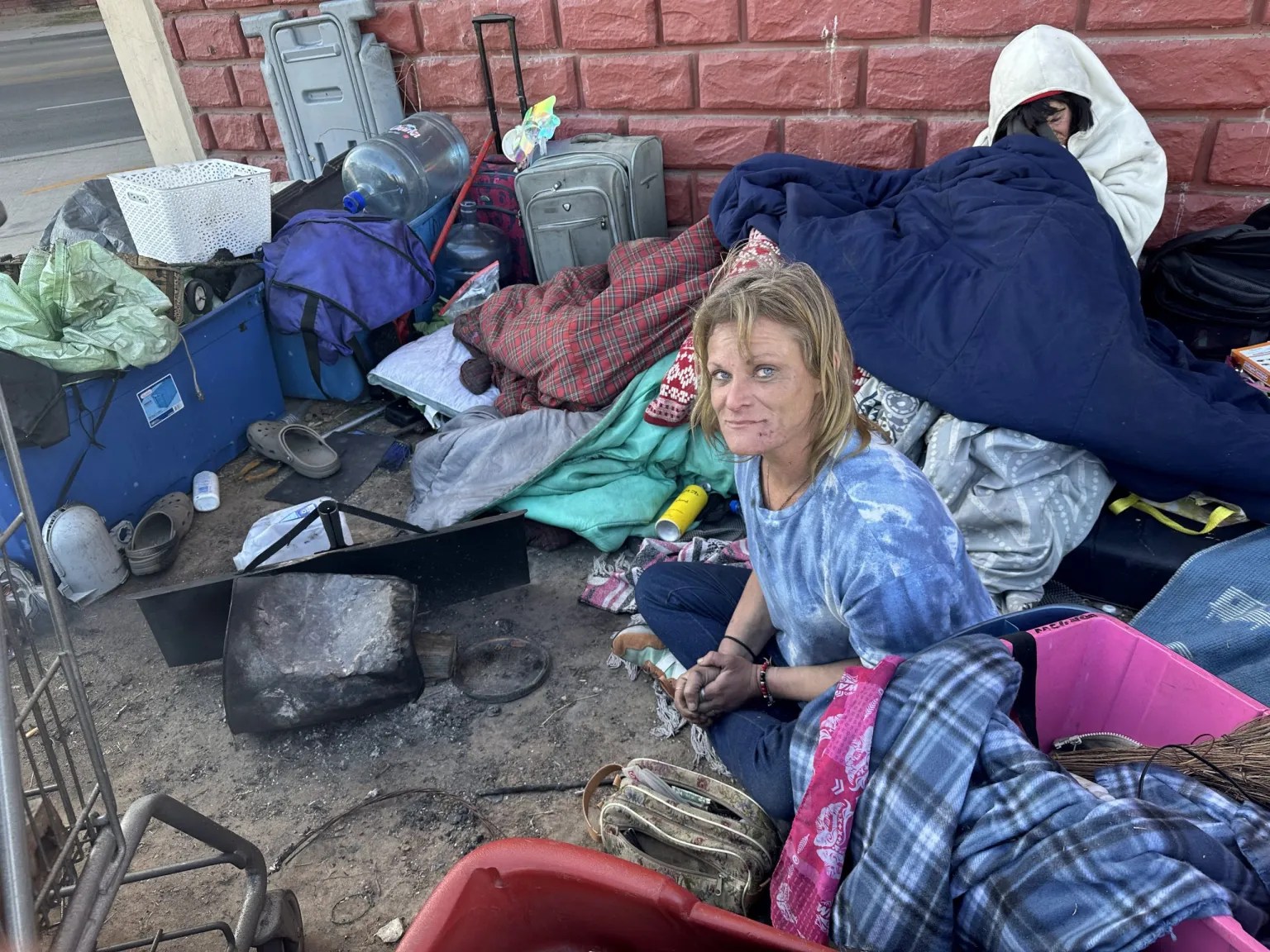
The Left pretends to pity the plight of the people we used to call “vagrants” but are now required to call “homeless.” Their numbers keep growing – despite the fact that we keep throwing money at them and giving them free housing, free meals and other free stuff.
Let’s stop right there. That last sentence, expressed as I just expressed it, is easily recognized as a “Fox Butterfield.” He was a New York Times columnist who expressed puzzlement at the “paradox” that more criminals were being sentenced to prison even though crime was down.
After years of being puzzled by this paradox that he perceived, Butterfield finally acknowledged that he had confused the cause with the effect. It’s not that fewer crimes had caused more criminals to be sent to prison. That would indeed be a paradox. Rather, it was that more criminals being in prison had caused fewer crimes to be committed.
Butterfield thus unwittingly gave his name to a comedic bit of mis-rhetoric and illogic. A “Fox Butterfield” is a statement expressing puzzlement because it confuses causes and effects. The true cause and effect are apparent to most people – but not to the person making the Fox Butterfield statement, because it is contrary to his belief system.
Something similar is at work in the issue of vagrants (which is not a four-letter word, by the way, and maybe that’s the reason Democrats don’t like it).
The Left pretends puzzlement about the apparent paradox that giving free stuff to vagrants for the purpose of escaping their vagrancy seems to produce more vagrancy, not less. If vagrancy is caused by vagrants losing their stuff, then shouldn’t it be remedied by giving them free stuff to replace what they lost?
Ah, but any person without a preconceived belief system sympathetic to vagrancy knows that it isn’t caused by losing one’s stuff. Rather, it’s caused by losing one’s mind. Usually to drugs, insanity or both. And so, it’s not a paradox that giving free stuff to vagrants fails to remedy their vagrancy – their minds, after all, are still missing in action.
In fact, giving free stuff to vagrants not only fails to help them, it actively hurts them. It enables them to continue their vagrancy.
That’s what has happened in America over the last generation. Camping on the sidewalk and pooping in the gutter used to be against the law. It still is, but the Democrat mayors of big cities decided to break their oaths of office by allowing it anyway – and to reward the lawbreakers with free stuff for doing so.
Sure enough, but contrary to Democrat expectations borne of their erroneous belief system, the result was more sidewalk camping and gutter pooping, not less.
Contrast this with big cities in the rest of the world. Most are poorer than American cities, and in Europe they tend to be at least as Leftist as in America. But you seldom see vagrants. They’re simply not allowed.
Why did the Democrats choose to enable vagrancy in America?
Two reasons. First, many Democrats mistakenly thought it was the humane thing to do. In their erroneous belief system, they believed that vagrants are just like you and me, except they’ve had a bit of bad luck. They’ve lost their job through no fault of their own, but because of . . . you know . . . capitalism. All that these unfortunates need, these Democrats believe, is a helping hand. And if we don’t give them that helping hand, they could well starve to death.
These beliefs are wrong in so many ways. Vagrants are nothing like you and me. They didn’t just lose their job; they’re almost all drug addicts or alcoholics or mentally ill or some combination thereof. A helping hand does not help them; it enables their misery and lets them inflict it on the rest of us. They won’t starve to death; nobody starves to death in America other than people who are literally too messed up to put into their mouths the food that is offered.
Thus, the first reason that Democrats enable vagrancy is simple ignorance on their part.
But the second reason is more sinister. Many Democrats enable vagrancy for the same reason they abolish the nation’s borders, decry merit as racist, preach that work is evil, undermine the family, mock religion, and tell us there are 72 genders.
It’s the same reason they want to cancel Sydney Sweeney for being too feminine and too white, neuter Bud Light for being too masculine and too redneck, and bury the Cracker Barrel logo for being too American.
It’s all because they loath America, Americans and Americana. Failing to destroy America militarily in two World Wars and one Cold War, they are now resigned to destroying her with a culture war from within. Indeed, surveys confirm that the defining trait of Democrats is their ambivalence (at best) for America.
Many of these Democrats don’t want to help the American poor as much as they want to hurt the American “rich” – defined as everyone who has more money than they do. They would prefer a nuclear Armageddon destroying everyone over a prosperous economy lifting both rich and poor.
Of course, if they were to get their wish for Armageddon, they’d hate that too. They hate wherever they are and whomever they’re with.
They have no country, no religion, no gender, no history, no traditions, no happiness, and they disbelieve in family. You might generously call these sorrowful souls “homeless.”
President Trump and NATO leaders at the White House, Aug. 18, and President Biden and NATO leaders at G7 summit in 2024
Vladimir Putin confirmed last week at their Alaska summit that if Donald Trump had been president three years ago, Russia would not have invaded Ukraine.
It was probably an attempt at flattery (which Trump did not acknowledge) but, still, it’s probably true. Even if it’s pure flattery, I cannot imagine Putin bothering to bestow such flattery on Trump’s predecessor.
At this same summit, Trump ordered a flyby of a B2 bomber – the ones that recently made a significant impression on the world, on Iran, and on Iran’s desert nuke factories.
After the summit, the leaders of NATO rushed to the White House to meet with the President. Seems the tariff imbroglio is all forgiven. Ukrainian President Zelenski showed up wearing something suit-ish. Trump called out “Emmanuel!” to French President Emmanuel Macron, who answered “Mr. President?”
Speaking with one voice – Trump’s – the leaders of the free world declared a desire for peace but made clear that they would not toss Ukraine under the Russian tanks. In fact, they hinted at NATO membership for Ukraine.
Sure, Russia will get some potato farms in Eastern Ukraine, and Putin will save face with his people (after slaughtering a quarter million of them) but Ukraine will survive, NATO will thrive, Europe will be strong, and America . . .







 the Aspen beat