
Ketamine, Elon, and me

Elon Musk – a man I admire greatly but not unreservedly – used ketamine. It’s not just a rumor. He wrote about it in a series of posts on what was then Twitter.

Ketamine is a manufactured drug that was originally designed as an anesthetic, and is still used for that purpose. However, it was noticed some years ago that in doses much lower than the anesthetic dose, it produces hallucinations. The effect is similar to that of other hallucinogenic drugs like LSD or naturally-occurring psilocybin (“magic mushrooms”). 

Ketamine, LSD, psilocybin and many other hallucinogens are thought not to be physically addictive (though, like other things that people enjoy, they may be habit-forming and psychologically addictive). In that respect, they are very different than, say, opiates such as heroin and morphine or, for that matter, coffee and alcohol.

Hallucinogens were investigated for years as treatments for emotional disorders such as depression and PTSD. But the “war on drugs” put a chill on that research.

As mind-altering drugs go, ketamine has a much better “brand” than LSD or psilocybin. That might be because letamine came into use as a medical anesthesia, not a street drug, and because a ketamine dose under medical supervision is easily controlled. That contrasts with street LSD and magic mushrooms, both of which are notoriously variable in their potency.

Equally important, a ketamine trip lasts about an hour while an LSD trip lasts more like a day.

Finally, ketamine has a better champion in Elon Musk than LSD had in Timothy Leary. Endorsements are everything, you know.

Given all that, together with some credible clinical studies, the FDA has approved ketamine in inhaler form for so-called “treatment resistant depression.” That’s defined as depression that resists other treatments such as the ubiquitous SSRI drugs.

The biochemical mechanism of ketamine on severe depression is not well understood. In layman’s terms, it seems to have a “resetting” effect similar to electroshock treatment – but without the occasional burn marks.

Ketamine treatment protocols are still evolving. A typical protocol involves half a dozen treatments over the course of several weeks. But sometimes the patient improves with just one or two treatments.  

Like other hallucinogens, ketamine is recognized as something that can be dangerously abused as a recreational drug. 

Elon said his use of ketamine was not for recreation, but was with a prescription under medical supervision to treat depression. (It says something about the sinister nature of depression that the richest person in the world could be afflicted with it.) Elon says he no longer uses it.

I have a personal experience with ketamine. Regular readers are aware that I had open heart surgery a week before Christmas to replace a defective aortic valve.

Due to the particular nature of my valve defect, the preferred method of aortic valve replacement where the valve is installed via a vascular catheter – a procedure something like a transcatheter angiogram – was not feasible for me.

My procedure instead went the old-fashioned route – through the chest. They sliced open my chest, sawed open my sternum lengthwise, pried my chest apart, accessed my beating heart, put me on a heart-lung bypass machine, injected a drug to stop my heart, cut into my heart, carved out my ruined aortic valve, and sewed in a replacement valve made from bovine tissue – from a cow.

They sewed up my heart, took me off the bypass machine, restarted my heart, wired my sternum shut, and sewed up the big wound through my chest.

Surgery took four or five hours, and I was under anesthesia for a total of six or seven. 

My recovery proved problematic. Although the wound healed well and I was up and about in a few days, I soon developed severe heart arrhythmias of various types. The surgical trauma to the heart from open heart surgery often disrupts the electrical pathways that control the beating of the four chambers, such that they don’t beat synchronously.

By then, I was about three months out from my surgery. Mechanically, my heart was doing very well. The new valve fashioned from the heart tissue of a cow was properly seated and functioning. I liked to say that I was doing much better than the cow.

But the electrical system regulating and synchronizing the contractions of my four heart chambers was all messed up. I was like a British sports car – mechanically I was not bad but the electrical system was reliably unreliable.

My random heartbeats not only wore me down, but also interfered with my sleep. Between the arrhythmias themselves and the sleep deprivation they produced, I was fatigued. I was indefatigably fatigued.

Unrelatedly, I had surgery on my forehead that was expected to be routine. That was bad timing. The surgery required a big, deep, star-shaped incision to carve out some skin cancer. I wound up with 19 external stitches plus another 25 dissolving subcutaneous ones. I looked like a hatchet murder victim, but was less active.

Also unrelatedly, my little brother died.

My reliably unreliable cardio-electrical system along with my indefatigable fatigue landed me in the Emergency Room. I was accompanied by a close friend who had helped me through my surgery in the months leading up to and following that.

In the ER, they did what they do in ERs. That is, they decided I was not at risk of dying that day, and they started to send me home.

The attending physician, however, began asking me questions about my situation. He had a ponytail. I liked him anyway, and I told him my recent story.

The doc suggested ketamine. I had never heard of ketamine, but my friend had. She said it killed Mathew Perry, the co-star of “Friends.”

The doc assured us that Perry had taken a huge dose or several doses of street ketamine the day he died, without medical supervision, and died in a swimming pool or hot tub – he might actually have drowned.

In my desperation, and after noting the absence of any swimming pools or hot tubs in this ER, I agreed to try this ketamine stuff. As the nurse was setting up an IV, we asked her whether I would feel anything. She answered that I would feel the pin-prick of the IV when she put it into my arm, but then I would feel nothing.

Maybe I asked the wrong question. After starting the IV, the nurse walked out of the curtained ER cubical, leaving me alone with my friend amid the gentle whirring of the machine slowly infusing ketamine into my vein.

The “disassociation” effect came first. Now I know what they mean by “out of body.”

Then came the hallucinations. They were something like a 70s light show, but crazy-intense and three dimensional – at least. I floated through walls of brilliant lights and gyrating shapes and wild colors.

Nothing had prepared me for this. I have never used recreational drugs. I had never heard of ketamine. The nurse had told me just minutes before that I would not feel anything. So, it was alarming. I whispered something like,

“. . . Oh . . . my . . . God . . .”

I wondered if I’d been given the wrong drug. I wondered if I’d been given an overdose. I wondered if this might be the end of the world, or at least the end of me.

At the same time, the feeling was freeing and exhilarating. I had the sensation of opening up and releasing tension and turbulence. I could see it – or hallucinate it – streaming out of me.

As I flew, I dimly felt that I needed to stay in sight of the ground. I asked my friend if she was still there. She answered yes. I asked her to keep talking. She did. About what, I don’t remember. But her voice reassured me that there was still an Earth, and that I was still on it, even as I floated in the cosmos.

It seemed that the whole treatment lasted no more than a few minutes, but in fact it was about 40 minutes. After the infusion stopped, the hallucinations stopped almost immediately. I was utterly spent.

The doc returned. I told him of my experience. He remarked, “Oh, maybe I should have warned you about that.”

I thought, “Yeah, duh.”

But I later decided that his little surprise was probably part of the treatment. My overall assessment of this physician is that his treatment of me was creative and certainly aggressive, but controlled and safe.

The next day at home, I researched ketamine, and I learned what I’ve written at the outset above.

I was very tired. Events leading up to the ketamine treatment, the sleep deprivation, and then the treatment itself, had physically and emotionally drained me.

But this tiredness was different than the indefatigable fatigue I’d had for months. Within a couple of days, I was much better than before the treatment. Over the ensuing weeks, my heart arrhythmias gradually disappeared. Maybe I’d been “reset.”

Note to readers: Don’t try this at home. Street ketamine can kill you.

Will it be on the watch of tough-talking Trump that Iran finally goes nuclear?

President Trump enjoys campaigning. The first campaign was in 2016 when he criticized the ill-advised deal that Obama had struck with Iran the year before.

Under that deal, Iran promised not to develop nukes – but only for a few years. Moreover, the inspection requirements were toothless, and Iran began violating them immediately by continuing its nuke program.

Trump rightly called that deal “a disaster” and “the worst deal ever” (which is saying quite a lot when it comes to deals made by Obama). After he was elected in 2016, Trump cancelled the deal.

And Iran continued its nuke program.

Trump’s second campaign was in 2020 when he promised that “as long as I am President of the United States, Iran will never be allowed to have a nuclear weapon.” Trump lost the election.

And Iran continued its nuke program.

Trump’s third campaign was in 2024 when he declared that if elected, he would exert “massive, maximum pressure” on Iran to end its nuclear program. He won that election.

And Iran continues its nuke program.

Trump’s “massive, maximum pressure” has not included new sanctions on Iran, even while the United States Senate is considering bipartisan bills to impose those sanctions whether Trump likes it or not.

Trump’s fourth campaign is ongoing as you read this. He seems unconcerned that there’s no election going on; campaigning is what he does. Tweets, anyone?

When it comes to Iran, his campaigning substitutes for governing. Tough talk substitutes for tough action – or even moderate action.

Even the tough talk gets watered down. A couple of weeks ago, Trump announced that he was “very close” to a new deal with Iran, as if he could close the gap with wishes and charm.

On Wall Street, stock traders evaluating the tariffs have an acronym. It’s “TACO,” which stands for Trump Always Chickens Out. In the face of a stock market rout, the tariffs Trump announced in April have quietly been withdrawn or at least re-drawn.

Note that Wall Street doesn’t say “TACO” as a political attack. They’re in the business of making money, not the business of politics. They say “TACO” in the same way they say, “Buy low, sell high.” It’s a truism.

Wall Street’s smart money has probably judged Trump correctly; being correct is why they’re on Wall Street while you and I are just on Main Street.

And so, we should expect a similar chickening out by Trump with respect to the Iranians. The Iranians themselves certainly do.

There will be a deal, alright. Trump will compromise to the point that it will be much the same as the 2015 deal that Obama struck. There will be promises by the Iranians, again, but no real teeth in the deal to enforce those promises, again. And there will be a zillion-dollar payment to the Iranians, again, which they’ll use to fund worldwide terrorism, again.

In short, the Iranians will get their nukes, and we’ll give them money to fund terror – and Trump will campaign on his success in striking a fake deal for them not to get their nukes.

Just like Obama.

In the big picture, western leaders have resigned themselves to a nuclear Iran. The fake deals are merely to mollify the masses. The leaders know that Iran will break the deals and get its nukes, and are already planning to say, “I’m shocked! They broke the deal!”

I’m not surprised that the Europeans act out this dishonest dance. Nor am I surprised that the Obama/Hillary/Biden crowd join in. But I expected something different from Trump – because he promised something different.

Ah, but there’s a wild card in this charade. It’s the Israelis. If the Ukrainians can take out a third of the strategic bomber fleet of Russia, imagine what the Israelis can do to the nuke program of Iran.

When it comes to the Jews saving the world, you know, there’s a precedent.

Trump is not a fascist . . . but . . .

At the outset, let me state my bona fides. I voted for Trump three times. I publicly supported his candidacy back when the media deemed him and his supporters like me stupid racists.

That was back when “Trump is literally Hitler” was the meme of the moment amongst the kind of people who don’t know the meaning of Hitler and don’t know the meaning of “literally.” Which is to say, most of the current mainstream media.

For the record, Trump is not Hitler, not literally or metaphorically, nor is he a fascist.

Contrary to popular belief engendered by the lamestream media, the word “fascist” does not mean “Republican.” Nor does it mean “very conservative.” In fact, Republicans and other politically conservative people are nothing like fascists at all.

Fascism is notoriously difficult to define, perhaps because it is used as an epithet by the ignorant more than as a descriptor by the educated. But most would say it involves a tendency toward, or actual exercise of, strong autocratic or dictatorial control. It also frequently involves forcible suppression of opposition, belief in a natural social hierarchy, subordination of individual interests for the perceived interest of the nation or race, and strong regimentation of society and the economy.

OK, let’s look at President Trump.

He’s missing the race component. Indeed, many of his political appointments have been racial or ethnic minorities.

Some people would say, “Oh, but those minorities don’t count because they’re conservatives.” To those people, I have a question: So, who’s the bigot here when you’re the one willing to deny the color of a person’s skin because he lacks the “correct” viewpoints?

The nationalistic component is a closer call. Trump shows little interest in invading Poland or France, but does seem to hanker for a little elbow room up north in Greenland and Canada. Still, forcible conquest doesn’t appear to be on his radar. (But what exactly is the purpose of his conquistador callings?)

As for a belief in a natural social hierarchy . . . gimme a break, the guy’s a real estate developer. If there were a natural social hierarchy, real estate developers would be at the bottom.

Here’s the component that worries me: He doesn’t suffer disagreement lightly.

It would be one thing if Trump shot down disagreement with brilliant argument and nuanced analysis. In doing that, my favorite commentator on the conservative side – or any side, for that matter – was William F. Buckley. He won arguments in such eloquent, understated style that the people he persuaded to his side left thinking they had agreed with him all along.

Trump, not so much. If you agree with him at the outset, he’ll draw cheers from you. But that’s not a persuader; that’s a cheerleader.

As for those who disagree with him, he quickly escalates – or, rather, gutter-stoops – to name-calling, arm-twisting and outright bullying.

There’s a place for that tactic, to be sure. Army boot camp comes to mind.

In politics and people, however, such an approach tends to backfire. You can bully people only so far, and you can’t bully strong people at all.

Moreover, the bullying itself can backfire. For example, how is Vladimir Putin supposed to back down once Trump tells him to? Even the girly-men at Harvard have stood their ground (sort of) once Trump publicly told them to take a knee. The first rule of effective bullying is to do it in private where the object of your bullying doesn’t need to save face.

But this self-pleasing bullying, this autocratic nature, is in Donald Trump’s DNA. Recall that this man took time away from making billions in order to be on a stupid TV reality show where he gloried in screaming “You’re fired!”

The most recent “You’re fired” moment came this week when Trump lashed out at some judges – one of which he appointed – for striking down his tariff program as non-enabled by the laws he’s citing. The judges may or may not be right, but it’s a matter that will be decided by the Supreme Court on appeal, as it should be, not by playground bullies. Meanwhile, calling the judge names is not an effective strategy for a litigant.

The judges that disagree with him are reinforced in their disagreement when he tries to bully them. They have lifetime tenure and no fear of Trump. And the judges who agree with him, give pause. What self-respecting judge (and judges have a lot of self-respect) wants to be known as a Trump toady?

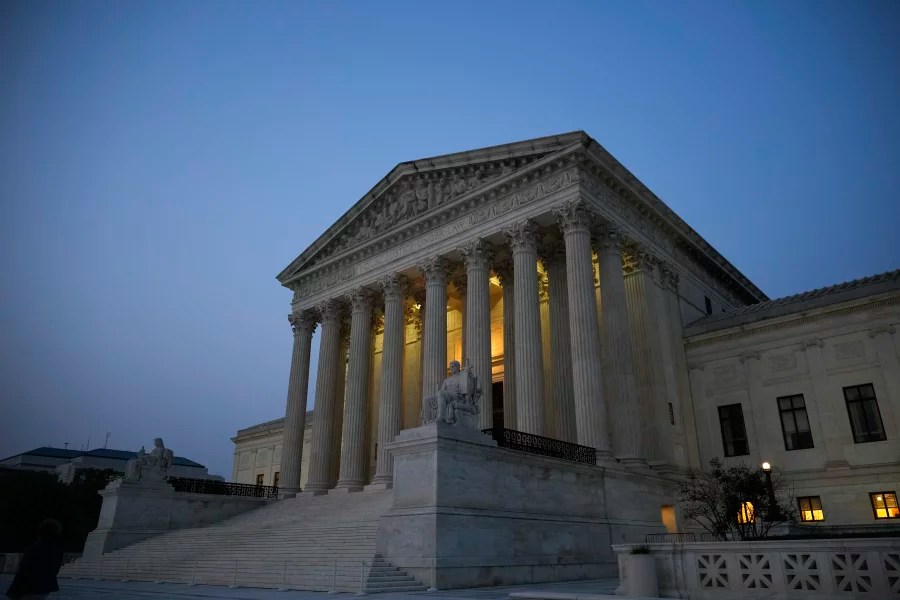
Oh yeah, the Supreme Court. He lashes out at them, too, though he appointed three of the nine. And he lashes out at the conservative Federalist Society for helping him choose the judges he lashes out at. I’m sure he’s just one lash away from lashing out at the people who helped him choose the Federalist Society to help him choose the judges.

Maybe all this plays well with a certain component of the base, and so it’s all clever triangulation by Trump. More likely, it seems to me, he just has the nature of an authoritarian bully.

It’s his greatest weakness. And I will not be voting for him a fourth time.

But he’s not Hitler!

Will Trump punish Iran as much as he’s punishing Harvard?

Harvard deserves punishment. For years, they boasted in their published materials that they had a policy to favor certain ethnic groups.

Accordingly, they favored a Native American with the improbable name of Elizabeth Warren to fill a law professor position. When called out for their discrimination, they said that – in violation of their stated policy – they had not favored her.

Comically, it turned out Warren wasn’t Native American anyway. And so, in her case, Harvard failed at racial discrimination despite their best efforts. Usually, however, they’ve succeeded.  

One egregious area where they’ve succeeded is in discriminating against Jews and Asians. For Asians, their SAT scores had to be substantially higher than for whites and about 400 points higher than for Blacks.

Thankfully, the Supreme Court outlawed this discrimination against Asians in a decision two years ago. The suspicion is that Harvard has not stopped doing it, however, but has merely stopped advertising it.

Harvard’s discrimination against Jews is worse, if that’s possible. Harvard encourages Jew-hate. It’s probably not a coincidence that many of these antisemites are foreign students that pay full tuition.

But that’s not the only reason. The Jew-haters are egged on by many faculty members.

But at least Harvard has not promised to nuke the Jews. They may chant for the eradication of Israel (as in “From the River to the Sea”) but at least they are not advocating the eradication of Judaism, for the most part.

President Trump has rightly declared war on Harvard. He has cut off federal money until they comply with the Supreme Court rulings on racial discrimination, and protect Jewish students and other racial and ethnic groups.

Harvard has vowed to fight for their “right” to discriminate, and their “right” not to protect Jewish students, and their “right” to hate or love in admissions and hiring on the basis of skin color.

Naturally, they express this neo-Nazi skinhead language in more flowery terms – it’s all about academic freedom, they preen. To preserve their academic freedom to hate, they’ve filed lawsuits in their backyard of Boston in front of Democrat-appointed judges who are predictably disposed favorably to their position.

But it will go to the Supreme Court, and there will be supreme judgments, and Harvard will lose supremely.

Then there’s Iran.

Iran’s formal policy is not to fail to protect the Jews. It’s to kill them. For many years, they’ve armed proxies in the Middle East to do precisely that. Hezbollah, ISIS, Hamas . . . you name it. The Iranians see no group as too violent, too cruel, or too barbaric. The more violent, the more cruel, and the more barbaric, the better.

And so, on that horrific October 7, there were babies beheaded, grandmothers burned alive, young women raped in front of their husbands, and hostages taken, tortured and killed.

At Harvard, they cheered, and that was very bad. But in Gaza, it was even worse.

So, President Trump, will your punishment of the Iranians be at least as severe as your punishment of Harvard? Will you impose sanctions to cut off their funding, as you have with Harvard?

Moreover, will you put an end to Iran’s decades-long quest for a nuclear weapon to carry out their promise to destroy Israel?

Or is all your talk just . . .  big talk? Is it something like the tariff talk – a negotiation posture that you’ll climb down from and compromise on when the going gets rough?

It’s one thing to declare war on Harvard, but it takes some guts to declare war on Iran. The world is watching.

Join the debate: Should old men be screened for prostate cancer?

Joe Biden’s office reported last week that he has been diagnosed with prostate cancer that has metastasized to his bones. They’ve also reported that he went the previous 11 years without a PSA test to screen for it.

At this point, his treatment options are limited. It’s impossible to cure metastasized prostate cancer. Hormone treatment can slow the cancer, but such treatment has side effects – it’s essentially reversible chemical castration, which reduces testosterone to about 5-10% of normal or less.

We’ll never know how much, if at all, Biden’s cancer is related to his cognitive impairments that are now widely acknowledged.  

As for his failure to get PSA tests for 11 years, his office and his media allies point out that some (but not most) medical authorities recommend against PSA tests for men over a certain age, typically something like 70 or 75.

In my opinion, that cutoff, even if adopted, should not apply to a person tasked with Joe Biden’s responsibilities, but that’s a different column. This column is about using such a cutoff for ordinary men.

Here are some of the pros and cons of skipping PSA tests for ordinary old men. Join the debate in the comments section below if you wish.

Cons for the PSA test in old men:

*Prostate cancer usually grows slowly. It’s a fact that more men die with prostate cancer than of it. The expected life span of a 75-year-old American man according to the actuarial tables is about 12 years. The expected life span of that man newly diagnosed with prostate cancer, if not treated, is not much shorter. It’s about 8 years, though the quality of the last few of those years is very poor.

*Given that prostate cancer is usually slow-growing, some cases are overtreated. The man winds up with the trouble of treatment, but no lengthening of his life span, because he dies anyway of something else. If the PSA test is not given to a man, and so the cancer is not discovered, then we can be assured that he will not be overtreated for it.  

*Treating prostate cancer costs taxpayers. The usual treatment is a prostatectomy or radiation therapy or sometimes both. In the case of men over 70, these costs are borne mainly by the Medicare system. It’s reasonable to assume that treating a man with prostate cancer costs somewhere between several tens of thousands of dollars up to a hundred thousand dollars or more.

*The PSA test sometimes produces a “false positive.” That is, a man will have an elevated PSA level suggestive of prostate cancer when, in fact, he does not have the cancer. This will lead to further testing to disprove the cancer. That testing would not have been necessary if the PSA test had not been given.

Pros for the PSA test:

*The PSA test itself costs hardly anything. The retail cost of a PSA test at LabCorp is $69. Medicare gets it for less.

*The PSA test is easy. It’s just one more little vial of blood filled from the same blood draw as the rest of an ordinary blood panel at a man’s annual physical.

*False positives are easily addressed. It is sometimes said that the occasional false positives of a PSA test result in “unnecessary treatment” but that’s not true. What it results in is further investigation in the form of non-invasive imaging and perhaps a tissue biopsy. The imaging is painless, though the biopsy is less so.

*Some prostate cancers kill quickly. The quick-killing ones, once discovered, can be distinguished from the slow-growing ones by ongoing monitoring. If warranted, they can be treated. If Joe Biden had received PSA tests as part of his ordinary annual medical exams, his rapidly advancing cancer would have been detected and would have been treated. Such treatment probably would have saved him from the cancer.

*Overtreatment in a minority of cases does not justify ignorance and non-treatment in the majority of cases. The solution to the problem of overtreatment of slow-growing cancers is not to stay ignorant of all cancers; it’s to avoid overtreating the slow-growing ones.

*Prostate cancer does kill. While it is true that the majority of men survive prostate cancer, it remains the number two cancer killer among American men (second only to lung cancer) simply because it’s very wide spread. It’s true that death by prostate cancer is usually slow but, to me, that makes it all the worse.

My personal opinion is that we should give the PSA test to old men, but use common sense in treating the cancers that are found. A slow-growing prostate cancer in a 78-year-old man with numerous co-morbidities and a life expectancy three years is a different story from a fast-growing prostate cancer in an otherwise healthy 73-year-old man with a life expectancy of 15 years.

Feel free to weigh in with your thoughts.

The Bidens must have known about his cancer for years

First, my sympathies for the Biden family. I’ve been there.

Now, here’s my puzzlement. Prostate cancer is notoriously slow-growing. Although prostate cancer is the second-leading cause of cancer deaths among men (second to only lung cancer), that’s not because it’s so deadly, but because it’s so common. It’s a fact that more men die with prostate cancer than of it.

Of those who die, the typical mechanism of death is by the cancer cells metastasizing to other organs and/or to the bones. It takes years for that to happen – typically something like 5-10 years even without treatment, and even longer with treatment.

Even after the metastasizing occurs, death is usually half a dozen years away or more. After all, the cancer cells are still slow-growing prostate cancer cells, even though they’re now in a new home in another organ or in the bones.

The usual treatment for prostate cancer is to remove the prostate gland, a walnut-sized gland “down there” whose main function is to provide the ejaculate that is the vehicle for sperm cells produced in the testicles. After a prostatectomy, a man can still have an orgasm, and it’s a much tidier affair. The surgery is usually done with what’s often called a “robot” but, in reality, is a human-operated arthroscopic system that utilizes fine motor controls and a viewing system.  

An alternative treatment that is often elected is radiation treatment. The prostate is irradiated five times a week for about six weeks. In one of nature’s happy coincidences, prostate cancer cells are more vulnerable to radiation than normal cells. The intended result is for the prostate cancer cells to die (or, more accurately, be sufficiently damaged that they cannot reproduce) while the other cells survive.

In practice, the radiation damages other cells to some extent, which sometimes inconveniences the patient with regard to, for example, urinary and sexual functions.

Neither approach is thought to directly impact a man’s cognitive function. But it should be mentioned that prostate cancer is a disease of older men. Radiation five times a week for six weeks has an effect on older men, even when the radiation is all below the waist. And being under anesthetic for four hours for a prostatectomy is not trivial trauma for a 75-year-old man.

Both treatments are effective, but recurrences are common. A prostatectomy tends to leave at least a few viable cancer cells behind in the prostate “bed” from which the prostate gland is removed. Radiation treatment, too, is known not to kill all the prostate cancer cells. The hope is that it kills enough of them that the man dies of something else before the remaining ones regroup and reproduce.

If the cancer has spread beyond the prostate – i.e., it has metastasized – then all bets are off. Neither a prostatectomy nor radiation treatment are directed toward anything other than the prostate gland.

The announcement from the Bidens is that he has “an aggressive form” of prostate cancer which has metastasized to his bones. The particular bones are not specified, but the hips and pelvis are the most likely. Nor is it specified to what extent the bone metastasis has taken place.

In advanced stages, metastasizing will spread to many bones. The common symptom is worsening bone pain, a deep, achy, persistent and ultimately agonizing sensation.  

Prostate cancer is usually detected long before any symptoms are noticeable. A routine blood test, which is part of every older man’s annual physical, measures a compound called “prostate specific antigen” or PSA.

Elevated levels of PSA suggest, but do not prove, prostate cancer. The doctor typically orders up further tests to confirm the suspicions. The ultimate confirming test is a biopsy.

Here’s my puzzlement. How is it that Biden’s first inkling that he has prostate cancer is when it has metastasized to his bones, given that metastasizing takes years and he presumably has been getting PSA tests at least annually?

My guess is that the Bidens have known of his cancer for a long time. It’s quite possible – nay, it’s likely – that he has undergone radiation treatment for it. (Prostatectomy treatment appears out of the question, because reports are that a nodule was discovered on his prostate; so it’s still there.)

The radiation treatment appears to have ultimately failed, as it not infrequently does. When the cancer became detectable again, it would have produced elevated PSA levels. By the time it was metastasizing, those levels would be very high.

Again, this does not happen in a matter of weeks or months, but years. It’s inconceivable that the Bidens were unaware of this cancer last November.

To generate book sales, the former Director of the FBI advocates 86’ing the President

James Comey has a book coming out, so he’s looking for attention. He got it.

He posted on Instagram a photo of shells on the beach arranged in the numbers “86 47,” the last two numbers being a little separate and bigger than the first two so as to differentiate them. His accompanying comment was:

“Cool shell formation on my beach walk.”

In case you were born yesterday, the number “86” is slang for terminating a person or thing. If a gangster talks about “86’ing” you, you’re toast. The number “47” of course corresponds to President Trump as the 47th President.

Comey got the attention he sought, and then some. Then he deleted the Instagram post, and put up a new post “explaining” that:

“I posted earlier a picture of some shells I saw today on a beach walk, which I assumed were a political message. I didn’t realize some folks associate those numbers with violence. It never occurred to me but I oppose violence of any kind so I took the post down.”

Wait a minute. In his first post, Comey pretends that the numbers were merely a “cool shell formation” while they were obviously much more than that; they were the numbers “86” and “47.”

So why did he pretend they were just a shell formation in the first post?

In his second message, he contradicts his first in admitting that he was aware it was a “political message” but contends he was not aware that it was a violent one. Really? This is the former Director of the FBI.

Then what did he think it meant? He never says.

The Secret Service charged with protecting the President takes seriously threats to his safety. The latest reports are that they’ve interviewed Comey.

That presents a problem for Comey. It appears likely that Comey himself arranged the shells on the beach. If he maintained his story that he simply stumbled across them, he was probably lying.

Such a lie could be uncovered by the contents of his phone. Multiple pictures of his “shell formation” could be on his phone showing various iterations until he settled on the one he liked.

Such a lie to the Secret Service investigators would constitute perjury, as Comey well knows – since he put people in jail for that.

On the other hand, if he told the truth to investigators, he revealed himself for what he apparently is: A former Director of the FBI who is willing to encourage harm to the President in order to sell books.

In today’s sordid world, it will probably indeed work to sell books. Fellow travelers on the left will buy his book with no intention of reading it, just to support his advocacy of violence. After all, they’ve normalized calls for political assassination, as we saw when they lionized a maniac who murdered a health insurance CEO on the street.

And it may work to accomplish more, too. It may work to achieve its stated goal of 86’ing the President. These are dangerous times, and this sick former FBI Director isn’t helping matters.

The only hotness in Hogg is that he’ll soon be bacon

The Democrat who goes by the initials AOC is the hottest Democrat in Congress. I know that’s a low bar, but still.

It’s the main reason Democrats like her. Be honest: Who would you like to share a voting booth with – AOC or Nancy Pelosi? And then there’s also the possibility of voting from home . . . .

I’ll admit it’s a bit creepy to see Her Hotness and 163-year-old Bernie Sanders together on a stage performing Dem-porn acts such as “the rich don’t pay taxes” and “Republicans are a threat to Democracy” before at least one of them gets driven to one of Bernie’s mansions.

But in creepy cradle-robbing and grave-robbing stunts, they have nothing on the Republicans. Have you seen Bill Belichick’s new 24-year-old girlfriend? (I thought the guy was just a great football coach. Turns out, he’s a god!)

And then there’s a new kid on the block named David Hogg. He’s a hero because he was at school one day when a nutcase went ballistic with a gun.

Hogg saved several students. Well, no, he didn’t.

Hogg disarmed the gunman. Well, no he didn’t.

Hogg went to confront the gunman. Well, no he didn’t.

Hogg hid in a closet. Yes, he did.

Hogg has made a living selling the day he hid in a closet. His pitch is that we should ban guns. Forget about police protection in the schools. Forget about mental health issues. Forget about arming the teachers. No, we should ban guns.

Because then, the gunmen couldn’t get a gun legally at a gun store, and they’d have to get them illegally instead. They’d have to get one or more of the 400 million that are in circulation in America.

Democrats love this pitch. Not because it would reduce gun violence – remember the 400 million guns already out there?

No, Dems love the pitch for two reasons. One, it punishes gun owners, and they hate gun owners. Or at least they think they do. They forget that most gun owners are not pickup-drivin’ beer-drinkin’ tobacky-chewin’ GOP-votin’ rednecks. Most don’t drop their drawers or even their g’s. Most are people like you and me. Well, at least me.

Two, banning guns makes Dems feel virtuous. It means they’re doing something and, more importantly, it means they can say they’re doing something. In the world of Democrats, it doesn’t matter if what you do is effective. It only matters that you do it and talk about doing it.

Hogg rode this pitch all the way to the Democrat National Committee Vice Chairmanship. (I won’t make a comment about the Chairman of Vice, not with Belichick on the page.) Hogg became a male AOC. White smoke rose from the DNC office, and it wasn’t because they were burning emails. They all but christened him “His Hotness.”

Then he started saying some things apart from his DNC-approved gun-taking pitch. He suggested that the old Democrats should retire to make way for young ones. He himself, coincidentally, happens to be a young one.

But not all old Democrats should retire, he said. Only the powerless ones he thought he could risk offending. That wouldn’t include 85-year-old Nancy. She’s fine, he assured us. Really not even old!

He miscalculated. Turns out, the old powerless ones he said should retire do, in fact, have some power.

Hogg is now being ousted from his Chairman of Vice position. He’s cooked. He’s fried. He’s bacon.

But he’s still got his gun-taking schtick. Expect more books and speeches.

Joe, don’t go!

On those rare occasions when I’m in need of an emetic, I’d rather have a finger stuck down my throat than have the image of Joe Biden stuck through my retina.

But he’s baaaaaack anyway. Democrats hate that he’s back.

What my enemy hates, I should like.  And so, I do. Even though it hurts my eyes and turns my stomach.

Democrats hate it for the same reasons that I like it. Every Joe sighting reminds people of why they voted against him. He demonstrates that he’s a creaky, corrupt, cardboard cutout that is incapable of thought and practically incapable of reading a teleprompter containing the thoughts of people who do his thinking for him.

Every appearance reminds people that the Democrats lied that he was “sharp as a tack” right up to the minute that he proved beyond a reasonable doubt that he was dull as a dullard, at which time they dumped him like a stained, plaid Laz-Z-Boy from the 70s and declared that their hand-picked replacement (why bother with primaries to ascertain the people’s preference when you have Nancy, Chuck and Barack?) was

. . . wait for it . . .

. . . “sharp as a tack.”

And joyous, to boot. And no known hair plugs, capped teeth, or criminal family.

I almost feel bad for Joe that the Democrats are not even pretending to welcome him. Almost.

“Joe, please go” Is their typical greeting. Guffaws are their typical reaction to his tiresome contention that he would have won the election (if only he’d had the courage not to quit). Yawns are elicited by his warnings that the Republicans want to end Social Security, end motherhood, and end the world.

Rage is the emotion generated by him reminding Democrats of his truculent, selfish refusal to quit when the quitting was good – back when the primaries were playing out and a competent new candidate could be chosen in the way they’re supposed to be. Embarrassment is what they feel when they see him stumbling, bumbling, humbling and crumbling on a stage.

Mind you, I don’t blame Joe for being semi-senile. Lots of people wind up there. Supreme Court Justice Ruth Bader Ginsburg in her final years comes to mind.

Ginsburg is another person whom I adore because she screwed the Democrats by quitting long after the quitting was good. Ginsburg’s encroaching senility so clouded her judgment that she could not see it encroaching, and so she failed to quit in time for Barack Obama to name her replacement.

She died at age 87 while still on the bench (when she was not in the hospital). After decades of reliably liberal votes, the legacy she left is that her replacement is Amy Coney Barrett, nominated by Republican President Trump and confirmed by a Republican Senate.  

Back to Joe being back. Surely, he can still distinguish between friends and enemies. Given that his friends wish he’d go away for good, and his enemies are happy he doesn’t, one might ask, why doesn’t he go away?

This might shock you, but politicians have big egos. They crave attention. It’s not exactly a monastic profession.

I don’t hold that against them. The need for attention is fundamental to mankind (and, to a slightly lesser extent, womenkind). Some people achieve it by being loved, others achieve it by being hated, and still others achieve it by writing stupid blogs where they weave themselves into the narrative.

What I hold against Joe is not his basic need for attention. What I hold against him is his terrible policies, his family corruption, his gross incompetence, and his shameless lies.

I’m glad he’s back to remind Americans of those things. As he continues to decline, I hope he sticks around. Cement that legacy, Joe.

Is the American Pope a case of follow-the-money?

To everyone’s surprise, the new Pope is an American. Like almost everyone else in the world, I’d never heard of him before yesterday. But he looks like a straight shooter and a stand-up guy. And, as popes go, he looks pretty healthy.

For readers in my tribe who are dismayed that he once expressed some passing criticism of President Trump’s summary deportation of illegal aliens, I ask you: What’s a clergyman supposed to say – kick the SOBs out?

I did not expect to see this – an American Pope – now or ever. Reports are that the smoke-watchers crowding the Vatican grounds didn’t either, and were a bit disappointed.

That’s not because Europeans hate or even dislike Americans. The practice of scorning American tourists ended at least a generation ago. The days of ugly Americans are now replaced by the days of rich Americans – and everyone likes customers who are rich.  (That said, it doesn’t hurt to greet people in their language when you’re in their country. “Buenos dias” and “bonjour” fetch a lot more smiles than “Hey, howya doin?”)

So don’t be fooled by Americans who sanctimoniously advertise to fellow Americans that they identify themselves as Canadians, not Americans, when they go to Europe, ostensibly to trick the Europeans into liking them. Those Americans are revealing a dislike for Americans alright – by themselves. Those Americans hate America, and they project that hatred onto the world.

Although Europeans don’t hate Americans the way some Americans hate Americans, I still wouldn’t expect the sun-drunk, ecstasy-filled citizens of Rome milling about St. Peter’s Square this week to be whispering, “Let’s pray they elect an Americano!”

And they weren’t. So why did the Cardinals elect an Americano?

Here’s a relevant factoid: The Vatican has deep financial problems.

Here’s another relevant factoid: When the Notre Dame burned a few years ago, guess who donated the greatest amount for the rebuilding, apart from the French themselves (several of whom were extraordinarily generous). It was the Americanos.

Connect the dots. 

I hope the strategy pans out. We need the Catholic Church more than ever before – and I say that as a Protestant.