The West will be subsumed by China – or conquered by Islam

Note to readers: This is the first of a three-part series. I’ve given this first installment the modest title “The Rise of Western Civilization.”

Western Civilization and its political systems are rooted in the Greek culture of about 2,500 years ago. Athens was famously a “democracy” (a Greek word) in its heyday, though only free men born of two Athenian parents were allowed to vote.

Most other Greek city-states, though not democracies, used political systems that recognized a role for the people and had a basic concept of individual rights and ethics.

Greek culture was similar to our own in other ways as well. The Greeks loved live entertainment. Actors, readers, musicians, singers and elaborate physical sets presented multimedia extravaganzas.

This passion for engagement extended to debating issues of the day, not unlike our online debates. They had a concept that speech was not exactly free, but somewhat protected. The death of Socrates for corrupting the youth with his orations might be an exception proving the rule.

Greek gods were depicted as having human forms. This was unusual for the time. In Egypt and Crete, for example, their gods were typically animals or part-animal/part-human. 

What defined Greek geopolitics were their long wars with the Persians. Hundreds of rival Greek city-states sometimes came together for alliances against Persia. Nothing establishes an identity for a group quite as well as a common adversary who threatens to enslave or exterminate them.

Those Persians were barbarians in both the Greek sense and the modern sense. In Greek, the word “barbaros” merely means “foreigners.” The Persians were certainly foreigners. They came from what is now Iran, which is across the Aegean Sea and nearly 2,000 miles from Athens.

In the modern sense, too, the Persians were barbarians. They subjected their defeated foes to a degree of cruelty and punishment that generally exceeded what the Greeks meted out.

In that regard, however, it should be mentioned that the first rule of history is not that it is written by the winners. The first rule is that it is written by the writers. Greek writing was sufficiently advanced to record history, while Persian writing was comparatively primitive. We thus have no Persian accounts of the Persian wars, only the Greek accounts.

The Greeks’ recordation of the Persian wars was only a small part of their writings. Better known today are their epic poems embodying much of their culture and beliefs, primarily the Iliad and the Odyssey.

The epic poems, originally oral traditions but reduced to writing early in Greek culture, are still considered some of the best literature in Western Civilization. They’ve influenced Western thought for over two millennia.

The Greeks were never conquered and exterminated. Rather, they were subsumed into the Roman empire.

Technologically, the Romans far surpassed the Greeks. In architecture and engineering, they invented the arch and its three-dimensional equivalent, the dome, which allow for loads to be suspended over a void using materials that are high in compressive strength but low in tensile strength, such as stone. They improved concrete with the use of aggregates and ash to build huge structures that still survive and in some cases are still used such as the Roman Pantheon. Their advances in metallurgy were applied effectively in weaponry, building materials, coins and tools.

They nearly conquered the world – or at least the part they could reach, from England to the Middle East.

When it came to art, however, the Romans never quite overcame their inferiority complex. They adopted much of Greek art, sometimes by slavishly copying it. Roman reproductions of Greek statues were common.

To some degree, the Romans adopted Greek ideas of government, as well. Rome never adopted the direct democracy of Athens but did use the representative democracy of a republic.

Yes, both the Greeks and Romans used slaves, but so did practically every other society in the ancient world, including the societies from which the Greeks and Romans sourced their slaves.

Even after the Roman republic gave way to an empire after Julius Caesar, the Romans retained ideas of individual rights and ethics inherited largely from the Greeks.

In Roman culture, Greek culture thus lived on.

The Romans, like the Greeks, were never really conquered and exterminated. Their culture and language were instead assimilated into the rest of Europe.

The Enlightenment, the Renaissance, the scientific method, and Western notions of ethics and individual rights are all rooted in Roman culture, which is, in turn, rooted in Greek culture.

In America in particular, this was very conscious. Just glance at the neoclassical architecture of the government buildings of Washington, D.C.

Let’s pause. What you’ve just read used to be common knowledge taught in high schools throughout America. You’re probably well aware of it all. Forgive me for boring you with my amateur synopsis.

But I suspect it’s no longer taught to youngsters. In today’s curriculum, Maya Angelou has replaced Homer, Richard Pryor has replaced Ovid, and climate change zealots have replaced Aristotle.

So, humor me – and yourselves. Inflict this synopsis onto some young unsuspecting victim of today’s bastardized school curriculum. Be a hit at Christmas dinner with a dramatic reading!

Note to readers: Watch for the second in this three-part series in a few days, called “The Fall of Western Civilization.”

People who “believe in science” are willfully blind  

Remember the virtue-signaling yard signs a few years ago? In rainbow colors, they shouted self-congratulatory platitudes like:

HATE DOESN’T LIVE HERE”

Except that the residents of the house hated anyone who disagreed with them.

“NO HUMAN IS ILLEGAL”

As if the phrase “illegal immigrant” is synonymous with the phrase “illegal human.”

“BLACK LIVES MATTER”

In view of the colossal rip-offs committed by the organization of that name, this one didn’t age well.

“WATER IS LIFE”

Except it’s not; water is a simple molecule of two hydrogen atoms and one oxygen atom. Saying “water is life” is like saying “aluminum is an airplane.”

“SCIENCE IS REAL”

I’ll leave aside the irony of someone blathering something scientifically incorrect like “water is life” and in the next breath preaching “science is real.” It’s this last platitude that I want to focus on.

I have no objection to the phrase “science is real,” per se. “Science” is a methodology of observing, collecting data, developing theories to explain the data, testing the theories, and adopting the theories that pan out – while discarding or modifying the ones that don’t. That method is indeed real.

The problem with “science is real” as a slogan, as opposed to science as a methodology, is that the sloganeers don’t understand the methodology. Rather, they believe – very strongly, as believers are wont to do – that “science” is not a method but an authority. When people disagree with them, they cudgel them with “science” to shut down the debate.

Real scientists don’t do that. Real scientists instead talk about the theories that the methodology of science has developed. You would never hear a real scientist say “Science says . . .” 

Real scientists don’t have nonsensical yard signs shouting “SCIENCE IS REAL.”

Over thousands of years, the methodology of science has led to immense knowledge and enrichment for humanity. From that methodology, we’ve learned that the earth travels around the sun, that many diseases are caused by living pathogens that we can control, that water is a molecule of two hydrogen atoms and one oxygen atom (none of which are alive), that we can split other atoms to release tremendous energy that may someday supply endless electricity to run artificial intelligence machines that will enable us to forget everything we learned in those thousands of years.

But along the way, we’ve gone down many dead ends.

For millennia, scientists including Aristotle thought that life was created spontaneously in suitable settings. It was supposed that tadpoles were created by mudpuddles.

Scientists believed that the earth was a static place, and resisted the concept of continental drift and plate tectonics long into the last half of the 20th century, well after the proof became overwhelming.

Scientists thought that all the great problems of physics had been solved by the end of the 1800s, until an obscure dabbler in the Swiss Patent Office unveiled theories that changed everything. Albert Einstein had a brilliant and creative mind unimpeded by the rigors of running a laboratory or raising NIH grants. In fact, he had no laboratory and did no experiments.

Einstein’s successors in physics never disproved his theories, but their theories of quantum mechanics in the infinitesimal stand awkwardly alongside Einstein’s theories of the universe at large.

His successors accepted Einstein better than Einstein accepted them. He dismissed quantum mechanics theories of uncertainty with “God does not play dice with the universe.” Late in life, Einstein was one of the continental drift deniers.

But the continents do drift, and God does seem to play dice.

In geology, scientists thought the age of the earth was maybe a few million years. Not until the middle of the last century did they theorize correctly (we currently think) that it’s more like 4,500 million years – or 4.5 billion.

At the time scientists came up with the 4.5 billion figure for the age of the earth, that figure was older than the widely accepted age of the universe. It was as if you were determined to be older than your mother. Talk about awkward.

The “science is real” crowd of non-scientists have even more reckoning ahead. Here’s a brief punch list of what the methodology of science has still left unanswered:

We don’t know why things fall. We have a name for it – gravity – and we can predict how things react to this gravity stuff (though our predictions get squirrely when we take them to a large scale and start moving things fast) but we don’t know what it is. It behaves like a force by drawing things toward one another, but we cannot isolate or identify that force. We’re left with the unsatisfying conclusion that it’s just an artifact of the shape of the universe. Hmm.

About 90% of the universe is unaccounted for. We call it “Dark Matter,” which is not to be confused with Darth Vader. Our observations say it has to be there, but we can’t find it or even describe it. Given that it’s 90% of the universe, it’s not like looking for a needle in a haystack. It’s more like looking for hay in a haystack. Here we are, deep in the haystack, and we can’t find the hay.

The universe began with a bang, says our best theory. Before this big bang, there was nothing – no time, no things, not even empty space. Then everything came out of nothing. We don’t know why and we don’t know how.

Back to quantum mechanics. Scientists have experimentally proven that there can be “action at a distance.” If two protons (or other objects) are “entangled,” then a change to one simultaneously effectuates a change to the other even if it’s a million miles away.

This simultaneous action-at-a-distance would seem to violate Einstein’s settled conclusion that nothing can travel faster than the speed of light – including information. But physicists have ideas as to why it doesn’t violate Einstein.  They call those ideas “theories.” Those theories will be tested, validated, invalidated, modified, remodified and, if appropriate, discarded.

I suspect that some of the great unanswered questions will never be answered because the applicable theories cannot be tested. How everything – the universe – came into existence from nothing, is one of those unanswerable questions. The nothingness before the big bang was empty of both time and events, and so it left no tracks. All we know and ever will know about the time before time and the nothing before everything, is nothing.

Which brings us back to that dice player.

The best we can say is this. Creation was created and, perforce, it was by a creator, the nature of which or whom is a question best left to philosophers and theologians.

Next time someone tries to win an argument by invoking “science,” have a little fun with them. Start with “Do you think water is life?” and go on from there.

Democrats sacrificed socialism on the altar of cultural wokeness – thank goodness

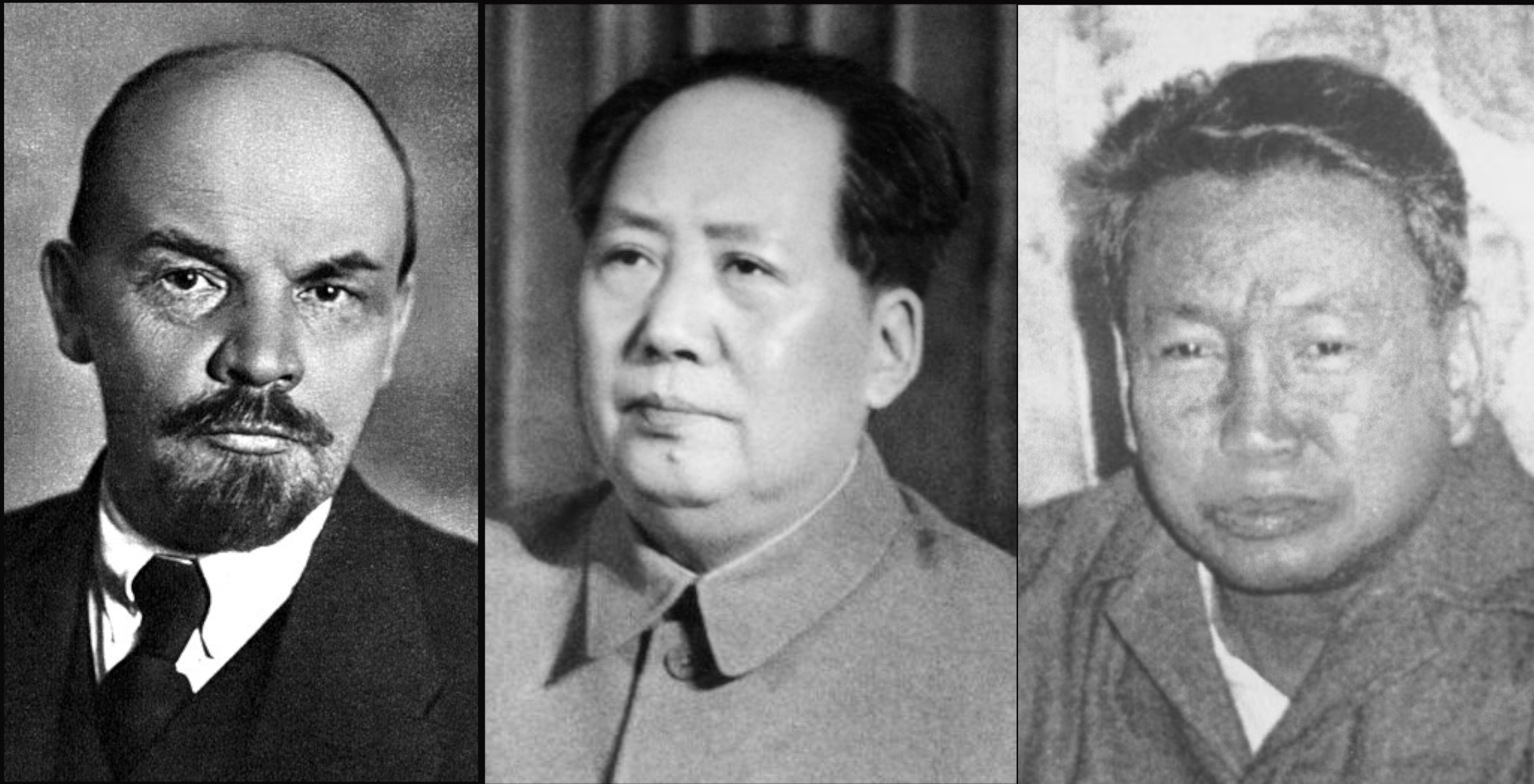
Here’s a thought experiment. First, picture Vladimir Lenin, Mao Zedong, Pol Pot and other communist despots of the 20th century. (I could add to that list the head of the National Socialist German Workers’ Party, but I don’t want emails purporting to correct me.)

Now imagine if part of their pitch to the public had been the following:

  • Men pretending to be women should compete against women in women’s sports, and, after the women lose to the men, they should be forced to shower with them;
  • People should be judged not on their merit or even their economic class, but on their skin color, and, moreover, those with skin colors who commit murder at 7x the ordinary rate should be judged more favorably;
  • Gay people should get preferences in admissions and hiring;
  • We should abolish our national borders;
  • Boys having adolescence issues should be called “girls” and have their penises cut off; and
  • Criminal laws are illegitimate.

If Lenin, Mao, Pol Pot and the other communists had preached such nonsense, the result would have been fantastic. Because they never would have come to power. And so we would have avoided 100,000,000 deaths caused by communism.

Fast forward to today. In an incredibly lucky twist of fate, would-be socialists and communists calling themselves Democrats over the past two decades did pitch that nonsense.

Enough people paid attention and recognized it as the nonsense that it was, that the Democrats were finally voted out of power.

Yes, there was also the matter of their latest leader and his senility, corruption and incompetence. But in the absence of their culturally woke nonsense, the Democrats/socialists/communists probably would have overcome the drag of their bad leader. They probably would have won the last election, and we’d be well down the road to lethal, ruinous economics.

That’s because socialism polls surprisingly well. Although people understand that men in drag should not beat and shower with women, they understand basic economics less well.

Among young voters especially, there’s a convenient tendency to believe that the reason they aren’t as wealthy as they’d like is because rich people are stealing their money.

Many young people believe this because they’ve never heard of Marx, Lenin, Mao, or Pol Pot, or the destruction and misery they inflicted. That’s no surprise, for their “teachers” are mostly (not all, fortunately) socialists themselves.

Democrats are now at a crossroads. One road is the one they’re on – the road of socialism in combination with woke cultural issues. The other road lets go of the woke cultural issues while continuing the socialism.

It’s common wisdom, at least outside the fever swamps of academia, that the Democrats need to take the road away from woke cultural issues if they want to win elections. To win elections, they should focus on socialism, not rainbows and bathrooms.

I am praying they don’t take that advice. I’m praying they keep losing elections by staying on the road of woke cultural issues in combination with socialism. If they’ll just stay the course, the story of the 21st century might be the 100,000,000 lives that we didn’t lose to communism.

Chief Justice Roberts isn’t your hired gun

The Republican-appointed Justices on the Supreme Court are now six of the nine. Unsurprisingly, the ideological tilt of the Court is more conservative than it’s been in two or three generations.

It shows. Last year, the Court took the conservative side in reducing deference to administrative agencies; deciding expansively in favor of presidential immunity (which of course benefits both liberal presidents and conservative ones, but the particular case that was decided benefited a conservative one, namely Donald Trump); limiting the obstruction of justice laws (which could also benefit liberals, but the particular case decided concerned the Jan. 6 protestors); allowing the removal of vagrants from public property; and striking down a ban on “bump stocks” that are used to convert a legal semi-automatic rifle into something akin to a “machine gun.”

In the few years prior, the Court took the conservative side in outlawing affirmative action in universities; overturning Roe v. Wade; limiting the president’s power to cancel student loans; and siding with religion over gender rights.

But that’s not enough, some of our tribe are howling. Some of the six Justices appointed by Republicans are not toeing the party line, they complain.

Indeed, in a few recent cases, Chief Justice Roberts and Justice Amy Coney Barrett, in particular, and, to a lesser degree, Justice Kavanaugh, have failed to come out on the “right” side of cases. And so, they’re derided as something less than “real conservatives” because they have failed occasionally to vote with the conservative “block.”

The critics point to the three liberal Justices, who typically do vote as a “block.” Getting a fix on this, however, is not easy. As I noted above, sometimes it’s not obvious which side of the law is doctrinairely the liberal one and which is the conservative one, apart from the liberal and conservative litigants who happen to be litigating that particular case.

For example, if President Trump wants to do something in the next four years that is legally equivalent to canceling student loans, what people see as the “liberal” side and the “conservative” side of Presidential power could flip.

But I will admit that on other issues, the liberal and conservative sides are ascertainable apart from the identity of the particular litigants in the case. On those issues, it is fair to say that in recent cases the three liberals have pretty much voted as a block, while the six conservatives sometimes have not.

In support of that conclusion, one source notes that in the ten politically-charged decisions last year that were 5-4 decisions (meaning at least one conservative “defected”) the three liberals voted as a block every time, while the six conservatives split seven times.

Some in my conservative tribe shout that the conservative Justices should vote as a conservative block, just as the liberals vote as a liberal block. Fight fire with fire, goes the reasoning.

I see two problems with that approach. One is practical and the other is moral.

The practical problem, as I’ve already stated at least twice, is that it’s not always apparent which side of the law – apart from the particular litigants in that case – is the “conservative” side and which is the “liberal” side. Today’s case decided on an expansive reading of the Second Amendment could, tomorrow, present a compelling opposite decision on law-and-order grounds.

You see, individual rights – whether they’re Second Amendment or First Amendment or simply common law or statutory rights – do not exist in a vacuum.  For every “right” held by one person there is a corresponding obligation on other persons to permit the exercise of that right. One person’s right to free speech means other people have an obligation to hear or at least tolerate that speech.

That obligation sounds trivial, until the speech by one person that others are obligated to tolerate is speech advocating, for example, another Holocaust or a speech mocking a child’s disabilities or a speech that arguably incites violence or perhaps is defamatory or maybe it’s just simply untrue. 

The task of the law is to balance rights of one set of people with the obligations of the rest of the people.

It’s not easy. To say simplistically that conservatives stand for lots of “rights” for some people gets you nowhere, because it is to say, simultaneously, that they stand for lots of obligations for other people.

That’s the practical problem with demanding that conservatives vote as a block just because liberals do.

The moral problem is that we conservatives are better than that. In war – which, after all, is just politics in another form – one side sometimes commits war crimes. That does not justify war crimes by the other side. If it did, where would that end?

I’m glad Americans don’t commit war crimes just because our adversaries sometimes do, and I’m glad Supreme Court conservatives vote for the law, not for the litigants.