Glenn K. Beaton is a writer and columnist living in Colorado. He has been a contributor to The Wall Street Journal, RealClearPolitics, Powerline, Instapundit, Citizen Free Press, American Thinker, Fox News, The Federalist, and numerous other print, radio and television outlets. His most recent book is "High Attitude — How Woke Liberals Ruined Aspen"
We don’t need to invade Greenland. We can instead buy the Greenlanders. Here’s my scheme.
First, let’s review what’s at stake. Greenland is the size of Texas. It’s strategically positioned in the North Atlantic. It extends almost to the North Pole (a spot that is on ocean ice north of Greenland).
We already have an air base in Greenland above the Arctic Circle which serves to provide early warning of incoming Russian missiles and bombers. And we also have our own bombers and missiles stationed there.
Greenland is rich in natural resources, including petroleum, fish, fresh water, gold, lithium and rare earth metals.
The population of Greenland is only about 57,000 people, 3,000 polar bears and 50,000 seals. The largest town holds only 18,000 people – smaller than the enrollment of a typical liberal arts college.
Denmark claims to “own” Greenland because it was settled by a few hundred Vikings – you know, pirates – thousands of years after it was settled by Native Americans. Greenland is technically a Danish colony today. In today’s world, however, that doesn’t give the Danes a claim to it. If anything, it makes the Danes “colonizers” and gives Greenlanders a claim against Denmark for reparations.
At some point, Greenland will be absorbed by one of today’s superpowers. It’s just too good and too vulnerable to pass up. Denmark is not in a position geographically, militarily or economically to resist a takeover. As for Greenland’s own military, well, there isn’t one.
The official language of Greenland is Eskimo. It’s not officially called that, however. (In fact, Eskimos aren’t officially called Eskimos anymore, either. They’re now called Inuit. Don’t ask why. That would be racist. But it has to do with raw meat.) The official language is officially called Kalaallisut. But most inhabitants and nearly all educated ones also speak English.
Given that 88% of the island claims to be Inuit, their loyalty to Denmark – the colonizers – is doubtful.
Of course, the U.S. could conquer Greenland with the Nantucket Police Force in a weekend. But there’s a better way.
Offer the Greenlanders money. Say, about a million dollars per man, woman and child. Since there are only 57,000 inhabitants, the total bill would come to only $57 billion.
That’s chump change. It’s less than 1% of the U.S. annual federal budget. It’s less than 4% of the outstanding student loan debt in America. It’s about what Somali immigrants defraud us out of in a couple of years.
I can see it now. We’ll annex Greenland. The Greenlanders will be thrilled and wealthy. We’ll build Trump Towers all along the coast, legalize gambling, and recoup from the inhabitants our $57 billion in a matter of months.
Democrat historians outnumber Republican historians by somewhere between 8 to 1 and 19 to 1. The disparity is even worse than those ratios suggest, since many of the Democrat historians are not just Democrats, but hard-left ones, while virtually none of the few Republican historians are hard-right.
There’s a name for hard-left historians. They’re called “tenured professors” and we pay their salaries and give them summers off. There’s also a name for hard-right historians. They’re called “Uber drivers” and we pay their salaries, too, but they don’t get their summers off.
It’s no surprise that historians have not looked at Donald Trump in a historical context. They’re too busy simply bashing him as a “threat to democracy” along with whatever epithet du jour is dished out by the pseudo-academic establishment in concert with the Democratic National Committee.
Admittedly, there are still one or two Republican historians in existence. Not all are Uber drivers. But they, too, have not done much to contextualize Donald Trump. They’re instead simply doing the polar opposite of what the army of leftist historians are doing. They’re cheerleading the Trump Presidency. You know who you are.
When a person is a history professor on the left, or less often on the right, maybe the lure of public grants and private clicks is just too strong to actually profess some history.
In any event, since the historians on both sides are busy practicing politics, your undersigned political junky will practice a little history. Someone has to.
Let’s start small. We could compare Trump to FDR, who bullied the Supreme Court into approving his welfare state even though it plainly ran afoul of the Constitution. He succeeded by threatening to expand the number of Supreme Court Justices to whatever number was necessary and packing it with his toadies.
Or we could compare Trump to the other Roosevelt – the one known as Teddy – because Teddy was a Rough Rider and, well, Trump is a rough rider.
Or we could compare Trump and his Greenlandic hegemony with Jefferson who doubled the size of the young nation by purchasing the Louisiana Territory without Congressional authorization.
Let’s go back a bit further.
Alexander the Great was the son of a Macedonian king who was publicly assassinated when Alexander was only 20. There’s disagreement about whether Alexander was behind the plot but, in view of his subsequent brutality and ambition, there’s no disagreement that such a plot was certainly within his character.
Alexander took the throne and immediately conquered much of the known world at a tender age when much of today’s youth is still on their parents’ health care insurance. He subjugated Athens. He put Persia out of business for about 2,400 years (until Benjamin Netanyahu and Donald Trump had to perform another smack-down last summer).
He founded a city on the coast of Egypt that became one of the great cities of the age. He had the unmitigated self-centeredness to name it after himself, Alexandria. The towering lighthouse he commissioned for the Alexandria coast was one of the Seven Wonders of the Ancient World, and stood for a thousand years.
Alexander himself stood for fewer than 33 years and was in power for only 12. But which do people remember, Alexander or the lighthouse?
(Since we’re on the topic of namesake cities, I can imagine TrumpopolisTM as a city. Send royalty checks for that name, Mr. President, to TheAspenBeat.)
Historians who are still practicing history say Alexander was a thug. He burned down Persepolis, the great Persian city in present-day Iran. He enslaved hundreds of thousands. He was gay (as were many ancient Greeks on occasion) but evidently not happy.
Alexander’s empire didn’t last, but the Greek civilization did. He was a despot, not a democrat, but his worldwide influence permanently chiseled Greek culture into the Roman and Judaic worlds, and ultimately into our own. Alexander wasn’t good, but he was certainly great.
On to another despot, Julius Caesar. Forget about Greenland, this guy invaded France. Then he went home and declared himself dictator. Desperate times call for desperate measures which call for desperate men.
It didn’t end well for Caesar, but it did end well for Rome. The ensuing empire ruled the known world for the next 500 years, establishing the “Pax Romana” that was the most peaceful time in ancient history.
We’ve named things after Julius Caesar – a casino, a surgical procedure, a month in the calendar, and a salad. No battleships, yet.
Then there was Napoleon Bonaparte. The Corsican seized power in France in the aftermath of the French Revolution where a succession of bloodthirsty mobs had made ritual machine-beheading into a spectator sport. It was something like being canceled, but more so.
Napoleon’s reach exceeded his grasp, especially in the Russian winter where half his army was frozen, starved or shot.
For that, Letitia James or some such person got Napoleon exiled. He came back for one last, brief round of glory, but met his Waterloo in 1815. He was then exiled again, and died on a remote island in the South Atlantic.
Like Alexander and Caesar before him, Napoleon wasn’t good but he was great.
America shows some parallels to the waning days of ancient Greece, the deteriorating Republic of Rome preceding the grandeur of the Empire, and post-Revolution France.
By some objective measures, our best days are behind us. National debt is far higher than ever before. Student achievement has plummeted.
A large portion of the population embraces socialism. Experiments over the years have proven socialism to be destructive and divisive, but the adherents are blissfully ignorant of those experiments, as are their teachers.
The basic competence of America’s governing elite is abysmal. Immigrants are allowed to defraud the people out of billions on the grounds that it would be racist to stop them. Trillions were spent on virtue-signaling in the guise of climate-change abatement.
For decades, the border was wide open – the government was even sending airplanes to pick up migrants for the express purpose of illegally plopping them into the country. They get commercial drivers’ licenses, welfare, college scholarships and voting rights, no questions asked.
Public discourse has deteriorated to yard signs, cable TV shouting matches, and internet drive-by commentary.
The democratic republic established by our Founders is nor equipped for this mob rule any better than post-monarchy France was.
Enter Donald Trump. He is not a good man and never will be, but he may prove to be a great man. As in the case of other historical figures, consider his timing, circumstances and luck – and sheer audacity.
What that greatness might mean for America will be revealed by history. But probably not by historians.
Note to Readers: This is the final installment of a three-part series. Part One is HERE and Part Two is HERE. I call this final installment “Choose Your Destructor.”
Part One of this series discussed the rise of Western Civilization from the Greeks and Romans. Part Two concluded with the sad realization that this Western Civilization is falling. The question for this final Part Three is, what will replace it?
It won’t be Russia, “a gas station masquerading as a country,” as John McCain famously put it. McCain died before he could witness Russia proving him right by flailing and failing to conquer it’s eastern neighbor for nearly four years now, a conquering that any competent conqueror could have performed in four weeks.
Of course, by “eastern neighbor,” I’m not talking about the NATO alliance, or even Finland or Sweden. I’m talking about . . . drum roll . . . Ukraine. That’s right. Russia cannot even take over a country most people had never heard of before Russia made heroes of them, and still couldn’t place on a map even if the map were limited to Eastern Europe.
That leaves two powerful forces as candidates for the Destructor of Western Civilization – the nation of China and the imperialist religion of Islam.
China is an ancient civilization going back to the time of the pharaohs. They built their civilization the old-fashioned way — by hard work, merit and an inquisitive culture, much as the Greeks and Romans later built theirs.
The ancient Chinese differed from the Greeks and Romans in an important way, due to geography. The Chinese weren’t located on the friendly pond of the Mediterranean Sea, but rather on the shores of the vast and ferocious Pacific Ocean, and so they never developed an advanced seafaring technology. That limited their ability to expand, since the land to the immediate west of them was high and dry. Eventually, they traded with the West over the Silk Road, but that came late and entailed an arduous journey.
As a result, Chinese culture has always been insular. Until the 20th century, they didn’t give a fig about the West. They were quite sure their system and their people were superior to whatever the West had to offer.
They still often think that way, though now they see that the West – or at least America – does have some things to offer. Such as advanced AI microchips.
With or without the West, Chinese culture is successful by most measures, as one would expect of a bright and numerous people utilizing merit-based approaches to management.
To be sure, communism has corrupted Chinese culture, as it corrupts all cultures it infects. But Chinese communism is a little different. It’s not just an extreme form of socialism. They don’t practice “from each according to his ability and to each according to his needs.” Karl Marx was not Chinese.
The communism practiced by the Chinese is more like a state-regulated capitalism. Small businesses flourish independently in a free market economy. Large ones are often controlled or even owned by the government, but with the goal of maximizing wealth, not redistributing it. Foreign investment in China is encouraged. They emphasize manufacturing and exporting manufactured goods, something no communist country ever achieved during the Cold War.
The political system, too, is pragmatic in a way seldom seen in Marxist communism. People join the Party, they advance by showing ability and alliances, and the most-accomplished become part of an oligarchy or “politburo,” which chooses leaders.
The leaders they choose these days are not dictators in the sense of having absolute power. There’s always the oligarchy/politburo to deal with.
This should sound familiar. The Founders of the United States of America were an oligarchy. They were not elected. Rather, they knew and respected one another and built alliances among themselves to arrive at most decisions by consensus.
Oligarchies are not so bad. I sometimes wish we were now being ruled by the oligarchy of Madison, Jefferson, Hamilton, Monroe, Franklin, Adams and the other Founders, rather than by warring mobs, conspiracy theorists and a lying media.
Chinese culture is generally not imperial. That’s in part due to their geographical isolation and consequent wariness of outsiders and in part, relatedly, because they always thought their culture was too good to share. Whatever the reasons, they don’t have a tradition of subjugating and enslaving their neighbors. The Chinese could own most of Russia and all of Southeast Asia, at a minimum, but they don’t. (Yes, I know about their designs on Tibet and Taiwan.)
Nor are the Chinese a theocracy or regime of ideologues. They’re a pragmatic and patient people. The billion-plus of them will eventually dominate the world, but probably not by brute force. (Yes, I know about the brutality of Tiananmen Square.)
Their strategy in trade is an example. Their days of slave labor and child labor are largely over. With vast numbers of skilled workers, they manufacture huge quantities of goods at high efficiency and sell them at a small margin. The manufacturing skills and trading networks they’re developing will serve them over the long term.
It’s the long term they’re interested in. The Chinese were a civilization in the time of the Egyptians, and well before the Greeks and Romans.
Our assimilation by the Chinese will probably be gradual and not destructive. They’re not interested in killing their customers. They think of Americans the way we think of cattle – big and clumsy, but very useful once you domesticate them.
Don’t get me wrong. I don’t think the Chinese are nice people. They will exploit us, and they already are. Like cattle, we will be milked.
But we won’t be slaughtered.
There are things China admires about us, such as our inventiveness, our technological sophistication, and even our entrepreneurialism (despite or perhaps because of the fact that they themselves are, putatively, anti-capitalist communists).
With any luck, the Greco-Roman-Western culture that still dominates the world but is falling fast will not be extinguished, but will instead live on and be subsumed by China. Who knows, they might even improve on it, just as the Romans improved on the Greeks in some ways and we improved on them both in some ways.
They might even boot the Muslims out of Europe – something that European leaders lack the backbone to do even as the European people demand it.
Which brings us to the other possible group that could be our Destructor. It’s that old nemesis of the Greeks – the Persians. Or, more broadly, the Muslims. Of course, the ancient Persians were not Muslims, since Muhammad was still a millennium in the future, but there’s a straight line between the culture of Persia and the culture of Islam.
I will state some hard truths about the Muslims. Rather than grappling with those hard truths, some will simply dismiss the message by labelling me as the messenger “Islamophobic.”
If “Islamophobic” means fearing people who glorify the beheading of babies, the torturing of hostages, the defenestration of gays, and the raping of women, then I plead guilty. I am indeed Islamophobic.
One of those hard truths about the Muslims is that they have a nasty habit of conquering and converting infidels at the point of the sword – the ones they don’t kill outright, that is. To that end, they’ve invaded Europe multiple times, the most recent being the “mostly peaceful” invasion of the last generation.
They’re like strangers who crashed a house party. The kind hosts reluctantly let them stay. Then they repaid the hosts’ kindness by trashing their house. Now, the hosts are afraid to ask them to leave. Next, they’ll be sleeping in the hosts’ bed, with his wife along with the young girls they brought.
It won’t continue to be mostly peaceful. The party crashers see the hosts as infidels. They contend the hosts have no rightful authority over this house. They must submit and convert and then submit some more, and some more, or be put to death.
In fairness to Muslims, two qualifications should be mentioned. First, violence can be found not only in Muslim writings but also in Judeo-Christian writings. But violence in old Judeo-Christian texts is mostly ignored or viewed as allegorical now. When’s the last time you heard a Christian talk about literal jihad? Or globalizing an intifada? No mainstream Christian theologian preaches that we should invade Saudi Arabia and kill or convert them.
Many mainstream Muslim theologians, on the other hand, do preach that they should invade Europe and America, kill or convert us, and steal our stuff. Their leaders publicly label us Satanic. The great cathedrals of Europe will be converted into Muslim mosques in the next 50 years. Bet on it.
The second qualification is, not all Muslims believe in violence. In fact, the great majority of them do not. But – and this is a big but – when someone commits an atrocity in the name of his religion, others of that religion are obligated to condemn the atrocity and disown the criminal who committed it. Muslims seldom do.
I realize I’m asking for more from good Muslims than I’ve ever asked of myself. I’m asking them to risk everything by standing against religious atrocities, while all I’ve ever risked is losing a few tribal readers by standing against stupid tweets.
But if you don’t stand up to wrongs committed in the name of your religion or tribe, then you forfeit that religion or tribe to the wrong. So far, most Muslims have elected not to bravely stand up to wrongs committed in the name of their religion. They’ve elected to risk their religion rather than risk themselves.
It’s ironic that, once you scratch the surface, this religion cloaked in machismo seems to be 10% barbarians and 90% chickens.
Back to those plodding Chinese. The difference between Chinese and Muslim culture can be seen in a microcosm in their respective immigrants to America. Which do you prefer?
I prefer the Chinese. Given the choice, I choose to be assimilated by pragmatic, exploitative, profit-seeking Chinese rather than being conquered and converted, or worse, by violent, macho, chicken-shit Muslims.
I wish I didn’t have to choose – I wish there were still reason for optimism about the West – but there’s not. Being assimilated into China is our only hope for some semblance of our culture to survive.
I always disliked Rob Reiner as a liberal activist, though I’ve admired his work including When Harry Met Sally and A few Good Men.
His work and his politics, however, don’t matter today. What matters is that he and his wife were murdered in their home. Their troubled son has been arrested.
It’s a horrible, violent tragedy, any way you look at it.
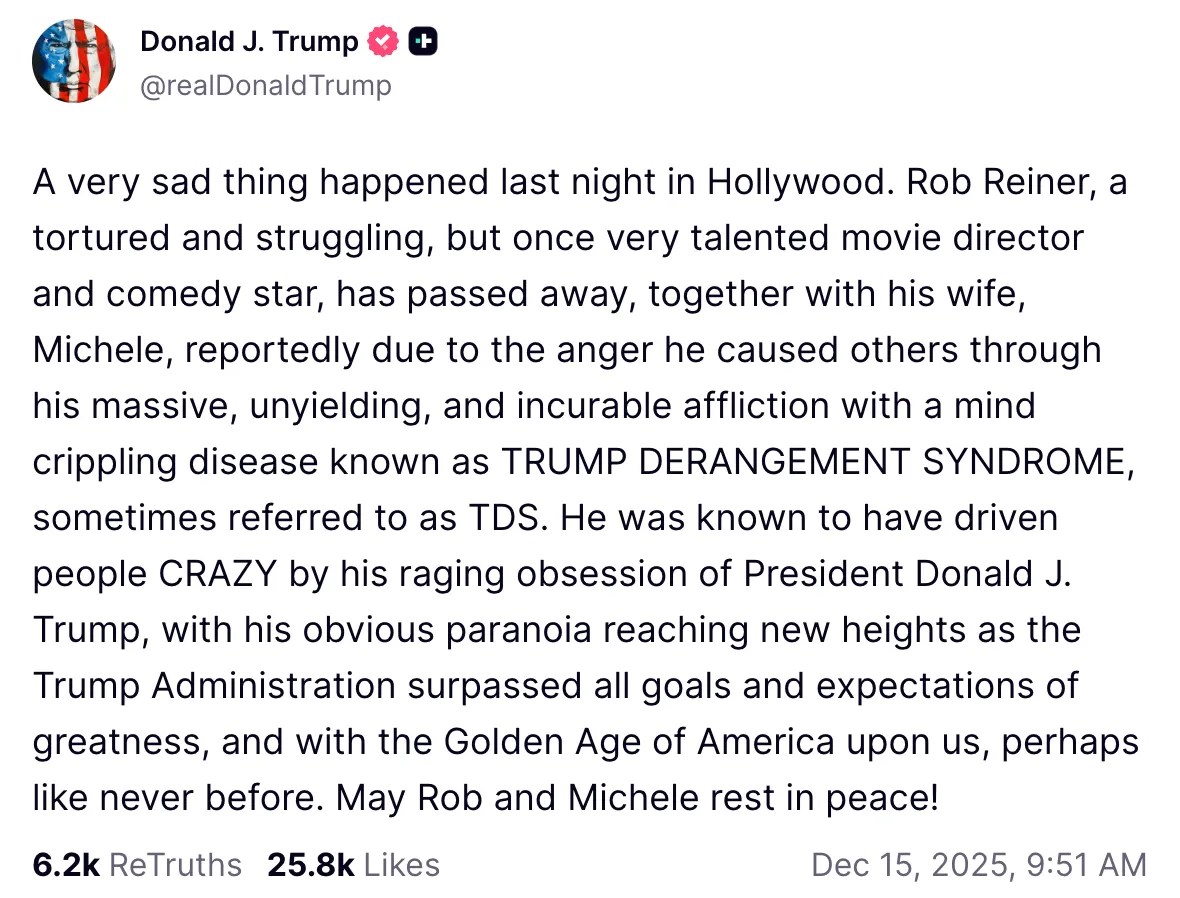
Unless you look at it the way the President did. Here’s his social media post in full:
Yep, the President marked the murder of this man and his wife — a murder for which their son has been arrested — by (1) ridiculing him the very next day for his politics, and (2) glorifying himself at their expense.
It should be noted that after Charlie Kirk was murdered, Reiner’s reaction was precisely the opposite of what we just saw from the President after Reiner himself was murdered. Reiner said the murder of Kirk was “horrible” and “unacceptable.” He went on to express admiration for the words of Kirk’s widow at his funeral.
I voted for Trump three times. To this day, I think the nation and the world are better off than we would have been with any of the three candidates he ran against. Witness the Joe Biden so-called Presidency.
Trump has improved America and the world, from the Mexican border to the Middle East, from his first term Supreme Court appointments to his second term war on wokeness. I applaud President Trump, and I’m proud of my votes for him.
But today, it appears the 79 years of Donald Trump may be catching up with him. Note that even the gold standard of senility – Joe Biden – was only 78 when he was elected.
Trump publicly ridiculed a man the day after he and his wife were murdered because he dislikes the man’s politics. He name-calls female reporters “Piggy” because he dislikes their questions.
His vainglory is clinical when it’s not comical. Think John Belushi with a samurai sword. He seems to be drifting into Nero and Caligula territory.
Some of his defenders contend he’s not ill, but just the biggest asshole to ever come near the White House (and that’s from his defenders).
OK, maybe the worst that can be said about Trump is that he’s just the world’s biggest asshole. But most Americans aren’t finding much comfort in that diagnosis, either.
You may say that he’s entitled to some anger after the way he’s been persecuted, and that I would be angry too. OK, I’ll buy that. But, unlike me, Trump has a country to run, a Presidency to fill, and an example to set.
Any way you slice it, in three years Trump will be gone. And in just one year, he’ll be a lame duck dealing with a hostile Democrat Congress.
It’s essential that the conservative cause – or MAGA if you prefer – survive. It’s a cause and a movement, not a person and a cult.
My loyalty is to that cause and that movement – to America – not to that man and his followers.
There’s a provision in the Constitution to deal with the incapacity of a President. It’s the 25th Amendment. At the request of the Vice President, a majority of the Cabinet certifies that the President is unable to perform his duties; Congress confirms it; and the Vice President assumes the Presidency.
That Vice President is JD Vance, not Kamala Harris. Thank God for that – and thank Trump.
Postscript: Condemn me if you wish. Name-call me if it makes you feel good. But consider this: If Trump is continuing to sink in the polls, and he is, and is losing three-time Trump voters like me, could it perhaps be time for a course correction before the GOP gets slaughtered in next year’s midterm elections? After all, your condemnation and name-calling won’t garner any more votes for our side – quite the opposite.
It’s a story right out of pre-woke Hollywood. Her country has been taken over by a series of corrupt socialist dictators (ah, but I repeat myself) who’ve seized the natural resources for their own personal enrichment. They’ve suspended or disregarded elections.
Not satisfied with stealing the country’s riches, the looters have also entered the drug business to support their palatial lives.
The regime operates in league with Russia, China, Iran and North Korea – not exactly upstanding citizens of the international community – whose main interests are in simply disrupting South America, along with sharing in the natural resource spoils.
All this is at the expense of the people. The country has gone from the richest in South America to one of the poorest in two generations. People are fleeing the country by the millions.
A brave, charismatic woman – a truly wise Latina – has stood up to the looting fascists. Risking her life, she demanded the ouster of the criminal dictator. She demanded fair elections. She’s been living in hiding, because the regime would surely imprison her, or worse, if they could find her.
Her name is Maria Machado. Her country is Venezuela. The Norwegian Nobel Committee this fall recognized her heroic work to free her country, and awarded her the Nobel Peace Prize.
President Trump has supported Machado and her efforts from the outset. He congratulated her for the prize, for her courage, and for her goals. She in turn said:
“This Nobel Prize is symbolic of that fight for freedom and is dedicated to the Venezuelan people and to President Trump for showing what strong leadership looks like in the moments that matter most.”
Speaking of strong leadership, the Administration assisted private American forces in extricating Machado from Venezuela for a harrowing journey to Oslo for the Nobel Prize. She arrived just hours too late to accept the prize in person, but her daughter accepted for her and read her stirring speech.
It’s an amazing story, still being spun. The Venezuelan dictator will fall – it’s just a matter of time (probably just weeks or months). Maria Machado will return to Venezuela. Socialist despotism in the Americas will be dealt a blow.
Stories in the American media (there isn’t really one in Venezuela anymore) including the New York Times and the Wall Street Journal have lauded Machado’s incredible efforts and harrowing journey. Give credit to the reporters and editors of both the Journal and the Times.
But the comments sections to those stories are chock full of hostility – not hostile to the Venezuelan regime, but hostile to Machado and Trump.
They’re hostile to Trump for the usual reason: Orange Man Bad! And they’re hostile to Machado for failing to scream “Orange Man Bad!”
The American left’s anger at Machado is heightened by the socialist dictator overlay to the story. They wonder, gee, what’s next? Will Trump go after our socialist friends in Cuba?
The American left reluctantly admit that murderous terrorism is an “unfortunate accident” and narco-state kleptocracies are unseemly, but what’s really horrible are Western civilization, American capitalism and, most of all, Donald J. Trump.
How dare this woman thank and applaud Trump – in public, no less! – they grouse. In their eyes, she’s a freakin’ woman with freakin’ dark-ish skin. Doesn’t she know her place? When it comes to relations between white Yanquis and darkish Latinas, her place is to defer to us American liberals. What we say, goes. And what we say is:
“Orange Man Bad. We don’t care if you think he helps your so-called cause of fighting-for-freedom. Nothing done by Orange Man is good. Nothing. Especially when he undermines socialism.”
Ah, socialism. It invariably deteriorates quickly into corruption, graft, waste and cronyism, and then fascism, totalitarianism, torture and terrorism.
But the American left never stops trying it. They now argue that the proof it works is in the fact that Bad Orange Man thinks it doesn’t, and he’s always wrong.
But, in fact, socialism doesn’t work – even if Trump thinks it doesn’t. It never has, and it never will. In the matter of Venezuela, the left will wind up on the wrong side of history, once again.
In a Supreme Court term with several important cases on executive power, two stand out. Both will be decided this Spring.
One is the tariffs case, argued a few weeks ago. The three liberal Justices will go against Trump, of course, because Orange Man Bad. But even the conservative Justices – especially the three appointed by Trump – appeared skeptical that the President could unilaterally impose broad tariffs.
Tariffs are much like a tax. The taxing power is generally held by Congress, not the President.
Yes, there is a loophole allowing for emergency actions by the President, but the Justices were not buying the argument that there was an emergency requiring tariffs on coffee from South America, wine from France, machines from Germany, pharmaceuticals from Switzerland, cars from Japan, etc. etc. etc.
(Apart from the legal issue, I’ve written that the tariffs are somewhat defensible from an economic perspective.)
You may argue that the “emergency” is the overall trade deficit. That trade deficit emergency, goes the argument, requires sweeping action.
I won’t argue the point. I’m just telling you that the Supreme Court is not buying it. Expect a 7-2 decision against Trump, or maybe even a 9-0 decision.
Already, companies that have paid the tariffs (including some that we assume are on the righthand side of the political spectrum, such as Costco) have filed lawsuits against the government for a refund of the tariffs they’ve paid.
Confusion will ensue. The decision is likely to be fractured with multiple opinions expressing different reasoning, and will also be complicated since the tariff scheme itself is complicated.
The other case at the Supreme Court concerns whether the President has the power to fire the leaders of so-called “independent agencies.” Trump will win this one.
Independent agencies are curious creatures. Scour the Constitution, and you’ll never find a mention of them. They are largely the creation of New Deal legislation from the 1930s. Over the ensuing century, they took on a life of their own in the fertile and fecund federal bureaucracy, like slimy salamanders spontaneously generated from warm mudpuddles.
There’s no doubt the President can fire ordinary agency leaders, but these independent agency leaders seem to have a special status in the minds of Washington politicians.
They clearly are part of the executive branch, since they’re not part of the judicial or legislative branch, but purportedly cannot be fired by the chief executive – the President – because they’re “independent.” They effectively make policy and enact legislation without oversight from Congress or the President.
This raises two questions. First, how can Congress delegate away its legislative power under the Constitution to entities never mentioned in the Constitution?
Could Congress also delegate away their legislative power to private foundations like the Gates Foundation and foreign entities like the United Nations? (Congress thinks the answer is yes, and to some extent they already have.)
In any event, it’s quite ironic that the defenders of these independent agencies accuse Trump of violating the law by firing the agency leaders, when the very existence of the agencies is in violation of the Constitution.
The second question is, if the President cannot fire the leader of an independent agency, then who can?
Not Congress, since Congress wields no hiring and firing power beyond its own internal staffing. Outside that, its power to hire people is non-existent and its power to fire people is limited to the draconian and rarely-used power to impeach.
And not the judiciary, either. Judges have no power to hire or fire members of the executive branch. They can barely hire and fire their clerks and secretaries.
So, if the President has no power to fire these independent agency leaders, then they are virtually untouchable.
Presidents and Congressmen come and go, but bureaucracies go on and on – especially if their leaders cannot be replaced. The deep state lives forever.
But it’s also the outcome desired by a certain cohort of never-Trump Republicans. It’s amusing to see their pseudo-scholarly rhetoric decrying the administrative state – until it’s Trump (gasp!) who proposes modest control over it. Then, and only then, reining in the unaccountable, unconstitutional administrative state run by unelected bureaucrats is . . . you know what’s coming . . . a threat to democracy.
The Supreme Court decision on this will likely be less hypocritical than those pseudo-scholar never-Trumpers. All nine Justices know that the administrative state of Democrats spawned by independent agencies is an unconstitutional cancer on democracy, and that the only means to rein it in is through the President.
Based on that common understanding, the six conservative Justices will side with the President and the three liberals will side against him.
A good part of a person’s success in the game of life is a product of nature and nurture – his genes and the parenting he received. People who were unlucky enough to receive bad genes, or bad parenting, or both, tend to be unsuccessful.
Tragically for America, these people who are unsuccessful at life are the very people who are disproportionately successful at having babies. Those babies tend to inherit their parents’ bad genes and learn their bad parenting.
When those babies grow up (or, often, just partially grow up) they, like their parents, are unsuccessful at life but disproportionately successful at having babies. Those babies, in turn, wind up short-changed by both nature and nurturing.
What I’ve just described already takes us through three generations. In the end, there’s no end. We’ve set up a vicious and expanding cascade of poverty and failure.
The effect is a policy of survival – and propagation – of the un-fittest. Charles Darwin would predict adverse consequences for our species.
Before you take offense, I hasten to add that general rules often are riddled with exceptions. I grew up in in a family of six with modest means. We all turned out OK. But the fact that it sometimes rains in the desert doesn’t disprove the general rule that deserts are dry.
The welfare state makes it all the worse. This was recognized as early as 1965 by intellectuals such as Daniel Patrick Moynihan, the future Democrat Senator from New York back when the Democratic Party sometimes produced rigorous thinking rather than identity politics. Moynihan’s work focused on poor Black families but it’s not a Black issue per se; it’s a poverty issue.
Moynihan criticized social welfare policies where we pay unsuccessful people to have unsuccessful babies to propagate their failure at life, thereby amplifying this vicious cascade of poverty.
The more babies they have, the more money we pay them. Then their babies have babies, and we’re off to the races.
Perhaps our policy should be exactly the opposite. Perhaps we should discourage unsuccessful people from having unsuccessful babies.
A smart start to getting out of this hole would be to stop digging. We should stop paying unsuccessful people to propagate. To that end, eliminate the $3,000 child tax credit.
Then go a step further. Pay people not to have babies. A simple way to accomplish that would be to pay them to undergo sterilization.
That sounds cruel, but is it really? If “my body my choice” justifies people aborting unborn babies because they’re inconvenient, then surely it justifies people accepting money to prevent the babies’ conception. For gosh sakes, the manufacturers of condoms accept money to prevent the conception of babies.
Moreover, many if not most of the babies these people have are utterly unplanned. If it’s cruel to prevent unwanted pregnancies, then why haven’t we outlawed those condoms – along with birth control pills, the rhythm method, premature withdrawal, abstinence and chastity?
I recognize that courts are wary of government measures that produce sterilization. Courts might view a system where the government pays people taxpayer money conditioned on them being sterilized as tantamount to the government sterilizing them involuntarily.
So don’t do it through the government. Let foundations and philanthropists administer the system with private funds. A foundation or a rich guy (Elon, do you hear me?) could say, “Here’s $3,000 for anyone under 50 who wants to get sterilized. And we’ll pay the medical bills, too.”
The people that we want not to have babies would find that offer tempting, because $3,000 is a lot of money to those people. But the people we want to have babies would not find that offer tempting, because that’s not a lot of money to them.
Over time, we just might reduce the population of undesirables (not to be confused with deplorables).
You might ask, what about America’s fertility crisis? Yes, it’s a fact that American (and European) birthrates are less than what’s required to maintain the current populations. And so, the argument goes, we should provide incentives for people to procreate.
That argument is premised on the notion that when it comes to people, the more the better. I question that notion, especially when I’m forced to endure crowded freeways, crowded hiking trails, and crowded crowds.
We have eight billion of us. Is that not enough? I don’t know about you, but I rarely think, “Gee, I wish there were more people here.”
From a pure financial perspective, it’s true that an ever-increasing population is necessary to continue our Ponzi scheme called Social Security, where we need more and more workers to support more and more retirees who live longer and longer (though the effects of rationed medical care – which seems inevitable and already encroaching upon us – will partially solve that problem).
I submit that the way to fix the Ponzi scheme of Social Security is not to produce infinitely expanded pools of young suckers to support it, but to phase out the scheme. Like all Ponzi schemes, it’s unsustainable. We cannot increase our population forever to produce an ever-increasing pool of hard-working suckers to support an ever-increasing number of long-lived retirees. At some point, we run out of space, resources and suckers.
Even if the number of suckers we breed to support the burgeoning population of retirees is sufficient in quantity, they are apt to be insufficient in quality. How many generations of bad nature and nurture can a society withstand?
The Babylon Bee – America’s unofficial newspaper of record – said they are indeed, but it turns out to be satire.
I think.
The Bee’s piece was in the heavy wake of a story that Somalis in Minnesota bilked the government out of something like a billion dollars. I say “billion” not in the way I say “gazillion.” The figure is actually, literally – and by “literally” I don’t mean figuratively – something like . . . a billion dollars.
Their scheme was to send bills to the Minnesota state government for providing various forms of welfare relief to the public. It took off during Covid when the government all but legalized fraud because the best way to defeat a pandemic is to close the schools, print money, and drop it from helicopters.
Somali groups would set up phony organizations pretending to provide whatnot, from affordable housing to food for children, and send the government fake invoices for it.
Which the government happily paid.
There were lots of clues for a long time that the whole thing was a scam. The Wall Street Journal reports “The massive fraud was an open secret. Merrick Garland, who served as U.S. attorney general under Joe Biden, called it the largest pandemic-relief hustle in the nation” (emphasis added).
But this was Minnesota, full of “nice” Minnesotans and especially full of a governor who was very full of himself and fulsome aspirations. His name was Tim Walz, aka the 2024 Democratic Vice-Presidential candidate.
Rather than pursuing the abundant clues and whispers – nay, the smoking guns and shouts – of fraud, Walz waltzed on, out of deference to a key Democrat constituency – Somalis.
Today’s Somalis in America, you see, are the descendants of Somalians who were enslaved in America three hundred years ago and discriminated against ever since and so they deserve special favors like legalized fraud.
Well, no, that’s not quite right. Today’s Somalis in America arrived in just the last decade or two. They fled a bloody war-torn Somalia to come to American in order to earn a piece of the American Dream.
Well, no, that’s not quite right either. They fled a bloody war-torn Somalia, alright, but they came to America to be beneficiaries of the modern American welfare state which flowers in nice Minnesota.
Well, no, even that’s not quite right. They fled a bloody war-torn Somalia and came to America to rip us off – while accusing us of racism all the while.
Two lessons can be learned from this. The obvious one is that the modern welfare state is out of control. It all but begs to be ripped off. The people paying for the rip-off are you and me, and it’s not pennies – it’s billions.
The second lesson is more controversial. Here’s a good summary of it:
[R]adical Islam has shown that their desire is not simply to occupy one part of the world and be happy with their own little caliphate; they want to expand. It is a – it’s revolutionary in its nature. It seeks to expand and control more territories and more people.
And radical Islam has designs, openly, on the West – on the United States, on Europe. We’ve seen that progress there as well. And they are prepared to conduct acts of terrorism – in the case of Iran, nation-state actions, assassinations, murders, you name it. Whatever it takes for them to gain their influence and ultimately their domination of different cultures and societies.
That’s a clear and imminent threat to the world and to the broader West, but especially to the United States, who they identify as the chief source of evil on the planet.
That statement was by Secretary of State Marco Rubio (whose parents were legal Cuban immigrants) in a recent interview.
Americans like to think that their diversity is a strength, and, up to a point, it is. But that strong diversity consists of groups such as Protestants from England, Catholics from Italy, Huguenots from France, Amish from Switzerland, and Jews from Poland. It even consists of Buddhists from China and Hindus from India.
Something that all those groups have in common is tolerance for other religions and, mostly, tolerance for other cultures. The concept of “infidel” is foreign to these groups.
Muslims are often different. The concept of “infidel” is alive and strong in Islam. They’ve sought to conquer Europe since the seventh century, and nearly succeeded several times. Even now – maybe especially now – many publicly name-call America “the Great Satan.”
Even Nazi Germany, imperial Japan, the Soviet Union and today’s communist China never called us “the Great Satan.” We Americans are semi-amused by that moniker, but the Muslims flinging it are dead serious.
They see the indigenous religions and culture of their adopted nation as evil. That’s a clever feat since, after all, their culture and religion failed in the place they fled, they came here voluntarily, and we welcomed them – complete with their religion and culture that looks down on us. But that’s how they see our cultures, our religions, and us.
Maybe part of the reason for their contempt for us is that they see us as suckers.
Muslims therefore tend not to seek assimilation into American culture, a culture they despise. They seek, more than the Irish, more than the Asians, more than the Jews, to maintain their particular identity and distinct culture.
And to impose it on us.
We’ve already seen what happens when Islam reaches a critical mass in a Western nation, as it has in France and is nearing in England. Within our lifetimes, it is likely that the Notre Dame and St. Paul’s will be converted into mosques.
You think that’s ridiculous? Bear in mind that the first great Christian cathedral was in Constantinople – the incredible Hagia Sophia. When Constantinople fell to the Muslims, they eventually changed the name of the city to Istanbul but they immediately mutilated the Hagia Sophia into a mosque by ripping out the altar and burning the Christian crosses and all other Christian symbols and art. The Hagia Sophia remains a mosque to this day. (BTW, where’s the Pope on this?)
Muslims conquer and they convert, at the point of a sword if necessary, and sometimes even if not.
Like most Americans, it goes against my grain to think we should discriminate against a particular religion and particular regions of the world in deciding who can immigrate into our nation. But this is an exception, and a very important one.
The facts are still emerging through the fog of war (or is it the fog of law enforcement, or the fog of antiterrorism?). Sometimes people (including myself) draw conclusions on the basis of incomplete information, so let’s start with what’s really known.
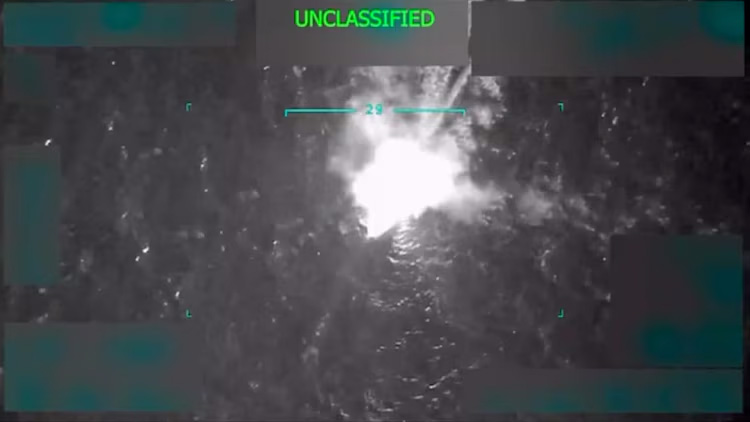
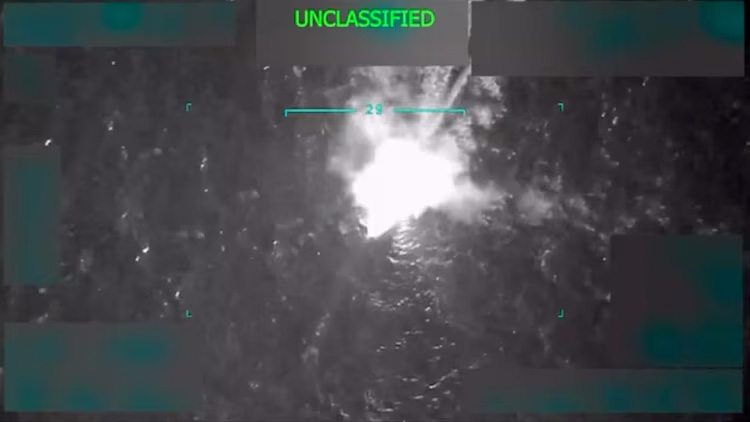
Our military launched another missile attack on a drug-smuggling fast boat. The boat burst into flames and was dead in the water but did not immediately sink. On-scene surveillance showed that not all of the 11 crew members were killed. One or two men were seen moving in the water.
Unlike the footage of other fast boats being attacked by missiles, this footage has not been publicly released, but the facts in the preceding paragraph are undisputed.
A second missile strike was then ordered. It obliterated the wreckage of the boat and killed the two remaining survivors. That, too, is undisputed.
The mission was observed in real time by the Admiral in charge as well as his boss, the Secretary of War, in a room at the Pentagon. Both men saw the first missile strike.
The Secretary of War reports that he then left the room to attend another meeting. The second strike was then ordered by the Admiral who evidently believed he had authority from the Secretary of War.
Here’s where it gets foggy. One report says that the Secretary of War instructed the military in advance to “kill them all.” He denies saying that.
He did say afterward that he supports the Admiral’s ordering of the second strike, and went on to proclaim “the fake news is delivering more fabricated, inflammatory, and derogatory reporting to discredit our incredible warriors fighting to protect the homeland.”
What’s the President say? When asked about the appropriateness of the second strike, he said:
“[The Secretary of War] said he didn’t do it, so I don’t have to make that decision.”
In the hurley-burley of the impromptu press conference aboard Air Force One, it’s not clear what, exactly, the Secretary told the President he “didn’t do.” It can’t be that he told the President they “didn’t do” a second strike, because they clearly did. Maybe what the Secretary said he “didn’t do” was to be the one who ordered it, since he was no longer in the room, or maybe what he told the President he “didn’t do” was to order the military to “kill them all.”
Apart from that ambiguity – something to be hashed out between the Secretary and the President – the most important words from the President about the second strike were the following:
“I wouldn’t have wanted that – a second strike. The first strike was very lethal. It was fine.”
Personally, I’ve defended the policy of bombing the drug smuggling fast boats. It’s a close call, legally, but the drug problem in America is very serious.
In the legal profession, there’s an expression: Hard facts make for hard law. America’s drug problem is a hard fact, and dealing with it requires some hard laws.
For that reason, I reluctantly support bombing fast boats loaded with lethal drugs in order to stop the drugs from entering America. I admit, it seems they could instead be simply followed and apprehended when they reach our shores, but Presidents get a lot of latitude in these matters of foreign affairs. I’ll give him that latitude in view of the seriousness of our drug problems.
But launching a second missile after the first missile wrecked and incinerated the boat, just for the purpose of killing the helpless survivors of the first missile, is a quite different thing.
Suppose the military had boarded the boat and found the two wounded survivors, rather than firing a second missile. Does anyone seriously contend they would be justified in executing them on the spot with a gun to their heads? If not, then why are they justified in executing them with a second missile launched from a different spot?
I think the President was right. The first strike was enough to stop the boat. There was no need to launch a second missile to kill the two wounded survivors in the water. Those killings were not necessary to the mission.
There’s a word for unnecessary killings. It’s on the tip of my tongue . . .
Like the President, I have little sympathy for drug runners, and if they die in the course of their criminality we shed no tears. But the President also knows that to murder them as they flail wounded in the water, well, that would make him worse than them. No thanks.
Credible reports are emerging on the latest shoot-fish-in-a-barrel episode in the Caribbean, where the force of the U.S. military is brought to bear on “fast boat” drug runners. For the record, I’ve supported these operations in the past.
A whistle-blower connected to the mission revealed that in this particular episode the boat and crew weren’t immediately vaporized. The initial missile strike destroyed the boat and killed nine on board, but the boat didn’t immediately sink. Two people were still alive in the water, wounded. The American military evidently saw from the air that the two men were alive.
The threat posed by this boat to American shores and American people was never imminent but was certainly real. Drugs kill, and they’ve recently killed more people than we’ve lost in highway deaths and gun shootings combined.
But the threat posed by this particular fast boat had ended. The boat was going nowhere.
The military had several options at that point. They could have simply went away. The effect would be to let the wounded go down with the boat or die of their wounds.
They could have rescued the wounded men and put them on trial for drug smuggling. Sure, the men were probably armed, and might have fought their rescuers – an apparent surrender can be an ambush. But that’s always a risk when taking a person prisoner. It’s one of the many risks that servicemen and women sign up for.
The mission leaders chose a third option. They conducted a “second strike” missile attack where they obliterated the already-disabled boat and killed the two wounded men who had survived the first strike.
That second strike was in direct violation of written Pentagon policy prohibiting attacks on shipwrecks where combatants on board are unable to fight.
I’ve defended these shooting-fish-in-a-barrel missions on the grounds that the law affords the President wide latitude in matters of foreign affairs. President Obama ordered lethal drone attacks on terrorists on foreign soil – including some who were American citizens, and I supported that as well.
A President does not need a Declaration of War from Congress to take action to defend American interests. The last time Congress issued a Declaration of War was 1942. (Both wars against Iraq were approved by Congressional “resolutions” that fell short of a Declaration of War.)
So, the absence of express Congressional approval for these actions does not especially bother me. What bothers me is the circumstances of this particular episode.
Put aside the fact that there’s been no judicial adjudication that these drug runners are, in fact, drug runners. Threats to American shores do not always lend themselves to due process determinations by old judges in walnut paneled courtrooms a thousand miles away.
And put aside the fact that these drug runners who are being bombed seldom get to America – they go to intermediate points such as Mexico or Caribbean islands where their drug cargo is transferred to some other drug runner.
And put side the fact that while these drug runners are certainly wrongdoers who deserve punishment, they are hardly drug kingpins like El Chapo with nine-figure bank accounts. They’re typically impoverished fishermen or peasants looking for a five-figure payday.
And put aside the fact that none of these fast boats has put up a fight. The crew are undoubtedly armed, but their arms are in the form of handguns, not surface-to-air missiles to deal with an F-16.
Put all that aside. It’s a close call, but I’m still willing to support the President in blowing up the drug runner boats. That’s not because I dismiss the gravity of doing so; in fact, it’s a matter of great gravity. Rather, it’s because I weigh that against the gravity of America’s drug problem.
Constitutional scholars are mixed on the legality of these fast-boat bombings.
But whatever the legality of a fast-boat bombing, making a second strike to kill the helpless wounded survivors – flailing in the water as they cling to their sinking boat – crosses a line. It’s in violation of Pentagon written policy, it’s a violation of the rules of war, it’s barbaric, it’s murder.
The President was understandably not aware of the situation in real time – he has other things on his agenda – but he said afterward that he would not have ordered the second strike.
The second strike was evidently on the direct orders of either the Secretary of War or an admiral in charge of the mission. Both were reportedly watching the mission live. The Secretary of War says the second strike was with his authority but he was out of the room when the order was given.
Either the admiral or the Secretary of War, or both, should resign or, in the case of the admiral, be court martialed. This cannot stand. It’s wrong.