The Wall Street Journal debases itself in a misleading Trump headline

I’ve read the Wall Street Journal for many years. I’ve even had a piece published in the Journal. The opinion page is excellent (even when I disagree with the opinions expressed there) and the news page is reliable (though it has drifted leftward over the years).

I was therefore surprised and disappointed to see the Journal’s coverage of a recent interview that President Trump gave to NBC News.

Trump was asked about the due process protections he should afford illegal aliens being deported. Here’s the transcript of the relevant part, as presented by NBC News itself:

“But even given those numbers [of illegals] that you’re talking about, don’t you need to uphold the Constitution of the United States as president?” Welker asked.

“I don’t know,” Trump replied. “I have to respond by saying, again, I have brilliant lawyers that work for me, and they are going to obviously follow what the Supreme Court said.”

A fair reading of that exchange is: (1) the interviewer asked Trump whether he would uphold the Constitution in connection with his deportation of illegals, (2) he replied that he’s not a lawyer, so he doesn’t know what the legal requirements are, (3) he has many brilliant lawyers who will tell him, and (4) they’ll “obviously follow what the Supreme Court” says.

The Journal presented the clip, but accompanied it with a very misleading headline. The headline read,

“Asked if He Has to Uphold the Constitution, Trump Says ‘I Don’t Know’”

That headline was misleading in at least three ways. First, it leaves out the context, thereby implying a context much broader.

The question asked of Trump was not the general question of whether he “has to uphold the Constitution.” Rather, it was a very specific question: It was whether Trump has to afford due process protections to illegals being deported.

Second, the headline omits the rest of Trump’s answer. He immediately went on to note in connection with this Constitutional issue that he is not a lawyer.

That’s not just a quibble. Even most lawyers would struggle to define the necessary due process protections for illegals. Do they get a full-blown jury trial? Do they get summary adjudication by an administrative judge? Do they get something in-between? Even the Supreme Court has not been crystal clear on this point.

Third, Trump wound up his answer by explicitly stating that he would defer to whatever the Supreme Court says.

In context, it’s hard to see what Trump said wrong. He did indeed start his answer with “I don’t know” but immediately explained why he didn’t know, and gave assurance that he would do as told by people who do know — namely, the Supreme Court.

The Journal’s headline parrots a similar headline from the outlet that did the interview, NBC News. I was not surprised to see NBC sink this low to rake up muck, but I was indeed surprised to see the Journal follow them down there.

Glenn Beaton practiced law in the federal courts, including the Supreme Court.

Liberal judges to violent, criminal illegals: “You’re Trump’s enemy, so that makes you my friend”

Judges lately often exhibit acute cases of TDS. One in Milwaukee was preparing to preside over the trial of an illegal who’d been charged with domestic abuse. In layman’s language, he was charged with beating his girlfriend and others to the point that some required hospitalization. Federal agents showed up outside the judge’s courtroom with a warrant to arrest the man, presumably to deport him.

The judge stalled the agents for a bit by sending them down the hall, then returned to the courtroom. While the agents were away, she spirited the violent illegal out the side door.

The agents suspected a ruse, and went outside. They intercepted the man on the street, though it took a potentially dangerous rundown to catch him.

A judge in New Mexico was harboring three illegals who were apparently members of a notorious Venezuelan gang. The judge gave them guns. The judge also took a hammer to the phone belonging to one, evidently because it contained pictures of beheaded victims. He didn’t want the incriminating evidence to be discovered.

These acts by judges are not just intemperate and illustrative of bad, well, judgment. They’re also crimes. It’s a federal crime to conceal illegal immigrants. It’s a federal crime to interfere with the investigations of federal law enforcement officials. It’s a federal crime to lie to them. It’s a federal crime to destroy relevant evidence of a crime. The statutory punishment can involve decades in the federal penitentiary.

Ordinarily, these judges would not side with a wife-beater, or with a gang member with photos of his beheaded victims on his phone. Even judges who are Democrats are not that loony.

So why did the judges do so in these cases? Here’s my theory.

The reason the judges sided with criminals in these cases was because the person who was after them was Donald Trump.

These Democrat judges perceive Trump as their enemy (probably correctly) and they perceive these criminals as Trump’s enemy (certainly correctly) and so that makes the criminals their friend.

“My enemy’s enemy is my friend” is a crude and amoral way to pick friends, but I suppose people have the prerogative to use whatever criteria they like in such personal matters.

But judges sitting in their courtroom are not engaged in personal matters. They’re engaged in public matters. Their job is to judge, and they’ve sworn to do so in accordance with the law. They don’t have the luxury of putting the law aside in favor of personal prejudices such as “the enemy of my enemy is my friend.” If they did, then they could decide that criminals are innocent simply because they happen to dislike the prosecutor. Or guilty because they happen to like the prosecutor.

I’m from the old-fashioned school, and so are almost all other lawyers and almost all judges and almost all civilized legal systems. In that school, the guilt or innocence of a defendant is based on what he did, not who he’s a friend or enemy of.

These judges know that, and they would agree with it – in the abstract. If offered a hypothetical where the evidence shows the defendant is guilty but the prosecutor is someone the judge abhors, the judges would say that’s the way the cookie crumbles. The defendant would be convicted on the basis of the good evidence presented, not exonerated on the basis of the bad prosecutor presenting it.

But in these particular cases – the real-life ones in Milwaukee and New Mexico mentioned above – the judges have become prisoners to their emotions. Their hate for Trump is so strong that they literally cannot think straight.

The judge’s best defense to the charges against them for aiding the criminal illegals, therefore, is a plea of insanity. And I think that plea is a pretty good one.

They’re deranged, and I mean that in a clinical way. Donald Trump has a way of doing that to Democrats. This derangement is not helping them with voters.

Glenn Beaton practiced law in the federal courts, including the Supreme Court.

JD Vance would be a terrific President right now

He wasn’t exactly a product of “white privilege.” He was born an Irish-Scot in Appalachia to a woman who was an alcoholic and drug user. His parents divorced when he was a toddler. He was abused, neglected, and impoverished.

He was raised mainly by his grandparents. Against the odds, he survived childhood. He enlisted in the Marines right out of high school. He served in Iraq, and was medaled and promoted.

He came home to enroll in the local landmark, Ohio State University. He graduated with a dual major in Philosophy and Political Science.

From Ohio State, he enrolled in Yale Law School. If you think it’s easy to get into Yale Law School without being a DEI applicant, try it sometime.  (For the record, I don’t contend that you learn anything at Yale Law School, but it’s indisputable that it’s extremely difficult for a white male to get in.)

Let’s recap. This Scottish-Irish hillbilly went straight from Appalachia to a tour of duty as a Marine in Iraq, to a dual major in Political Science and Philosophy at Ohio State, to Yale Law School.

Along the way, he was publishing political stuff, and befriended billionaire conservative entrepreneur Peter Thiel.

Don’t ask me how he met Thiel and convinced him to give him the time of day. But I’m guessing it’s the same qualities that got him from Appalachia to Yale Law School.

I’d say he never looked back, except he did. At this point in his life, he started work on what became an inspirational best-seller about his early life, Hillbilly Elegy, which was later made into a great movie directed by Ron Howard. Rent it and watch it.

He was elected a U.S. Senator at age 38, and Vice President of the United States at age 40.

Ah, Vice President of the United States. That’s the recent waiting room of some men who later sat in the Oval Office, some good ones and some bad ones – Richard Nixon, Lyndon Johnson, Gerald Ford, and George H. W. Bush. (I don’t even count the old senile guy with a “doctor” wife to lead him around to collect payola for the family business while the world went to hell.)

So, is JD Vance of Presidential timber?

First, does he have the ambition? Well, yes. If he didn’t, he’d be in Kentucky driving a pickup truck of moonshine.

Is he smart? Yes. See, Yale Law School, above.

Does he take it personally if someone takes a position in opposition to his? Not as far as I can tell, but he’s likely to demolish that person’s position.  

Does he go around picking fights he cannot win just because he enjoys fighting and enjoys  the attention? No, I don’t think so. From what I’ve seen, he picks a fight because that particular fight is an important one and he knows he has a good chance of winning it.

Perhaps as a Marine in Iraq he learned an old saying of pilots in the Air Force: There are old ones and there are bold ones, but there are no old, bold ones.

Can he criticize a person’s position without name-calling? Yes, he can and he does. Calling people names is for people who are losing the argument.

Is he vague and unpredictable? Usually not. He may have learned something in the practice of law: Only be vague and unpredictable on purpose, never accidentally.

Does he tweet in ALL UPPER-CASE LETTERS as if he’s shouting at you? No, the little letters seem to get his point across just fine. He knows that, as in name-calling, shouting is for people who are losing the argument.

Does he have a beautiful wife who seems to genuinely love him? (Indulge me here. I like a First Lady to be firstly a lady.)

Yes, He appears to. They’ve been together since he was barely out of Appalachia.

I could go on, but you get the point. JD Vance is Presidential material.

Ah, you say, but maybe he’s unelectable.

Ah, says me, that’s the genius of this. See United States Constitution, Article II, Section 4 . . . Impeachment.  

To impeach Vance’s boss (whom I voted for three times), we would need the help of the Democrats. An impeachment conviction in the Senate requires 67 votes, and the Republicans have only 53.

Would the Democrats be so deranged as to vote to convict Vance’s boss in the Senate, and persuade a dozen and a half Republicans to join them there, thereby putting JD Vance into the Oval Office without ever being elected to it?

Yes. Recall what the “D” stands for in TDS.

The tariffs are a needed blow to the “progressive” tax system

Democrats think Americans pay too little in taxes. More specifically, they think “rich” Americans fail to pay their “fair share.”

They play fast and loose with those terms “rich” and “fair share.” Their unstated definition of “rich” is people who make more than the Democrat hurling the allegation. And they never do define “fair share.” It’s always just more, more, more on the rich, rich, rich.

Never mind that the top 1% of earners pay 40% of federal income taxes, the top 5% pay 61%, and the bottom 50% pay only 3%.

There’s another kind of tax in the news this week. President Trump announced tariffs on imported goods. The tariffs vary by country and by goods, but the broadest one is 10%. Some things are exempt from the new tariffs, and some things are subject to a higher one.

Democrats argue that these tariffs are, in effect, a sales tax on American consumers. The argument is that foreign manufacturers importing their wares into America will simply pass the tariff cost on to American consumers in the form of higher prices.

That’s approximately true but not entirely, for several reasons. For one, the foreign manufacturers will probably absorb some of the tariffs themselves by taking it out of their profit margins. To the extent that happens, the tariff is a tax alright, but it’s a tax levied on foreigners.

I like the idea of foreigners paying some of Americans’ taxes.

For another thing, Americans will probably shift their buying habits somewhat away from foreign goods once tariffs make them more expensive. It’s hard to predict how much of that will happen.

For simplicity, let’s assume what the Democrats and their media allies have assumed – the worst. Let’s assume that the quantity of imports does not decline, that this 10% winds up getting levied on all of them, and that the whole 10% gets passed on to American consumers.

What would that add up to in dollars?

America imports about $4 trillion worth of goods annually.  Therefore, under those assumptions, a 10% import tariff would cost Americans about $400 billion in higher prices.

The Democrats would have you believe that this $400 billion goes up in smoke. It does not. Like any other tax, it goes to the U.S. Treasury.

Even Democrats know this. (Well, maybe AOC doesn’t.) But they nonetheless rail against this particular tax, while supporting all other taxes.

I suspect that their real opposition is not to the tax, but to the taxer. The Democrat’s mantra is Orange Man Bad, and so everything he says and does is bad, even when he proposes something they usually love – a tax increase.

Now here’s an interesting connection. In Trump’s first administration eight years ago, the Republicans passed sweeping tax cuts. Tax cuts benefit the people who pay real taxes. Duh.

As pointed out above, the people who pay real taxes are largely the people who make real money. Double duh.

And so, the Trump tax cuts benefited real people who make real money and therefore pay real taxes. They didn’t much benefit people who don’t make money and therefore don’t pay taxes. Triple duh (and let’s get out the tiny violin).

Those Trump tax cuts are set to expire at the end of this year. If that happens, the result will be a tax increase amounting to about $400 billion/year.

If that number sounds familiar, it’s because it’s the same number mentioned above in connection with the tax revenue that will be realized by the new tariffs.

That’s right, the tariffs will approximately pay for extending the tax cuts. A coincidence? I think not.

There’s another twist. The people who will benefit from extending the tax cuts are not the same people who will pay the tariffs that offset the cost of them. The tariffs will be paid by everyone buying imported goods – people who buy Japanese cars, Korean electronics and South American vegetables. In short, they’ll be paid by pretty much everybody.

But extending the tax cuts will benefit people in proportion to how much they pay in taxes. The people who pay a lot of tax will get a lot of benefit. As pointed out, those are people who are wealthy.

An apt slogan might be, “To each according to what was taken from each.” Apologies to Karl Marx.

The end result is to chip away, a bit, at the progressiveness of the tax system – the system where wealthy people not only pay more because they make more, but also pay at a higher percentage.

That progressive tax system is how we got into an arrangement where the bottom 50% pay only 3% of federal income taxes while the top 1% pay 40%.

You may like this outcome, or not, depending on where you fall on the income spectrum.

But as a matter of social policy, it’s clear that our current progressive tax system leaves the bottom 50% as non-stake holders. Those non-stake holders naturally push for higher taxes because they know they themselves won’t have to pay them. They get to free load.

Democrats have pandered to those free loaders for a long time. That’s been successful for the Democrats, but destructive to the nation.

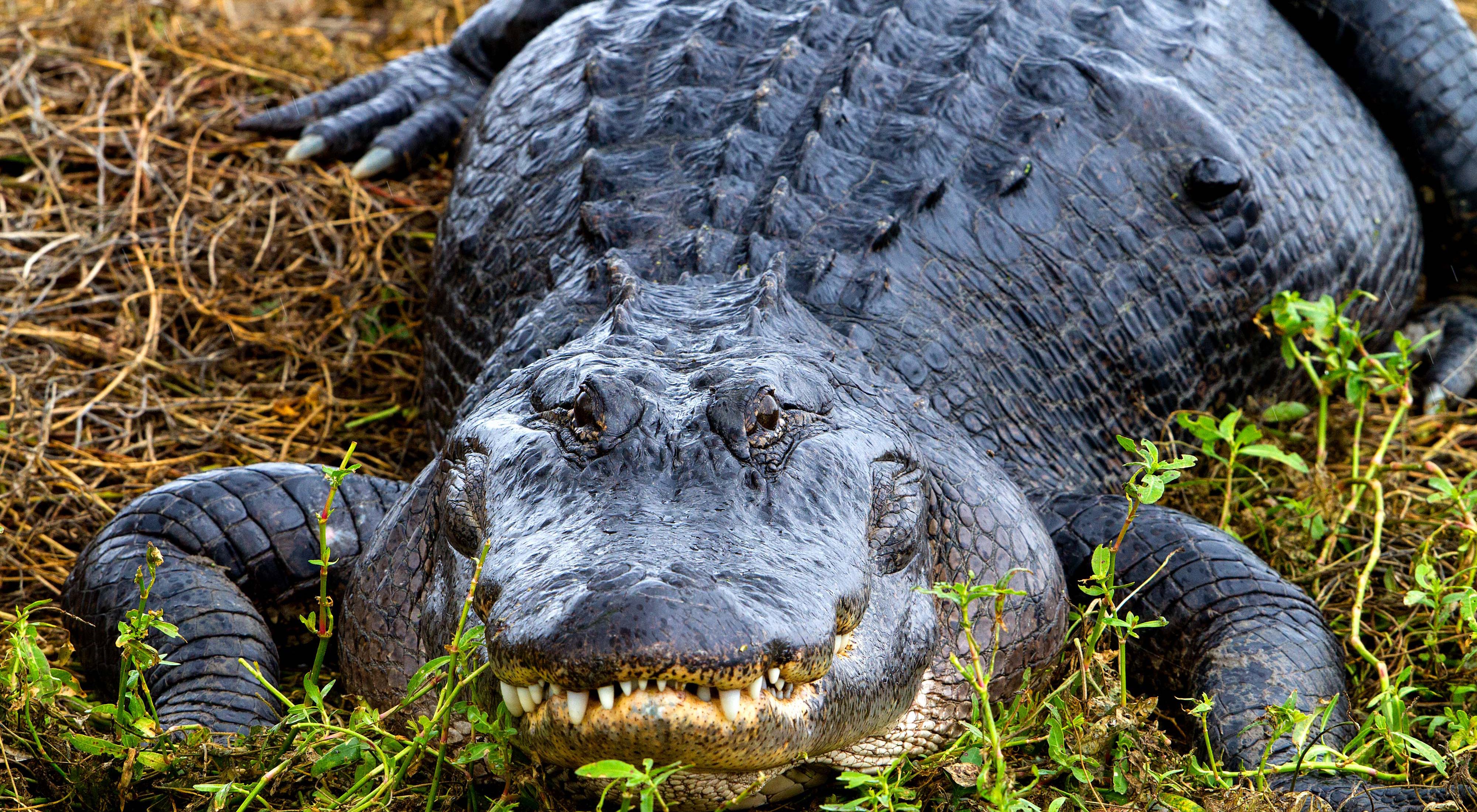
Should we kill all the alligators, or get out of the swamp?

Lawyer advising client engaged in expensive litigation: The goal should be to get out of the swamp, not to kill all the alligators.

Dishonest media-alligators undermined President Trump’s first Presidency with bogus charges of Russian collusion. Corrupt deep state-alligators fabricated allegations to defeat his re-election in 2020. Partisan prosecutor-alligators in New York and Georgia brought bogus charges in trying to derail his election last year.

Overreaching judge-alligators in some of the federal district courts now seek to undermine his national security policies – an area that the Constitution largely reserves to the President. 

It’s a testament to Trump’s courage and stamina – and to the nation’s structure and people – that he has fought and mostly beaten the alligators over the last ten years. In his spare time, he got himself elected President twice and survived two assassin-alligators.

He’s been up to his elbows in alligators. I understand why he’s going after them now. I probably would, too.

It’s also important to note, in fairness to Trump, that we didn’t elect him to get us out of the swamp; we elected him to drain it. Draining the swamp is inevitably hard on the alligators who feed there.

But here’s the issue. Not all of Trump’s targets today are alligators and not all are even in the swamp. 

Such as Big Law.

I don’t expect you to feel sorry for girly men and manly girls pulling down seven-figures to say res ipsa loquitur. And it’s a fact that Big Law (which I’ll define as the several dozen American law firms with over 1,000 lawyers) is a mostly liberal crowd. That is evident from their political contributions which are largely to Democrats, and from their pro bono activities which are mostly for liberal causes.

But you could say the same thing about nuns. (Not the seven-figures part.)

In my practice, seldom did I see Big Law behaving like a political institution. In fact, the firms that comprise Big Law are rivals which rarely act concertedly or even cooperatively. Rather, they make a good living by fighting with one another on behalf of their opposing clients.

Those clients are notably moderate, since the executive ranks of the Fortune 500 include very few radicals. In their choice of lawyers to represent them in their next billion-dollar merger or bet-the-company antitrust case, they aren’t exactly looking for Che Guevara.

As for individual lawyers, the recipe for success in Big Law has nothing to do with political leanings. The recipe is: do great work, have great clients, and bill great hours. (I had at least one of those ingredients when I was in Big Law, and wound up doing OK.)

Big Law is simply not an alligator, and, even if it is, it’s not in the D.C. swamp (with the possible exception of the firm that was involved in the Steele Dossier, an involvement from which the firm has distanced itself after the departure of a key lawyer).

Even if Big Law firms are indeed Democrat institutions, notwithstanding what I’ve pointed out above, being a Democrat merely makes a person hypocritical, socialistic, loathsome, and halitotic. It doesn’t make them a criminal.

So, is it appropriate to bring the enormity of the U.S. Government to bear on private enterprises like Big Law for the sin of choosing one political doctrine over another?

If so, then why limit it to Big Law? Why not have the government go after Big Business for their political leanings? Why not go after Big Billionaires for theirs? Why not go after Big You and Big Me for ours?

Why not go after Big Nuns?

Before you moan “damned straight!” consider the fact that someday there will be another Democrat President, someday there will be another Democrat Congress, and someday there will be another Democrat Supreme Court.

If America is to continue, it will be as a nation of predictable laws and sound principles, not a series of regimes exacting revenge on their predecessor regimes.

That said, I can hardly wait for Trump and Musk to bring down the teachers’ unions.

Glenn K. Beaton practiced law in the federal courts, including the Supreme Court.

Columbia is led by a mom. They need a leader.

Moms are wonderful creatures. They soothe, and they smooth. They resolve conflict with milk and cookies. Without moms, we wouldn’t be here.

Not all women are moms. Joan of Arc was not a soother or a smoother, and was never a mom. Nor was Amelia Earhart or Queen Elizabeth I.

Even among strong women who were mothers, not all were moms. Golda Meir and Margaret Thatcher had children but, to the public at least, they were not moms. Some women can change from a skirt into pants and back again, depending on the setting, and maybe Meir and Thatcher did. Others can’t.

My point is, a “mom” is a collection of feminine traits possessed usually by women (and occasionally by men) which are very useful in the right circumstances.

Being in charge of Columbia University in the year 2025 is not the right circumstance.

Let’s back up. Universities have been left-leaning for at least two generations. That leftism has been reinforced in recent years by federal money. Both public and private universities receive billions in federal tax dollars. Politicians on the left always liked that, because they liked the leverage they get with that money.

“Promote leftist ideology, or we’ll withhold the money,” they told the universities. It’s not that they needed to bully universities into promoting leftist ideology – the universities were happy to do that without being bullied – but lefty politicians bullied them anyway because they just enjoy bullying people.

After the October 7, 2023 massacre, Columbia became a hotbed of terrorist sympathizers. The sympathizers sought not just to support terror abroad, but to import it into America. They terrorized Jewish students and violently advocated the eradication of Israel along with its Jewish inhabitants.

The leaders of Columbia turned a blind eye to this terror. That’s because Columbia is a leftist place, and the left hates Jews.

The reasons the left hates Jews is a bigger issue, but it boils down to: (1) They see Judaism, correctly, as a pillar of Western Civilization, and they hate civilization; (2) They see Jews as typically being very meritorious, and they hate merit because it interferes with identity politics; and (3) They just hate Jews.

The left often gets a pass for their Jew-hate on the grounds that Jews are usually not dark-skinned. After the horror of 10/7, our leading universities not only equivocated in their condemnation of the terror, they seemed to sympathize with the terrorists.  

The gentlepersons of Congress invited the leaders of Columbia, Harvard, Penn, MIT and other universities to testify about this misplaced sympathy for terrorists.

Those leaders suggested – apparently in coordination beforehand – that calling for the annihilation of Israel, harassing Jewish students, and encouraging violence in antisemitic protests might or might not be acceptable depending on the “context.”

History is still being written on the ultimate outcome of that testimony, but the history-writing is over for at least three of those university leaders. Public outcry forced them out of their presidents’ offices and back to the safe ivory towers of their professorships.

The replacement president of Columbia joins a long and distinguished line of presidents there, including Dwight D. Eisenhower. This new one is a doctor – a real one, not a “Doctor” Jill. She’s a smart woman.

She’s also a mother of three and, as I’m about to explain, a mom.

President Trump is not. As promised, he has taken higher education to the woodshed. He has demanded that universities put an end to their systemic antisemitism. He has threatened to cut off the federal money spigot if they don’t rejoin civilized society.

The mom who is newly in charge at Columbia did what moms do in such circumstances; she smoothed and soothed. Trump had a list of about three principal and principled demands. She said “yes, yes and yes.”

Then she went back to Columbia and got an earful from the leftist faculty there, demanding that she rescind her agreement with Trump. To the faculty, she said “OK, OK and OK.”

Then the Trump administration got wind of her rescission. They demanded that she publicly and humiliatingly reiterate her earlier agreement to their demands. They demanded she rescind her rescission.

She again said, “yes, yes and yes.”

Now neither side trusts her, for good reason. Whatever she does, both sides will suspect and allege she’s not doing what she promised them she would do.

I doubt milk and cookies will smooth this over.

Is it productive for Trump to push legal limits?

I won’t leave you in suspense. I’m a lawyer, so the answer is sometimes yes, sometimes no.

If you’re in the tribe that thinks whatever Trump does is wrong, or the opposite tribe that thinks whatever Trump does is right, then read no further. Just skip the analysis and instead warm up your cheers or your jeers for the Comments below, as your tribe dictates.

But if you’re in neither tribe, but are just a political partisan (which is different than being in a tribe) or a political neutral (are there any these days?) then read on.

It’s important to recognize at the outset that Presidents push legal limits all the time, and they often lose when the matter is adjudicated in the courts. The actions of Joe Biden’s administration were frequently struck down as being in violation of applicable laws or Constitutional provisions. That includes actions on important matters concerning the immigration laws, the environmental laws, the deference to administrative agencies, the wage laws, and student loan forgiveness.

Before you exclaim “Yeah, Biden was a crook,” be aware that this is something that just happens with Presidents, including Bush, Obama, Reagan and nearly every other one. Abraham Lincoln illegally suspended the Constitutional habeas corpus rules, thereby precluding wrongly imprisoned American citizens from seeking court reviews of their cases.

(All that said, Biden was indeed a crook.)

It would be a simpler world if the good guys and bad guys and all the rest of us always knew exactly what’s legal and what’s not. We’d just send the bad guys to jail when they did something that’s not. We wouldn’t need trials, courts, judges and juries.

But our world is complicated and fact-dependent, and so is the law.

That’s why I have no problem with President Trump testing the limits. If he didn’t, he wouldn’t be doing his job – a job I voted for him to do, three times (in three elections, I hasten to add).

A good example is the issue of birthright citizenship. The 14th Amendment appears to state that a person born in this country is automatically a citizen of the country, regardless of whether the mother is in the country legally.

But the Amendment contains a vague qualifier “subject to the jurisdiction thereof.” Trump’s argument is that this qualifying phrase excludes from citizenship a baby born in this country if its mother is here illegally. 

Although I hope Trump’s argument will succeed, I think it ultimately will not. But it’s a non-frivolous argument, and I would not be shocked if the Supreme Court ultimately buys it (though I would indeed be surprised).

In such a case, it’s fine for President Trump to make the argument. Let it go up to the Supreme Court, as Trump has requested, and let them decide the matter. That’s the way the system is supposed to work, and it nearly always does.

By the way, six of the nine Supreme Court Justices were appointed by Republicans who might lean toward Trump’s view of the matter.

(Here’s where you can complain that some of the Republican-appointed Justices are not “real conservatives.” Fine. But if that’s the case, then the blame lies with the Republican Presidents who appointed them – who was President Trump in his first term in the case of three of the six.)

Now here’s where things get dicey. What happens if Trump’s argument on birthright citizenship fails at the Supreme Court?

Trump himself has said he has no intention of violating court orders. That should end the matter. If it doesn’t, then we truly have a crisis, and I don’t mean that in a good way.

We had a hint of a crisis this week. The Department of Justice put Venezuelan immigrants alleged to be gang members on planes to deport them. There was apparently no contention that they were here legally, but there was also no due process finding that they were indeed members of the identified gang.

A judge ordered that they not be deported for another two weeks so that the matter could be given minimal due process. Meanwhile, the individuals were safely in the DOJ’s custody.

The judge at a hearing explicitly told the DOJ that they should instruct any planes already in the air to turn around. However, the judge’s subsequent written order did not include that instruction.  

Be aware that judges often issue orders orally. There’s no magic about reducing an order to writing.

But the White House has contended that the absence of the judge’s oral turn-around order in his written order meant that it was no longer in effect. Therefore, they say, they were free to let the planes proceed without intending any violation of the court’s order.

I find that argument dubious.

But I’m very glad they made that argument, rather than simply stating “We don’t follow court orders we don’t like from judges we don’t respect.”

That sort of belligerence would be unconstructive, and would cost Trump the support of most Americans. We’ve come too far to lose it all in an ill-advised cafeteria food fight.

Unfortunately, however, that’s the belligerence I’m seeing in some of the internet commentary from the tribe.

Let’s look at the big picture. In virtually all democracies (almost by definition), the final interpretation of laws is made by the judicial branch, not by an executive branch. The Constitution that we conservatives hold dear requires the executive to defer to the courts in interpreting the nation’s laws.

If the executive doesn’t like a law, his remedy is to get the law changed if the people’s representatives concur. It’s not to say “I can do whatever I want because the people elected me.”

That could be our system, but it clearly is not. If it were, then all the judges – and, for that matter, all the legislators – could just go home. But it would be to a very different home.

Glenn K. Beaton practiced law in the federal courts, including the Supreme Court.

Trump v. Zelensky cage match: Whaaat?

The White House event “Trump and Zelensky Meeting Staged for Media” somehow turned into “Trump v. Zelensky Cage Match.”

How did that happen? My theory is that it wasn’t exactly an accident, but it didn’t play out the way either side intended.

Bear in mind that both leaders are experienced actors – Trump as a reality TV host and Zelensky as a stand-up comedian. (Yes, Trump really was a reality TV host!) Both saw the meeting as a stage. They intended to communicate not with one another – that could have been done better in private – but with millions of viewers.

Trump is eager to end the Ukraine war. So too is Zelensky. However, they obviously differ on the terms of peace. Trump wants more Ukrainian concessions than Zelensky wants to give.

That’s particularly true in the real estate department. To a guy like Trump with some knowledge of real estate, the path to peace is simple: Ukraine should give up some potato fields, beneath which are more land mines than potatoes at this point.

To Zelensky, those potato fields are Ukrainian, and he’ll be damned if he’ll give a single potato to the Huns from the east. Those potatoes are owned by Huns from Ukraine, by golly.

Trump’s team (probably with J.D. Vance in a lead role) arranged this meeting not to achieve a meeting of the minds. They don’t care to meet Zelensky’s mind, and, even if they did, why make a reality show out of it?

The reason for the public meeting was to lock Zelensky into a deal, sort of. Everyone would make nice. Trump would suggest a vague peace-for-land exchange. Zelensky would nod – noncommittally, but he’d still nod. After all, the real estate of war-torn eastern Ukraine is not exactly Mar-a-Lago. 

The end result would be a step toward peace where Ukraine gives up some land, Russia goes home, mostly, and Trump takes credit.

“Mr. President, the Nobel Prize Committee in on line four!”

Zelensky had probably been briefed on the outlines of this show. He had time to get truly outraged, and time to script some faux outrage as well.

By the way, who shows up for a televised meeting in the White House with what we used to call The Leader of the Free World wearing a sweatshirt?

Someone who is pretty full of himself, that’s who. When asked by a reporter (reporters are known for their sartorial splendor, you see) whether he even owns a suit, Zelensky replied that he would wear one when the war is over. At the rate he’s winning, his post-war suit might be Captain Kirk’s old one.

In fairness, this Zelensky guy is under some stress these days. That stress showed in the meeting. Zelenski was having none of the peace-for-land deal, and he made that more than clear.

Fine, that land is Ukrainian (though there are a lot of ethnic Russians on it).

Zelensky’s mistake was to get a little too strident. Belligerent, even. He’d apparently been warned in advance not to get into a tussle with Trump, and especially not to get into a televised Trumpian tussle, but he did anyway.

Trump tussled right back, and also tag-teamed to his trusty televised Trumpian tussler, J.D. Vance.

And the cameras rolled.

When Zelensky got really pouty, Trump threw him out. I mean that figuratively (or literally, as the illiterates would say these days).

The losers in this misplayed reality show are Zelensky, the Ukrainian people, and Trump, in that order.

Zelensky and Ukraine lose because they have no options. Europe is not willing to defend Europe to the extent America has – with weapons, money and intel. Without America, Ukraine is borscht.

As for Trump, he lost the Nobel Prize that day, but the Nobel Committee will never give it to him anyway. He also lost some negotiation leverage with Vladimir Putin, but the deal he’s negotiating isn’t his. It’s Ukraine’s, so who cares?

He knows Zelensky will be back, and might even be wearing a suit this time. Meanwhile, he perhaps turned American public opinion harder against the sweatshirt-wearing little comedian with no sense of humor.

There will be a land-for-peace cramdown on Ukraine because that’s the only peace that Putin will accept. After three years of ugly war, Putin has shown he might not be able to conduct much of a war, but he’s very patient.

Zelensky’s belligerence served to increase the amount of Ukrainian land that will be given up, and decrease the amount of peace that it will be given up for. Ironically, in making a bad deal worse, he made it all the easier for Trump to sell it to a war-story-weary American public.

Dem pundits ask, “Why aren’t we marching in the streets?” Here’s why:

It’s amusing to see them pose the question to themselves. It’s not really a question; rather, it’s rhetorical. Posing the question, “Why aren’t we marching in the streets?” is their way of saying that they really should be.

But even after considerable angst, self-incrimination, and rhetorical excesses about not marching, they’re still not marching.

As for why, there’s a simple answer and a complicated one. The simple answer is, because it’s cold outside.

Remember the “protest era” of the 60s and early 70s? College kids would organize protests and sometimes riots with two goals in mind:

  • Ending the Vietnam War (or, really, just ending the draft); and
  • Ending Spring finals.

You might reasonably ask, what about Winter finals? Well, they wanted to end Winter finals, too, but, baby, it’s cold outside when Winter finals roll around. What fun is it to protest outside in the cold?

So, the hippies conveniently decided that the Vietnam War – or at least the draft – needed ending mainly in the spring, not the winter.

Along the way, the hippies appointed themselves as the outsiders, the disrupters, the independent thinkers, the anti-establishmentarians who were rightly skeptical of government.

Such images were useful in fitting in with the cool kids, and picking up chicks.

Here we are, two generations later. The hippies are now grown up, kind of, and have jobs, sort of, at businesses, of a type, such as colleges and media outlets tasked with setting the cultural norms.

Those hippie-run institutions survive on some tuition from suckers (or advertising in the case of the media), huge donations of money from foundations that they and their friends run, and grants from a government that, again, they and their friends run.

In short, the hippies who sought to tear down the establishment are now . . . the establishment. Ironically, and with an utter lack of self-awareness, they continue their quixotic tilting at The Man, even as they themselves have morphed into him. 

There’s one particular man they loath. This Bad Orange Man is an outsider, a disrupter, an independent thinker, an anti-establishmentarian who is rightly skeptical of government. 

Does that sound familiar?

He’s everything the hippies imagined themselves to be two generations ago, and still fantasize that they are now, even as they rake in money and power from the establishment they simultaneously condemn and control.

Bad Orange Man is therefore not just a threat to their creature comforts, but to their self-image. For that, they deem him stupid, diabolically clever, fascist, Hitlerian, and a pooh-pooh breath with corny hair. They’d say he’s a communist, if only they disliked communism.

Yes, he’s as bad as they get. But who wants to stand on the streets of DC in the semi-freezing winter?   

That’s the simple answer to the question “Why aren’t we protesting in the streets?”

Here’s the complicated answer. They feel just a twinge of admiration and empathy for Bad Orange Man. Maybe they know, deep in their subconscious, that he’s not The Man they protested against, but is the man they always imagined themselves to be.

Then again, that credits them with both a consciousness and a conscience.

We’ll see come spring. Until then, the brave resistance of the aging hippies will remain mostly pixel protests composed in keyboard comfort. Come spring, they might get out a bit more. But those achy knees . . .

Democrats are still owned by their hate

It was predicted that the changing demographics of America – specifically, more racial minorities – would deliver permanent control of the government to the Democrats by now.

Instead, over the past few years the Democrats have lost the Presidency, the Senate, the House, a majority of governorships, a majority of state legislatures, and the Supreme Court.

This isn’t just about Donald Trump, though his approval ratings are higher than ever while Joe Biden’s (who?) are lower than ever.  It’s broader than that. The approval ratings of Democrats are at historic lows in general, while the approval ratings for Republicans are near all-time highs.

In their rosy predictions of perma-control, here’s what the Democrats got wrong.

Americans don’t vote for their skin color, they don’t vote for their sexuality, they don’t even vote for their financial interests.

What they vote for is America. A Hispanic American does not vote for Hispanic illegals; he votes for America. A gay man does not vote for gays; he votes for America. Black men do not vote for Blacks, or at least less so than before; they vote for America.

Even middle-aged white men don’t vote for middle-aged white men; they, too, vote for America. Democrats used to mock white men in Kansas for being too stupid to “vote their interests.” Which meant that those white men – typically on the low end of the income scale – failed to vote for wealth redistribution that would benefit them personally.

But those men didn’t fail to understand that they personally would benefit from the Democrats’ socialistic wealth redistribution schemes. They understood it perfectly. They simply concluded that it was bad for America even if it might be good for them personally.

Democrats are unable to grasp that. They cannot fathom a person who puts the interests of America above his own personal financial ones – perhaps because those Democrats never would do such a thing themselves.

That’s something unusual and great about America. For all the divisiveness and emotion, we’re still a great melting pot of ethnicities and variations with the common goal of making the country great. People don’t care so much about the color of your skin or where you came from. They care about your ideas, your work, and your love for the country.

Ronald Reagan understood this sentiment, and shared in it. For that matter, so did John Kennedy, Jimmy Carter and maybe even Bill Clinton.

Kamala Harris did not. Nor did Barack Obama, Hillary Clinton, or Joe Biden. They thought a presidential campaign was all about assembling and pandering to a hodge podge of people with nothing in common other than grievances against The Man, whom they perceived as their oppressor.

Ironically, the Democrats have continued campaigning against The Man – the establishment – well after they’ve become him. It’s amusing to see leftist professors who comprise 95% of the faculty rebelling against their oppressors – who are presumably the remaining 5% that haven’t yet been purged.

Trump broke the fever. He offered a campaign founded on common sense and plain talk, spiced with an unrelenting calling out of the broke woke.

For that, they hated him. It wasn’t his policies per se, but his independence. He didn’t seek the approval of the establishment powers.

Trump instead spoke truth to that power. I’ll admit that sometimes he exaggerated the truth, to make his point. OK, occasionally he even fibbed.

But the outrage that the powerful expressed at his fibs was faux. They weren’t really outraged that he fibbed to them. He’s a politician, after all. Rather, they were outraged that he refused to bow to them.

Trump not only refused to bow to them; he refused to accept their legitimacy. They had forfeited legitimacy long ago with lies about Russian collusion, burying Hunter’s laptop, hiding Joe’s senility, deleting 30,000 of Hillary’s emails after Congress subpoenaed them, and telling us “If you like your health care plan, you can keep it.”

It’s one thing to disagree with the establishment. For that, they’ll merely beat you, a la Mitt Romney and John McCain. But if you challenge their legitimacy, they’ll hate and hound you forever because then you threaten their very existence. In Trump’s case, their hatred almost cost him his life.

The Democrats and their establishment cronies are unable to get past this hatred for Trump, and they might never. To use one of their favorite cliches, Trump is an existential threat.

And so, they will double down on mutilating the genitals of boys, trying to promote or pass over people on the basis of their skin color, urging a re-opening of the borders to illegal immigration and lethal drugs, and, as the Democrat leader of the House promised last week “fighting in the streets.”

They long for Antifa and BLM which, to them, were the glory days.

At this point, the Democrats’ policies are not designed to solve problems, but to milk them. They’ve forgotten the substantive bases for their failed policies, if there ever were any. Now, their policies are simply futile, destructive expressions of their raw hate against a person who rejects their mindless dogma, undermines their absolute power, and threatens their establishmentarian existence.

It’s scream therapy.

Expressing one’s anger in a dramatic fashion can be therapeutic, up to a point. But until the Democrats get past their grief, it will continue to cost them elections.