Cat fight at the Supreme Court!

Girls don’t usually fight. There are sound reasons for this – reasons of general decorum, biology, hormones, jewelry, dresses and hairdos. 

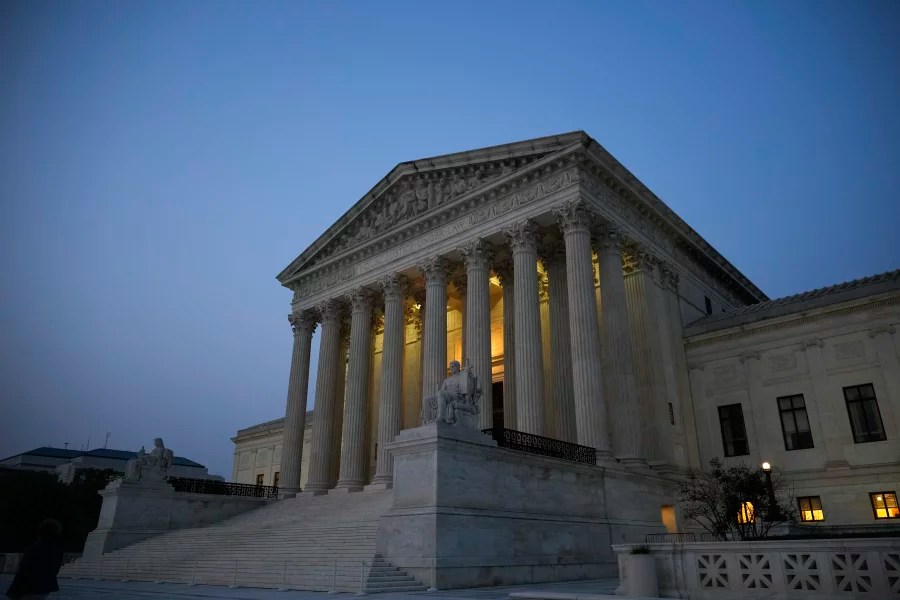
But when they do, boy oh boy, it can be a doozy. It happened yesterday at the Supreme Court.

The case was an appeal of a district court order issuing a “universal injunction” against President Trump’s executive order seeking to abolish “birthright citizenship.”

Birthright citizenship is the kind you get if you’re born in America even if your parents are here illegally. The 14th Amendment seems to provide for it, although there is a non-frivolous argument that it does not.

A universal injunction is one that binds the enjoined party even against persons not involved in the lawsuit.

The district court judge in this case found Trump’s executive order against birthright citizenship to be in violation of the 14th Amendment, and issued an injunction forbidding its enforcement against the plaintiff in the case.

Here’s where it gets dicey. The judge’s injunction applied not just for the benefit of the named plaintiff, but for the benefit of all other people in the country even though they weren’t parties to the case. It was a universal injunction.

Trump appealed the universal injunction on two grounds: (1) you should not get citizenship merely by being born in America if your mother was here illegally – in other words, the 14th Amendment does not provide for birthright citizenship – and (2) the universal injunction barring enforcement of the executive order even against people who were not parties to the case was an unconstitutional overreach by the judge.

The Supreme Court heard the latter argument on universal injunctions, and reserved the substantive birthright citizenship issue for another day.

It was a typical 6-3 political decision, meaning the six Republican-appointed Justices beat the three Democrat-appointed ones. (Elections have consequences, as President Obama once pointed out.)

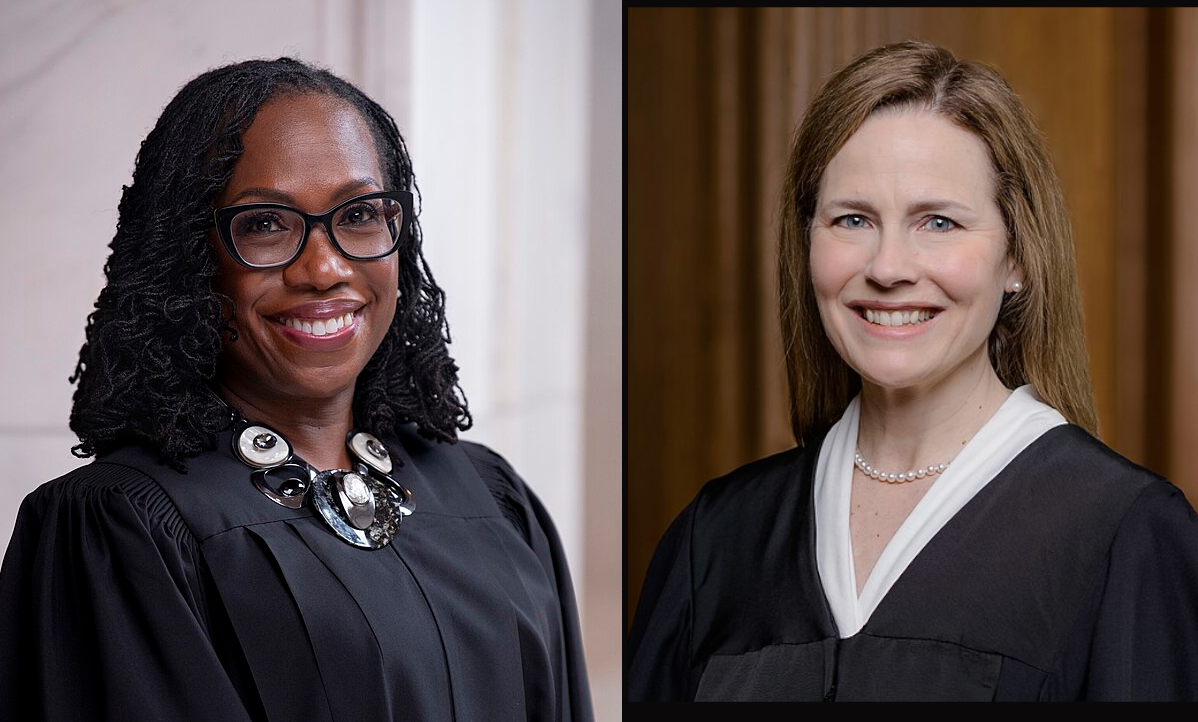
The opinion for the Court was by Justice Amy Coney Barrett. She walked through the history of universal injunctions, noting that they scarcely existed until recent times.

Now that they do exist, they are prone to abuse. A political plaintiff can choose to file his suit in a district that is notoriously favorable to his politics. Then he gets a favorable decision – typically without even a trial but instead on a preliminary basis – that applies for the benefit of all potential plaintiffs everywhere.

In theory, the district court’s decision could be reversed after a trial, but that’s years away, and, in reality, the trial decision from the same judge will be the same anyway. (On many of these issues, there’s no right to a jury trial.)

It’s actually even worse than that. Say for a moment that the plaintiff somehow loses his bid for a universal preliminary injunction in a favorable district. There’s nothing to stop another plaintiff from filing the same suit in a different favorable district. If the second plaintiff wins in that second case in that second district, he can expect to get the universal preliminary injunction that the first plaintiff was denied.

The defendant – the government in this case – is thus not only required to win in one district favorable to the other side, but is required to win every case in every district where every plaintiff files. One loss, and all are lost.

Weirdly, the universal preliminary injunction obtained by the second plaintiff – or third or fourth – who prevailed could even have the effect of reversing the loss by all earlier plaintiffs. The earlier, losing plaintiffs wind up getting unlimited bites at the apple by enjoying the repeated re-litigation of the matter by later plaintiffs.

The Supreme Court via yesterday’s opinion by Justice Barrett finally put a stop to routinely issued universal injunctions. Trump is doing well at the Supreme Court, and this was his biggest win. Our system in largely working.

Justice Ketanji Brown Jackson Issued a peptic dissenting opinion. You’ll recall Jackson. She is the woman who was asked at her Senate confirmation hearing, “Can you define the word ‘woman’?”

It was obviously a gotcha question which Jackson wanted to avoid answering. A smart and articulate woman — not too much to ask for in a Supreme Court Justice — could have dodged the question with a little BS such as, “Well, that word is used in many different ways, Senator. There’s a biological way, a social way, a behavioral way, a gender way, and . . . blah blah blah . . . mumble mumble . . . ”

Instead, Jackson gave the Republicans a sound bite for the ages: “I can’t . . . Not in this context. I’m not a biologist.”

Bob Dylan said you don’t need to be a weatherman to know which way the wind blows. He never met Ketanji Brown Jackson.

Questioner: Can you tell me which way the wind blows, Ms. Jackson?

Jackson: I can’t. I’m not a weatherman.

In another recent dissent by Jackson (thankfully, she appears to specialize in dissents) she lamented that the Supreme Court’s decision “comes at a reputational cost for this Court, which is already viewed by many as being overly sympathetic to corporate interests.”

Say what? A Justice of the Supreme Court is openly worrying, or pretending to, that their decisions might be viewed as sympathetic to “corporate interests”?

First, the Court is supposed to apply the law to the facts, public perception be damned. Second, the allusion to “corporate interests” is amateur activism. Is the Court supposed to disfavor corporations? What about large partnerships? What about LLCs? Non-governmental organizations? Charitable foundations? Sole proprietorships?

Is the law different depending on the choice of entity that one party made when they set up their organization?

Back to yesterday’s universal injunction case. Jackson’s dissent warned that the decision was “an existential threat to the rule of law.”

That’s a serious allegation. Her allegation is that the Supreme Court whose job is to interpret the law is threatening its very existence.

I have three responses to Jackson’s allegation. One, yawn. Two, notice how people who aren’t very smart like to use the phrase “existential threat” as if it makes them a French philosopher or something. Three, if abolishing universal injunctions threatens the rule of law, then how did the rule of law survive for two centuries without them?

Justice Barrett in response wrote that Jackson’s dissent “is at odds with more than two centuries’ worth of precedent, not to mention the Constitution itself.” She observed that Jackson “decries an imperial Executive while embracing an imperial Judiciary.”

Barrett wasn’t done: “Observing the limits on judicial authority – including, as relevant here, the boundaries of the Judiciary Act of 1789 – is required by a judge’s oath.”

Finally came Barrett’s knockout punch: “Justice Jackson would do well to heed her own admonition: ‘Everyone, from the President on down, is bound by law.’ That goes for judges too.”

In the cloistered confines of the Supreme Court, that constitutes a beating. Jackson was rightly condemned in a written opinion joined by six of the Justices for advocating a position contrary to two centuries of precedent and the Constitution itself, endorsing an imperial judiciary, violating the judge’s oath, and refusing to be bound by law even as she wildly accuses the Court of threatening the very existence of law.

Justice Barrett as the author of that take-down put to rest any doubts. She’s all woman, and she’s got a pair.

The federal judiciary still works

You’ll recall that a federal judge in California ruled against Trump in the dispute over his use of the National Guard to protect federal buildings in Los Angeles from rioters who demand a permanent open border.

That judge happened to be the 83-year-old semi-retired little brother of 86-year-old liberal retired Supreme Court Justice Stephen Breyer.

Big Brother must have been so proud.

First, a word about federal judges that most people are not aware of. Federal judges can go on “Senior Status” as they get old. That means they get full pay and benefits including perks such as secretaries, beautiful offices, and young and attractive law school graduates to do their research and listen to their genuflections.

Oh, and a palatial courtroom for their exclusive use (though it sits empty 90% of the time), a fancy black robe, and a guy to shout “ALL RISE” when they walk in. (You’re supposed to remain standing until the judge mutters, “Be seated.” That’s one of many, many things they don’t teach in law school, but you quickly learn it on the job.)

These Senior Status judges are expected to do a bit of work. But only as much work as they feel like doing. They can work 35 hours a week, or 15.  Unlike ordinary judges, they can turn down any case. The cases they turn down go back into the hopper to be assigned randomly to another judge.

It shouldn’t come as a surprise to you that most federal cases are very boring matters. Senior Status judges turn them down left and right.

Did I mention that they get full pay, benefits and perks fit for a king including a guy to shout “ALL RISE”?

It’s a good gig. So much so that in the federal district covering Colorado, for example, 9 of the 17 judges have elected “Senior Status.” In other words, over half of the federal District Court judges in Colorado are part-time but receiving full pay, benefits and perks.

There was a day when federal District Court judges didn’t exploit Senior Status. After all, they had to share the elevator and lunchroom with full-time colleagues who were tasked with the boring cases that the Seniors had turned down. And they were cognizant of the financial burden they and their entourage and appurtenances imposed on taxpayers.

That day seems to have passed.

Back to California. The Little Brother who ruled against Trump in the federal District Court there has been on “Senior Status” for the last 14 years. As a Senior Status judge, Little Brother could have turned down this case. He didn’t. He took it, heard it, and issued a decision against Trump.

Ah, but not all is lost. Even this case is not lost. The Trump administration appealed Little Brother’s order. Unfortunately, the appeals court covering Little Brother’s district court is the liberal Ninth Circuit. But fortunately, the liberal Ninth Circuit overturned Little Brother’s order. Trump won his appeal.

Appeals are heard by a three-judge panel of appellate judges selected at random from the sitting judges of that circuit. Trump was very lucky in that two of the three were Trump appointees. Before you conclude that the fix was in for Trump, be aware that the third was a Biden appointee and he, too, ruled in favor of Trump.

The decision was not a close call. The appellate judges noted that the President does not have wholly unfettered authority to call out the National Guard – there are statutes limiting that – but in general the President is entitled to some deference.

In this particular case, there was rioting in the streets. That’s enough.

The case now could be re-heard by the Ninth Circuit in an “en banc” hearing of 11 appellate judges randomly selected from the 29 active appellate judges in the Circuit.

Then, or even before then, the losing party can appeal to the Supreme Court where six of the nine Justices are Republican appointees. It’s likely that Trump will win there.

Apart from the merits or demerits of this particular case, here’s the point I want to make. The American federal judiciary still works.

It’s true that some of the judges don’t work as well, or as hard, as they could, or they should, but as a general rule they do indeed work in every sense of the word. Virtually all of them are very bright men and women with outstanding credentials, though some are too old for the job.

One more related point. The inflammatory allegation that federal court judges are “bought off” or otherwise corrupt is utterly unsubstantiated and, in my personal experience, unfounded. Despite the abuse of Senior Status, and despite the age-related limitations of some judges, never once in my career did I see the slightest evidence of corruption in any of them.

Justice Breyer’s Little Brother may be an ideologue, and that’s bad, but there’s no evidence that he’s corrupt. There’s a remedy when a judge is an ideologue. It’s called an appeal. It works.

Glenn Beaton practiced law in the federal courts, including the Supreme Court.

Trump is not a fascist . . . but . . .

At the outset, let me state my bona fides. I voted for Trump three times. I publicly supported his candidacy back when the media deemed him and his supporters like me stupid racists.

That was back when “Trump is literally Hitler” was the meme of the moment amongst the kind of people who don’t know the meaning of Hitler and don’t know the meaning of “literally.” Which is to say, most of the current mainstream media.

For the record, Trump is not Hitler, not literally or metaphorically, nor is he a fascist.

Contrary to popular belief engendered by the lamestream media, the word “fascist” does not mean “Republican.” Nor does it mean “very conservative.” In fact, Republicans and other politically conservative people are nothing like fascists at all.

Fascism is notoriously difficult to define, perhaps because it is used as an epithet by the ignorant more than as a descriptor by the educated. But most would say it involves a tendency toward, or actual exercise of, strong autocratic or dictatorial control. It also frequently involves forcible suppression of opposition, belief in a natural social hierarchy, subordination of individual interests for the perceived interest of the nation or race, and strong regimentation of society and the economy.

OK, let’s look at President Trump.

He’s missing the race component. Indeed, many of his political appointments have been racial or ethnic minorities.

Some people would say, “Oh, but those minorities don’t count because they’re conservatives.” To those people, I have a question: So, who’s the bigot here when you’re the one willing to deny the color of a person’s skin because he lacks the “correct” viewpoints?

The nationalistic component is a closer call. Trump shows little interest in invading Poland or France, but does seem to hanker for a little elbow room up north in Greenland and Canada. Still, forcible conquest doesn’t appear to be on his radar. (But what exactly is the purpose of his conquistador callings?)

As for a belief in a natural social hierarchy . . . gimme a break, the guy’s a real estate developer. If there were a natural social hierarchy, real estate developers would be at the bottom.

Here’s the component that worries me: He doesn’t suffer disagreement lightly.

It would be one thing if Trump shot down disagreement with brilliant argument and nuanced analysis. In doing that, my favorite commentator on the conservative side – or any side, for that matter – was William F. Buckley. He won arguments in such eloquent, understated style that the people he persuaded to his side left thinking they had agreed with him all along.

Trump, not so much. If you agree with him at the outset, he’ll draw cheers from you. But that’s not a persuader; that’s a cheerleader.

As for those who disagree with him, he quickly escalates – or, rather, gutter-stoops – to name-calling, arm-twisting and outright bullying.

There’s a place for that tactic, to be sure. Army boot camp comes to mind.

In politics and people, however, such an approach tends to backfire. You can bully people only so far, and you can’t bully strong people at all.

Moreover, the bullying itself can backfire. For example, how is Vladimir Putin supposed to back down once Trump tells him to? Even the girly-men at Harvard have stood their ground (sort of) once Trump publicly told them to take a knee. The first rule of effective bullying is to do it in private where the object of your bullying doesn’t need to save face.

But this self-pleasing bullying, this autocratic nature, is in Donald Trump’s DNA. Recall that this man took time away from making billions in order to be on a stupid TV reality show where he gloried in screaming “You’re fired!”

The most recent “You’re fired” moment came this week when Trump lashed out at some judges – one of which he appointed – for striking down his tariff program as non-enabled by the laws he’s citing. The judges may or may not be right, but it’s a matter that will be decided by the Supreme Court on appeal, as it should be, not by playground bullies. Meanwhile, calling the judge names is not an effective strategy for a litigant.

The judges that disagree with him are reinforced in their disagreement when he tries to bully them. They have lifetime tenure and no fear of Trump. And the judges who agree with him, give pause. What self-respecting judge (and judges have a lot of self-respect) wants to be known as a Trump toady?

Oh yeah, the Supreme Court. He lashes out at them, too, though he appointed three of the nine. And he lashes out at the conservative Federalist Society for helping him choose the judges he lashes out at. I’m sure he’s just one lash away from lashing out at the people who helped him choose the Federalist Society to help him choose the judges.

Maybe all this plays well with a certain component of the base, and so it’s all clever triangulation by Trump. More likely, it seems to me, he just has the nature of an authoritarian bully.

It’s his greatest weakness. And I will not be voting for him a fourth time.

But he’s not Hitler!

To generate book sales, the former Director of the FBI advocates 86’ing the President

James Comey has a book coming out, so he’s looking for attention. He got it.

He posted on Instagram a photo of shells on the beach arranged in the numbers “86 47,” the last two numbers being a little separate and bigger than the first two so as to differentiate them. His accompanying comment was:

“Cool shell formation on my beach walk.”

In case you were born yesterday, the number “86” is slang for terminating a person or thing. If a gangster talks about “86’ing” you, you’re toast. The number “47” of course corresponds to President Trump as the 47th President.

Comey got the attention he sought, and then some. Then he deleted the Instagram post, and put up a new post “explaining” that:

“I posted earlier a picture of some shells I saw today on a beach walk, which I assumed were a political message. I didn’t realize some folks associate those numbers with violence. It never occurred to me but I oppose violence of any kind so I took the post down.”

Wait a minute. In his first post, Comey pretends that the numbers were merely a “cool shell formation” while they were obviously much more than that; they were the numbers “86” and “47.”

So why did he pretend they were just a shell formation in the first post?

In his second message, he contradicts his first in admitting that he was aware it was a “political message” but contends he was not aware that it was a violent one. Really? This is the former Director of the FBI.

Then what did he think it meant? He never says.

The Secret Service charged with protecting the President takes seriously threats to his safety. The latest reports are that they’ve interviewed Comey.

That presents a problem for Comey. It appears likely that Comey himself arranged the shells on the beach. If he maintained his story that he simply stumbled across them, he was probably lying.

Such a lie could be uncovered by the contents of his phone. Multiple pictures of his “shell formation” could be on his phone showing various iterations until he settled on the one he liked.

Such a lie to the Secret Service investigators would constitute perjury, as Comey well knows – since he put people in jail for that.

On the other hand, if he told the truth to investigators, he revealed himself for what he apparently is: A former Director of the FBI who is willing to encourage harm to the President in order to sell books.

In today’s sordid world, it will probably indeed work to sell books. Fellow travelers on the left will buy his book with no intention of reading it, just to support his advocacy of violence. After all, they’ve normalized calls for political assassination, as we saw when they lionized a maniac who murdered a health insurance CEO on the street.

And it may work to accomplish more, too. It may work to achieve its stated goal of 86’ing the President. These are dangerous times, and this sick former FBI Director isn’t helping matters.

Joe, don’t go!

On those rare occasions when I’m in need of an emetic, I’d rather have a finger stuck down my throat than have the image of Joe Biden stuck through my retina.

But he’s baaaaaack anyway. Democrats hate that he’s back.

What my enemy hates, I should like.  And so, I do. Even though it hurts my eyes and turns my stomach.

Democrats hate it for the same reasons that I like it. Every Joe sighting reminds people of why they voted against him. He demonstrates that he’s a creaky, corrupt, cardboard cutout that is incapable of thought and practically incapable of reading a teleprompter containing the thoughts of people who do his thinking for him.

Every appearance reminds people that the Democrats lied that he was “sharp as a tack” right up to the minute that he proved beyond a reasonable doubt that he was dull as a dullard, at which time they dumped him like a stained, plaid Laz-Z-Boy from the 70s and declared that their hand-picked replacement (why bother with primaries to ascertain the people’s preference when you have Nancy, Chuck and Barack?) was

. . . wait for it . . .

. . . “sharp as a tack.”

And joyous, to boot. And no known hair plugs, capped teeth, or criminal family.

I almost feel bad for Joe that the Democrats are not even pretending to welcome him. Almost.

“Joe, please go” Is their typical greeting. Guffaws are their typical reaction to his tiresome contention that he would have won the election (if only he’d had the courage not to quit). Yawns are elicited by his warnings that the Republicans want to end Social Security, end motherhood, and end the world.

Rage is the emotion generated by him reminding Democrats of his truculent, selfish refusal to quit when the quitting was good – back when the primaries were playing out and a competent new candidate could be chosen in the way they’re supposed to be. Embarrassment is what they feel when they see him stumbling, bumbling, humbling and crumbling on a stage.

Mind you, I don’t blame Joe for being semi-senile. Lots of people wind up there. Supreme Court Justice Ruth Bader Ginsburg in her final years comes to mind.

Ginsburg is another person whom I adore because she screwed the Democrats by quitting long after the quitting was good. Ginsburg’s encroaching senility so clouded her judgment that she could not see it encroaching, and so she failed to quit in time for Barack Obama to name her replacement.

She died at age 87 while still on the bench (when she was not in the hospital). After decades of reliably liberal votes, the legacy she left is that her replacement is Amy Coney Barrett, nominated by Republican President Trump and confirmed by a Republican Senate.  

Back to Joe being back. Surely, he can still distinguish between friends and enemies. Given that his friends wish he’d go away for good, and his enemies are happy he doesn’t, one might ask, why doesn’t he go away?

This might shock you, but politicians have big egos. They crave attention. It’s not exactly a monastic profession.

I don’t hold that against them. The need for attention is fundamental to mankind (and, to a slightly lesser extent, womenkind). Some people achieve it by being loved, others achieve it by being hated, and still others achieve it by writing stupid blogs where they weave themselves into the narrative.

What I hold against Joe is not his basic need for attention. What I hold against him is his terrible policies, his family corruption, his gross incompetence, and his shameless lies.

I’m glad he’s back to remind Americans of those things. As he continues to decline, I hope he sticks around. Cement that legacy, Joe.

The Wall Street Journal debases itself in a misleading Trump headline

I’ve read the Wall Street Journal for many years. I’ve even had a piece published in the Journal. The opinion page is excellent (even when I disagree with the opinions expressed there) and the news page is reliable (though it has drifted leftward over the years).

I was therefore surprised and disappointed to see the Journal’s coverage of a recent interview that President Trump gave to NBC News.

Trump was asked about the due process protections he should afford illegal aliens being deported. Here’s the transcript of the relevant part, as presented by NBC News itself:

“But even given those numbers [of illegals] that you’re talking about, don’t you need to uphold the Constitution of the United States as president?” Welker asked.

“I don’t know,” Trump replied. “I have to respond by saying, again, I have brilliant lawyers that work for me, and they are going to obviously follow what the Supreme Court said.”

A fair reading of that exchange is: (1) the interviewer asked Trump whether he would uphold the Constitution in connection with his deportation of illegals, (2) he replied that he’s not a lawyer, so he doesn’t know what the legal requirements are, (3) he has many brilliant lawyers who will tell him, and (4) they’ll “obviously follow what the Supreme Court” says.

The Journal presented the clip, but accompanied it with a very misleading headline. The headline read,

“Asked if He Has to Uphold the Constitution, Trump Says ‘I Don’t Know’”

That headline was misleading in at least three ways. First, it leaves out the context, thereby implying a context much broader.

The question asked of Trump was not the general question of whether he “has to uphold the Constitution.” Rather, it was a very specific question: It was whether Trump has to afford due process protections to illegals being deported.

Second, the headline omits the rest of Trump’s answer. He immediately went on to note in connection with this Constitutional issue that he is not a lawyer.

That’s not just a quibble. Even most lawyers would struggle to define the necessary due process protections for illegals. Do they get a full-blown jury trial? Do they get summary adjudication by an administrative judge? Do they get something in-between? Even the Supreme Court has not been crystal clear on this point.

Third, Trump wound up his answer by explicitly stating that he would defer to whatever the Supreme Court says.

In context, it’s hard to see what Trump said wrong. He did indeed start his answer with “I don’t know” but immediately explained why he didn’t know, and gave assurance that he would do as told by people who do know — namely, the Supreme Court.

The Journal’s headline parrots a similar headline from the outlet that did the interview, NBC News. I was not surprised to see NBC sink this low to rake up muck, but I was indeed surprised to see the Journal follow them down there.

Glenn Beaton practiced law in the federal courts, including the Supreme Court.

Liberal judges to violent, criminal illegals: “You’re Trump’s enemy, so that makes you my friend”

Judges lately often exhibit acute cases of TDS. One in Milwaukee was preparing to preside over the trial of an illegal who’d been charged with domestic abuse. In layman’s language, he was charged with beating his girlfriend and others to the point that some required hospitalization. Federal agents showed up outside the judge’s courtroom with a warrant to arrest the man, presumably to deport him.

The judge stalled the agents for a bit by sending them down the hall, then returned to the courtroom. While the agents were away, she spirited the violent illegal out the side door.

The agents suspected a ruse, and went outside. They intercepted the man on the street, though it took a potentially dangerous rundown to catch him.

A judge in New Mexico was harboring three illegals who were apparently members of a notorious Venezuelan gang. The judge gave them guns. The judge also took a hammer to the phone belonging to one, evidently because it contained pictures of beheaded victims. He didn’t want the incriminating evidence to be discovered.

These acts by judges are not just intemperate and illustrative of bad, well, judgment. They’re also crimes. It’s a federal crime to conceal illegal immigrants. It’s a federal crime to interfere with the investigations of federal law enforcement officials. It’s a federal crime to lie to them. It’s a federal crime to destroy relevant evidence of a crime. The statutory punishment can involve decades in the federal penitentiary.

Ordinarily, these judges would not side with a wife-beater, or with a gang member with photos of his beheaded victims on his phone. Even judges who are Democrats are not that loony.

So why did the judges do so in these cases? Here’s my theory.

The reason the judges sided with criminals in these cases was because the person who was after them was Donald Trump.

These Democrat judges perceive Trump as their enemy (probably correctly) and they perceive these criminals as Trump’s enemy (certainly correctly) and so that makes the criminals their friend.

“My enemy’s enemy is my friend” is a crude and amoral way to pick friends, but I suppose people have the prerogative to use whatever criteria they like in such personal matters.

But judges sitting in their courtroom are not engaged in personal matters. They’re engaged in public matters. Their job is to judge, and they’ve sworn to do so in accordance with the law. They don’t have the luxury of putting the law aside in favor of personal prejudices such as “the enemy of my enemy is my friend.” If they did, then they could decide that criminals are innocent simply because they happen to dislike the prosecutor. Or guilty because they happen to like the prosecutor.

I’m from the old-fashioned school, and so are almost all other lawyers and almost all judges and almost all civilized legal systems. In that school, the guilt or innocence of a defendant is based on what he did, not who he’s a friend or enemy of.

These judges know that, and they would agree with it – in the abstract. If offered a hypothetical where the evidence shows the defendant is guilty but the prosecutor is someone the judge abhors, the judges would say that’s the way the cookie crumbles. The defendant would be convicted on the basis of the good evidence presented, not exonerated on the basis of the bad prosecutor presenting it.

But in these particular cases – the real-life ones in Milwaukee and New Mexico mentioned above – the judges have become prisoners to their emotions. Their hate for Trump is so strong that they literally cannot think straight.

The judge’s best defense to the charges against them for aiding the criminal illegals, therefore, is a plea of insanity. And I think that plea is a pretty good one.

They’re deranged, and I mean that in a clinical way. Donald Trump has a way of doing that to Democrats. This derangement is not helping them with voters.

Glenn Beaton practiced law in the federal courts, including the Supreme Court.

JD Vance would be a terrific President right now

He wasn’t exactly a product of “white privilege.” He was born an Irish-Scot in Appalachia to a woman who was an alcoholic and drug user. His parents divorced when he was a toddler. He was abused, neglected, and impoverished.

He was raised mainly by his grandparents. Against the odds, he survived childhood. He enlisted in the Marines right out of high school. He served in Iraq, and was medaled and promoted.

He came home to enroll in the local landmark, Ohio State University. He graduated with a dual major in Philosophy and Political Science.

From Ohio State, he enrolled in Yale Law School. If you think it’s easy to get into Yale Law School without being a DEI applicant, try it sometime.  (For the record, I don’t contend that you learn anything at Yale Law School, but it’s indisputable that it’s extremely difficult for a white male to get in.)

Let’s recap. This Scottish-Irish hillbilly went straight from Appalachia to a tour of duty as a Marine in Iraq, to a dual major in Political Science and Philosophy at Ohio State, to Yale Law School.

Along the way, he was publishing political stuff, and befriended billionaire conservative entrepreneur Peter Thiel.

Don’t ask me how he met Thiel and convinced him to give him the time of day. But I’m guessing it’s the same qualities that got him from Appalachia to Yale Law School.

I’d say he never looked back, except he did. At this point in his life, he started work on what became an inspirational best-seller about his early life, Hillbilly Elegy, which was later made into a great movie directed by Ron Howard. Rent it and watch it.

He was elected a U.S. Senator at age 38, and Vice President of the United States at age 40.

Ah, Vice President of the United States. That’s the recent waiting room of some men who later sat in the Oval Office, some good ones and some bad ones – Richard Nixon, Lyndon Johnson, Gerald Ford, and George H. W. Bush. (I don’t even count the old senile guy with a “doctor” wife to lead him around to collect payola for the family business while the world went to hell.)

So, is JD Vance of Presidential timber?

First, does he have the ambition? Well, yes. If he didn’t, he’d be in Kentucky driving a pickup truck of moonshine.

Is he smart? Yes. See, Yale Law School, above.

Does he take it personally if someone takes a position in opposition to his? Not as far as I can tell, but he’s likely to demolish that person’s position.  

Does he go around picking fights he cannot win just because he enjoys fighting and enjoys  the attention? No, I don’t think so. From what I’ve seen, he picks a fight because that particular fight is an important one and he knows he has a good chance of winning it.

Perhaps as a Marine in Iraq he learned an old saying of pilots in the Air Force: There are old ones and there are bold ones, but there are no old, bold ones.

Can he criticize a person’s position without name-calling? Yes, he can and he does. Calling people names is for people who are losing the argument.

Is he vague and unpredictable? Usually not. He may have learned something in the practice of law: Only be vague and unpredictable on purpose, never accidentally.

Does he tweet in ALL UPPER-CASE LETTERS as if he’s shouting at you? No, the little letters seem to get his point across just fine. He knows that, as in name-calling, shouting is for people who are losing the argument.

Does he have a beautiful wife who seems to genuinely love him? (Indulge me here. I like a First Lady to be firstly a lady.)

Yes, He appears to. They’ve been together since he was barely out of Appalachia.

I could go on, but you get the point. JD Vance is Presidential material.

Ah, you say, but maybe he’s unelectable.

Ah, says me, that’s the genius of this. See United States Constitution, Article II, Section 4 . . . Impeachment.  

To impeach Vance’s boss (whom I voted for three times), we would need the help of the Democrats. An impeachment conviction in the Senate requires 67 votes, and the Republicans have only 53.

Would the Democrats be so deranged as to vote to convict Vance’s boss in the Senate, and persuade a dozen and a half Republicans to join them there, thereby putting JD Vance into the Oval Office without ever being elected to it?

Yes. Recall what the “D” stands for in TDS.

The tariffs are a needed blow to the “progressive” tax system

Democrats think Americans pay too little in taxes. More specifically, they think “rich” Americans fail to pay their “fair share.”

They play fast and loose with those terms “rich” and “fair share.” Their unstated definition of “rich” is people who make more than the Democrat hurling the allegation. And they never do define “fair share.” It’s always just more, more, more on the rich, rich, rich.

Never mind that the top 1% of earners pay 40% of federal income taxes, the top 5% pay 61%, and the bottom 50% pay only 3%.

There’s another kind of tax in the news this week. President Trump announced tariffs on imported goods. The tariffs vary by country and by goods, but the broadest one is 10%. Some things are exempt from the new tariffs, and some things are subject to a higher one.

Democrats argue that these tariffs are, in effect, a sales tax on American consumers. The argument is that foreign manufacturers importing their wares into America will simply pass the tariff cost on to American consumers in the form of higher prices.

That’s approximately true but not entirely, for several reasons. For one, the foreign manufacturers will probably absorb some of the tariffs themselves by taking it out of their profit margins. To the extent that happens, the tariff is a tax alright, but it’s a tax levied on foreigners.

I like the idea of foreigners paying some of Americans’ taxes.

For another thing, Americans will probably shift their buying habits somewhat away from foreign goods once tariffs make them more expensive. It’s hard to predict how much of that will happen.

For simplicity, let’s assume what the Democrats and their media allies have assumed – the worst. Let’s assume that the quantity of imports does not decline, that this 10% winds up getting levied on all of them, and that the whole 10% gets passed on to American consumers.

What would that add up to in dollars?

America imports about $4 trillion worth of goods annually.  Therefore, under those assumptions, a 10% import tariff would cost Americans about $400 billion in higher prices.

The Democrats would have you believe that this $400 billion goes up in smoke. It does not. Like any other tax, it goes to the U.S. Treasury.

Even Democrats know this. (Well, maybe AOC doesn’t.) But they nonetheless rail against this particular tax, while supporting all other taxes.

I suspect that their real opposition is not to the tax, but to the taxer. The Democrat’s mantra is Orange Man Bad, and so everything he says and does is bad, even when he proposes something they usually love – a tax increase.

Now here’s an interesting connection. In Trump’s first administration eight years ago, the Republicans passed sweeping tax cuts. Tax cuts benefit the people who pay real taxes. Duh.

As pointed out above, the people who pay real taxes are largely the people who make real money. Double duh.

And so, the Trump tax cuts benefited real people who make real money and therefore pay real taxes. They didn’t much benefit people who don’t make money and therefore don’t pay taxes. Triple duh (and let’s get out the tiny violin).

Those Trump tax cuts are set to expire at the end of this year. If that happens, the result will be a tax increase amounting to about $400 billion/year.

If that number sounds familiar, it’s because it’s the same number mentioned above in connection with the tax revenue that will be realized by the new tariffs.

That’s right, the tariffs will approximately pay for extending the tax cuts. A coincidence? I think not.

There’s another twist. The people who will benefit from extending the tax cuts are not the same people who will pay the tariffs that offset the cost of them. The tariffs will be paid by everyone buying imported goods – people who buy Japanese cars, Korean electronics and South American vegetables. In short, they’ll be paid by pretty much everybody.

But extending the tax cuts will benefit people in proportion to how much they pay in taxes. The people who pay a lot of tax will get a lot of benefit. As pointed out, those are people who are wealthy.

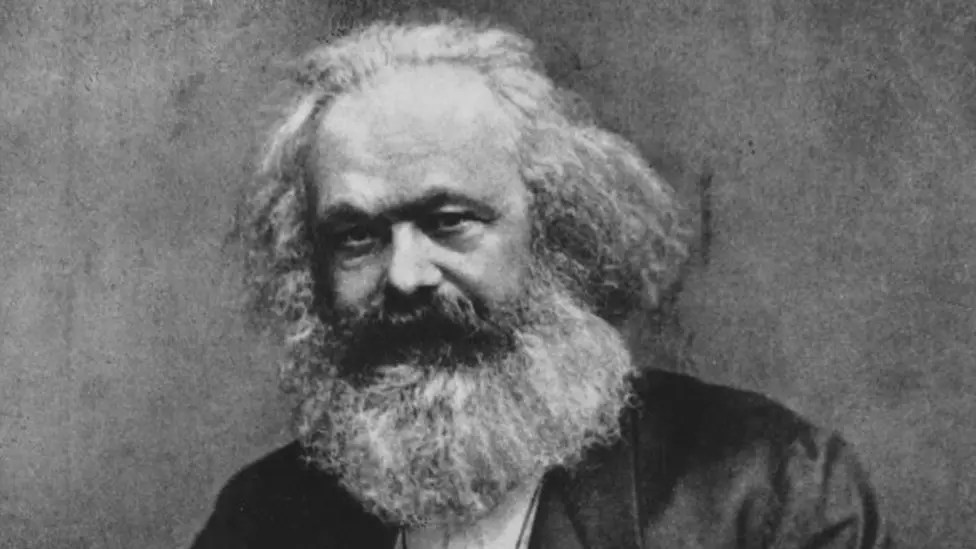
An apt slogan might be, “To each according to what was taken from each.” Apologies to Karl Marx.

The end result is to chip away, a bit, at the progressiveness of the tax system – the system where wealthy people not only pay more because they make more, but also pay at a higher percentage.

That progressive tax system is how we got into an arrangement where the bottom 50% pay only 3% of federal income taxes while the top 1% pay 40%.

You may like this outcome, or not, depending on where you fall on the income spectrum.

But as a matter of social policy, it’s clear that our current progressive tax system leaves the bottom 50% as non-stake holders. Those non-stake holders naturally push for higher taxes because they know they themselves won’t have to pay them. They get to free load.

Democrats have pandered to those free loaders for a long time. That’s been successful for the Democrats, but destructive to the nation.

Should we kill all the alligators, or get out of the swamp?

Lawyer advising client engaged in expensive litigation: The goal should be to get out of the swamp, not to kill all the alligators.

Dishonest media-alligators undermined President Trump’s first Presidency with bogus charges of Russian collusion. Corrupt deep state-alligators fabricated allegations to defeat his re-election in 2020. Partisan prosecutor-alligators in New York and Georgia brought bogus charges in trying to derail his election last year.

Overreaching judge-alligators in some of the federal district courts now seek to undermine his national security policies – an area that the Constitution largely reserves to the President. 

It’s a testament to Trump’s courage and stamina – and to the nation’s structure and people – that he has fought and mostly beaten the alligators over the last ten years. In his spare time, he got himself elected President twice and survived two assassin-alligators.

He’s been up to his elbows in alligators. I understand why he’s going after them now. I probably would, too.

It’s also important to note, in fairness to Trump, that we didn’t elect him to get us out of the swamp; we elected him to drain it. Draining the swamp is inevitably hard on the alligators who feed there.

But here’s the issue. Not all of Trump’s targets today are alligators and not all are even in the swamp. 

Such as Big Law.

I don’t expect you to feel sorry for girly men and manly girls pulling down seven-figures to say res ipsa loquitur. And it’s a fact that Big Law (which I’ll define as the several dozen American law firms with over 1,000 lawyers) is a mostly liberal crowd. That is evident from their political contributions which are largely to Democrats, and from their pro bono activities which are mostly for liberal causes.

But you could say the same thing about nuns. (Not the seven-figures part.)

In my practice, seldom did I see Big Law behaving like a political institution. In fact, the firms that comprise Big Law are rivals which rarely act concertedly or even cooperatively. Rather, they make a good living by fighting with one another on behalf of their opposing clients.

Those clients are notably moderate, since the executive ranks of the Fortune 500 include very few radicals. In their choice of lawyers to represent them in their next billion-dollar merger or bet-the-company antitrust case, they aren’t exactly looking for Che Guevara.

As for individual lawyers, the recipe for success in Big Law has nothing to do with political leanings. The recipe is: do great work, have great clients, and bill great hours. (I had at least one of those ingredients when I was in Big Law, and wound up doing OK.)

Big Law is simply not an alligator, and, even if it is, it’s not in the D.C. swamp (with the possible exception of the firm that was involved in the Steele Dossier, an involvement from which the firm has distanced itself after the departure of a key lawyer).

Even if Big Law firms are indeed Democrat institutions, notwithstanding what I’ve pointed out above, being a Democrat merely makes a person hypocritical, socialistic, loathsome, and halitotic. It doesn’t make them a criminal.

So, is it appropriate to bring the enormity of the U.S. Government to bear on private enterprises like Big Law for the sin of choosing one political doctrine over another?

If so, then why limit it to Big Law? Why not have the government go after Big Business for their political leanings? Why not go after Big Billionaires for theirs? Why not go after Big You and Big Me for ours?

Why not go after Big Nuns?

Before you moan “damned straight!” consider the fact that someday there will be another Democrat President, someday there will be another Democrat Congress, and someday there will be another Democrat Supreme Court.

If America is to continue, it will be as a nation of predictable laws and sound principles, not a series of regimes exacting revenge on their predecessor regimes.

That said, I can hardly wait for Trump and Musk to bring down the teachers’ unions.

Glenn K. Beaton practiced law in the federal courts, including the Supreme Court.