The midnight train to Georgia

“L.A. grew too much for the man . . . .

Said he’s going back to find

a simpler place and time.”

James Weatherly’s lyrics having been written half a century ago, one can only wonder what “the man” might think of today’s L.A.

It probably doesn’t matter. After all, it was over a century and a half ago that the town of Concord, Massachusetts, with its whopping population of about 2,200, had grown too much for another man, who sought his simpler place and time on the shores of Walden Pond.

Thoreau’s celebrated experiment was little more than a grand and somewhat phony gesture by a self-impressed social misfit with a Harvard education. Nevertheless, he used the occasion to fire off some trenchant commentary about a social and economic system in which “The mass of men lead lives of quiet desperation.” Embraced by liberal academia, his book would sell like hotcakes in the 20th century.

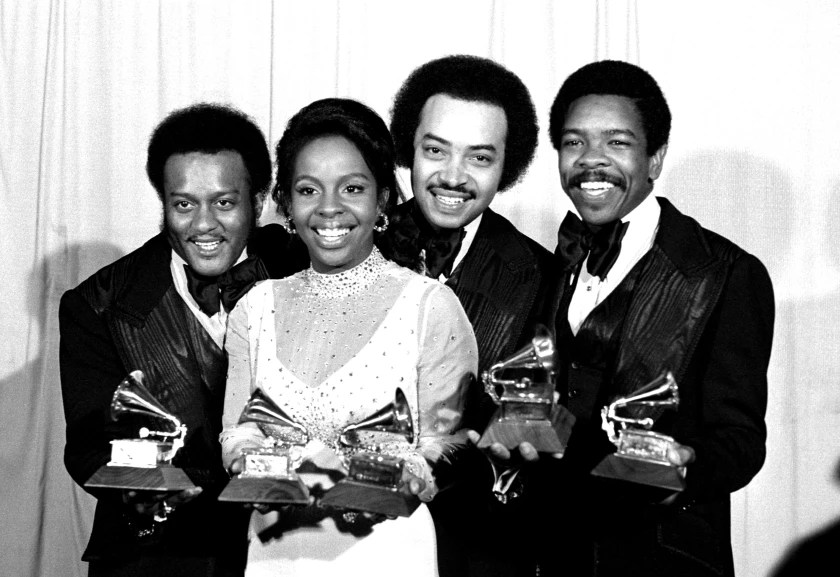
But back to the song by Gladys Knight and the Pips — with its all-American roots in R&B, Doo-wop, Country, and one other musical genre to be touched upon shortly.

The theme is familiar. Indeed, it’s not a stretch to say that the very creation of America in the European mind was an effort to catch the midnight train to Georgia. Yes, many came in the pursuit of wealth, even empire, but the tired, huddled masses were dreaming more modestly of a plot of earth and the intangibles that came with it. In their most purely idyllic fantasies, they imagined themselves as De Crevecoeur’s “new man,” an innocent new Adam dissociated from the historic past, dwelling in a paradise regained. 

Some, like Brigham Young, claimed to have reached this place. More sober minds have acknowledged that the “new” man brought the old history with him — indeed, his descendants are up to their necks in the continued making of that history, some of it more dreadful than ever — and that it’s become nigh unto impossible to find a nook or cranny of America’s geography in which “Georgia” can be found. The TV series “Yellowstone,” for example, depicts a montane pastoral idyll filled with men and women whose desperation is far from “quiet.”

Back to the song — not that we should necessarily find the wisdom of the ages in a piece of pop music.

The first thing to understand is that it’s not about “the man,” his defeat and retreat, nor is it about Georgia. Rather, its subject and protagonist is the woman whose voice we are hearing, and who also will be boarding that train — not because her life is quietly desperate, but because “I’d rather live in his world, than live without him in mine.” It’s the principal declaration of the song, and presumably it hasn’t come without some internal conflict.

Perhaps she hadn’t been reading Betty Friedan and Gloria Steinem, but surely their question, which was blowing in the zeitgeist, had entered her mind — Was she going to Georgia only to raise this guy’s barefoot children and braise collard greens on the cook stove? Not well played, girl.

But if she is still conflicted, you’re not hearing it in her voice, which is positive, forward-looking, uplifted. It’s almost like we’re listening to a piece of Gospel music, which in fact happens to be the other major formative influence on this song. (Listen to it HERE and tell me you can’t hear The Pips sounding an “Amen” after almost every musical phrase.) Now capitalize the two male pronouns — “I’d rather live in His world, than live without Him in mine” — and you’re listening to two thousand years’ worth of Christian saints. Convert these words to female pronouns, and you’re thinking like a medieval chivalric knight about the secret lady of his heart, knowing that, socially, he can never live in her world, but will remain committed to living for her world until the day of his death.

Pretty noble stuff. “He who would lose his life for my sake shall find it.” This woman’s happiness does not lie in Georgia, but rather in her commitment to another person who appears to offer her something more than material comfort in Madonna’s material world. 

Fifty years later we find ourselves among ideologues often characterized as utopians — “Great Reset,” New World Order types who feel that, if only we can erase past history and present values, together with the kind of people and thinking that created them, blend Western religion into a more universal spirituality that honors the Earth and no longer subjects it to “dirty,” non-renewable sources of energy, and liberate ourselves from “gender” stereotypes and so on, then behold The New Georgia and truly new men and women!

I don’t think the Gladys Knight persona would be buying it. You want “Georgia”? Just get on the train. It’s nearly midnight, when one day comes to an end, and a new day begins.

— Chad (“Bitter”) Klinger
My mom got run over by a train

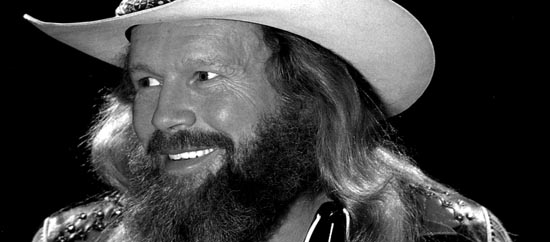
OK, gentlereaders, give me some help. In the comments, give me a column to go with these great David Allen Coe lyrics:

Well, I was drunk the day my mom got out of prison
And I went to pick her up in the rain
But before I could get to the station in my pickup truck
She got run over by a damned old train

The whole song is HERE in case that helps. The winner gets to buy me a pickup truck, a beer and a train. In the rain.

My dog, my choice?

“My body, my choice” is a favorite slogan of abortion advocates. It’s thin gruel.

To the extent this slogan is an analysis and not just a chant, it assumes the conclusion. It assumes that a fetus anywhere from hours old to nearly born is simply owned in a legal property sense by the mother in whom it resides.

But that’s the whole question, right? That question is not answered by just determining the location of the fetus. If it were, then a mother wrapping her arms around her baby or toddler or husband could make the same argument; “My body, my choice.” Or could leave a toddler outside the house overnight with the argument, “My house, my choice.”

In other areas of law, philosophy, religion and morality, we don’t subordinate the rights of living creatures to legal property interests. The left’s sudden libertarian argument that it can do whatever it wants with whatever it owns seems not to apply in such things as building codes that require carbon monoxide detectors in “my” house. Or laws against indecent exposure of “my” body. Or noise ordinances against “my” stereo. Or laws against me ending “my” life. Or laws requiring me to wear a seat belt in “my” car.

So, what about “My house, my body, my stereo, my life, my car . . . my choice”?

You may reply that in those examples, there’s a societal interest countervailing the individual interest. We don’t want people to have to see your naughty bits, or hear your noise, or breathe your car’s emissions. But what about the laws requiring carbon monoxide detectors in my house? And what about the laws requiring me to wear a seat belt? And laws prohibiting me from ending my life? It’s hard to argue that society has a direct interest in those things.

Here’s another example. Suppose a person buys a dog. Unlike a soon-to-be-born baby, the dog is indisputably owned by its owner. The dog is legally the owner’s property.

Suppose further that the dog owner decides when the puppy is about eight months old that he doesn’t want a dog after all. It’s too much effort, too expensive, too constraining, too interfering with the owner’s dating life, and too limiting on the travel that’s necessary for the owner’s career.

Note that there’s an alternative for a dog owner who changes his mind. He can bring the dog to the animal shelter where another person can adopt it.

Should the owner be allowed instead to slice and dice the dog with a machete and vacuum up the pieces, as we do with a fetus in a dilatation and extraction abortion?

After all, my dog, my choice. And after all, a dog is not a human being, is it?

No, we don’t allow that, and we shouldn’t. The reason we don’t allow that is that we’re not barbarians. We don’t have public executions either.

So, the abortion-on-demand crowd is left with the position that dogs have more right to life than 8-month-old unborn babies. Really?

There’s ownership and there’s ownership. What you “own” is not determinative of what you’re allowed to do with it. Society has a legitimate interest in regulating activities that lessen us as a culture.

After that little rant, you might assume I’m an abortion abolitionist. I’m not. I see it as the most difficult political/social/moral/legal issue of our time. I firmly believe the Supreme Court was right in deciding in an exercise of judicial modesty that it’s not a decision for them but for the people. As one of those people, I would favor state legislation that bars abortion in most instances after 15 weeks, as they do in most of Europe and all of Mississippi, but not before.

In that, I think I’m balancing legitimate and even a few illegitimate interests of a mother against legitimate interests of society and legitimate interests of the living creature within her womb. I recognize that others may reach a different balance. That’s why this is a decision for the people, not the judges.

It’s complicated. Saying that a fertilized egg is a human being like you and me that is entitled to all the protections of one, and so “abortion is murder,” does no more to illuminate the discussion than saying “My body, my choice.” Let’s get beyond sloganeering.

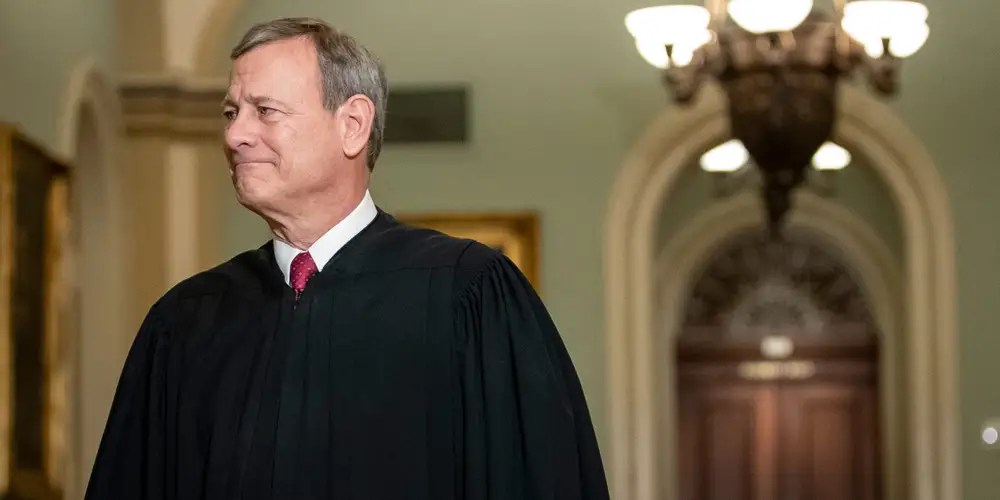
Who or what is Chief Justice John Roberts protecting?

The old news of the leak of Justice Alito’s draft opinion last May overruling Roe v. Wade has now been swamped by the new news of the Supreme Court’s final opinion a month later.  

That final opinion, almost identical to Alito’s draft and joined by five of the nine Justices, held that Roe was wrong. As a matter of fact and law, the Constitution never mentions, alludes to, or implies a Constitutional right to abortion.

(Notice my use of the word “abortion” to identify abortion. Because “abortion” has a bad connotation, advocates of it seek to rebrand or euphemize the procedure with wooly obfuscation like “a woman’s right to choose” or “reproductive rights.” But “a woman’s right to choose” is ambiguous unless you think that abortion is the only thing women have the right to make a choice about. And “reproductive rights” is a deliberate misnomer, much like “Planned Parenthood.” This is not about the right to reproduce or become a parent, but the right not to.)

The Supreme Court’s decision returns the abortion question to the state legislatures elected by the people or the state constitutions enacted and amended by the people. The states are already going in different directions on the issue, as our system of Federalism permits and even intends.

This is a bad outcome only if you think that abortion is a moral wrong which, according to at least five unelected lawyers in black robes appointed for life, is barred sub silentio by the Constitution or you think abortion is a moral right that is granted sub silentio by that same Constitution.

I’m in neither camp. I’m instead in the camp that the Constitution says what it says and doesn’t say what it doesn’t say. I think this Supreme Court decision is not a bad outcome at all. Let the people and their elected legislatures puzzle out this philosophical, moral and religious – but not legal or Constitutional – issue. That’s what the Founders intended for such issues.

But there’s another question still unresolved. Who leaked Justice Alito’s draft opinion?

That question is important. This unprecedented leak shook the Court to its marble foundations. In the context of the Supreme Court, the leak was far worse than Watergate in the context of the presidency or the Pentagon Papers in the context of the military. This breach of confidence undermined the Justices’ deliberations, reputations, and authority.

Chief Justice John Roberts recognized the cataclysmic nature of the leak. In a rare press release, he called the leak “absolutely appalling” and said he was turning the matter over to law enforcement.

That was a couple of months ago. Since then, crickets.

Several theories have been advanced regarding the identity of the leaker. The obvious one is that it was a law clerk for one of the three liberal dissenting Justices who hoped the leak would generate such an outcry that the majority Justices would back down. Indeed, there are several law clerks with a history of abortion advocacy.

But I doubt this theory that it was a law clerk. Ivy League law school graduates are a mercantile bunch. I doubt they would jeopardize a hard-earned and lucrative career for this political Hail Mary.

Another theory is that the leaker was one of the dissenting Justices who naively thought the same – that the leak would pressure at least one of the majority Justices to change his or her mind.

Yet another theory is from the reverse-head-fake-counter-flop school. It was one of the five Justices who joined the Court’s opinion overruling Roe. The theory is that one of the other four were wavering. The leaker strategized that the leak would lock that wavering Justice into his or her tentative position, because changing his or her vote after the leak would reflect badly on the size of his or her cojones.

No Supreme Court Justice wants to be shown to have little cojones. These people could make ten-fold their government salary in private practice. They instead chose black robes, an audience that stands when they enter the room, and a raised dais from which they look down upon and interrupt those rich lawyers who chose the money route, all because it says they have big cojones. Without the cojones perk, the job offers no rewards.

But I think this theory is too clever by half. I can’t imagine a Justice in the majority thinking, “Gee, so-and-so Justice is wavering. How can I lock that Justice in to the preliminary vote on the case? I know, I’ll leak the draft opinion, and so he/she won’t be able to change his/her mind without looking like a cojones-lacking Justice.”

And so, I think the second theory is correct. One of the three dissenting Justices leaked the opinion in the hope that the ensuing protests would pressure at least one in the majority to change his or her mind. That obviously didn’t work, and if anything it may have had the opposite effect.

I suspect that the status of the law enforcement investigation is as follows. Law enforcement has interviewed the thirty-some clerks and reviewed their phone calls and emails. They’ve been cleared, else we’d have heard otherwise by now.

That leaves the Justices.

I suspect that Roberts stopped the investigation before law enforcement interviewed the Justices and reviewed their emails and phone records. Because he doesn’t want to deal with what he knows the investigators would find.

Roberts has always been obsessed with the status and prestige of the Court, which is not a bad thing for a Chief Justice to be obsessed about. Indeed, he refused to join the majority opinion in this case – instead writing a separate opinion saying he wanted to uphold the Mississippi law limiting abortion to 15 weeks without outright overruling Roe – because he wanted to conserve the power of the Court by issuing a small ruling and not at big one.

That approach is defensible. Overbroad decisions have the effect of binding future litigants who have not had their day in court, based on hypothetical and un-litigated facts. To avoid that, courts usually issue rulings no bigger than necessary to decide the case in front of them.

I thought the Court would approach this case that way. Roe was bad law, but it was not necessary to outright overrule it in order to uphold the Mississippi law.

Now, again trying to conserve the Court’s status and prestige, Roberts probably believes that implicating a sitting Supreme Court Justice in a criminal leak would be even more destructive to the Court than the leak itself.

He may be right. But still, as Chief Justice, isn’t part of his job description to be the chief of justice?

One last morsel for thought: If the leaker was indeed a Justice, the liberal reporter at Politico who broke the story and published the draft opinion now has kompromat on her.

Glenn Beaton practiced law in the federal courts, including the Supreme Court.

Is the British system better?

Britain was blessed, cursed and obsessed with a controversial politician named Boris Johnson who had a good brain and mostly good policies but a bad personality. For the latter, he’s been canned. His own crew have jumped ship, effectively dragging their captain overboard with them.

Don’t feel sorry for Johnson. He’s a bit of a jerk, he got caught up in some ridiculous little scandals, he got very little backing from his friends whom he backed very little in their own times of need, he had a habit of saying attention-grabbing but inappropriate things, he’s a second-rate womanizer, and he has funny hair.

Sound familiar?

Johnson was a conservative, or a “Tory” as the Brits call them. You might therefore suppose that the outcome of this political fall would be that the opposing party, the Labour Party, or what we Americans would call the Democrats when we’re feeling charitable – or the Socialists, Marxists, Communists, Stalinists, Maoists or Chavistas when we’re not – now comes into power.

Wrong. When a British Prime Minister resigns before his term has expired, his successor is chosen by the majority party in Parliament. Today, that’s the Tories, the same party that chose Johnson.

Continue reading

“F*** Clarence Thomas” is a lousy argument for abortion on demand

After the Supreme Court’s decision saying that abortion is a matter for state legislatures to sort out, and not something addressed by the Constitution, as I predicted many months ago, the hard-left mayor of Chicago in a public speech spat “f*** Clarence Thomas!” (Devoid of any self-awareness, days later this same Democrat mayor bemoaned the toxicity of current political discussions.)

Note that this is not some bomb-throwing, Antifa/Democrat hoodlum, but is the mayor of one of the biggest cities in America. (OK, I’ll admit that she could be both.)

The mayor didn’t bother to tell us what part of the Constitution guarantees abortion on demand. But, no matter. For saying that none did, “f*** Clarence Thomas.” The mayor’s “analysis” was echoed by many other Democrats including most of their media allies.

Of the six Justices that formed the majority in the abortion case, Justice Thomas was singled out even though he wrote only a concurring opinion and not the opinion of the Court. The left routinely singles him out for special hate because he’s black. The left sees black people who won’t side with them as not just wrong, but uppity and possibly worthy of lynching. Who gave them permission to leave the Democrat plantation?

Continue reading

Fascist officials of Aspen threaten to cancel a newspaper because its new owners are unwoke

The Aspen Times months ago published a thinly supported story suggesting that one of the local billionaires was in league with Vladimir Putin. The billionaire filed suit against the newspaper for defamation. The newspaper wanted to settle the case.

Meanwhile, the newspaper was recently bought by a family-owned group of several dozen small newspapers. Much of the family are Republicans, which may be the determinative fact in this story.

The new owners asked that the newspaper staff refrain from commenting on the pending litigation while settlement talks were ongoing. That’s standard and prudent in legal proceedings. You don’t want employees saying things that might become evidence at trial or disrupt the settlement negotiations.

Continue reading

The Supreme Court just allowed religion to peek out of the closet

For years, a public high school football coach made a practice of saying short prayers after football games. He prayed whether he won or lost. Some of his players typically joined in, and some didn’t.

For that, he was fired.

This has been a long drive for the left. It started on their own 2-yard line about two centuries ago with Karl Marx scorning the masses he pretended to champion by mocking their “opiate” of religion. Marx and his fellow travelers preferred the opiate of opiate.  

Marx’s antipathy toward religion gained traction in the Soviet Union. Revealing one’s faith was a detriment to advancement in the Communist Party, and the Party controlled everything. The faithful had their property confiscated and they endured open ridicule and ostracism by institutions such as schools, employers and the media. (Does this sound eerily familiar?)

Continue reading

The Aspen Times censors are literally crying about their new owner “censoring” them

Readers will remember the Aspen Times. They’re the little but old – venerable, we’re told – newspaper of Aspen. These days it’s a hard left rag in a hard left town of limousine liberals who are screwed, swindled, salved and soothed by the local Stalinists in an obscene spectacle something like a Mexican donkey show.

One of the frequent perks for Aspen Times editors and reporters, as for many other members of the ruling Aspen establishment, is housing subsidized by the limo-libs for dimes on the dollars – often slopeside.

I was the token conservative columnist with the Aspen Times for seven years. But I grew a little big for my britches. Over that time, I became the most-read columnist in the newspaper. Then I started to become more-read than even front-page news. I was occasionally the very most-clicked item in the newspaper.

Ah, but that wasn’t their goal. I was hired not to succeed in offering a viewpoint contrary to the Aspen leftwing establishment, but to be a token. So, on Christmas Eve in 2019 they fired me. By email.

Continue reading

Mommas, don’t let your cowboys grow up to be babies

It’s a biological fact that, generally speaking, males in relation to females are naturally larger, more physical, more ambitious, stronger, faster, cruder, stinkier, hairier, more competitive and hornier. Those traits are wired into them as tightly as the DNA in their Y chromosome, and are all awash in the testosterone hormone produced in their testicles.

At times, those traits can be problematic. At other times, they can save the day, save the world, or save a child.

But men are out of fashion these days. Boys, too.

Continue reading